
Planning a Giant Lord of the Rings Statue
A giant Lord of the Rings statue might center on a robed figure, an armored character, or a sprawling fantasy creature. Each has a different silhouette, footprint, and viewing pattern, so the subject and pose should be selected with the actual display space in mind.
Discuss a Fantasy Statue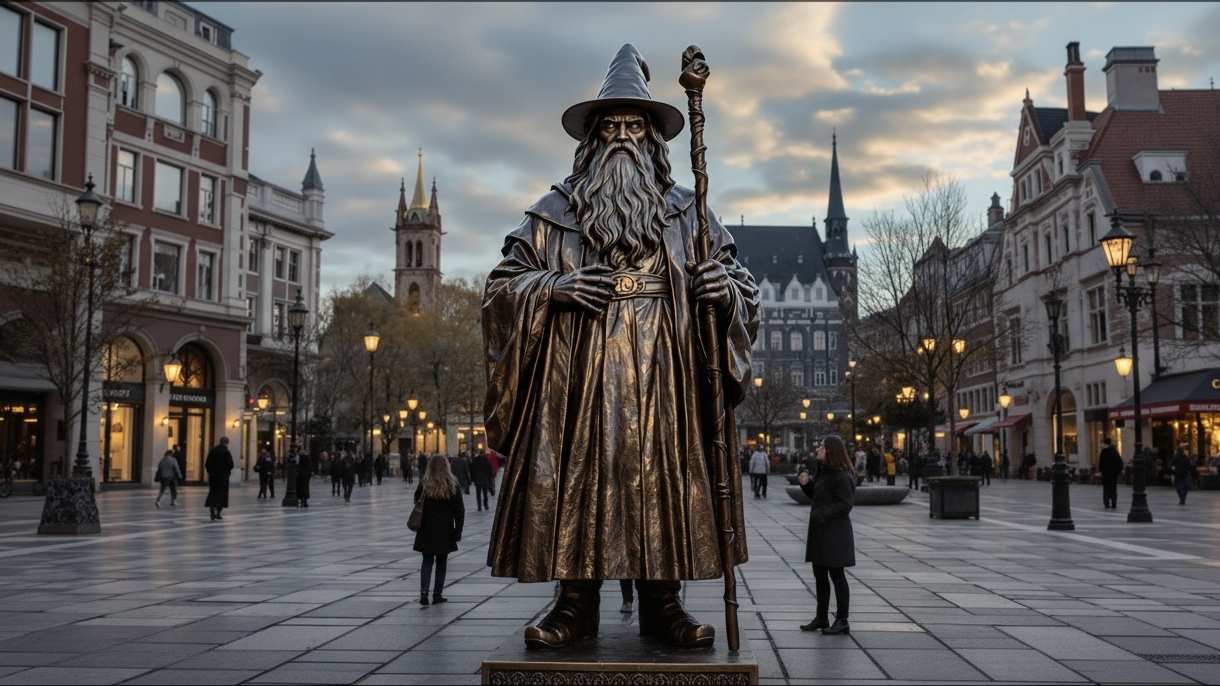
Choose the figure before choosing the scale
A wizard with a staff reads as a tall, narrow composition. A dragon may spread through wings, tail, neck, and a low body. An armored figure or creature group creates another footprint entirely. Identify the subject's defining outline and the angle from which it must be understood before setting a height.
The strongest pose is not always the most extended one. A folded wing, turned staff, tucked tail, or adjusted arm can preserve the character while fitting a doorway, exhibit bay, or freight plan. Mark which features must keep their original orientation and which can be composed around the site.
Build the display around its narrative scale
A single physical idea becomes clearer when its role in the space is specific.
Guardian figure
An upright character can face an entrance or overlook a room with a compact base and strong front three-quarter view.
Creature centerpiece
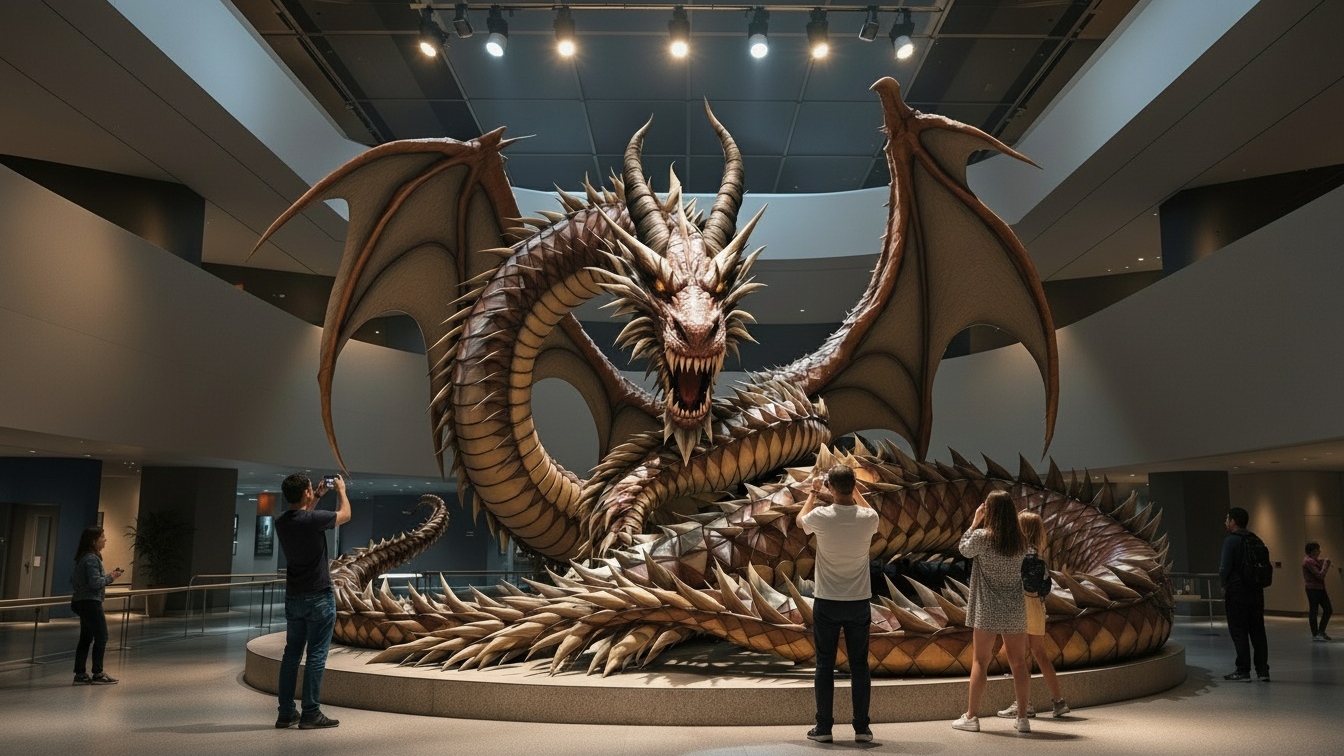
A dragon or other large creature may prioritize width, low sightlines, and an open perimeter for viewing.
Photo encounter
A figure positioned for guests needs a planned camera direction, safe standing area, and visible face or head.
Scenic grouping
A rock form, doorway, pedestal, or limited environment can support the subject without becoming a separate broad exhibit.
Compare a completed creature with a completed character figure
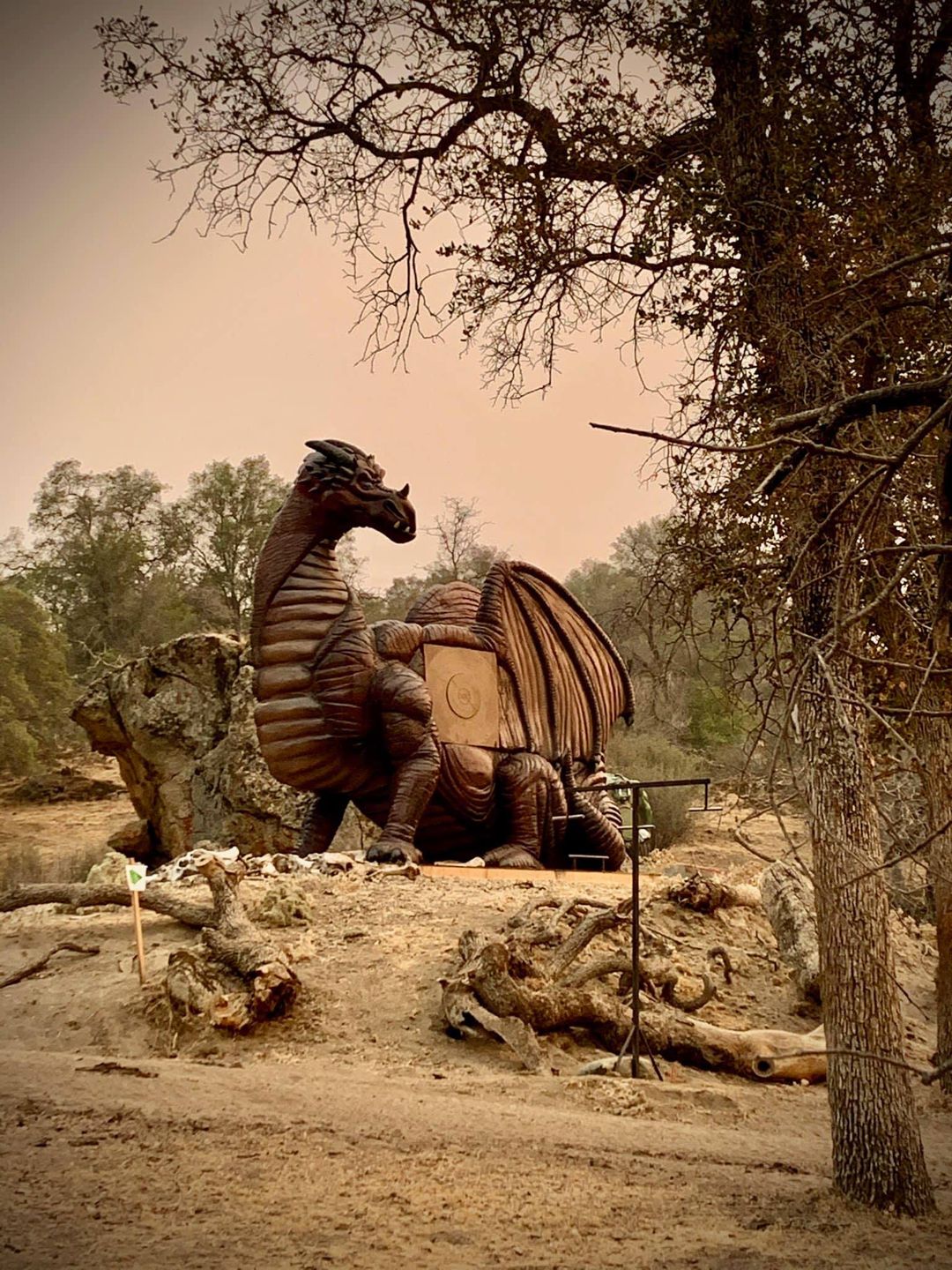
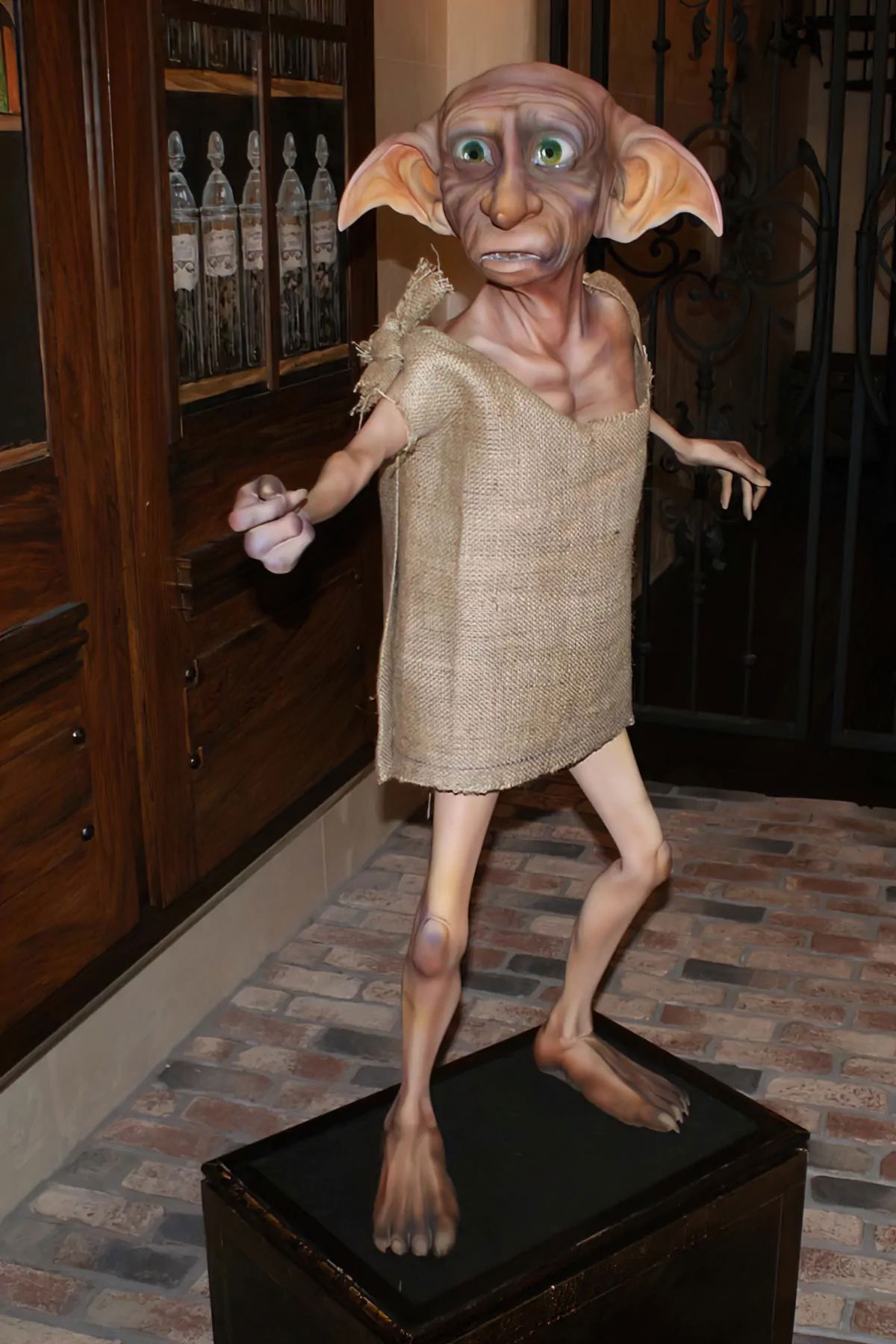
The dragon archery target has a broad animal form with extended wings and tail. The Dobby display is a slender upright character with concentrated facial and costume detail. These completed WhiteClouds projects demonstrate how fantasy subjects can demand very different proportions and viewing space.
Account for wings, staffs, capes, and tails
Long projections often define shipping and installation limits. Record the overall envelope at the chosen pose, not only the height of the body. If an element may detach for access or packing, identify the desired seam location and what must remain visually uninterrupted once assembled.
Share the normal viewing distance, circulation path, ceiling height, route into the site, and whether the display is indoor, covered, or exposed. Repeated travel, visitor contact, lighting, or a raised platform should be part of the initial scope because each affects the practical display plan.
Details to settle for an initial estimate
Clear subject references and a measured site are more useful than a general request for something epic.
- Final character or creature reference
- Preferred pose and expression
- Height plus maximum width and depth
- Essential wings, weapons, staffs, or costume elements
- Primary viewing direction
- Base or limited scenic setting
- Access route and display conditions
- Delivery city and required date
Request pricing for a giant Lord of the Rings statue
Send the subject reference, pose, dimensions, viewing sides, extended elements, base or scenic needs, environment, site access, destination, and deadline. Note any separable parts, lighting, visitor interaction, or installation requirements.