
Planning a Giant One Ring Display Prop
A giant One Ring prop is a deceptively simple form: an uninterrupted circular band whose profile, opening, inscription, finish direction, and support are all exposed. The first decision is whether viewers see it upright on edge, tilted toward a camera, suspended, or resting flat as part of a scene.
Plan a Ring Display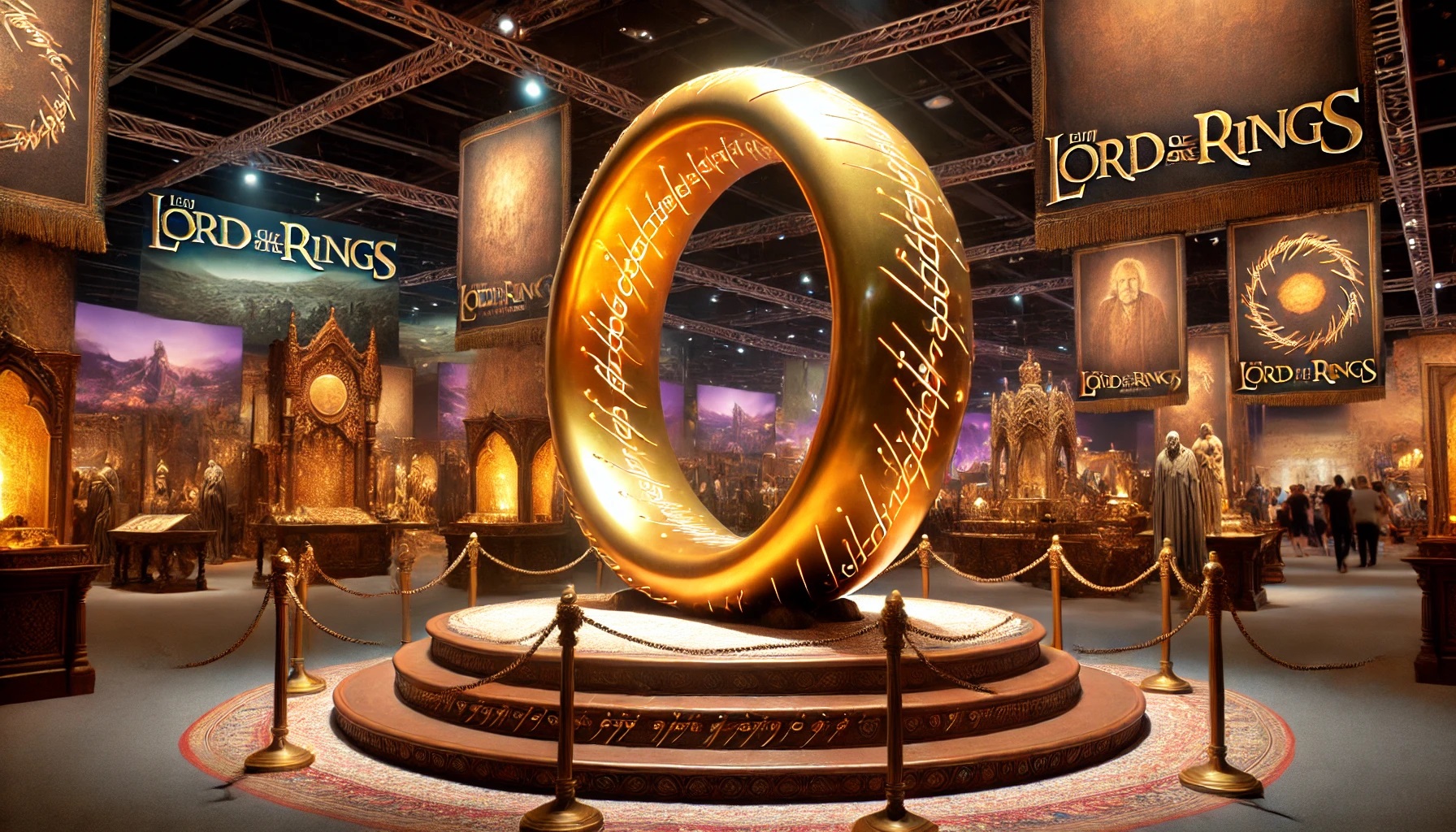
Set the opening and band profile together
Outside diameter alone does not define the prop. A thick band leaves a smaller opening and reads as a heavy object, while a slimmer section creates a larger framed view. Supply the intended outside diameter, inside opening, and side thickness, then review the proportions from the primary camera or audience position.
The cross-section can appear rounded, flattened, beveled, or deliberately stylized. That profile controls highlights and shadows, especially on a metallic-looking surface. If the ring needs visible markings, show their position around the circumference and indicate whether they must read only from the front or continue around the form.
Choose how the ring meets the room
Orientation determines support, footprint, and what appears through the center.
Upright on edge
The open center becomes a strong frame, but the lower support must be planned so the circle still reads cleanly.
Tilted display
A controlled angle can reveal the inner surface and inscription while keeping the ring visible to a standing audience.
Flat or low
A horizontal treatment can become part of a tabletop or scenic floor feature, with different viewing and protection needs.
Suspended
Overhead presentation requires the exact rigging location, finished height, viewing sides, and venue approval to be addressed at the start.
Use contrast to keep the inscription visible
A metallic direction can range from smooth and polished-looking to aged or textured. The choice should support the viewing distance and lighting rather than simply copy a small reference. A subtle inscription may vanish under flat light; deeper relief, tonal contrast, or controlled illumination may be considered if the markings are central to the display.
Provide artwork that is authorized for the intended use. Mark the exact start point, direction, spacing, and visible segment of any lettering. If the prop rotates, lights, or invites visitors inside the opening, describe that behavior explicitly so the support and clearance plan can be evaluated with it.
Compare pedestal and scenic presentations
One concept gives the ring a formal exhibit base and controlled viewing boundary. The other uses the open center to frame a woodland setting. Both are planning illustrations, and neither represents a completed WhiteClouds commission.

Build the quote around the ring's true envelope
The opening, band, base, and surrounding clearance all belong in the size discussion.
- Outside diameter and inside opening
- Band width, thickness, and edge profile
- Upright, tilted, flat, or suspended orientation
- Authorized inscription or surface artwork
- Primary viewing side and lighting conditions
- Base, anchoring, or rigging limitations
- Largest access opening and component limit
- Destination, display duration, and deadline
Request pricing for a giant ring prop
Share the diameter, band profile, orientation, approved inscription art, finish direction, viewing sides, support constraints, access limits, destination, and required date. Include lighting, motion, suspension, or visitor interaction only when those features are part of the plan.