
Custom Cartoon Statue Ideas
Turning a cartoon drawing into a statue requires choices that the original artwork may never show. The pose has to work from multiple angles, flat shapes need physical depth, and the expression must remain recognizable after features are projected into space. Approved character art is the starting point, not a complete three-dimensional specification.
Discuss a Cartoon Statue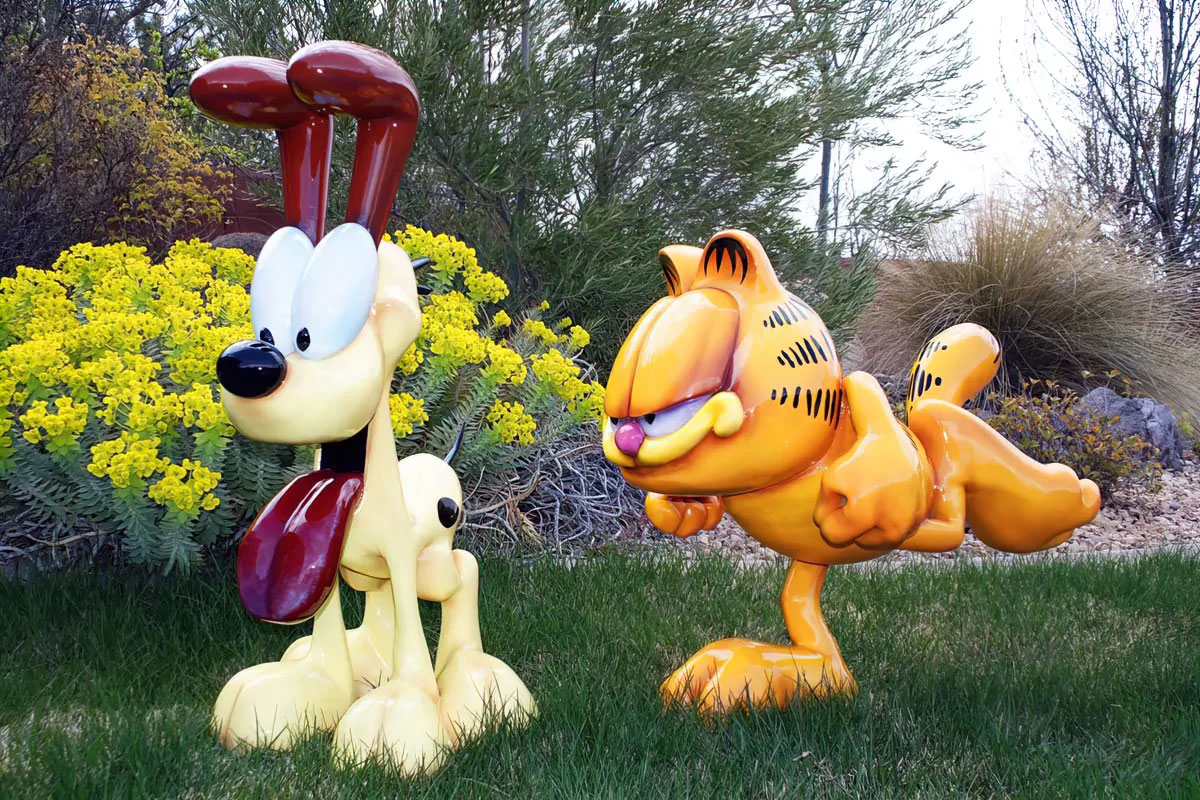
Begin with approved artwork and intended pose
Provide front, side, rear, and expression references where they exist. If the source is one drawing, identify which proportions, costume details, colors, and graphic outlines are essential. The character owner should approve any interpretation needed to complete unseen sides.
Choose a neutral stance, action pose, seated position, or interaction with another object. The pose determines the footprint, overall height, overlap of limbs and costume pieces, and the support relationship. It also changes which expression and silhouette the audience sees first.
Compare three dimensional interpretations
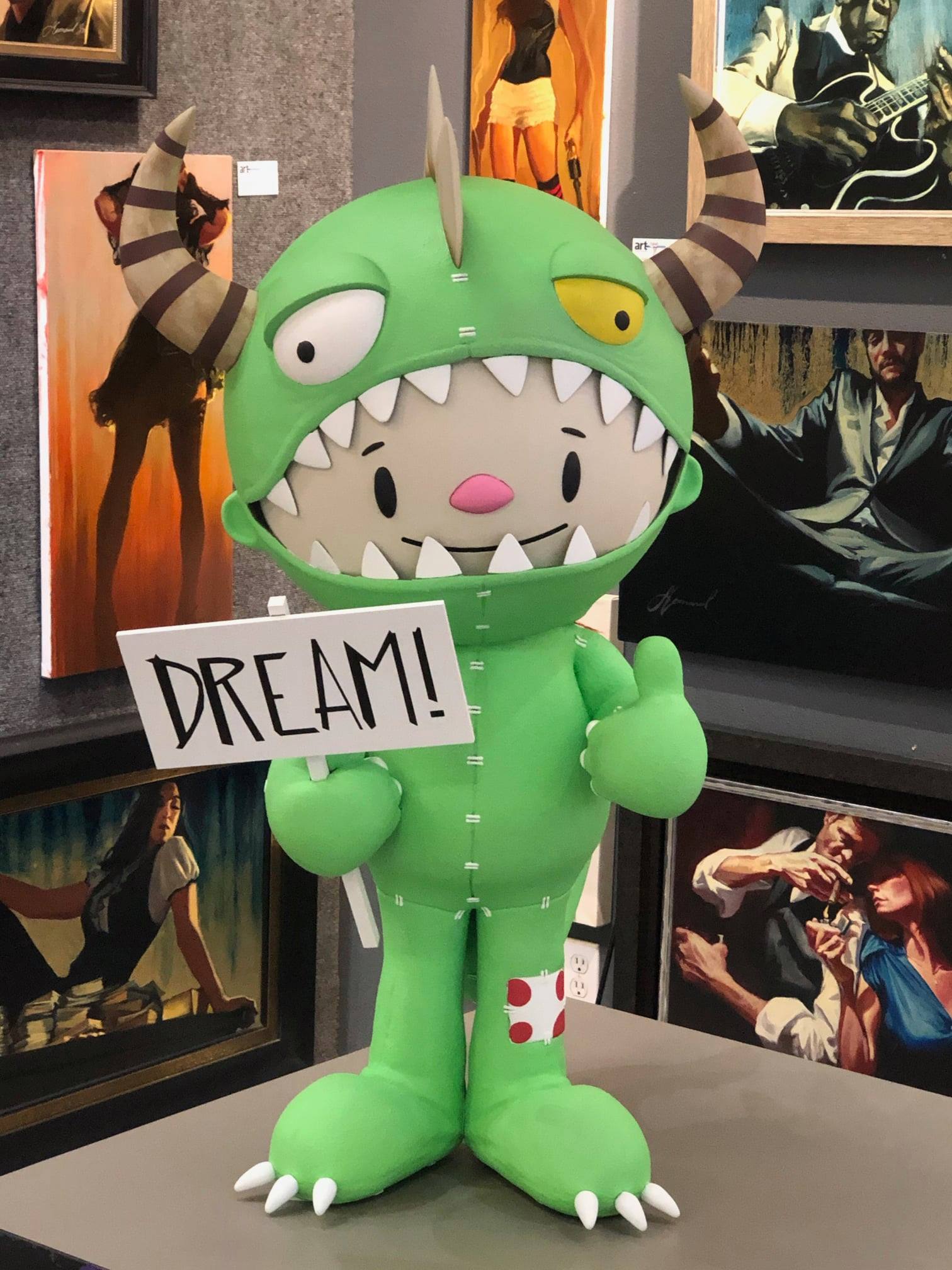
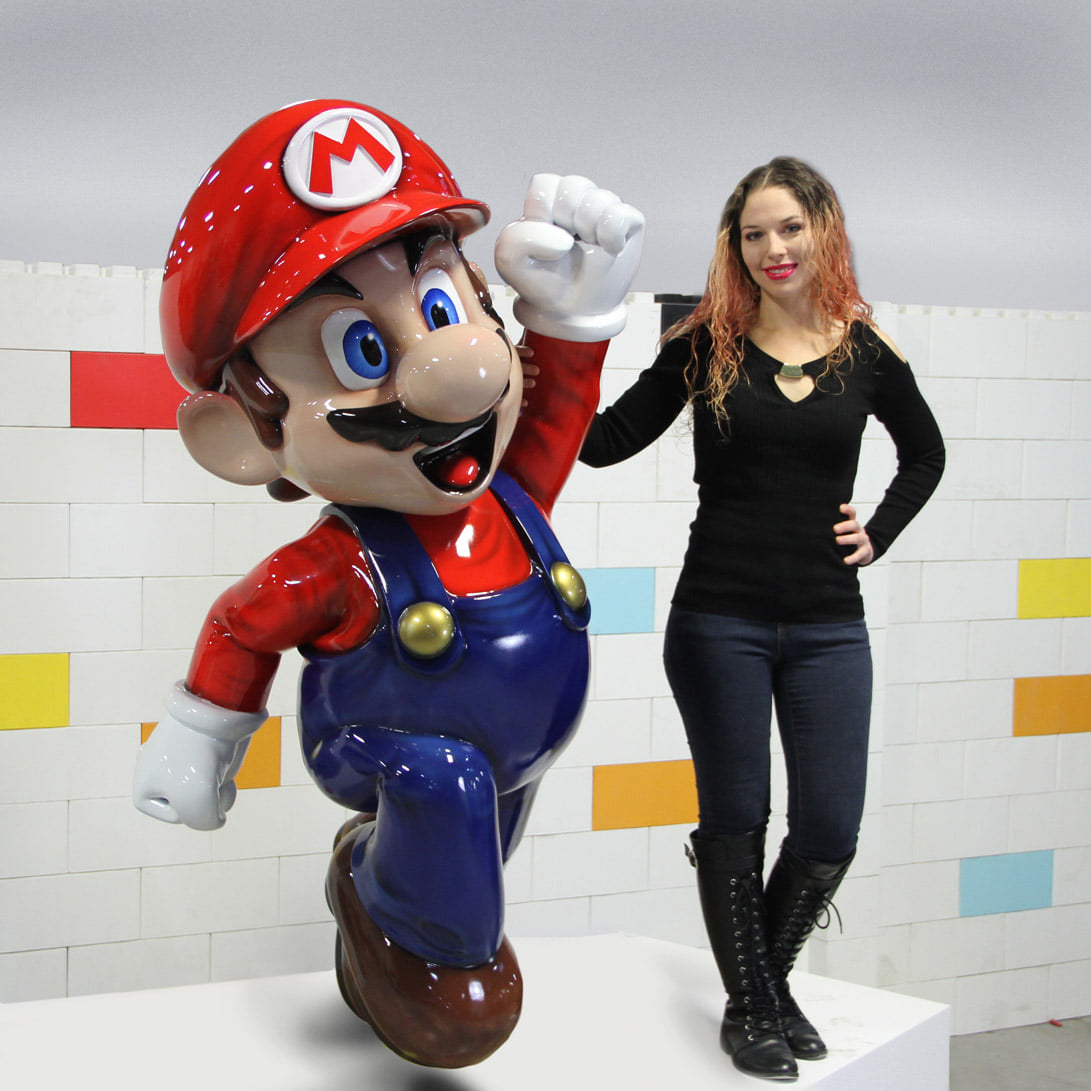
Garfield and Odie preserve familiar cartoon proportions as a pair. Dragonboy translates an illustrated artwork into a smaller statue, while Mario demonstrates a full-height figure with recognizable costume forms. Each project belongs to its own approved character context.
Resolve the features a flat drawing leaves open
A strong character model accounts for every approach rather than treating the statue as a thickened front view.
Head and expression
Set eye direction, mouth shape, facial depth, ears, hair, and any defining profile from approved art.
Body and pose
Establish torso rotation, limb positions, hand shapes, foot placement, and the intended line of action.
Costume and accessories
Identify layers, props, logos, and small features that need depth, separation, or graphic treatment.
Support and ground line
Coordinate the stance with a visible base, integrated scenic element, or another project-specific support strategy.
Confirm permission and approval responsibilities
The client should supply artwork it is authorized to use and identify the person responsible for character approval. Do not substitute an unlicensed public image when the statue represents protected intellectual property. If a new original character is being developed, provide the approved design package and revision process.
Plan review milestones for the pose, proportions, expression, color, and graphics. A late change to the head angle or limb position can affect many connected forms. The approval sequence should match the parts of the character that are hardest to change after fabrication advances. Include a scale reference in each review so costume details are judged in relation to the full figure and its intended audience distance.
What to send for a cartoon-statue quote
Approved character references and a chosen pose allow the initial scope to address the actual figure.
- Authorized character artwork
- Pose and expression
- Overall height and footprint
- Required viewing sides
- Costume and accessory details
- Color and surface direction
- Base and audience contact
- Access, destination, and deadline
Request a custom cartoon statue quote
Send the authorized character art, selected pose and expression, desired dimensions, costume and accessory details, viewing sides, surface direction, base preference, audience-contact expectations, access measurements, destination, and deadline.