The Epic Scale of America’s Wild Heart
Yellowstone National Park isn’t just big — it’s immense. It’s a place so vast that it feels almost impossible to measure, a landscape that stretches across states, ecosystems, and even time itself. It’s the kind of wilderness where mountains vanish into the clouds, herds of bison move like storms across open plains, and boiling geysers shoot into the sky with ancient rhythm. But let’s ask the question that every traveler and dreamer wonders: how big is Yellowstone National Park, really? The answer might surprise you — and the more you explore, the more you realize that “big” barely begins to describe it. Yellowstone is a world within a world: a living geological masterpiece, a sanctuary for wildlife, and a vast, breathing ecosystem that defines the very concept of “wild America.”
A Park That Spans Three States and Millions of Acres
Yellowstone National Park covers 2.2 million acres — that’s roughly 3,472 square miles of unspoiled wilderness. To put it in perspective, Yellowstone is larger than the states of Rhode Island and Delaware combined. Its sprawling borders stretch across three states — about 96% in Wyoming, 3% in Montana, and 1% in Idaho. But those numbers only begin to tell the story. Yellowstone’s size isn’t just about its surface area — it’s about what lies within: vast mountain ranges, deep canyons, thundering rivers, and one of the world’s largest volcanic systems simmering beneath your feet. Driving from one end of the park to the other takes hours, and even then, you’ve only seen a fraction of it. You can spend days exploring just one region — the geyser basins, the waterfalls, the valleys — and still feel like you’ve barely scratched the surface.
A Landscape Built by Fire and Ice
What makes Yellowstone’s size so dramatic isn’t just its reach, but its origin story. The entire park sits atop a supervolcano — one of the largest active volcanic systems on Earth. About 640,000 years ago, a cataclysmic eruption blasted away mountains and reshaped the region into a massive caldera — a volcanic depression that now stretches 45 miles across. That’s nearly the size of the entire city of Los Angeles.
Today, the heat trapped beneath Yellowstone still fuels more than 10,000 hydrothermal features, including the world-famous Old Faithful geyser, bubbling mud pots, and steaming hot springs that shimmer in surreal blues, yellows, and oranges. Every plume of steam, every tremor beneath the soil, reminds you that Yellowstone isn’t just a park — it’s a living, shifting force of nature. Its colossal size holds not only space but energy — the primal heartbeat of the Earth itself.
Lakes, Canyons, and Peaks: Yellowstone’s Vast Geography
Yellowstone’s terrain is a symphony of extremes. Within its 2.2 million acres, you’ll find nearly every natural feature imaginable, each one on a staggering scale.
- At its heart lies Yellowstone Lake, the largest high-elevation lake in North America. It spans 136 square miles and reaches depths of more than 400 feet. The lake sits atop an active volcanic chamber, and in winter, its steaming shores look like a vision from another world — ice, mist, and fire all in one scene.
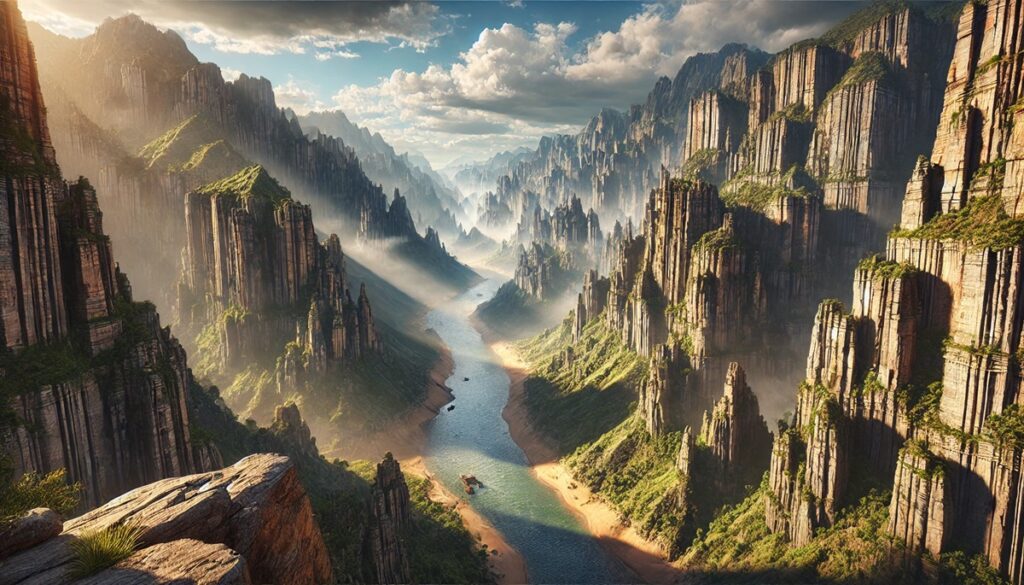
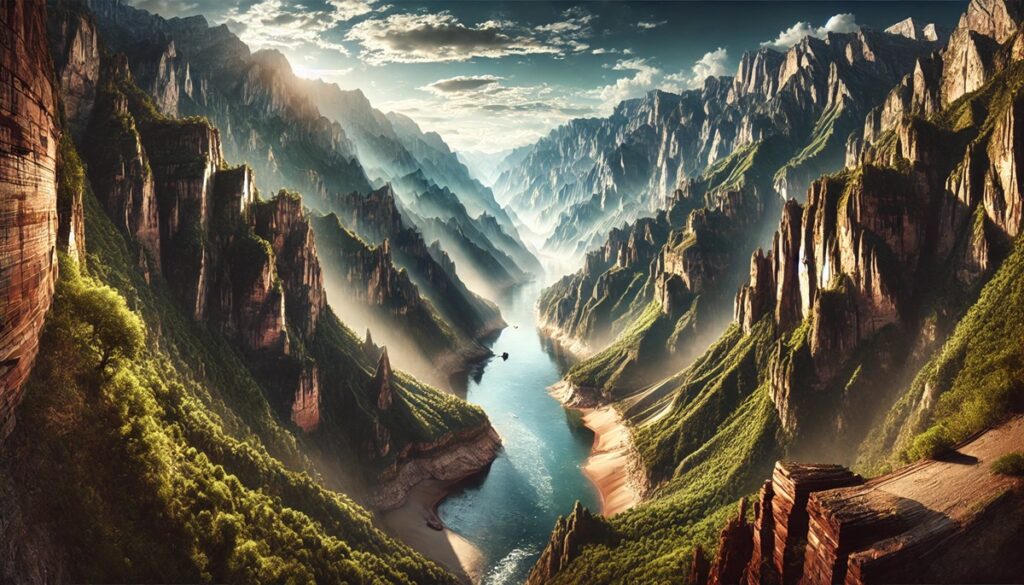
- Then there’s the Grand Canyon of the Yellowstone, a breathtaking rift carved by the Yellowstone River over thousands of years. The canyon stretches for about 20 miles and plunges over 1,200 feet deep, with waterfalls so powerful that the mist creates permanent rainbows.
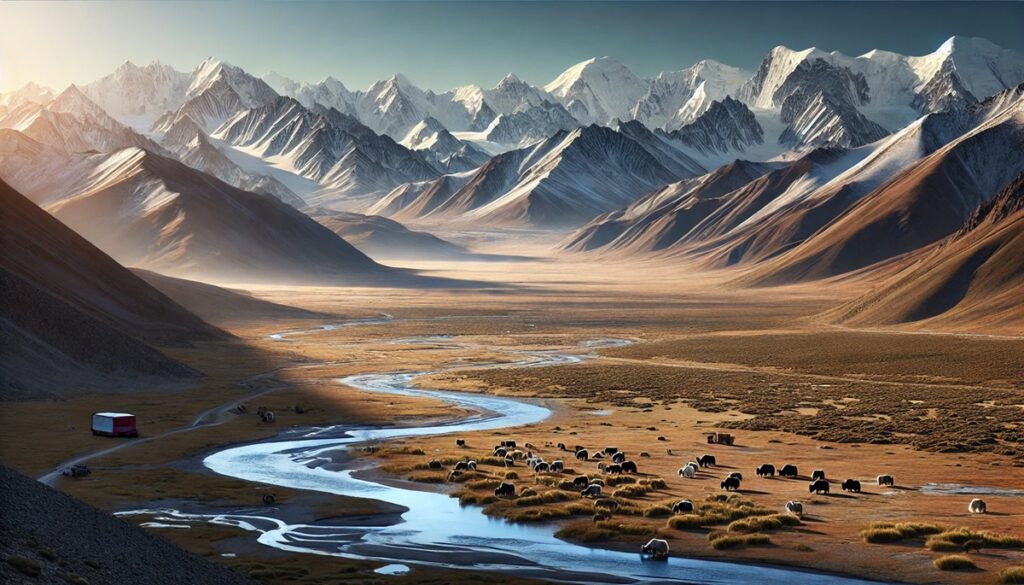
- To the south and east rise the Absaroka and Gallatin Ranges, rugged mountains that give the park its dramatic skyline. Many peaks reach above 10,000 feet, and even in midsummer, snow often lingers on the ridges.
Every corner of Yellowstone feels like its own planet — a scale so varied that you can stand in an alpine meadow in the morning and walk through a geothermal wonderland by afternoon.
Wildlife Kingdom: The Scale of Life in Yellowstone
If Yellowstone’s size is measured not only in miles but in life, it’s truly beyond comprehension. The park is home to hundreds of species, many of which roam freely across its vast borders, making it one of the last remaining intact temperate ecosystems on the planet.
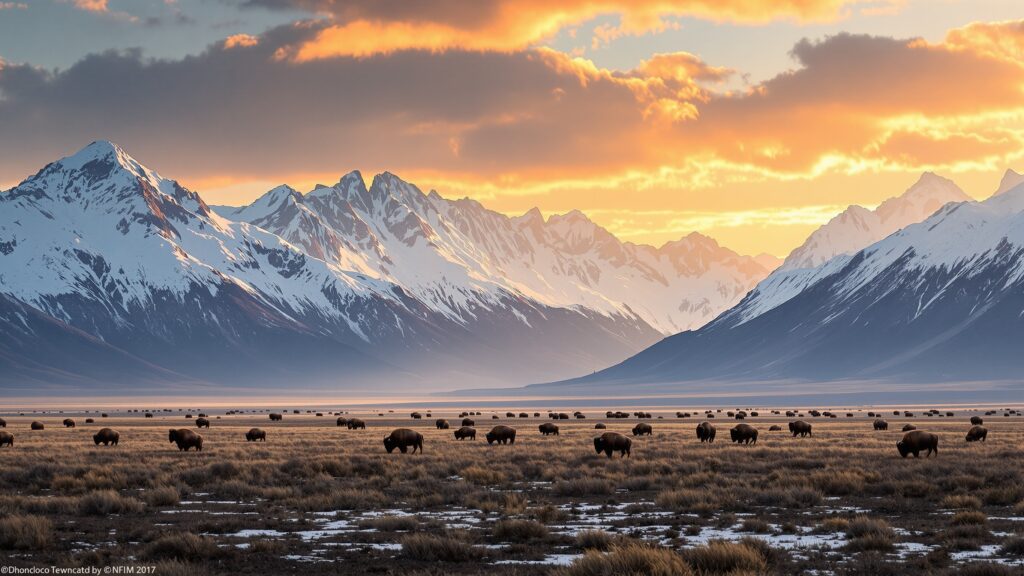
- The bison, North America’s largest land animal, roam here in herds of hundreds. Watching them cross the Lamar Valley is like glimpsing a scene from prehistory — shaggy silhouettes moving through the mist of dawn.
- Grizzly bears and black bears roam the forests.
- Wolves, reintroduced in the 1990s, now thrive across Yellowstone’s massive valleys and mountains, reshaping the park’s ecosystems in ways scientists never predicted.
- Elk, moose, bighorn sheep, and pronghorn add to the grand procession of wildlife that makes Yellowstone a living wilderness rather than a preserved museum.
This vastness gives life room to breathe — an unbroken web of nature that still functions as it did long before cities or highways ever existed.
Hydrothermal Marvels: A Planet Within a Park
Yellowstone contains over half of the world’s geysers, with more than 500 erupting across the park’s steaming basins. Together with hot springs, fumaroles, and mud pots, these hydrothermal features make Yellowstone a kind of alien world — alive, colorful, and unpredictable.
The Upper Geyser Basin alone is home to Old Faithful and hundreds of other active geysers spread over a few square miles. But zoom out, and the entire park is laced with geothermal fields covering nearly 10,000 total features — the highest concentration on Earth.
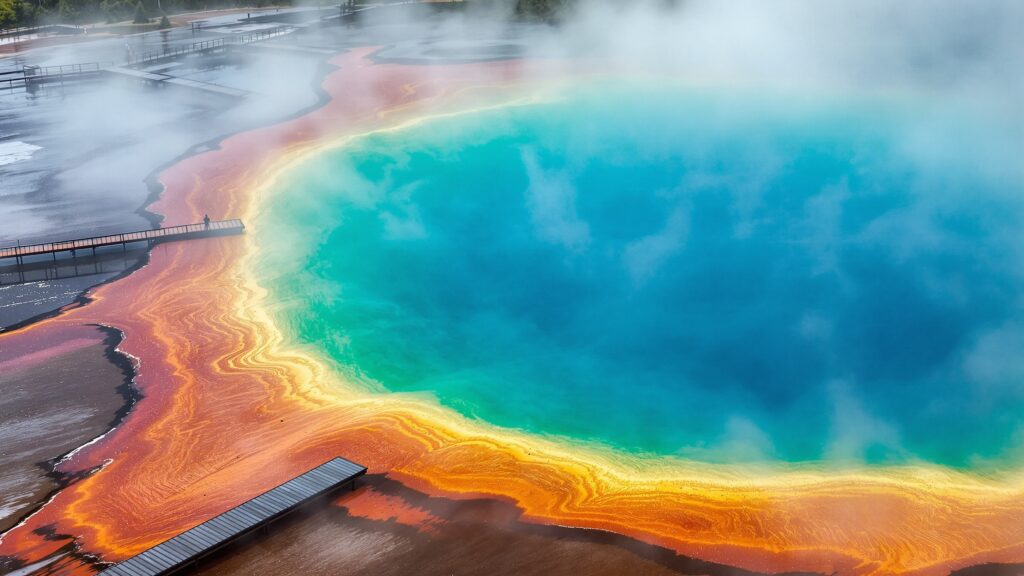
Some are as small as bubbling puddles; others, like the Grand Prismatic Spring, are enormous — nearly 370 feet wide and glowing in vivid rainbow colors created by heat-loving microorganisms. The Grand Prismatic is so large that it’s best viewed from the air, where its colors form a perfect natural mandala of life and energy. That’s Yellowstone in a nutshell — each detail intricate, each feature vast.
Endless Roads, Trails, and Hidden Frontiers
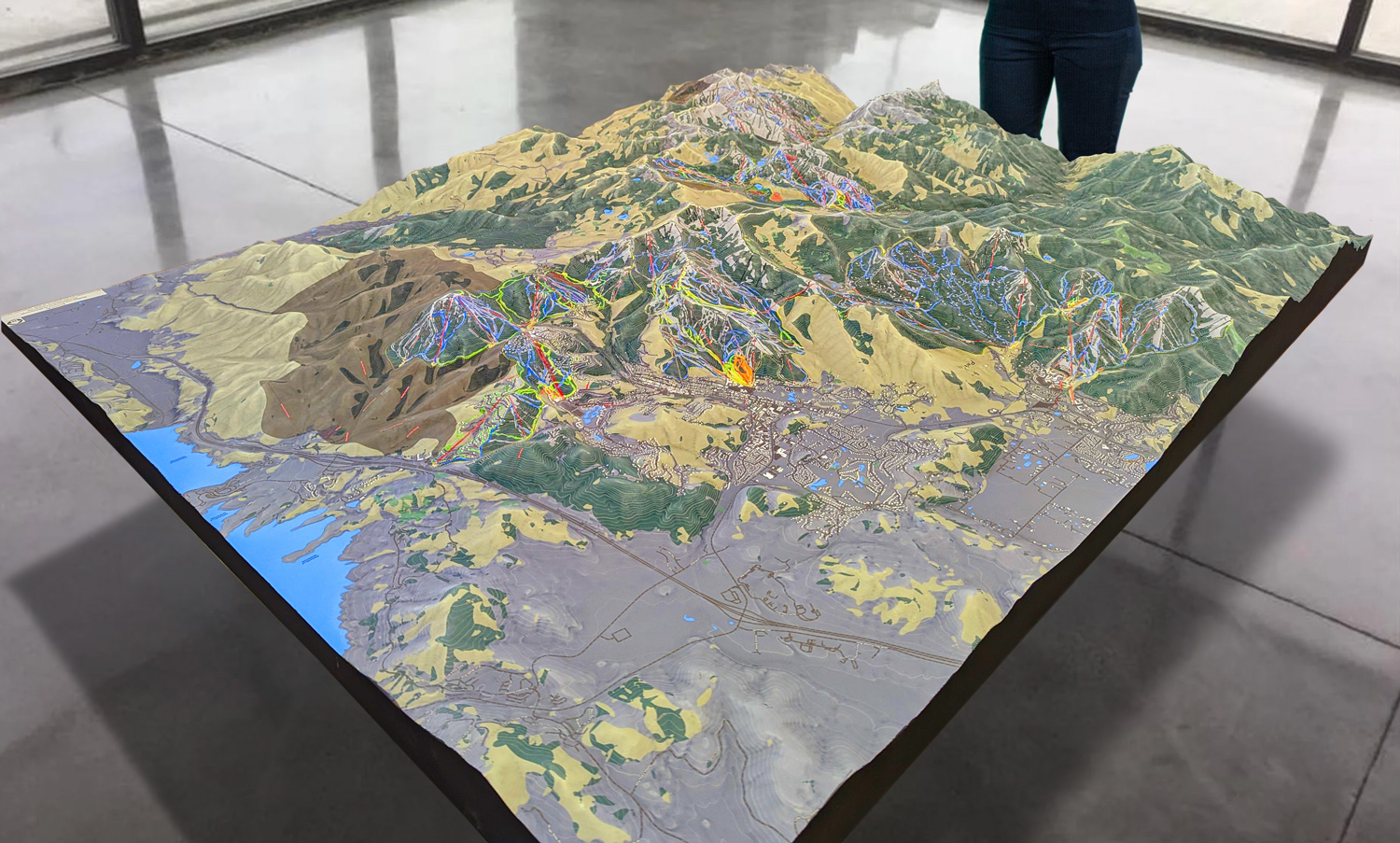
With more than 900 miles of hiking trails and 466 miles of roads, Yellowstone is a labyrinth of adventure. But even with all this access, only a fraction of the park is ever seen by most visitors. The majority of Yellowstone remains wilderness — untouched and unreachable by road. The backcountry stretches in every direction, filled with remote lakes, high-altitude meadows, and valleys where wolves still howl at night. Some parts of the park are so remote that it can take days to reach them on foot. Rangers still patrol these wild zones by horseback, just as they did a century ago. And when you’re deep in the backcountry, surrounded by silence and stars, it’s easy to feel the immensity of the park — and your own smallness within it.
Bigger Than You Think: Yellowstone’s Place in Perspective
Let’s take a moment to put Yellowstone’s scale into perspective.
Yellowstone is larger than Yosemite, Grand Canyon, and Great Smoky Mountains National Parks combined. It’s so big that it could fit New York City inside its borders over 35 times. It’s about 60 miles long (north to south) and 54 miles wide (east to west).
Driving the Grand Loop — the main road that connects Yellowstone’s major attractions — covers more than 140 miles, and even that doesn’t reach every region. And beneath all of that lies a volcanic system stretching over 30 miles underground, a geological giant that’s constantly shaping and reshaping the surface above. When you stand at a geyser basin or gaze over Hayden Valley, you’re not just looking across land — you’re peering across time, scale, and the raw power of the planet.
The Human Connection: Big Dreams in a Big Park
When Yellowstone became the first national park in the world in 1872, the idea was revolutionary. The founders couldn’t fully imagine how vast it truly was — or how much it would inspire future generations. To early explorers, Yellowstone seemed almost mythical: a place of fire, ice, and endless mystery. They called it “Wonderland,” and the name still fits. The park’s sheer size has shaped everything from conservation policy to our imagination of wilderness itself. For travelers today, its enormity offers something rare — perspective. To drive through Yellowstone is to experience a world that humbles and restores you all at once. You begin to realize that in a country obsessed with progress and speed, some places still move at the pace of eons.
Seasons of Scale: How Yellowstone Changes Through the Year
Yellowstone’s size makes it a world of seasons — each transforming the park into something entirely new. Each season reveals another layer of scale — not just spatial, but emotional.
- In spring, melting snow feeds rivers that roar to life. Elk and bison give birth to calves on the open plains. The park feels raw, reborn.
- In summer, the sheer scale of daylight matches the park’s vastness. Wildflowers blanket the meadows, and tourists from around the world fill the trails and boardwalks.
- Come autumn, the park glows in gold and rust. The crowds thin, the air sharpens, and the elk bugle through the valleys.
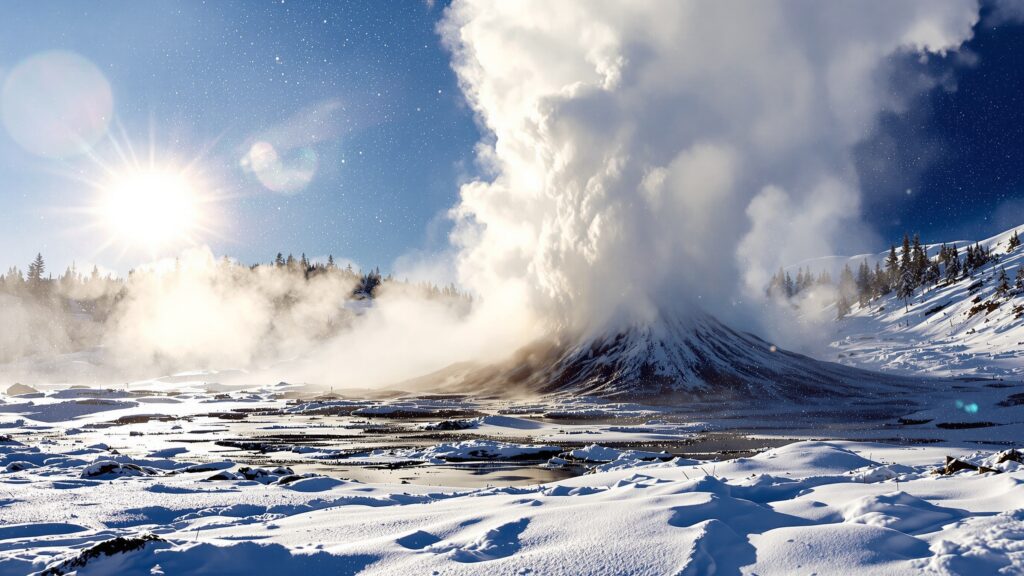
- And in winter, Yellowstone becomes a kingdom of snow. Roads close, steam rises from frozen geysers, and wolves move silently across the white expanse. Only a fraction of the park is accessible — but those who visit see it at its most powerful and pure.
The Science of Size: Yellowstone’s Volcanic Heartbeat
Deep below Yellowstone lies a chamber of molten rock so vast that it shapes the landscape above in invisible ways.
Scientists estimate that the Yellowstone Caldera sits above a magma reservoir measuring roughly 25 to 40 miles wide and 6 miles deep. This underground giant fuels earthquakes, hot springs, and geysers. It even subtly inflates and deflates parts of the surface — like a slow, geological breath.
Though the idea of a “supervolcano” can sound ominous, scientists constantly monitor Yellowstone’s activity, using satellites, sensors, and thermal imaging to track every movement. What they’ve discovered is not fear, but fascination — the Earth’s natural engine, pulsing beneath one of its most beautiful creations.
A Wilderness That Feels Infinite
For all its scientific data, Yellowstone’s true size can’t be understood by numbers alone. It’s felt — in the thunder of waterfalls, the stillness of alpine lakes, the endless sweep of sky. It’s in the silence after a geyser erupts. The moment a bison herd passes close enough that you feel the ground tremble. The horizon stretching so far you can’t tell where it ends. Yellowstone feels infinite because, in a way, it is. Its ecosystems, its history, its wild energy — all interwoven across 2.2 million acres of living Earth. And that’s the real answer to how big Yellowstone is: as big as nature itself.
The Measure of the Wild
So, how big is Yellowstone National Park? It’s 2.2 million acres on a map — but in experience, it’s boundless. It’s not just America’s first national park; it’s the beating heart of the wild, a living reminder of what our planet looked like before boundaries and roads. Standing at the edge of the Grand Canyon of the Yellowstone or on the shores of the great lake, you can’t help but feel the same awe that explorers felt 150 years ago. You see the world not as a collection of places, but as a living, breathing whole — enormous, mysterious, and alive. Yellowstone’s true size isn’t measured in miles. It’s measured in moments that take your breath away.