How Big Is Venus? A Journey Across Earth’s Fiery Twin
When people look up at the night sky, one of the brightest objects they see—often mistaken for a distant airplane or star—is Venus. Known as the “Morning Star” or “Evening Star,” this brilliant planet has fascinated humans for thousands of years. Ancient civilizations worshiped it, astronomers studied its mysterious clouds, and modern spacecraft have revealed a scorching world hidden beneath a thick atmospheric veil. But just how big is Venus? At first glance, Venus might seem like a distant glowing point of light, but in reality it is one of the largest rocky planets in our solar system. In fact, Venus is so similar in size to Earth that scientists often call it Earth’s twin. Yet despite their similar sizes, the two worlds could not be more different. Venus is a blistering inferno with crushing atmospheric pressure, while Earth remains a vibrant, life-supporting oasis. To understand the true scale of Venus, we need to explore its diameter, surface area, gravity, atmosphere, and how it compares with other planets. By the time you finish this journey, you’ll have a vivid sense of just how massive—and fascinating—this mysterious planet really is.Venus at a Glance: The Planet Next Door
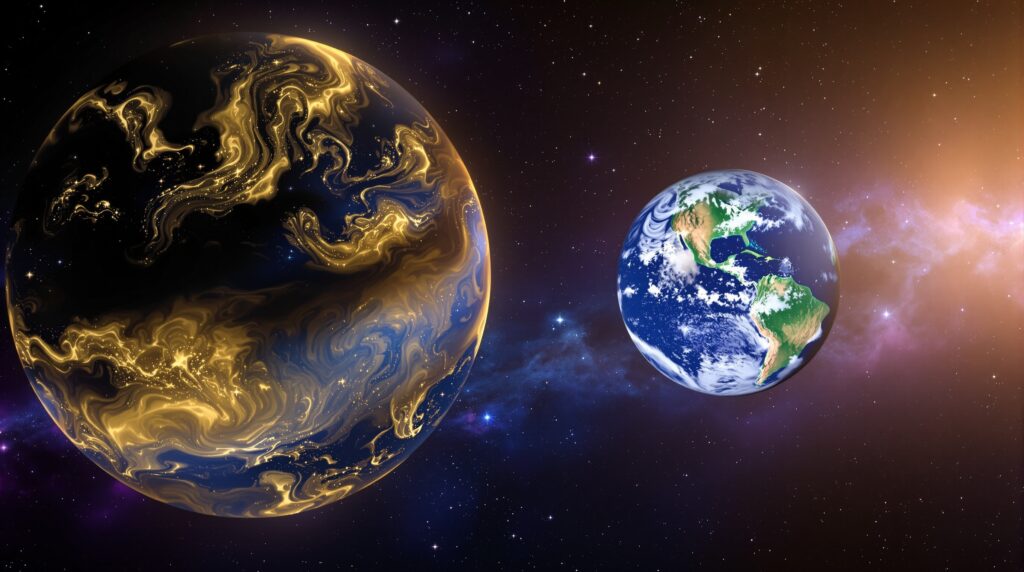
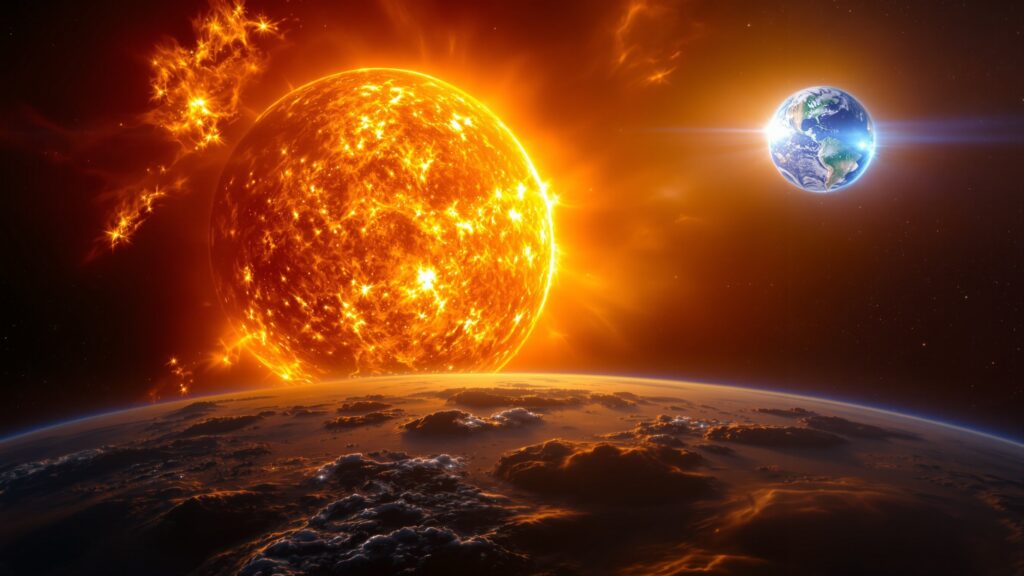
Venus is the second planet from the Sun, orbiting just inside Earth’s path around our star. Because of its close proximity to Earth, it is often our nearest planetary neighbor, sometimes coming within about 24 million miles during orbital alignments. Despite being slightly smaller than Earth, Venus still ranks among the largest rocky planets in the solar system. Only Earth surpasses it in size among the terrestrial planets.
Here are some key numbers that define the scale of Venus.
- Venus has a diameter of about 7,521 miles (12,104 kilometers). That means if you could drive straight across the planet through its center, the distance would stretch farther than traveling across the continental United States.
- Its radius measures approximately 3,760 miles (6,052 kilometers), placing it just a few hundred miles smaller than Earth.
- In terms of mass, Venus weighs in at about 81.5 percent of Earth’s mass. That means if Earth were placed on a giant cosmic scale, Venus would come remarkably close in weight.
These numbers explain why scientists often describe Venus as Earth’s sibling planet. Their sizes are nearly identical, making Venus the closest planetary match to Earth in our solar system.
How Venus Compares to Earth
If you placed Venus next to Earth in space, the difference in size would be surprisingly subtle. From a distance, the two planets would appear almost like twins.
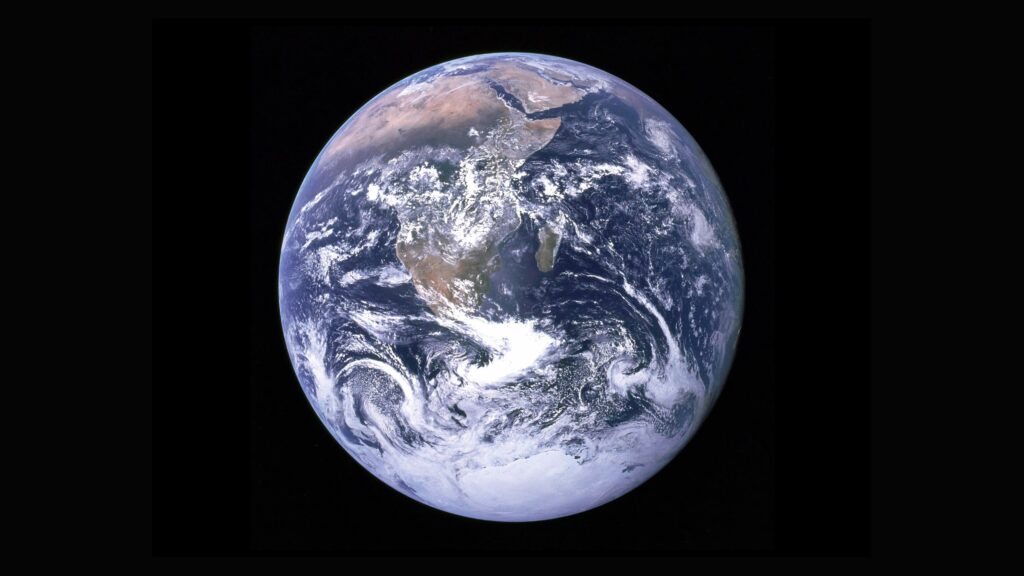
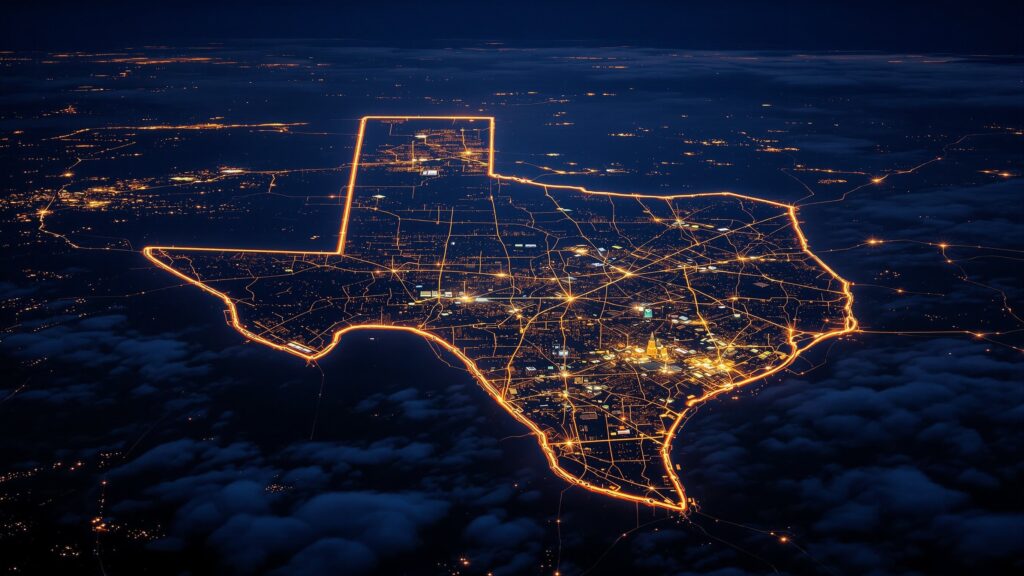
Earth has a diameter of about 7,918 miles, which means Venus is only about 400 miles smaller. That difference is less than the width of Texas.
Because of this similarity, gravity on Venus is also very close to Earth’s. A person standing on Venus would experience about 90 percent of Earth’s gravity. If you weigh 150 pounds on Earth, you would weigh roughly 135 pounds on Venus.
For decades, scientists speculated that Venus might host oceans, continents, and perhaps even life. After all, if the two planets were so similar in size, maybe they shared similar environments.
Unfortunately, the reality turned out to be dramatically different. Instead of blue oceans and green continents, Venus hides a landscape of volcanic plains, crushing atmospheric pressure, and temperatures hot enough to melt lead.
The Surface Area of Venus
Another way to understand the size of Venus is by looking at its total surface area.
Venus has a surface area of approximately 177 million square miles (460 million square kilometers). That is nearly identical to Earth’s total land and ocean surface area. To put that in perspective, the entire surface of Earth—including all oceans and continents—covers about 197 million square miles. Venus falls just slightly below that figure.
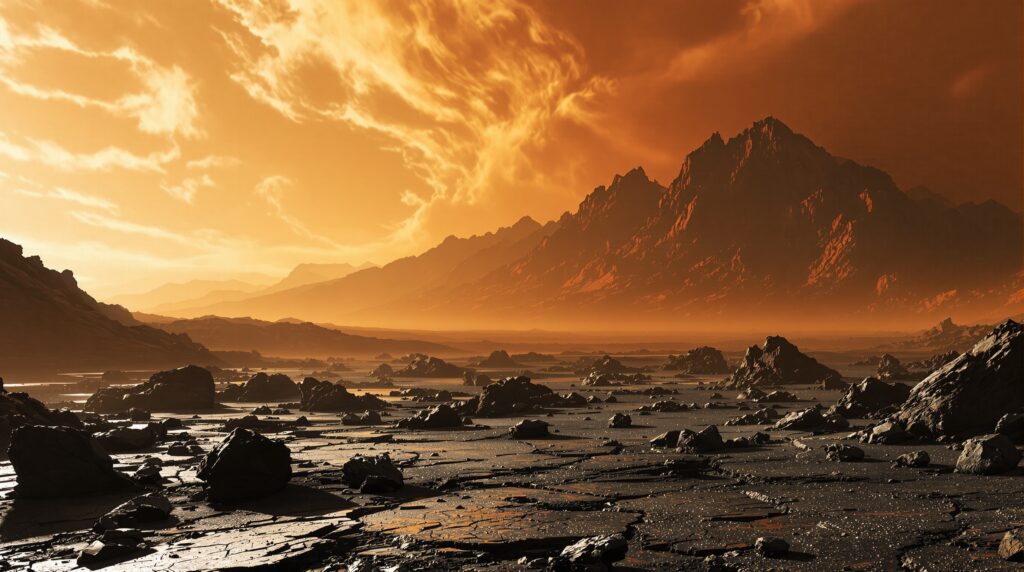
Imagine being able to explore every inch of Venus. You would find vast volcanic plains, enormous lava flows, towering mountain ranges, and giant impact craters scattered across the landscape. But you would also encounter one major obstacle: Venus’s brutal conditions make exploration extremely difficult.
A Planet Wrapped in Clouds
One of the most fascinating aspects of Venus is that you cannot see its surface from space with ordinary cameras.
Venus is completely covered by thick clouds made primarily of sulfuric acid droplets. These clouds reflect sunlight extremely well, which is why Venus shines so brightly in the sky.
In fact, Venus reflects about 75 percent of the sunlight that hits it, making it the most reflective planet in the solar system.
From orbit, the planet appears as a smooth, glowing sphere of white and pale yellow clouds. Beneath those clouds lies the true surface—one that remained hidden from human eyes until radar mapping technologies were developed in the late twentieth century.
The Landscape of Venus
When scientists finally mapped Venus using radar instruments, they discovered a surprisingly complex landscape.
Most of the surface is covered by vast volcanic plains formed by ancient lava flows. These plains stretch across enormous regions, sometimes extending for thousands of miles.
Venus also contains large mountain ranges, including Maxwell Montes, the tallest mountain on the planet. This massive peak rises about 36,000 feet above the surrounding terrain, making it taller than Mount Everest when measured from its base.
The planet is dotted with impact craters from asteroid collisions, though far fewer than expected. Scientists believe volcanic activity periodically resurfaces the planet, covering older craters with fresh lava.
One of the most intriguing features on Venus is its enormous volcanic structures. Some volcanoes stretch hundreds of miles wide, dwarfing many volcanoes on Earth.
In fact, Venus may have tens of thousands of volcanoes, making it one of the most volcanically shaped planets in the solar system.
The Crushing Atmosphere of Venus
While Venus is similar in size to Earth, its atmosphere is dramatically different—and incredibly massive.
Venus’s atmosphere is composed mostly of carbon dioxide, with small amounts of nitrogen and other gases. This thick blanket of greenhouse gases traps heat very efficiently. As a result, Venus experiences an extreme greenhouse effect.
Surface temperatures on Venus average around 900°F (475°C). That is hot enough to melt lead, destroy spacecraft electronics, and vaporize many materials. But temperature is only part of the story.
The atmospheric pressure on Venus is about 92 times greater than Earth’s pressure at sea level. Standing on Venus would feel like being nearly a mile underwater in Earth’s oceans.
This crushing pressure is one reason why spacecraft that land on Venus rarely survive for long. Most probes fail within an hour after landing.
How Venus Formed
Like Earth and the other rocky planets, Venus formed about 4.5 billion years ago from a swirling disk of gas and dust surrounding the young Sun.
Tiny particles gradually stuck together through gravity, forming larger and larger bodies. Over millions of years, these bodies merged to form planets. Because Venus formed in a similar region of the solar system as Earth, the two planets developed similar sizes and compositions.
Both planets are made primarily of rock and metal, with iron cores and rocky mantles. However, something in Venus’s early history caused its climate to evolve very differently.
Scientists believe Venus may once have had liquid water on its surface. But as the Sun gradually brightened, the planet likely experienced a runaway greenhouse effect.
Water evaporated into the atmosphere, where it trapped more heat. Eventually, the oceans may have boiled away entirely, leaving the hot, dry world we see today.
Venus Compared to Other Planets
To truly grasp the size of Venus, it helps to compare it with the other planets in the solar system.
- Venus is the sixth-largest planet overall, but it is the second-largest rocky planet after Earth.
- Mercury, the closest planet to the Sun, is much smaller. Its diameter measures only about 3,032 miles, making Venus more than twice as wide.
- Mars, often called the Red Planet, is also significantly smaller. Mars has a diameter of about 4,212 miles, meaning Venus is nearly twice its size.
However, when compared to the gas giants like Jupiter and Saturn, Venus suddenly appears tiny.
- Jupiter’s diameter is about 86,881 miles, meaning you could line up more than 11 Venuses across Jupiter’s width.
These comparisons highlight an interesting fact about our solar system: the rocky planets are relatively small compared to the enormous gas giants. Still, among the rocky worlds, Venus stands as one of the most substantial.
The Slow Rotation of Venus
Venus has another unusual feature that affects how we experience its size: it rotates extremely slowly.
A single day on Venus—one full rotation of the planet—lasts about 243 Earth days.
Even stranger, Venus rotates in the opposite direction of most planets. This is known as retrograde rotation.
If you stood on the surface of Venus (with some miraculous protection from the heat), you would see the Sun rise in the west and set in the east.
Because of this slow rotation, the planet experiences extremely long days and nights. However, the thick atmosphere distributes heat around the planet so efficiently that temperatures remain nearly the same everywhere.
Why Venus Appears So Bright
Even though Venus is not the largest planet, it often looks like the brightest object in the night sky after the Moon.
That brightness comes from two main factors.
- First, Venus is relatively close to Earth compared to most other planets.
- Second, its thick cloud cover reflects enormous amounts of sunlight.
Because of these factors, Venus can shine so brightly that it casts faint shadows under dark conditions. Ancient civilizations noticed this brilliance thousands of years ago. The planet became an important part of mythology and astronomy in cultures around the world.
Exploring Venus with Spacecraft
Despite its harsh conditions, humans have sent many spacecraft to explore Venus.
Early missions from the Soviet Union’s Venera program successfully landed on the surface and transmitted the first images of the alien landscape. These images revealed a rocky terrain filled with scattered stones and volcanic formations.
Later missions used radar mapping to penetrate the thick clouds. NASA’s Magellan spacecraft, launched in 1989, created detailed maps of about 98 percent of the planet’s surface.
More recently, scientists have renewed interest in Venus exploration. Several future missions aim to study the planet’s atmosphere, geology, and potential volcanic activity.
These missions could help answer one of the most important questions about Venus: why did it become such an extreme world while Earth remained habitable?
The Importance of Venus
Understanding the size and nature of Venus helps scientists answer bigger questions about planetary evolution.
Venus shows us what can happen when a planet experiences runaway climate change. By studying its atmosphere and history, researchers gain insights into how greenhouse effects operate on a planetary scale.
This knowledge helps scientists better understand Earth’s climate and the potential futures of other planets.
Venus also provides a valuable comparison for exoplanets discovered around distant stars. Many rocky planets outside our solar system may resemble Venus more than Earth.
Learning about Venus helps scientists interpret those distant worlds.
A Planet Nearly Earth’s Twin
So, how big is Venus?
With a diameter of 7,521 miles, a radius of 3,760 miles, and a surface area of about 177 million square miles, Venus stands as one of the largest rocky planets in our solar system.
It is only slightly smaller than Earth, sharing many structural similarities with our home planet.
Yet despite these similarities, Venus is a dramatically different world—a scorching planet wrapped in toxic clouds and crushing atmospheric pressure.
Its size makes it a true sibling to Earth, but its environment reminds us how delicate planetary climates can be.
As scientists continue to explore Venus with new missions and technologies, we may uncover even more secrets about this mysterious world.
And every discovery brings us closer to understanding not just Venus, but the complex story of planets everywhere.