How Big Is the Moon? A Journey Into the Size of Earth’s Celestial Companion
The Moon is one of the most familiar objects in the night sky. It shines down on us with quiet beauty, inspiring poets, guiding explorers, and sparking the imaginations of scientists. Yet for something we see so often, the question “how big is the Moon?” isn’t as easy to answer as it seems. We know it’s smaller than Earth, but by how much? Is it large enough to influence life here, or small enough to be fragile in the vastness of space? To truly understand the Moon’s size, we need to look at it through numbers, comparisons, and imagination.
The Official Measurements: Putting Numbers on the Moon
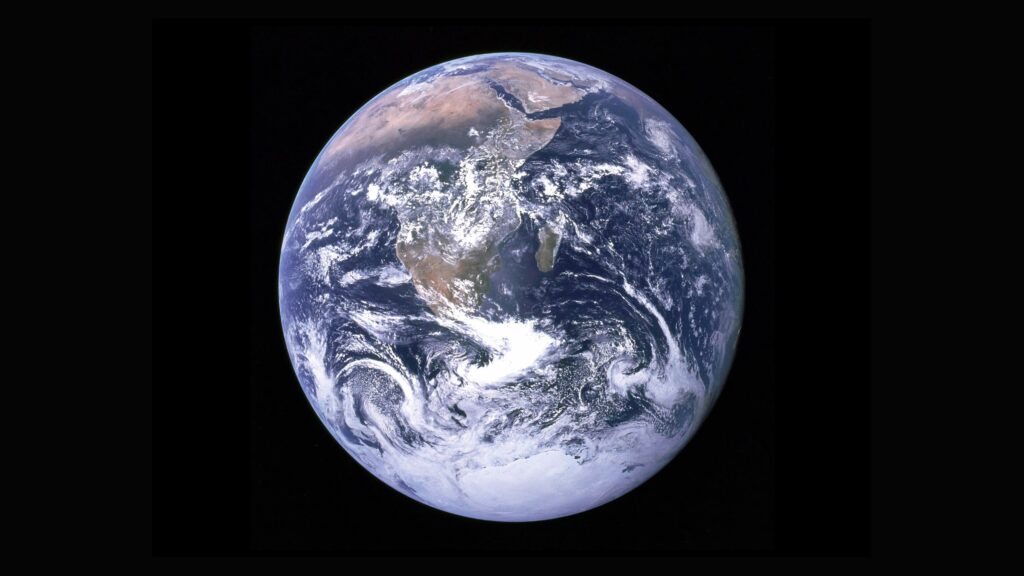
The Moon has a diameter of about 2,159 miles (3,474 kilometers). That’s roughly a quarter of Earth’s diameter, which measures 7,917 miles. In terms of surface area, the Moon covers about 14.6 million square miles (37.9 million square kilometers). If you’re trying to picture that, it’s about the same size as Africa, which has a land area of 11.7 million square miles.
When it comes to volume, the Moon is about 21.9 billion cubic kilometers, making it just 2% the volume of Earth. And mass? The Moon weighs in at 7.35 × 10²² kilograms, which is only about 1.2% of Earth’s mass. These raw numbers show the Moon is significantly smaller than Earth—but they don’t yet convey how enormous it really is compared to what we can picture in everyday life.
How the Moon Compares to Earth
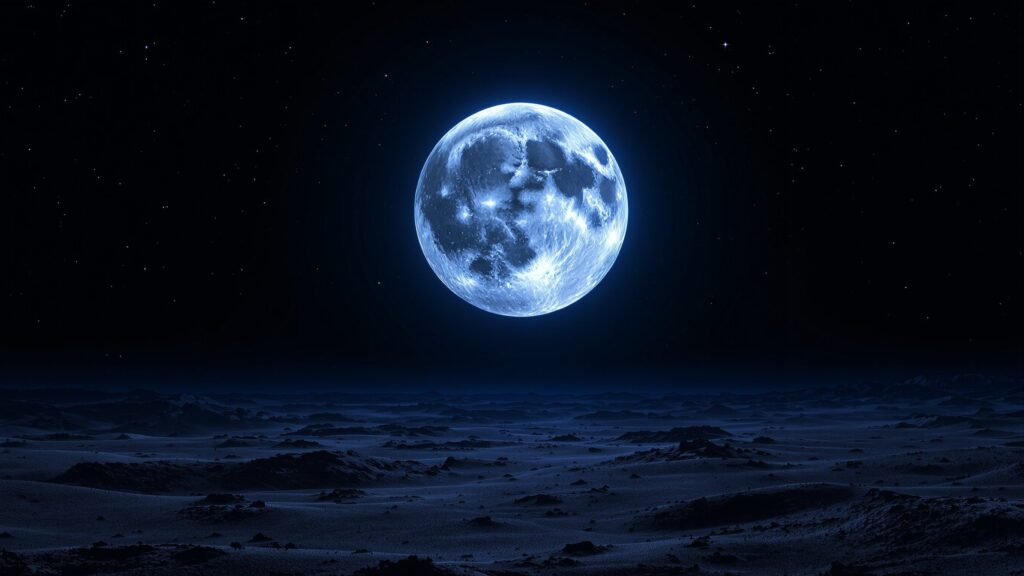
From Earth’s perspective, the Moon can feel tiny, floating as a silver disc in the sky. But up close, its size is staggering. Imagine trying to walk around its equator. That trip would take you about 6,800 miles, the same as traveling from New York to Los Angeles and back again.
Despite being one-quarter of Earth’s diameter, the Moon is large enough to be the fifth-largest satellite in the solar system. Only Jupiter’s moons Ganymede, Callisto, and Io, and Saturn’s moon Titan surpass it in size. For comparison, Ganymede, the biggest moon of all, measures 3,270 miles across—about 50% bigger than our Moon.
Yet what makes the Moon stand out is not just its size, but its size relative to its planet. Most moons in the solar system are tiny compared to their planets, but Earth’s Moon is unusually large. In fact, it’s sometimes described as a “double planet system” because the Moon is so big relative to Earth.
Walking the Moon: A Human Scale of Size
Thinking of the Moon in human terms helps put it in perspective. Imagine standing on the lunar surface, surrounded by gray plains and rolling craters. The horizon curves noticeably closer than it does on Earth, thanks to the Moon’s smaller size. On Earth, the horizon is about 3 miles away for the average person at sea level, but on the Moon, it’s only about 1.5 miles away. This closeness of the horizon gives the Moon an intimate feel, almost as if the world folds in on itself. Yet despite its smaller scale, the Moon is still vast. Walking across it would take months, and driving a car around its equator would still mean thousands of miles of road. The Apollo astronauts who visited only explored small patches of the surface—mere fractions of the Moon’s immense expanse.
The Moon Compared to Continents and Countries
Sometimes the easiest way to understand the Moon’s size is by comparing it with land masses here on Earth. The Moon’s surface area is about the same as Africa, which helps make it more relatable. Imagine all of Earth’s nearly 8 billion people spread across Africa, and you get an idea of how humanity could theoretically spread across the Moon.
If you prefer country comparisons, the Moon is about 27 times larger than the United States. It’s also about 50 times larger than France. That means the Moon isn’t just “a big rock in space”—it’s an entire world, with room for continents, mountains, valleys, and craters that dwarf anything we experience here.
Mountains, Valleys, and Craters on a Lunar Scale
The Moon’s surface adds another dimension to its size. The tallest mountain on the Moon is Mons Huygens, which rises about 18,000 feet (5,500 meters)—comparable to Mount Everest on Earth. Vast basins, such as the South Pole–Aitken Basin, stretch over 1,500 miles across, making it one of the largest known impact craters in the solar system. Craters like Tycho and Copernicus, visible even to the naked eye from Earth, measure dozens of miles across. Standing on their edges would feel like gazing across an entire state. These features remind us that the Moon is not just big, but richly textured with landscapes of enormous scale.
The Moon’s Influence on Earth: Size With Impact
The Moon’s size also matters because it influences life on Earth in profound ways. Its gravitational pull is strong enough to create ocean tides, stabilizing Earth’s tilt and making our climate more predictable. Without a Moon of this size, Earth’s wobble might be far greater, leading to wild climate swings that could challenge life as we know it.
Even though the Moon is only 1/80th the mass of Earth, its position and scale are just right to affect our planet. The “big” in the Moon isn’t just about diameter or surface area—it’s about influence. Its size allows it to tug on Earth in ways no smaller moon could.
The Moon Compared to the Sun and Other Celestial Bodies
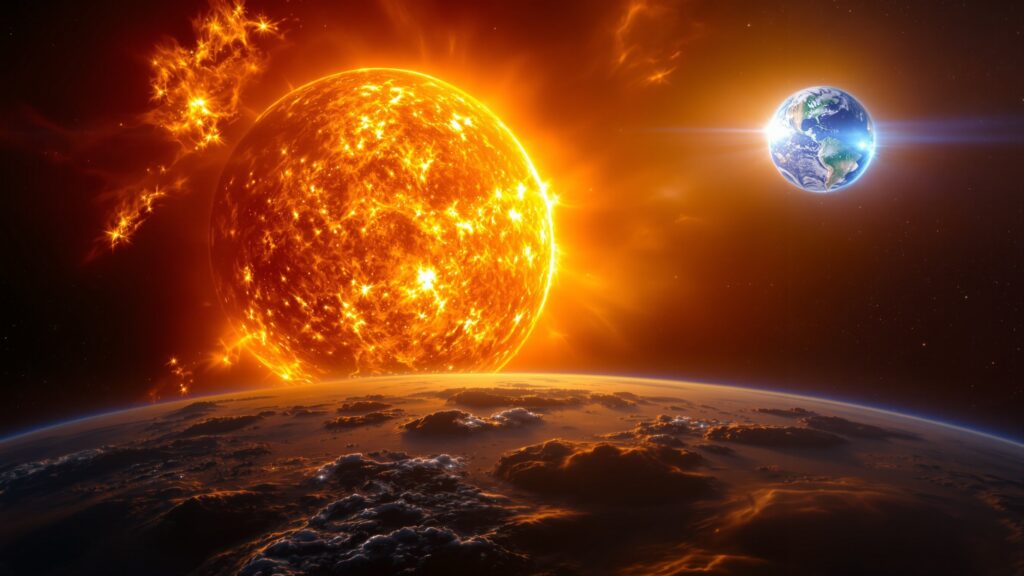
When we look at the Moon in the night sky, it seems roughly the same size as the Sun. That’s because the Sun is about 400 times larger in diameter than the Moon, but also about 400 times farther away. This cosmic coincidence creates the spectacular phenomenon of total solar eclipses. Compared to planets, the Moon is still impressive. It’s bigger than Pluto, the former ninth planet of our solar system, which measures only 1,473 miles in diameter. That means our Moon is not just a satellite—it’s bigger than some worlds that orbit the Sun directly.

The Moon in Human Imagination: How Big Does It Feel?
Beyond numbers, the Moon’s size takes on symbolic meaning. To ancient cultures, the Moon wasn’t just a celestial body—it was a god, a goddess, a guardian in the night sky. Its size and presence inspired myths, rituals, and calendars. The Moon feels bigger than its measurements because it looms large in human imagination.
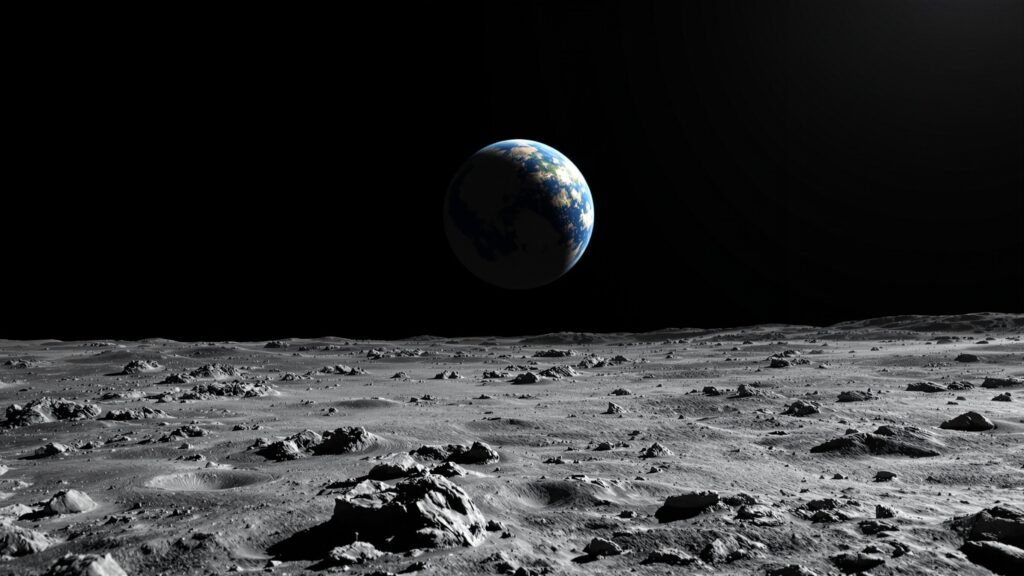
Even today, when astronauts describe standing on the Moon, they talk about the feeling of looking back at Earth. From the lunar surface, Earth itself appears much larger in the sky than the Moon does to us—about 3.7 times wider. This reversal highlights the relativity of size and scale.
The Moon as a Destination: Exploring Its Size in Missions
The Apollo missions revealed how vast the Moon truly is. While astronauts walked on its surface, they covered only small areas, collecting rocks and exploring nearby craters. Each landing site was just a pinpoint on the lunar map. Future missions aim to do more. NASA’s Artemis program plans to return humans to the Moon, with bases near the south pole. The hope is to expand exploration, treating the Moon not as a small rock but as a new world. Its size offers room for scientific discovery, resources, and even the possibility of human settlement.
Comparing the Moon to Human Achievements
Think about the largest structures humans have built—the Great Wall of China, stretching about 13,000 miles, or the International Space Station, spanning 357 feet. The Moon dwarfs them all. Even our greatest engineering achievements are tiny scratches compared to the Moon’s 6,800-mile circumference.
It’s a humbling reminder: while we’ve learned to reach the Moon, we’ve barely begun to comprehend its immensity. Each crater, mountain, and valley holds more scale than entire human empires.
Why the Moon’s Size Captures Our Imagination
So why does the Moon’s size fascinate us so much? Part of it lies in its paradox: it’s small enough to orbit Earth, yet big enough to rival planets. It’s close enough to dominate our night sky, yet distant enough to feel mysterious. It’s big enough to influence tides and stabilize climates, yet fragile compared to Earth or the Sun. The Moon’s size is a balancing act—a cosmic sweet spot that makes it not just large or small, but significant. That’s why we keep asking the question “how big is the Moon?” The answer is never just a number—it’s a story of proportion, impact, and wonder.
Conclusion: The Moon as a World of Its Own
The Moon is 2,159 miles across, covering 14.6 million square miles, and holding landscapes as vast as continents. It’s one-quarter the size of Earth, yet bigger than Pluto. It’s large enough to shape tides, guide civilizations, and inspire humanity’s boldest adventures.
But perhaps the best way to answer “how big is the Moon?” is this: it’s big enough to be a world of its own. From its mountains and valleys to its cultural and scientific significance, the Moon is not just Earth’s companion—it’s a celestial giant that looms larger in our imagination than any measurement could capture.