
How Big Is the Largest Prop Ever Made?
How Big Is the Largest Prop Ever Made?
We Build Custom 3D Maps
Did you know we make
custom
3D Raised Relief Maps
How Big Is the Largest Prop Ever Made? Exploring the True Giants of Human Imagination
Props have always existed to make stories feel real. From ancient theater masks to modern film sets, they are the physical objects that bridge imagination and reality. But sometimes, a prop stops being just a supporting element and becomes the spectacle itself. It grows so large that it no longer fits neatly into a scene—it is the scene. This leads to a fascinating question that captures curiosity across film, events, engineering, and design: how big is the largest prop ever made? The answer is not a single measurement or object. Instead, it’s a journey through film history, live events, themed environments, and record-breaking constructions that stretch the definition of what a “prop” can be. Some are temporary, some permanent, some practical, and others purely jaw-dropping. All of them share one thing in common: they pushed scale beyond what anyone thought was reasonable.
What Qualifies as a “Prop” at Extreme Scale?
Before measuring size, it’s important to define what we mean by a prop. A prop is a constructed object created to support storytelling, atmosphere, or visual impact. It is not purely functional architecture, but it may borrow architectural techniques. It is not just art, but it often lives within an experience, performance, or narrative.
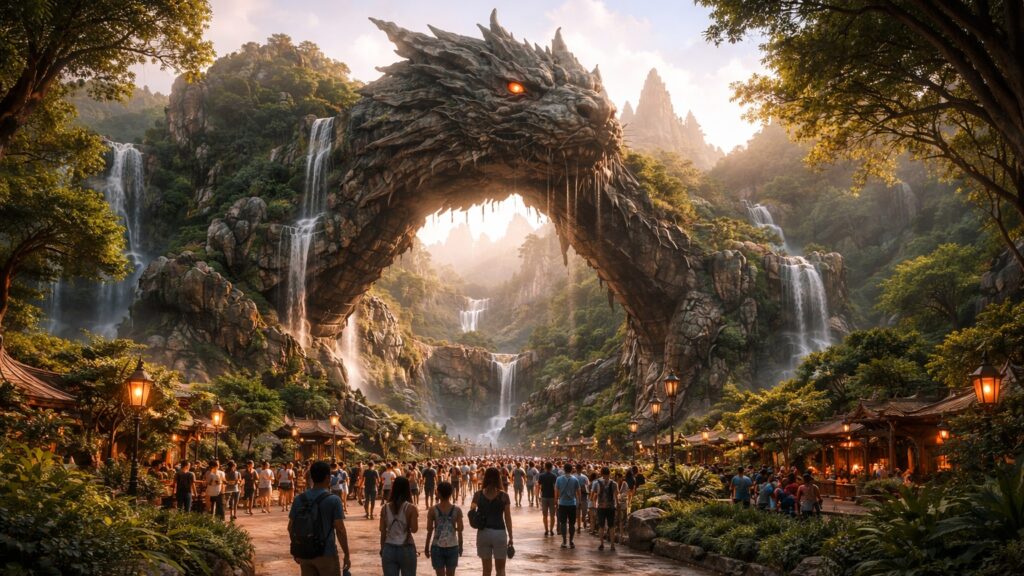
At extreme scale, this definition blurs. Massive ships, giant creatures, towering statues, and full-scale environments have all been labeled props when they were built specifically to serve a scene, an event, or a moment. If it was designed to visually communicate an idea rather than function as a real-world utility, it qualifies. This is where “largest prop ever made” becomes less about a ruler and more about intent.
Early Giants: When Props First Grew Beyond the Stage
The earliest oversized props appeared when storytelling moved beyond small stages. In large outdoor theater and early cinema, scale became essential. Directors realized that exaggeration made emotions clearer and visuals more powerful.
Silent films used oversized furniture, giant clocks, and exaggerated architectural elements to convey mood. These were large for their time, but still modest compared to what would come later. The real explosion in prop size happened when film budgets grew, camera technology improved, and audiences began craving spectacle.
Once viewers expected immersion, props had permission to become enormous.
Film Sets That Redefined “Big”
Some of the largest props ever made were created for film—not because they had to be, but because realism demanded it. Miniatures could only go so far. At a certain point, full-scale construction was the only way to achieve believable interaction.
One of the most famous examples is the full-scale ship built for Titanic. While technically a set, it functioned as a prop for storytelling. Stretching hundreds of feet long and towering multiple stories high, it was so large that it behaved like a real ship in water. Actors didn’t pretend they were on something massive—they were.
Creature films have also produced colossal props. Massive animatronic creatures, sometimes weighing tons, were built to allow actors to physically interact with monsters rather than imagining them. These props often required internal steel frameworks, hydraulics, and entire teams operating them like industrial machines.
In these cases, the prop wasn’t just large—it was operational at scale.
Theme Parks: Where Props Become Environments
If film introduced giant props, theme parks perfected them. Here, props don’t just appear in one scene; they surround guests entirely. Mountains, castles, spaceships, and creatures become immersive props that define entire lands. Some of the largest themed props in the world stand well over 100 feet tall. Artificial mountains housing rides, giant trees supporting walk-through worlds, and colossal creatures integrated into buildings all qualify as props because they exist to tell a story rather than serve a practical purpose. These structures are engineered like buildings but designed like props. They are visual illusions scaled up to monumental proportions, often hiding steel skeletons, elevators, ride systems, and control rooms beneath themed surfaces. At this level, size becomes emotional architecture.
Event Props That Break the Sky
Live events have produced some of the most extreme examples of prop scale ever attempted. Think of international celebrations, world expos, Olympic ceremonies, and global countdown events.
Gigantic countdown towers, enormous inflatable structures, and towering symbolic sculptures have been built solely for single moments—sometimes lasting only minutes. These props can reach heights comparable to office buildings, yet they exist purely for visual storytelling.
One of the most fascinating aspects of these props is their temporary nature. Engineers design them to go up quickly, dominate a skyline, deliver maximum impact, and disappear just as fast. Their scale is intentional excess, designed to imprint itself on collective memory.
Inflatable Props: How Size Became Limitless
Inflatables changed everything. Once air replaced solid mass, props were no longer constrained by weight in the same way. Suddenly, props could be hundreds of feet long or tall without requiring traditional structural support. Some of the largest props ever made are inflatables used in parades, festivals, and public spectacles. Giant animals, characters, and abstract forms have stretched longer than city blocks. These props are light enough to move, yet visually enormous.
At full inflation, they can dwarf buildings, creating a surreal sense of scale. At rest, they collapse into compact bundles. This contrast alone adds to their mythic reputation. Inflatable technology is one of the main reasons the concept of “largest prop ever” keeps evolving.
When a Prop Becomes a Landmark
Some props grow so large that they stop being temporary. They remain long after the story or event ends and become landmarks in their own right. Massive sculptures built for expos, film locations turned tourist attractions, and themed installations preserved due to popularity all blur the line between prop and permanent structure. They were not designed as buildings, yet people visit them like monuments. What makes these fascinating is that their purpose was never utility. They exist because someone once needed something impossibly big to tell a story—and it worked.
Measuring “Largest”: Height, Volume, or Impact?
So how do we actually define the largest prop ever made? Is it the tallest? The heaviest? The widest? The most expensive?
In practice, the answer depends on perspective. Some props win on sheer height, towering above cities. Others win on volume, enclosing massive interior spaces. Some dominate through complexity, incorporating movement, sound, and lighting across gigantic surfaces.
There are also props whose size is psychological rather than physical. A prop that fills an entire horizon or becomes the defining image of an event can feel larger than something technically taller but less meaningful. In the world of props, impact often outweighs inches.
Engineering the Impossible
The largest props ever made required more than creativity. They demanded serious engineering. Wind load, structural integrity, transport logistics, safety regulations, and crowd interaction all had to be considered.
Designers often work backward from emotion. They ask how the audience should feel, then calculate what size is required to produce that feeling. From there, engineers figure out how to make it stand, move, or inflate safely.
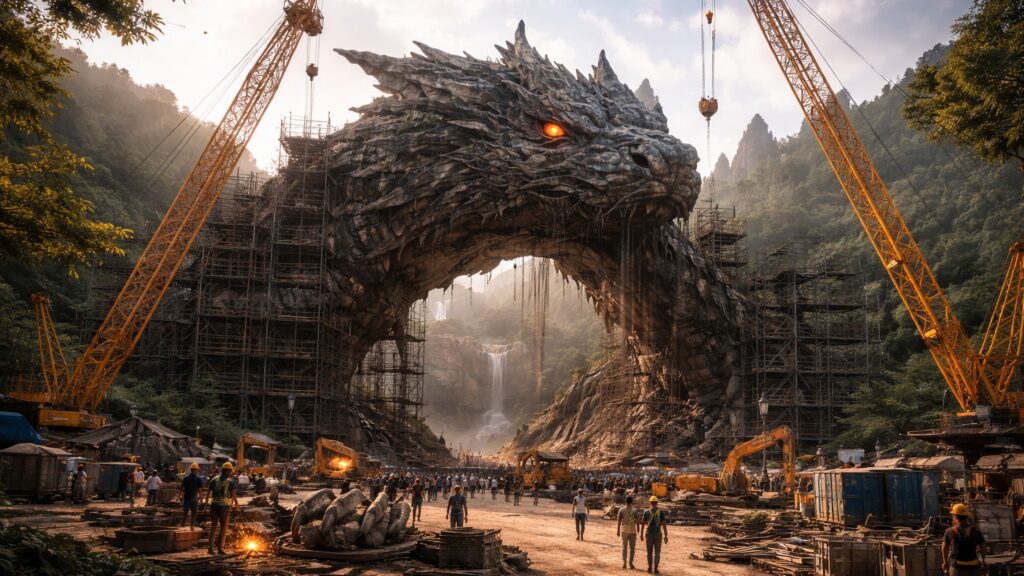
At extreme scale, props are often modular. They arrive in sections, assemble on-site, and hide their seams beneath visual detail. The illusion of a single massive object is carefully constructed.
Why Bigger Keeps Winning
There is a reason humanity keeps pushing prop size. Bigger objects trigger awe. They remind us of childhood, when the world felt oversized and magical. They also create shared experiences. Thousands of people can look at the same massive object and feel connected in that moment.
In marketing, entertainment, and public events, scale cuts through noise. A giant prop becomes instantly recognizable, shareable, and memorable. It demands attention without asking for it. That’s why the title of “largest prop ever made” is never held for long.
The Role of Technology in Supersizing Props
Modern materials have made giant props more achievable than ever. Lightweight composites, advanced fabrics, LED integration, and digital modeling allow designers to simulate scale before building it. Projection mapping can make a structure feel larger than it physically is. Motion systems can give a massive prop life. Sensors allow props to respond to crowds, sound, or time. The future of giant props is not just taller—it’s smarter.
Could the Largest Prop Ever Still Be Ahead of Us?
Almost certainly. Every decade introduces a new leap in what’s possible. What once required steel and concrete can now be achieved with fabric and light. What once took months to build can now be assembled in days.
As global events grow larger and audiences more visually sophisticated, the pressure to create unforgettable moments increases. That pressure often translates into scale. The next “largest prop ever made” may already be in planning, designed for a moment that hasn’t happened yet.
More Than Size: Why Giant Props Matter
At the end of the day, the largest prop ever made is not important because of its measurements. It matters because it represents ambition. It shows how far humans will go to tell a story, celebrate a moment, or create wonder. Giant props remind us that imagination has no fixed scale. When designers dream big enough, the physical world stretches to meet them. And that might be the biggest prop of all.
How Big Is?



Top 10’s




Contact us today to learn more about our 3D services and how we can help you achieve your goals.