An Inland Sea Hiding in Plain Sight
The Gulf of Mexico is so familiar that its true size often goes unnoticed. It appears on weather maps, beach vacations, oil reports, and hurricane forecasts, yet few people ever stop to consider just how enormous it really is. The Gulf isn’t just a body of water tucked between coastlines. It’s a vast inland sea, a dynamic engine of weather, wildlife, commerce, and culture that quietly rivals some of the largest seas on Earth. When you look closely, the Gulf of Mexico reveals itself as a geographic giant—one that shapes entire regions, feeds millions of people, and influences the climate far beyond its shores.
The Sheer Scale in Numbers
The Gulf of Mexico covers approximately 617,000 square miles, making it one of the largest bodies of water in the world. That’s larger than the entire country of France and roughly comparable in size to the Mediterranean Sea’s smaller sub-basins. From east to west, the Gulf stretches nearly 1,000 miles. From north to south, it spans about 900 miles at its widest points.
Its coastline touches five U.S. states—Texas, Louisiana, Mississippi, Alabama, and Florida—and wraps around Mexico’s eastern edge before meeting Cuba at its southern boundary. This immense size gives the Gulf a presence that is continental rather than regional. Numbers alone hint at its magnitude, but they still don’t fully capture what it feels like to encounter the Gulf in person or from above.
A Sea Disguised as a Gulf
Despite its name, the Gulf of Mexico behaves much like a sea. It is connected to the Atlantic Ocean through the Straits of Florida and to the Caribbean Sea through the Yucatán Channel. Water flows continuously through these openings, bringing warm currents, nutrients, and marine life in constant motion. The Gulf’s depth adds another layer to its size. While many imagine it as relatively shallow, parts of the Gulf plunge to depths exceeding 14,000 feet. The Sigsbee Deep, its deepest point, rivals the depth of some of the world’s major ocean trenches. This vertical scale makes the Gulf enormous not just across the surface, but downward into the darkness. It’s a reminder that size isn’t just measured side to side—it’s measured from surface to seafloor as well.
Coastlines That Stretch for Thousands of Miles
The Gulf’s shoreline is vast in its own right. When measured along bays, wetlands, barrier islands, and beaches, the coastline extends for thousands of miles. Louisiana’s coast alone forms a complex maze of marshes and deltas, while Florida’s Gulf Coast runs uninterrupted for hundreds of miles of sandy beaches.
Mexico’s Gulf coastline is equally expansive, marked by lagoons, river mouths, and long stretches of undeveloped shoreline. These coastlines support major cities, ports, fishing communities, and ecosystems that depend on the Gulf’s size and productivity. This immense perimeter makes the Gulf feel less like a single body of water and more like an entire region shaped by the sea.
Rivers Feeding a Giant
One reason the Gulf of Mexico is so large and biologically rich is the number of rivers that flow into it. The Mississippi River system alone drains nearly half of the continental United States, carrying freshwater, sediment, and nutrients from thousands of miles away. When that water reaches the Gulf, it spreads outward, influencing currents and ecosystems across a massive area. Other rivers, including the Rio Grande, the Mobile River system, and numerous Mexican rivers, add to this constant influx. Together, they make the Gulf the receiving basin for one of the largest drainage systems on Earth. This connection means that rainfall in the Midwest, snowmelt in the Rockies, and storms in the Southeast all eventually influence the Gulf’s waters.
A Body of Water That Shapes Weather
The Gulf’s size gives it enormous influence over weather patterns. Its warm waters act as fuel for storms, particularly hurricanes. As tropical systems move across the Atlantic and Caribbean, the Gulf’s heat can intensify them rapidly, sometimes within hours.
This same warmth also drives everyday weather. Moist air rising from the Gulf feeds thunderstorms across the southern and central United States. Seasonal rains, humidity levels, and temperature patterns are all shaped in part by this massive body of water. Because the Gulf is so large, its weather influence stretches far inland, affecting areas hundreds or even thousands of miles from the coast.
How Big Is It Compared to Other Seas?
Comparisons help bring the Gulf’s size into focus. The Gulf of Mexico is larger than the North Sea and significantly bigger than the Baltic Sea. While it’s smaller than the Mediterranean Sea as a whole, it rivals many of its sub-regions in scale. If you placed the Gulf over Europe, it would cover several countries at once. Laid over the United States, it would stretch from Texas well into the Midwest. These comparisons reveal that the Gulf is not a minor geographic feature—it’s a major sea by any global standard. Its size places it firmly among the world’s most important marine regions.
Life Thriving Across a Vast Marine World
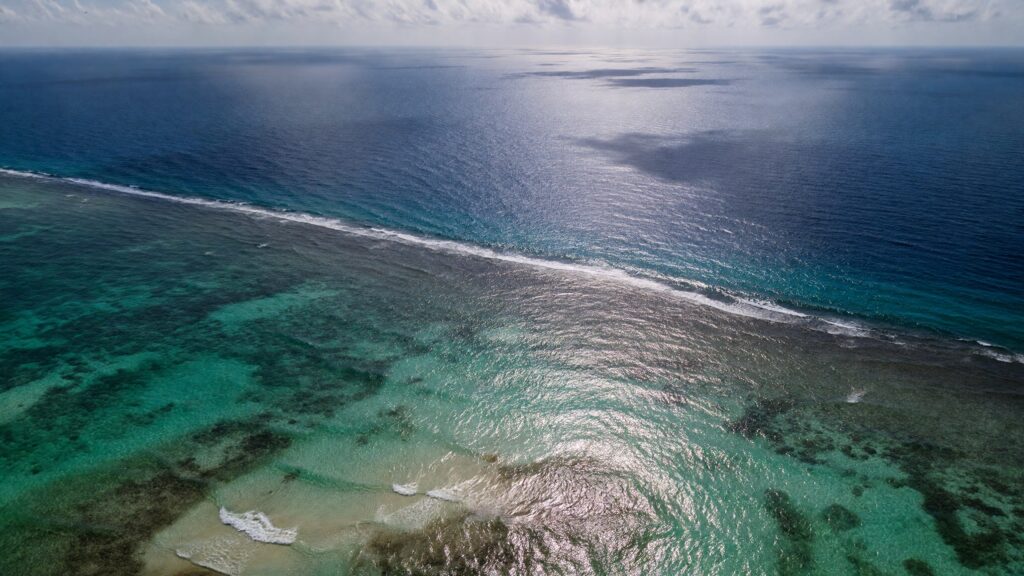
The Gulf’s enormous area supports one of the most productive marine ecosystems on the planet. Coral reefs, deep-sea habitats, seagrass meadows, and open-water ecosystems all coexist within its boundaries. Thousands of species of fish, marine mammals, birds, and invertebrates depend on the Gulf’s size and diversity. Some areas teem with life near the surface, while others remain largely unexplored in the deep sea. The Gulf’s depth and breadth allow species to migrate, adapt, and thrive across different environments. It’s a place where coastal estuaries meet the open ocean, creating a constant exchange of life and energy. This biological scale mirrors the Gulf’s physical size, making it a true marine giant.
Human Activity on a Massive Scale
Because the Gulf is so large, human activity within it operates on an equally massive scale. Major shipping routes cross its waters, connecting ports in the United States, Mexico, and beyond. Oil and gas platforms dot the seafloor, some operating in water deeper than many mountains are tall.
Commercial fishing fleets work vast stretches of the Gulf, harvesting seafood that feeds millions of people. Tourism thrives along its shores, with entire regional economies tied to its beaches and waters. The Gulf’s size allows all of these activities to coexist, sometimes uneasily, within the same space. It’s a reminder that the Gulf isn’t just big geographically—it’s big economically and culturally as well.
Seeing the Gulf from the Sky
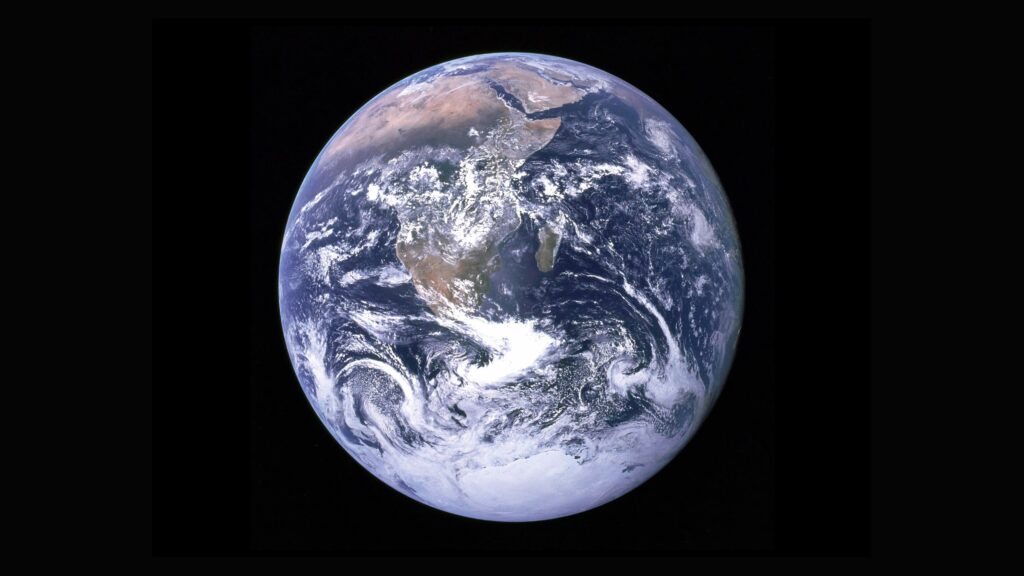
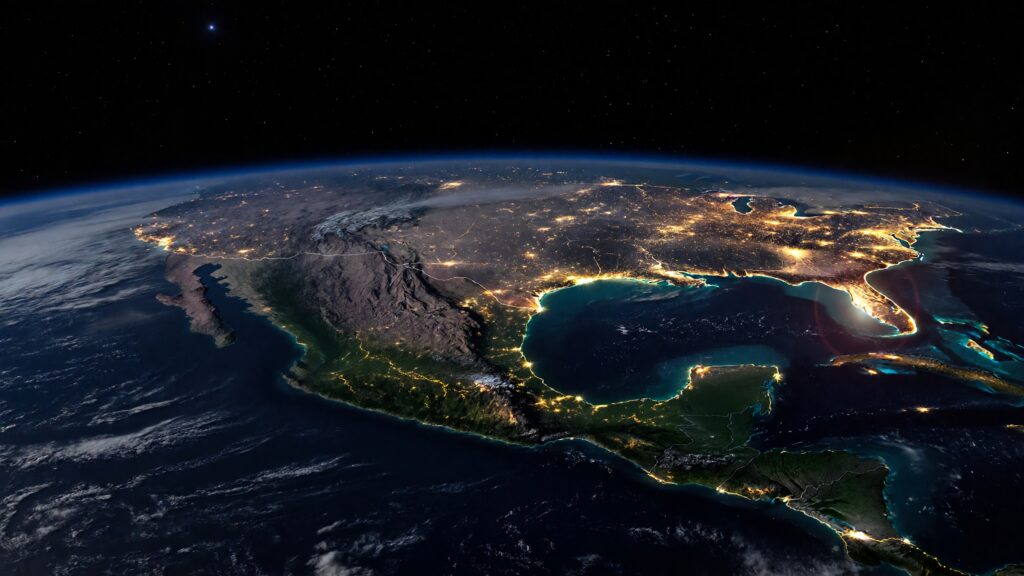
From an airplane window, the Gulf of Mexico feels endless. Flying from Texas to Florida means hours over open water, with nothing but blue stretching in every direction. From space, the Gulf appears as a massive bowl carved into the North American continent, its waters swirling with currents and clouds. Satellite images reveal vast loop currents and eddies that spin for months, redistributing heat and nutrients across huge distances. These images make it clear that the Gulf functions as a single, massive system rather than a collection of smaller parts. Seeing it from above changes how you understand its size forever.
A Gulf That Feels Like an Ocean
Many people who spend time on the Gulf notice something surprising: it doesn’t feel like a gulf at all. Stand on a beach along the Texas or Florida coast, and the horizon looks just as distant and boundless as it does on the open ocean. Ships disappear over the curve of the Earth. Storms roll in with oceanic power.
That sense of infinity comes from the Gulf’s sheer width. In many places, the opposite shore is hundreds of miles away, far beyond visibility. This creates an ocean-like experience that reinforces just how enormous the Gulf truly is. It’s a place where the boundaries between sea and ocean blur.
The Hidden Depth of the Seafloor
Beneath the surface, the Gulf of Mexico becomes even more impressive. Its deep basins and underwater canyons rival those found in major oceans. The seafloor hosts cold seeps, deep-sea coral communities, and unique ecosystems adapted to extreme pressure and darkness. Exploration of these depths is still ongoing, with new discoveries made regularly. The Gulf’s vertical scale adds a hidden dimension to its size, making it not just wide, but profoundly deep. This unseen world expands the Gulf’s importance beyond what most people ever witness.
Environmental Challenges of a Vast System
The Gulf’s size also means that environmental issues can have far-reaching consequences. Pollution, nutrient runoff, and oil spills don’t stay localized. They spread across currents and coastlines, affecting ecosystems hundreds of miles away.
One example is the seasonal hypoxic zone, often called the “dead zone,” which forms when excess nutrients fuel algae growth that depletes oxygen. This area can grow to thousands of square miles, underscoring how large-scale processes shape the Gulf. Protecting something this big requires cooperation across states, countries, and industries.
Why the Gulf’s Size Truly Matters
Understanding how big the Gulf of Mexico is helps explain why it plays such a central role in North America’s environment and economy. Its size allows it to store heat, shape storms, support fisheries, and connect continents through trade. It’s a natural system operating on a scale that demands respect and careful stewardship. The Gulf isn’t just a backdrop for coastal life. It’s an active force that touches millions of lives, often in invisible ways.
A Giant Basin at the Heart of the Americas
So how big is the Gulf of Mexico? It’s big enough to behave like a sea, deep enough to rival oceans, and wide enough to shape weather across continents. It’s big enough to host entire industries, ecosystems, and cultures within its waters.
More than anything, the Gulf of Mexico is big in influence. Its size gives it power—over climate, commerce, and life itself. Once you see it not as a simple gulf, but as a vast inland sea, you begin to understand just how monumental it really is.