How Big Is the Great Salt Lake? Exploring Utah’s Shimmering Inland Sea
When people think of lakes, they often picture serene waters surrounded by mountains or forests, perhaps dotted with fishing boats or lined with summer cabins. But the Great Salt Lake in Utah is no ordinary lake. It’s a vast, otherworldly body of water so unusual that it has inspired explorers, puzzled scientists, and amazed visitors for centuries. The lake has been called the “American Dead Sea” for its salinity, but another question defines its character just as strongly: how big is the Great Salt Lake? The answer is both straightforward and astonishing, because the size of this unique lake is not fixed but ever-changing, shifting dramatically with seasons, climate, and history. Let’s dive deep into the immensity of the Great Salt Lake, exploring its numbers, comparisons, and significance.
The Official Measurements: The Lake in Numbers
The Great Salt Lake is the largest saltwater lake in the Western Hemisphere and one of the largest terminal lakes in the world, meaning it has no outlet to the sea. At its fullest, the lake can span over 1,700 square miles (4,400 square kilometers). That’s about the same size as the state of Delaware or half the size of Puerto Rico. Its shoreline stretches roughly 335 miles, though like the surface area, the exact figure changes constantly depending on water levels.
In terms of width, the lake measures up to 75 miles long and 35 miles wide at its greatest extent. Its depth, however, is surprisingly shallow, averaging about 14 feet with a maximum depth of just over 30 feet in some areas. This shallow nature contributes to its volatility, as small changes in water input or evaporation cause the surface area to expand or shrink dramatically.

A Lake That Refuses to Stay the Same Size
Unlike many lakes with more stable shorelines, the Great Salt Lake is a living, breathing giant, swelling and shrinking in response to rainfall, snowmelt, and drought. In the mid-1980s, record snowpacks swelled rivers feeding the lake, causing it to surge to a modern peak of over 3,300 square miles, flooding roads, railways, and farmland. Conversely, in recent years, persistent drought and water diversion have shrunk it to historic lows, dipping below 1,000 square miles in 2022. This variability makes defining its size tricky. The Great Salt Lake is not a static lake; it is a dynamic system that constantly redefines itself. It can be half its maximum size or double it, depending on climate cycles. This volatility is part of what makes it fascinating—and part of what makes managing it such a challenge.
Comparing the Great Salt Lake to Other Famous Lakes
So, how does the Great Salt Lake measure up against other well-known bodies of water? Compared to freshwater lakes, it is immense, but its size comes with caveats. For instance, Lake Tahoe in California and Nevada covers about 191 square miles—less than a fraction of the Great Salt Lake’s maximum extent. Yet Tahoe, with its crystalline blue depths reaching 1,645 feet, dwarfs the Great Salt Lake in terms of volume.
Then there are the Great Lakes of North America. Lake Michigan, for example, spans over 22,000 square miles, making it many times larger than the Great Salt Lake. Still, the Great Salt Lake holds its own as a giant inland sea in the American West, unrivaled by any other lake in the region. Its saltiness and shimmering white shores set it apart from its freshwater cousins, making comparisons as much about character as size.
The Great Salt Lake as an Ecosystem Giant
Sheer size doesn’t just mean geography—it also means ecological importance. The Great Salt Lake supports one of the largest ecosystems of its kind. Each year, millions of migratory birds rely on its briny waters and surrounding wetlands as stopovers along the Pacific Flyway. The lake’s surface can appear empty, but beneath the waves thrive billions of brine shrimp, whose tiny bodies fuel massive food chains that sustain bird populations. The wetlands surrounding the lake stretch for hundreds of square miles, creating habitats as vast as they are essential. In this sense, the Great Salt Lake is bigger than its watery dimensions suggest—it represents a living landscape that sprawls far beyond its surface, shaping wildlife migration across entire continents.

Human Scale: How Big Does the Great Salt Lake Feel?
Standing on the shore of the Great Salt Lake can feel like standing at the edge of an ocean. The horizon stretches unbroken, and the air carries a salty tang. On calm days, the water mirrors the sky, making it nearly impossible to tell where water ends and air begins. Its size can trick the senses—it looks endless, despite being enclosed entirely by land.
For modern visitors, a trip to Antelope Island State Park in the middle of the lake reinforces its immensity. From the island’s mountains, the view spans miles of shimmering water, ringed by salt flats and desert. Even though the lake’s average depth is shallow, its breadth creates the illusion of infinity. This paradox—shallow yet vast, enclosed yet ocean-like—makes the Great Salt Lake a one-of-a-kind natural wonder.
A Lake That Shapes Utah’s Identity
The size of the Great Salt Lake isn’t only a scientific fact—it’s also cultural. For centuries, Indigenous peoples lived along its shores, understanding its rhythms and respecting its abundance. In the 19th century, Mormon pioneers settled nearby, and the lake quickly became a defining feature of the Utah landscape. Salt production, brine shrimp harvesting, and recreation industries emerged, all tied to the lake’s scale. Its immensity made it impossible to ignore, and its presence helped shape the identity of Salt Lake City, the capital named in its honor. The city’s skyline rises in the distance, framed by mountains and this sprawling inland sea, a daily reminder of how the lake dominates its surroundings.
The Saltiness: A Different Kind of Bigness
When asking how big the Great Salt Lake is, you can’t ignore its other defining feature—its salt. The lake has no outlet, so minerals accumulate as water evaporates, creating salinity levels that range from two to seven times saltier than the ocean. In some arms of the lake, the water is so saline that swimmers float effortlessly.
This saltiness makes the Great Salt Lake’s bigness not just about surface area, but about chemistry. The lake holds billions of tons of dissolved minerals, giving it a heft that extends beyond geography. Its mineral deposits have even been harvested for industry, making the lake a massive natural resource as well as a geographic giant.

Shrinking Lake, Growing Concern
In recent decades, the Great Salt Lake has been shrinking at an alarming rate. Climate change, water diversions from rivers, and prolonged drought have pushed the lake to historically low levels. By 2022, its size dipped below 1,000 square miles—less than a third of its 1980s peak. This contraction is more than an environmental issue—it’s a crisis that could reshape the region. As the lakebed dries, it exposes toxic dust that can blow into nearby communities. The shrinking size threatens wetlands, bird habitats, and industries that depend on brine shrimp. In this sense, the “bigness” of the Great Salt Lake is a warning: its reduction carries consequences far beyond its shorelines.
How Big the Great Salt Lake Feels From Space
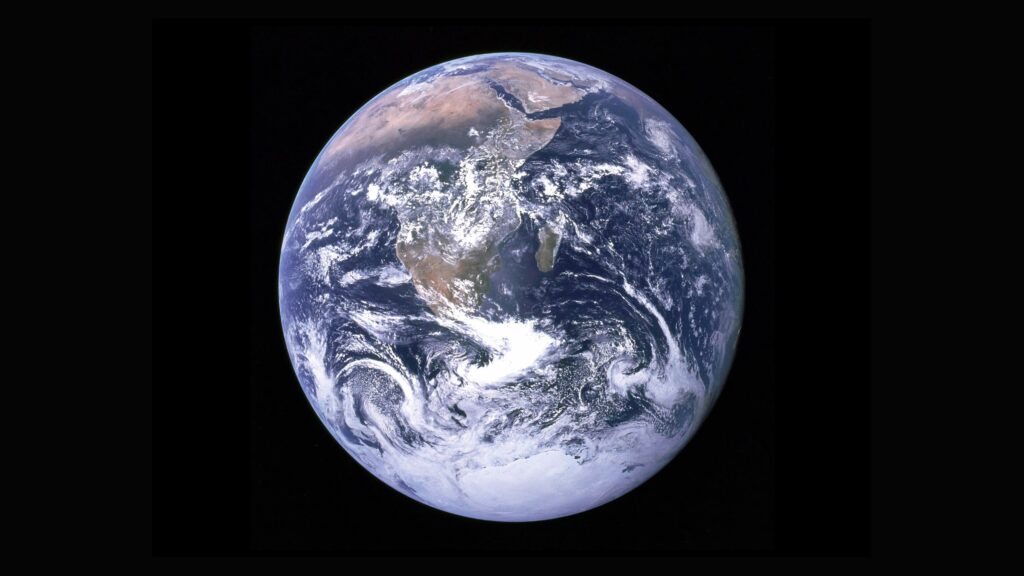
From orbit, astronauts often describe the Great Salt Lake as one of the most striking features of the American West. Its irregular shape, shifting colors, and immense size stand out against the surrounding desert and mountains. In satellite photos, the lake gleams like a giant jewel, a reminder of how large it is in the context of the continent.
Its changing footprint is also visible from space. The lake has retreated and expanded so dramatically over the decades that its outlines in images look like rings on a tree, recording cycles of abundance and scarcity. This cosmic view reinforces its enormity, reminding us that the Great Salt Lake is not just a Utah landmark, but a planetary-scale feature.
Why the Great Salt Lake’s Size Matters
So, why does the size of the Great Salt Lake matter? It matters because scale influences everything from ecology to economics. The lake’s immensity provides habitats for birds, sustains industries that harvest its minerals and brine shrimp, and defines landscapes that attract millions of visitors. Its shrinking size, on the other hand, threatens these systems, raising alarms about water use and environmental stewardship. The Great Salt Lake teaches us that bigness is not permanent. A lake that can expand to over 3,000 square miles can also shrink to less than 1,000. Its variability makes it a mirror of climate, a barometer of human impact, and a reminder that nature’s scale is dynamic, not fixed.
Conclusion: The Ever-Changing Great Salt Lake
So, how big is the Great Salt Lake? At its fullest, it stretches over 1,700 square miles, larger than some U.S. states. At its lowest, it contracts to less than 1,000 square miles, reminding us of its fragile balance. It is up to 75 miles long, 35 miles wide, and ringed by hundreds of miles of shoreline. From space, it glimmers as one of North America’s largest inland seas.
But the true answer is that the Great Salt Lake is big in more ways than one. It’s big in geography, big in ecology, big in culture, and big in consequence. Its shimmering waters hold a mirror up to the human story of the American West: one of resilience, adaptation, and respect for the natural world. The Great Salt Lake is not just a lake—it’s a giant, a symbol, and a reminder that nature’s scale is both vast and vulnerable.