How Big Is the Gobi Desert? Exploring One of Earth’s Most Enormous Landscapes
When most people imagine a desert, they picture endless rolling sand dunes stretching beneath a blazing sun. But the Gobi Desert challenges that expectation in dramatic fashion. Vast, rugged, and wildly diverse, the Gobi is not just a desert—it’s a sprawling natural world that defies simple definition. So how big is the Gobi Desert? The answer is both straightforward and astonishing. Covering roughly 500,000 square miles (about 1.3 million square kilometers), the Gobi is one of the largest deserts on Earth. It stretches across northern China and southern Mongolia, forming a massive expanse of terrain that includes rocky plains, gravel fields, mountains, and only occasional sand dunes. Understanding the size of the Gobi is more than just a matter of numbers. It’s about grasping the scale of a landscape that has shaped history, influenced climate, and continues to inspire awe in those who venture into its vastness.
The True Scale of the Gobi Desert
To truly appreciate the size of the Gobi Desert, it helps to compare it to places we already know. At approximately 500,000 square miles, the Gobi is larger than many entire countries. It’s bigger than Germany, larger than South Africa’s largest provinces, and comparable in size to the state of Alaska if you consider only its central regions. What makes the Gobi especially impressive is not just its total area, but how that area is distributed. The desert stretches over 1,000 miles from southwest to northeast and spans nearly 500 miles from north to south in some regions. This enormous footprint makes it one of the largest deserts in Asia and the sixth-largest desert in the world. But unlike the Sahara, which is dominated by sand seas, the Gobi is a cold desert. Much of its surface is composed of bare rock, compacted earth, and gravel plains. This gives the landscape a stark, almost alien appearance—one that feels vast in a completely different way.
A Desert of Extremes
The Gobi’s size is matched only by its intensity. It is one of the most extreme environments on the planet, with conditions that vary dramatically throughout the year.
Temperatures in the Gobi can swing wildly. In the summer, parts of the desert can reach over 100°F (38°C), while in the winter, temperatures can plunge to -40°F (-40°C) or lower. These extremes are a defining characteristic of the Gobi and contribute to its reputation as a harsh and unforgiving place.
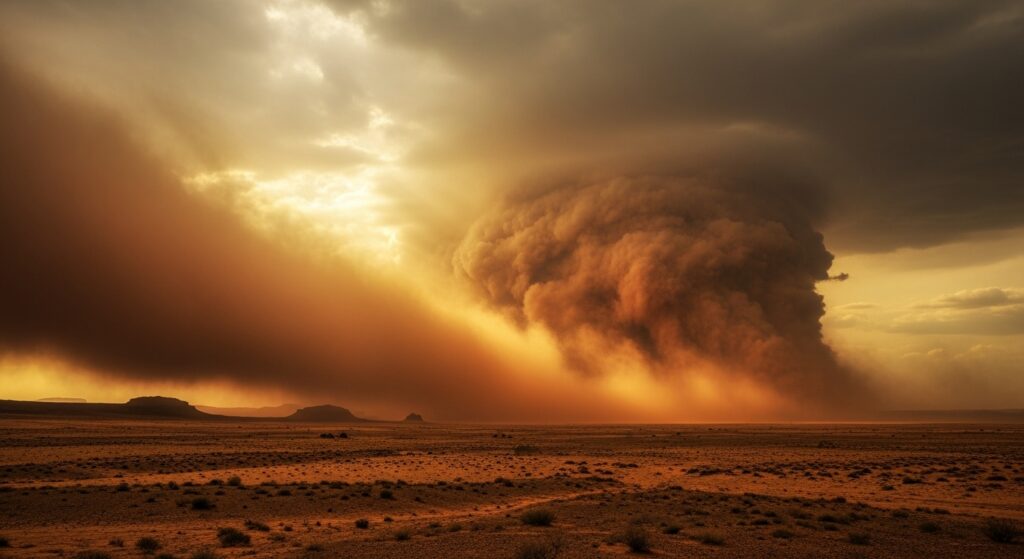
Rainfall is scarce, often averaging less than a few inches per year. This lack of moisture, combined with strong winds, shapes the terrain over time. Dust storms can sweep across the desert, carrying fine particles for hundreds or even thousands of miles.
Despite these challenges, the Gobi is far from lifeless. Its vast size allows for a surprising diversity of ecosystems, each adapted to survive in this demanding environment.
Geography: More Than Just Sand
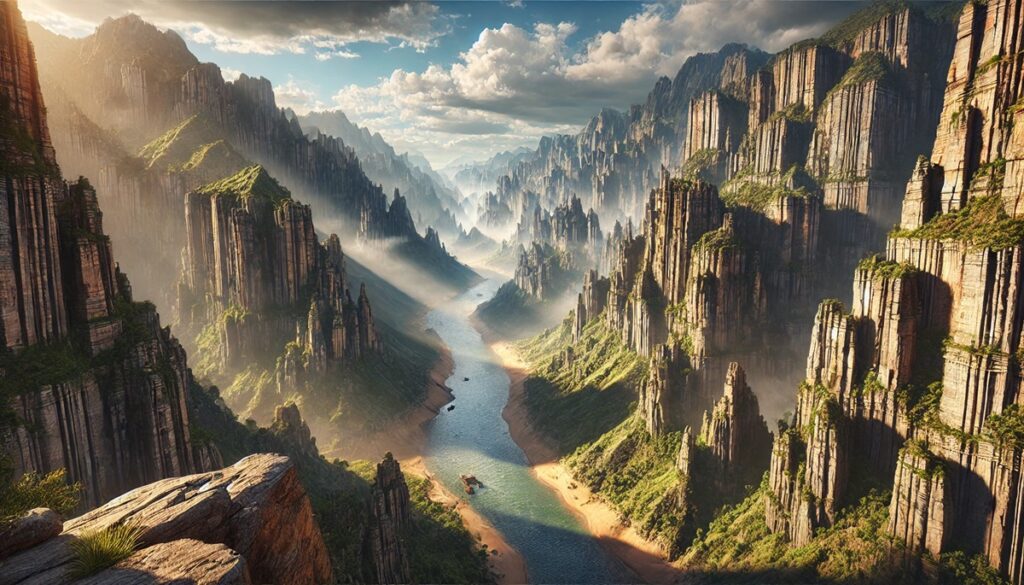
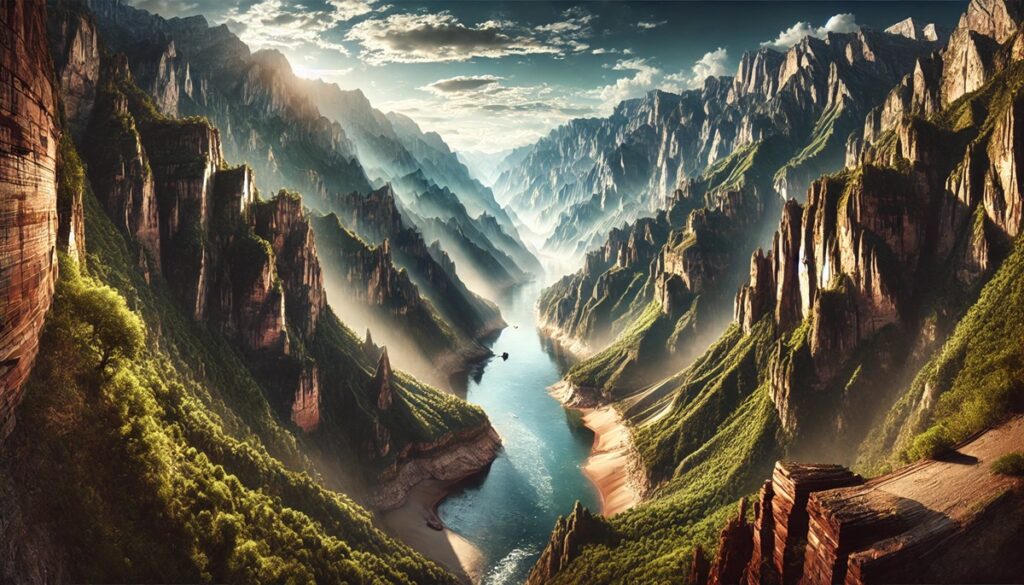
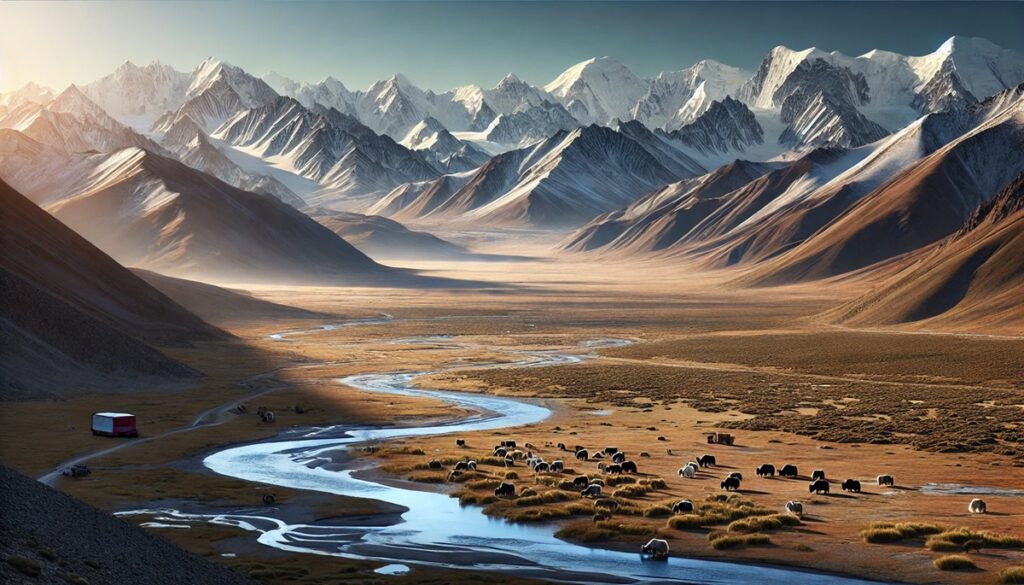
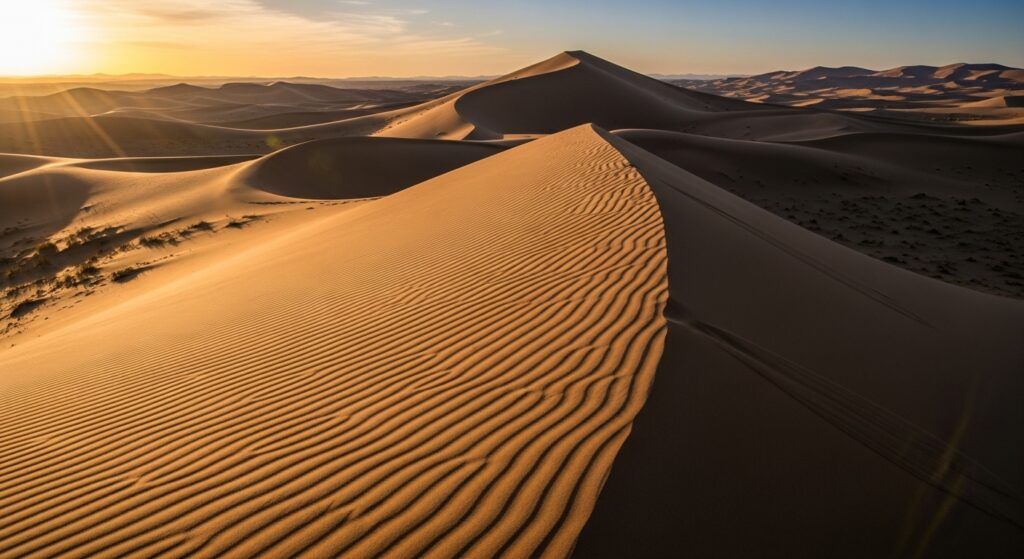
One of the most fascinating aspects of the Gobi Desert is its variety. Unlike the stereotypical image of a desert filled with dunes, the Gobi is a mosaic of different landscapes. Rocky plateaus dominate much of the terrain, creating a rugged and uneven surface. Gravel plains stretch out in all directions, forming vast open spaces that seem to go on forever. In some areas, dramatic mountain ranges rise from the desert floor, adding vertical scale to an already immense landscape.
There are also pockets of sand dunes, some of which are among the largest in Asia. These dunes, while not as widespread as in other deserts, add a dynamic element to the Gobi’s geography. This diversity means that the Gobi is not a single uniform desert, but rather a collection of interconnected environments. Each region has its own character, contributing to the overall sense of scale and complexity.
The Gobi in Human History
The immense size of the Gobi Desert has played a significant role in shaping human history. For centuries, it acted as both a barrier and a bridge between civilizations.
The ancient Silk Road, one of the most important trade networks in history, passed along the edges of the Gobi. Traders, travelers, and explorers had to navigate its vast and often dangerous terrain to connect East and West.
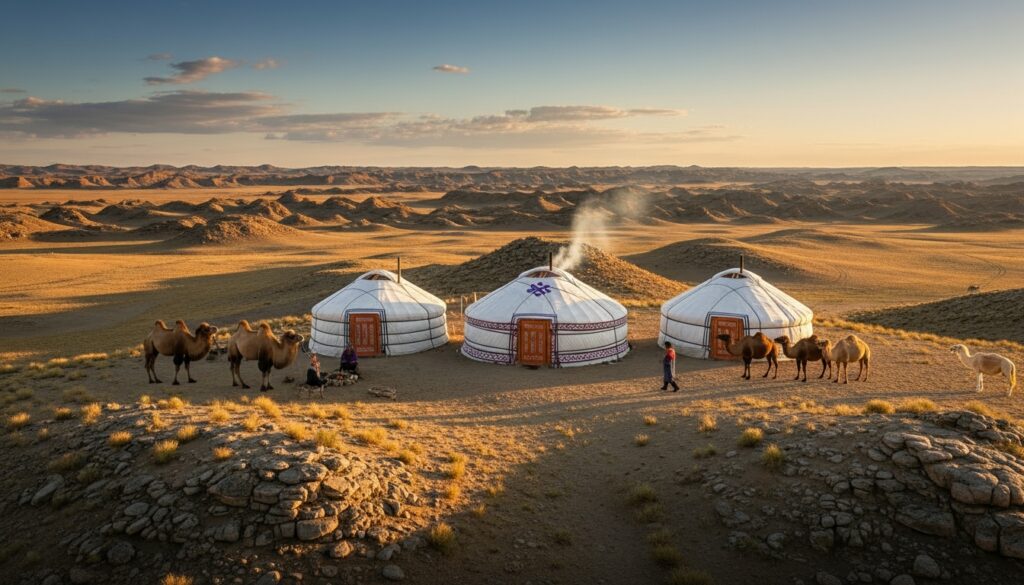
The Gobi was also home to nomadic cultures that adapted to its harsh conditions. These communities developed unique ways of life, relying on mobility, resourcefulness, and deep knowledge of the land.
Even today, parts of the Gobi remain sparsely populated. Its sheer size and challenging environment make large-scale settlement difficult, preserving much of its natural state.
Wildlife in a Vast Landscape
Despite its harsh conditions, the Gobi Desert supports a surprising array of wildlife. Its size allows for habitats that sustain both small and large species.
Animals such as wild camels, snow leopards, and gazelles roam the region, each uniquely adapted to survive in extreme temperatures and limited water availability. Smaller creatures, including reptiles and rodents, play important roles in the ecosystem.
Birds also thrive in certain areas, especially near seasonal water sources. These pockets of life highlight the resilience of nature in even the most challenging environments.
The vastness of the Gobi provides space for these species to exist with relatively little human interference. This makes it an important area for conservation and ecological study.
How the Gobi Compares to Other Deserts
When discussing the size of the Gobi Desert, it’s helpful to place it in a global context. While it is one of the largest deserts in the world, it differs significantly from others in both composition and climate.
The Sahara Desert in Africa is larger, covering over 3.5 million square miles, but it is predominantly a hot desert with extensive sand dunes. The Gobi, by contrast, is colder and more varied in its terrain.
Antarctica is technically the largest desert on Earth, but it is classified as a polar desert due to its extremely low precipitation. The Gobi occupies a unique middle ground, combining elements of both cold and arid environments.
This distinction makes the Gobi one of the most interesting deserts to study, as it challenges traditional definitions and expectations.
The Role of Climate and Wind
The size of the Gobi Desert is closely tied to its climate. Its location in the rain shadow of the Himalayas prevents moisture from reaching the region, contributing to its arid conditions.
- Strong winds play a major role in shaping the landscape. Over time, these winds erode rock, transport sediment, and create the distinctive features that define the Gobi.
- Dust storms originating in the Gobi can travel vast distances, sometimes reaching cities thousands of miles away. This highlights the global impact of a desert that might otherwise seem remote.
The interplay between climate and geography is a key factor in understanding both the size and the character of the Gobi Desert.
Exploration and Discovery
The Gobi Desert has long been a place of exploration and discovery. Its vast, largely untouched terrain has attracted scientists, adventurers, and researchers from around the world.
One of the most significant discoveries in the Gobi was the unearthing of dinosaur fossils. The region is one of the richest sources of prehistoric remains, providing valuable insights into the history of life on Earth.
Explorers have also documented unique geological formations and ecosystems, adding to our understanding of how deserts evolve over time.
The sheer size of the Gobi means that there is still much to learn. Even today, new discoveries continue to emerge from its remote regions.
Experiencing the Gobi Today
For modern travelers, the Gobi Desert offers an experience unlike any other. Its vastness creates a sense of solitude and perspective that is difficult to find elsewhere.
Visitors can explore dramatic landscapes, from towering dunes to rocky canyons. They can witness breathtaking sunsets, where the sky stretches endlessly above the horizon.
Cultural experiences are also an important part of visiting the Gobi. Interacting with local communities provides insight into a way of life that has endured for generations.
Traveling in the Gobi requires preparation and respect for the environment, but the rewards are immense. It is a place that leaves a lasting impression on all who visit.
Why Size Matters
Understanding how big the Gobi Desert is helps us appreciate its significance on a global scale. Its vast area influences weather patterns, supports unique ecosystems, and preserves important historical and scientific resources.
Size also shapes the human experience of the desert. It creates a sense of awe and humility, reminding us of the scale of the natural world.
In a time when much of the planet has been mapped, explored, and developed, the Gobi remains a place where the horizon still feels infinite.
A Landscape Beyond Measure
So, how big is the Gobi Desert? It is enormous—spanning hundreds of thousands of square miles and stretching across two countries. But its true size is not just measured in miles or kilometers.
The Gobi’s scale is felt in its silence, its extremes, and its endless horizons. It is a place where nature reveals its raw power and beauty, offering a glimpse into a world that exists far beyond the boundaries of everyday life.
To understand the Gobi is to appreciate the vastness of our planet—and to recognize that even in the modern age, there are still places that remain wild, mysterious, and profoundly inspiring.