How Big Is the Earth? Exploring the Vastness of Our Home Planet
We live on it, we explore it, we map it, and we dream of venturing beyond it. But have you ever stopped to ask the simplest, most humbling question: how big is the Earth? It’s a question with answers in numbers, comparisons, and imagination. Our planet feels infinite when driving across a state or flying over an ocean, yet it’s also small enough to be just a blue marble floating in space. To understand Earth’s true size, we need to zoom in and out—measuring its surface, comparing it to other planets, and translating the numbers into real-world scale.
Earth by the Numbers: The Official Measurements
Let’s begin with hard facts. Earth has a diameter of about 7,917 miles (12,742 kilometers) at the equator and a circumference of about 24,901 miles (40,075 kilometers). That means if you could walk nonstop around the equator, you’d have to cover nearly 25,000 miles—roughly the same as circling the United States four times.
Earth’s total surface area is around 196.9 million square miles (510.1 million square kilometers). Of that, about 71% is covered in water, leaving 29% as land. That’s about 57.5 million square miles of land for nearly 8 billion people to share.
In terms of volume, Earth contains about 260 billion cubic miles (1 trillion cubic kilometers) of space. Its mass is about 5.97 × 10²⁴ kilograms—a number so large it’s nearly impossible to picture. These raw measurements confirm one thing: Earth is staggeringly big, but still understandable when compared to other worlds.
Earth Compared to Everyday Scale
The problem with numbers is that they often feel abstract. To truly grasp Earth’s size, let’s bring it into human terms. Imagine driving across the planet. Even if you traveled at highway speeds of 60 miles per hour without stopping, circling the equator would take over 17 days of continuous driving. By plane, a commercial jet cruising at 550 miles per hour would still take about 45 hours of nonstop flight to circle the Earth once. On foot, things become even more dramatic. At an average walking pace of 3 miles per hour, it would take nearly a year to walk around the equator—assuming you never stopped to rest, eat, or sleep. These mental experiments remind us that Earth is enormous in human scale, yet manageable in planetary scale.
How Big Is Earth Compared to the Moon and the Sun?
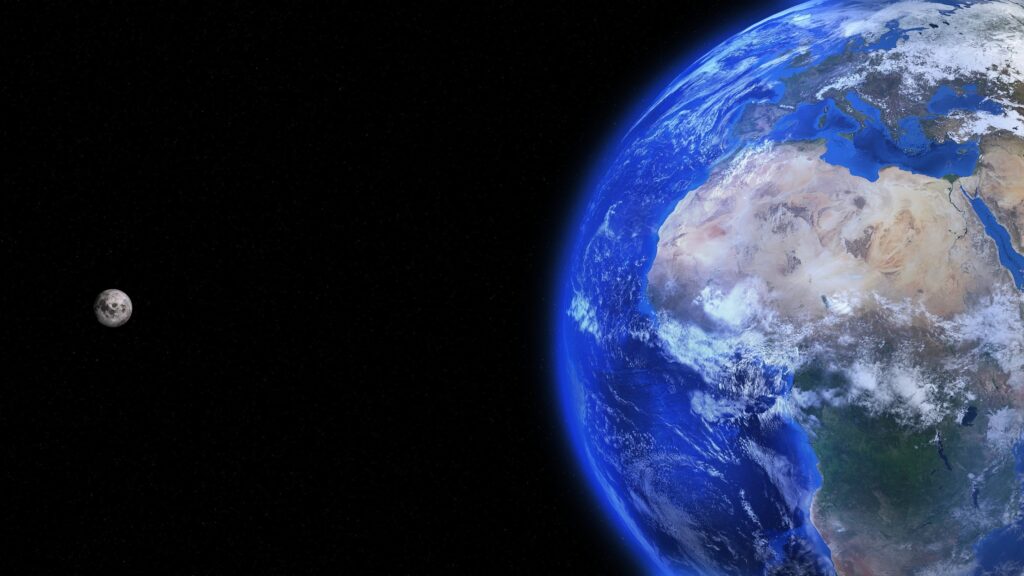
When it comes to neighbors in space, Earth is truly in the middle. Our Moon, for instance, has a diameter of 2,159 miles—just over a quarter of Earth’s. Earth is about 50 times larger in volume and 80 times more massive than the Moon. That’s why the Moon orbits us and not the other way around.
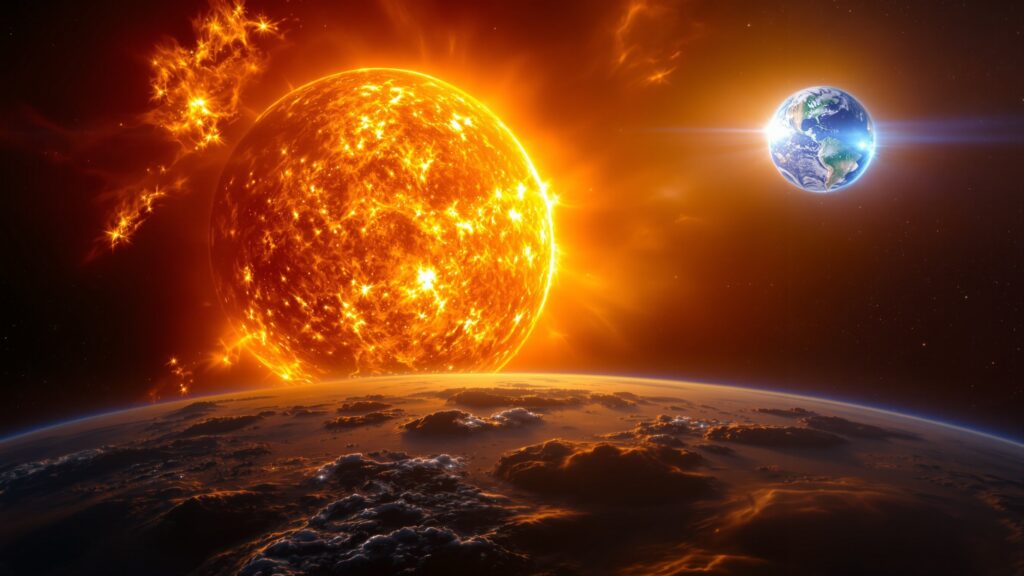
The Sun, on the other hand, dwarfs us completely. With a diameter of 864,000 miles, the Sun is more than 100 times wider than Earth. You could fit about 1.3 million Earths inside it. This perspective shows that while Earth is immense on human terms, it’s modest compared to the star that sustains it.
Earth Compared to Other Planets in the Solar System
Earth is the largest of the four rocky planets—Mercury, Venus, Earth, and Mars—but it’s far smaller than the gas and ice giants. Mars, often called our sister planet, has a diameter of just 4,212 miles—about half of Earth’s. Venus, nearly Earth’s twin, is only slightly smaller with a diameter of 7,520 miles. Mercury, the smallest planet, measures only 3,031 miles across. But compare Earth to Jupiter, the true giant of the solar system, and our size shrinks dramatically. Jupiter’s diameter is about 88,846 miles, meaning it could fit more than 1,300 Earths inside it. Saturn, Uranus, and Neptune also make Earth look tiny, though not as overwhelmingly as Jupiter. This comparison highlights Earth’s special place: large enough to sustain a thick atmosphere and oceans, but small enough to avoid crushing gravity and overwhelming pressure.
The Horizon: How Earth’s Size Shapes Our View
One of the ways Earth’s size becomes visible to us every day is through the horizon. Stand on the beach and look out to sea. The point where the ocean seems to meet the sky is only about 3 miles away for the average person standing at sea level. That’s because Earth curves gently beneath our feet. Climb to the top of a tall mountain or fly in an airplane, and the horizon stretches farther, revealing Earth’s roundness. Astronauts in orbit see the full curve of the planet, a breathtaking reminder that Earth is both vast and finite at the same time.
Land and Ocean: Dividing Earth’s Immensity
Earth’s size is not only about its measurements, but how that space is divided. Of the 196.9 million square miles of surface area, the oceans claim about 139.5 million. The Pacific Ocean alone covers 63 million square miles—larger than all the land on Earth combined.
On the land side, Asia is the largest continent at 17.2 million square miles, followed by Africa at 11.7 million. Even Antarctica, mostly covered in ice, spans 5.4 million square miles. Each continent, in its own way, illustrates the immensity of Earth’s landmasses, carved by rivers, mountains, and deserts.
Earth Compared to Human Populations
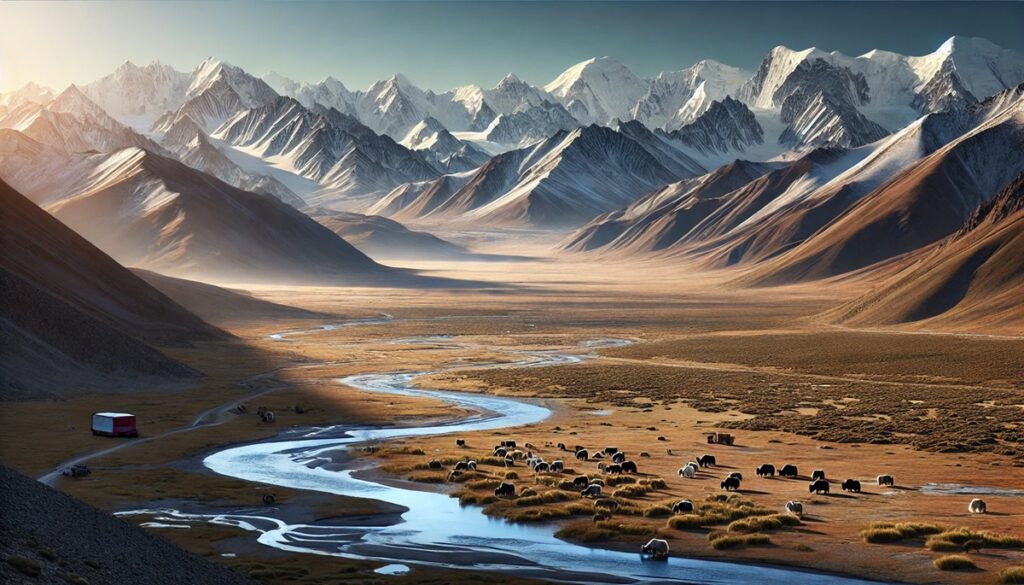
To further understand Earth’s size, think of people. Nearly 8 billion humans share this planet, spread unevenly across its continents. Asia alone holds about 60% of the global population, packed into cities like Tokyo, Delhi, and Shanghai. Meanwhile, vast stretches of deserts, mountains, and forests remain sparsely inhabited. Population density highlights how big Earth feels depending on where you are. In New York City, with more than 27,000 people per square mile, the planet feels crowded. In Mongolia, with fewer than 7 people per square mile, it feels endless. The same Earth accommodates both extremes.
Earth’s Mountains, Oceans, and Extremes
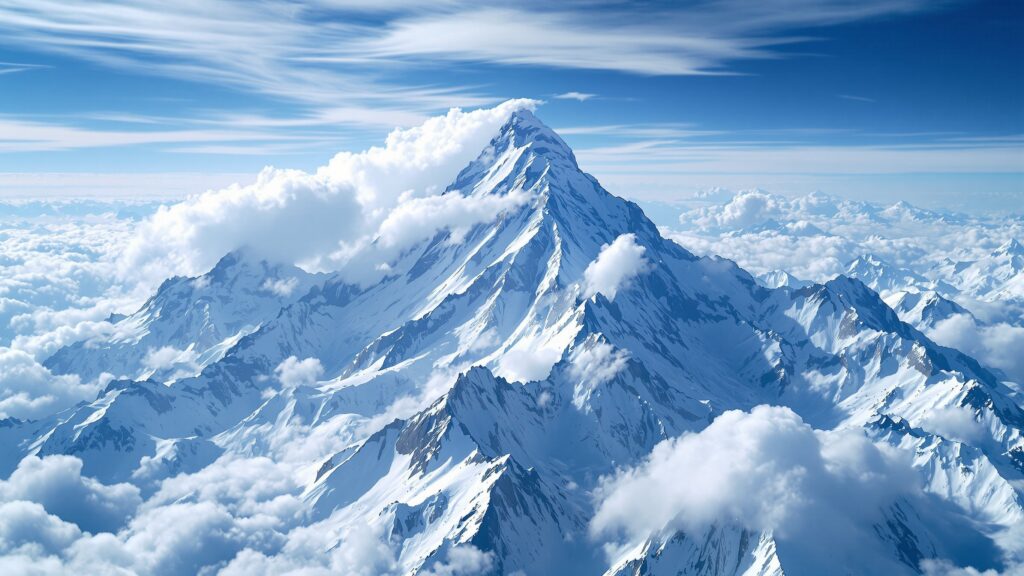
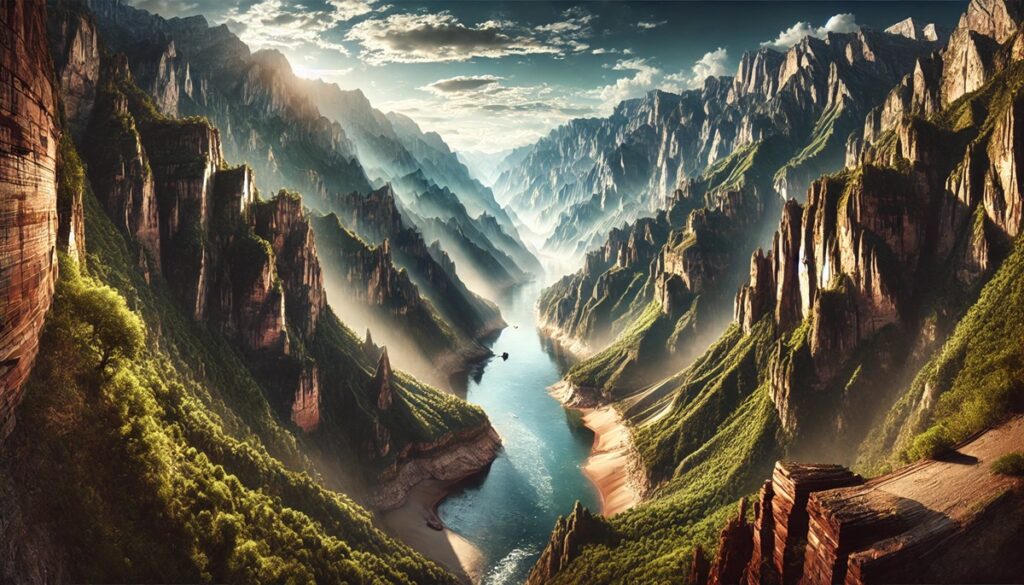
Part of Earth’s bigness lies in its extremes. The tallest point on the planet is Mount Everest, rising 29,032 feet above sea level, while the deepest is the Mariana Trench in the Pacific Ocean, plunging nearly 36,000 feet below sea level. If you placed Everest inside the Trench, its peak would still be over a mile underwater.
The Sahara Desert alone spans 3.6 million square miles, nearly the size of the United States. The Amazon Rainforest covers 2.1 million square miles, producing much of the oxygen we breathe. These natural features illustrate the enormous variety contained within Earth’s size.

How Earth Compares to Human Achievements
Human civilization has always been about adapting to Earth’s scale. The Great Wall of China, stretching about 13,000 miles, seems monumental—but it still only wraps around half of Earth’s equator. Commercial airplanes, satellites, and internet cables now connect continents, shrinking the perceived size of our world. Yet even with all our technology, Earth’s vastness humbles us. Standing in the middle of the Grand Canyon, trekking across Siberia, or sailing the open Pacific reminds us that our planet still overwhelms human ambition.
Earth in the Cosmos: A Blue Marble Perspective
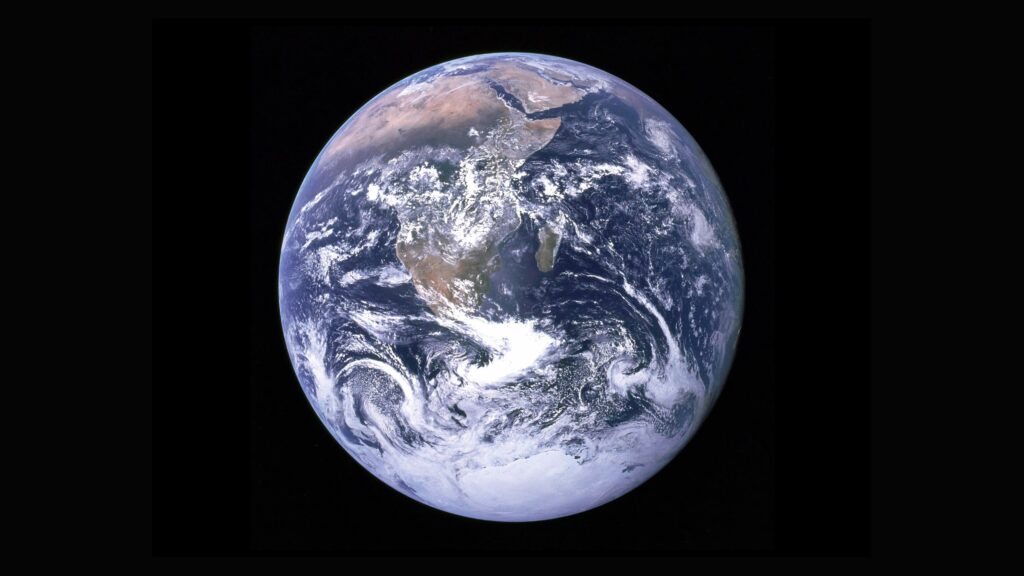
From space, Earth looks small—a glowing blue marble set against blackness. Yet this perspective doesn’t diminish its size; it magnifies its importance. Earth is the only known planet to host life, and its size plays a key role in that.
If Earth were much smaller, it might not have held onto a breathable atmosphere. If it were much larger, gravity might have made human life impossible. Our planet is not just big—it’s the perfect size for life as we know it.
Why Earth’s Size Matters
Understanding Earth’s size isn’t just an academic exercise—it’s vital. Its mass generates gravity that holds the atmosphere in place. Its circumference regulates climate zones and seasons. Its oceans distribute heat and life across the globe. Everything from the food we eat to the air we breathe is tied to the scale of our planet. Earth’s size also matters in how we see ourselves. It feels infinite when we’re small, but fragile when viewed from space. It reminds us that while our world is massive, it’s also limited—something to be cherished and protected.
Conclusion: Measuring Our Giant Home
So, how big is Earth? It’s 7,917 miles wide, nearly 25,000 miles around, with a surface area of almost 197 million square miles. It’s big enough to contain continents, oceans, deserts, and rainforests that feel endless, yet small enough to be just one planet among billions in the cosmos.
Earth is vast in human scale, moderate in planetary scale, and precious in cosmic scale. It is a giant home that shapes our lives in ways both visible and invisible. The next time you look out to the horizon, fly over an ocean, or see Earth from space in a photo, remember: its size is not just a number—it’s the foundation of everything we are.