A state of deserts, mountains, neon cities, hidden lakes, and epic distances
When people picture Nevada, their minds usually go straight to Las Vegas—bright lights, endless entertainment, and glowing casinos rising from the desert. But that famous strip represents only a tiny fraction of what Nevada truly is. Beyond the neon skyline lies a vast, powerful landscape that stretches for hundreds of miles in every direction. Nevada is a state of extremes: silent valleys, towering mountains, dry salt flats, deep blue alpine lakes, lonely highways, and cities that seem to appear out of nowhere. Nevada often feels empty, but that emptiness is part of its greatness. It is one of the largest states in the U.S., and yet one of the least densely populated. You can drive for hours without seeing another car, then suddenly arrive in a bustling city glowing with life. This dramatic contrast between scale and solitude is what makes Nevada feel so mysterious and unforgettable. So just how big is Nevada? Let’s explore its size in every way imaginable—from land area and mountain ranges to highways, climate zones, cities, and jaw-dropping comparisons that truly show its scale.
Nevada by the Numbers: The Raw Size
Nevada covers 110,572 square miles, making it the 7th largest state in the United States. To put that into perspective, it is larger than:
- The entire United Kingdom
- Greece
- Portugal
- New Zealand’s North Island
If Nevada were its own country, it would rank among the top 70 largest nations in the world by land area. From east to west, Nevada stretches roughly 322 miles, while from north to south it spans about 492 miles. That’s nearly the distance from New York City to Cleveland. What’s even more surprising is that most of this land remains untouched. Vast valleys, high deserts, and rugged mountains dominate the state, creating a sense of scale that feels endless.
A State Built on Mountains and Basins
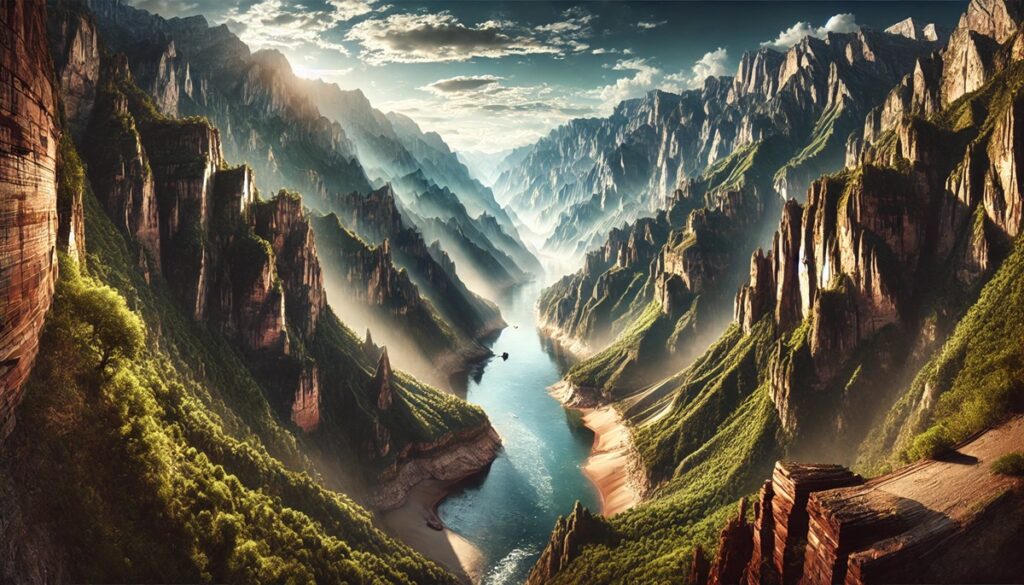
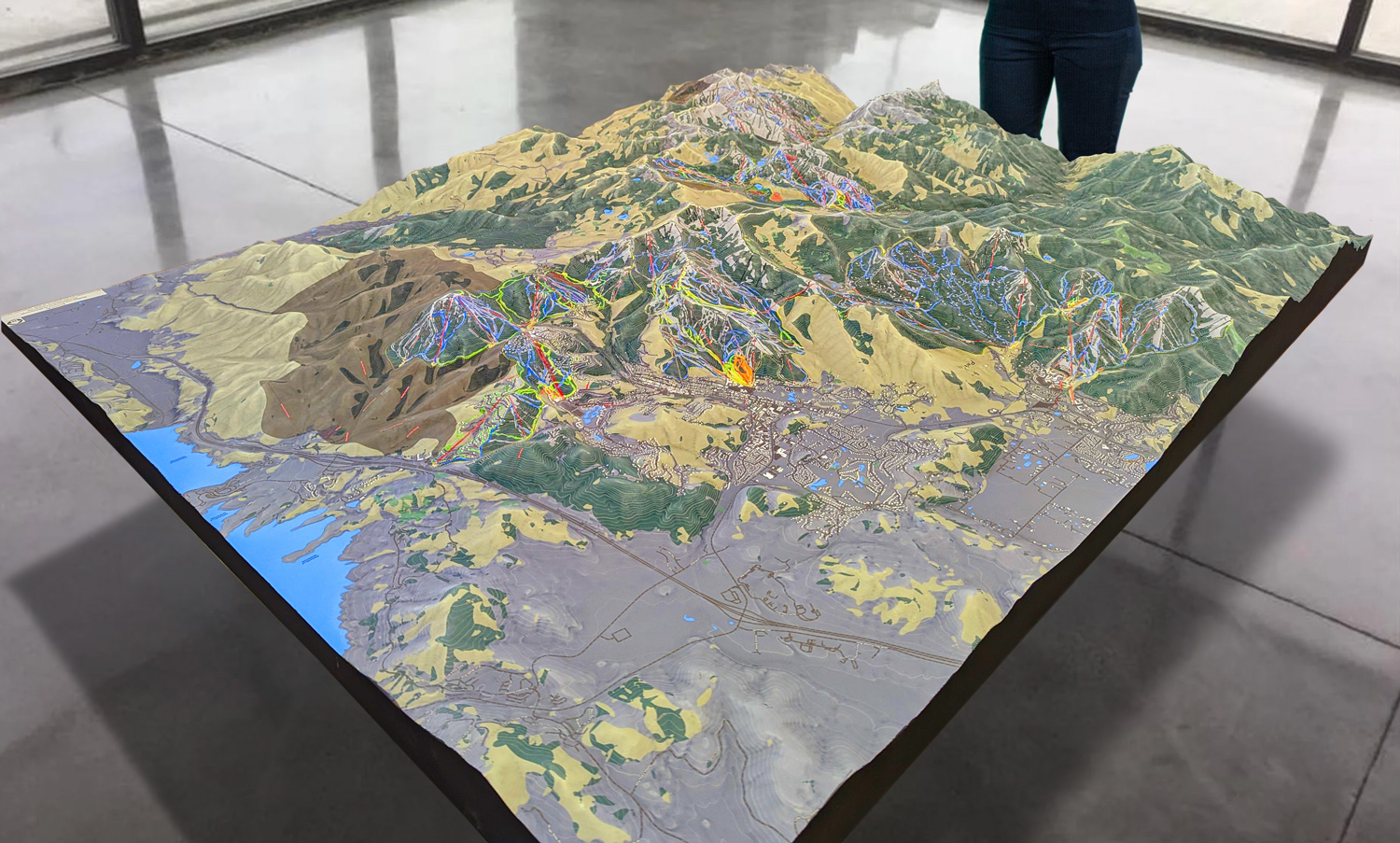
Nevada is known as the “Battle Born State,” but it is also part of the Great Basin, a massive geographic region filled with valleys and mountain ranges. In fact, Nevada contains more mountain ranges than any other state—over 300 separate ranges. These ranges rise sharply from flat desert floors, creating dramatic elevation changes. One moment you’re in a sun-baked valley, and the next you’re climbing into alpine forests. Nevada’s highest point, Boundary Peak, reaches 13,147 feet, while its lowest point near the Colorado River sits at just 479 feet above sea level. This massive vertical difference adds to Nevada’s sense of scale. It’s not just wide—it’s tall.
Desert Kingdom: The Vast Dry Lands
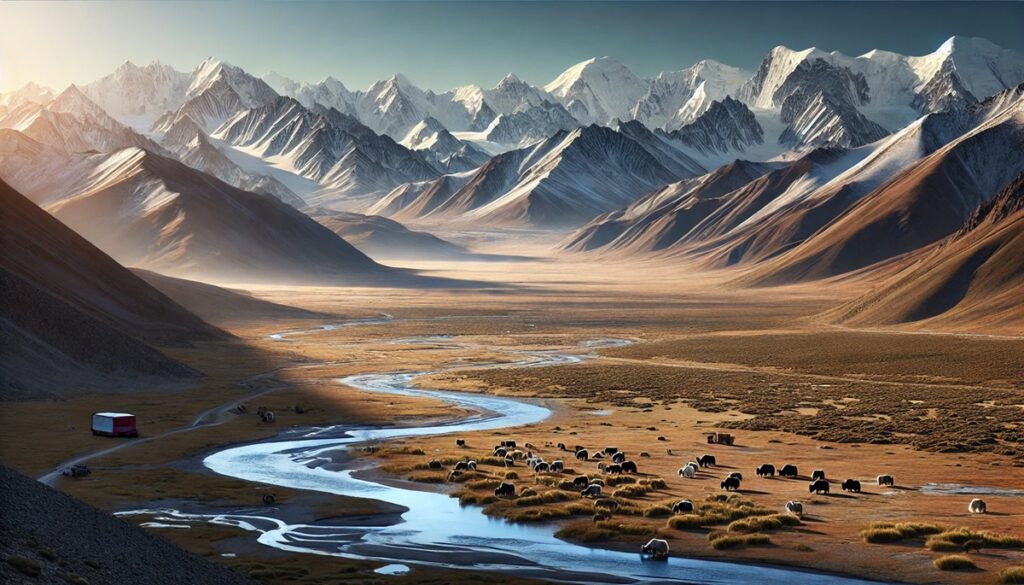
About 85% of Nevada is classified as desert or semi-arid land. The state contains large portions of both the Mojave Desert in the south and the Great Basin Desert across the rest of the state. These deserts are not empty wastelands—they are full of subtle beauty, hidden wildlife, ancient rock formations, and sprawling basins that seem to stretch forever. The deserts alone are larger than many U.S. states. If Nevada’s desert regions were separated into their own state, they would still rank among the biggest in the nation.
How Big Is Nevada Compared to Other States?
Nevada is bigger than all of these states combined:
- Massachusetts
- New Jersey
- New Hampshire
- Vermont
- Connecticut
- Rhode Island
- Delaware
You could stack these states inside Nevada and still have room left over. It is nearly three times the size of Pennsylvania, four times larger than New York, and almost six times bigger than South Carolina. Despite this massive land area, Nevada ranks among the least populated states, which makes the space feel even bigger than it already is.
The Long Roads of Nevada
Nevada has more than 70,000 miles of roads, many of which cut through isolated valleys and open desert. Some highways stretch for over 200 miles without major towns. Driving through Nevada can feel like crossing an entire country. A single road trip from Reno to Las Vegas is about 450 miles, taking over 7 hours without stops. That’s longer than driving across many European nations. Nevada’s highways are famous for their wide horizons, distant mountains, and skies that seem to go on forever.
Cities Spread Across a Giant Map
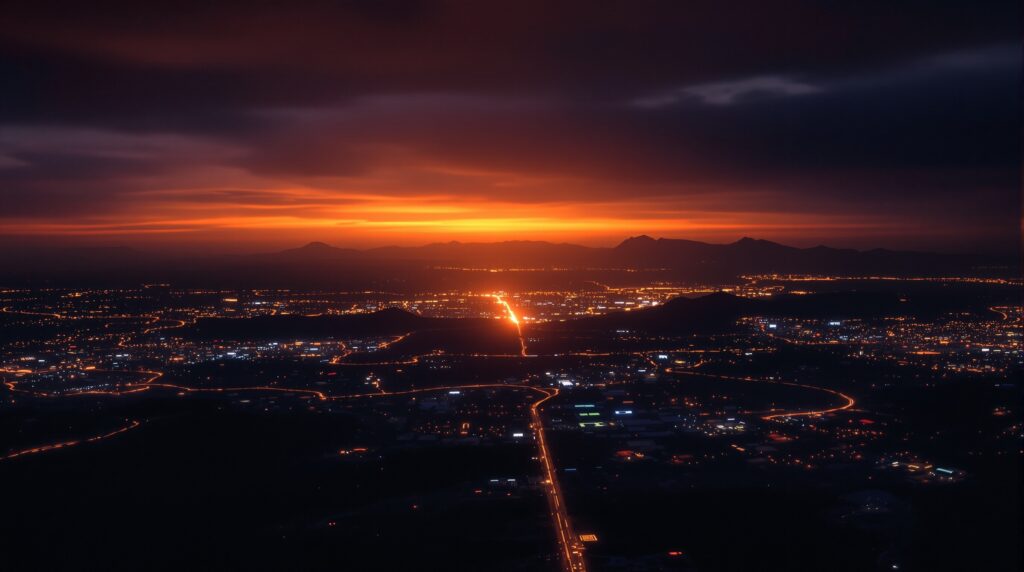
Despite its size, Nevada has only a handful of major cities. Las Vegas and Reno are the largest, but they are separated by hundreds of miles of desert and mountain terrain.
Las Vegas sits in the far southern corner, while Reno rests near the northern border. Between them lies nearly the entire state—mountains, ghost towns, dry lakes, and open wilderness. Most Nevadans live in just a few urban pockets, leaving the rest of the state wide open and sparsely populated.
This contrast between dense cities and empty landscapes creates a dramatic sense of scale that feels cinematic.
Nevada’s National Parks, Lakes, and Wild Spaces
Nevada is home to massive natural areas that stretch across hundreds of square miles. Great Basin National Park alone covers over 120,000 acres, with ancient bristlecone pines, glacier-carved valleys, and cave systems beneath the mountains.
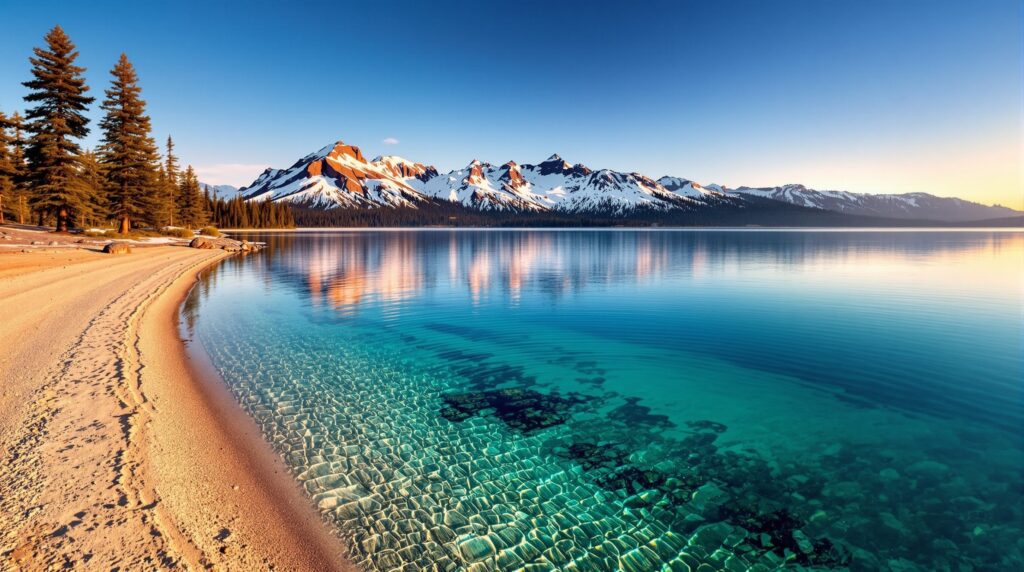
Lake Tahoe, one of the clearest lakes in the world, straddles the Nevada-California border and holds enough water to cover the entire state of California with 14 inches of water. Its shoreline alone spans over 70 miles. Then there are the endless playas—flat desert basins that feel like natural amphitheaters of silence. Some are so large they can be seen from space.
Climate Zones Across a Giant State
Because Nevada is so large, it contains multiple climate zones. Southern Nevada feels like a classic hot desert, while northern Nevada experiences snowy winters and alpine conditions. In some parts of the state, temperatures can swing by more than 100 degrees Fahrenheit between winter and summer. You can stand in the heat of Las Vegas in the morning and be skiing near Lake Tahoe by evening. That kind of climate diversity exists only in truly massive regions.
How Big Is Nevada in Human Experience?
Nevada’s size changes how people live. Towns are far apart. Supplies travel long distances. Stargazing feels infinite. Silence becomes powerful. The night sky stretches wider than anywhere else, making the Milky Way glow with stunning clarity. The scale affects everything—from architecture to transportation to culture. Nevada feels less like a state and more like a frontier, even today.
Nevada vs. Famous Landmarks
You could fit:
- Over 120 Grand Canyons inside Nevada
- Nearly 300 Central Parks across its surface
- Dozens of Mount Everests laid flat across its deserts
When people say Nevada is big, they aren’t exaggerating—it is a geographic giant.
Conclusion: A State That Feels Endless
Nevada isn’t just large—it feels infinite. Its deserts stretch into the horizon. Its mountains rise in dramatic waves. Its cities glow like islands of light in an ocean of darkness. Whether you measure Nevada in miles, mountains, silence, or sky, it remains one of the most vast and awe-inspiring places in North America. To stand in Nevada is to feel small—in the best possible way.