Inside America’s Largest Subtropical Wilderness
When people hear the word “Everglades,” they often picture alligators, airboats, and endless green marshes stretching to the horizon. But few truly understand just how massive Everglades National Park really is. This is not a single swamp or a small wildlife preserve—it is a vast living system that covers a huge portion of South Florida, touching cities, coastlines, rivers, and underground water supplies. Its size is so enormous that it functions more like a natural country than a park. Located at the southern tip of Florida, Everglades National Park protects one of the most complex wetland ecosystems on Earth. It is the largest subtropical wilderness in the United States and one of the most biologically important landscapes in the world. Yet numbers alone only begin to explain its scale. To really understand the Everglades, you have to imagine its width, its length, its slow-moving water, and how it connects mountains of rain in the north to coral reefs in the south. This article takes you deep into the true size of the Everglades. We will explore its land area, compare it to cities and states, examine the ecosystem’s physical reach, and look at how far its water and wildlife extend beyond park boundaries. By the end, you will not just know how big the Everglades is—you will feel it.
The Raw Size of the Everglades
Everglades National Park covers approximately 1.5 million acres, which equals about 2,350 square miles. That makes it larger than the entire state of Delaware and bigger than major U.S. cities like Los Angeles, New York City, and Chicago combined. When you stand on one edge of the park, you are often more than 50 miles away from the opposite side.
To picture this, imagine driving across the park from east to west. It can take well over two hours just to skirt its boundaries, even on highways. And that is only the protected portion. The greater Everglades ecosystem, which includes surrounding wetlands, rivers, and conservation lands, is even larger.
This protected land is made up of sawgrass marshes, mangrove forests, freshwater sloughs, pine rocklands, hardwood hammocks, and coastal estuaries. Each of these environments is massive in its own right, but together they form one of the largest continuous wetland systems on the planet.
How the Everglades Compares to States and Cities
One of the easiest ways to understand the scale of the Everglades is to compare it to places you already know. At 2,350 square miles, the park is larger than the entire land area of Delaware, which is about 1,982 square miles. It is nearly as large as the state of Rhode Island’s landmass.
If you placed Everglades National Park on top of New York City, it would swallow all five boroughs and still have room to spare. You could fit Miami, Fort Lauderdale, and West Palm Beach inside the park boundaries with space left over for marshes, mangroves, and wildlife corridors. When viewed from the air, the Everglades looks like a green ocean. Its size is not just horizontal—it stretches vertically into layers of water, soil, vegetation, and underground limestone aquifers that feed the entire region.
The “River of Grass” That Defines Its Scale
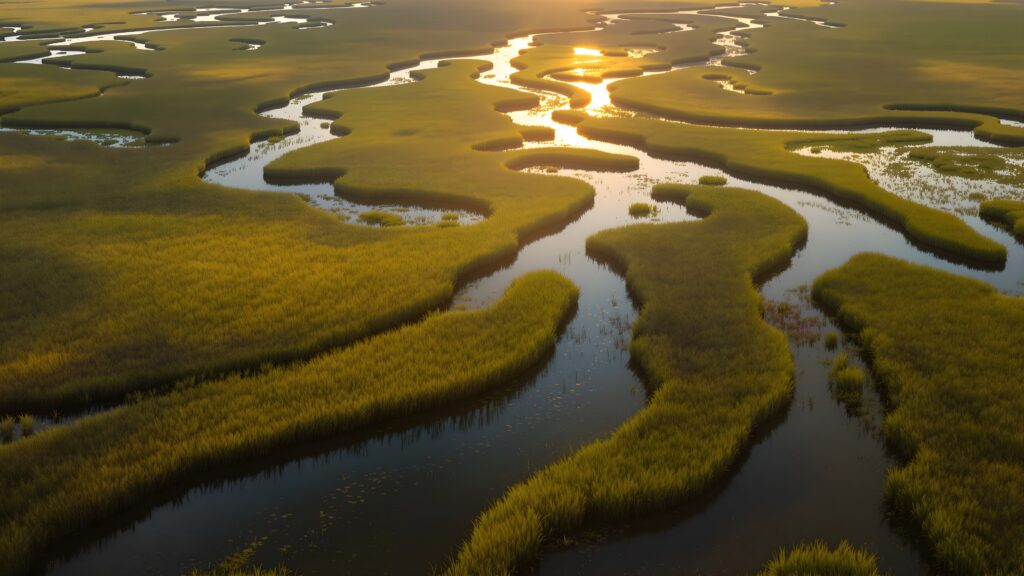
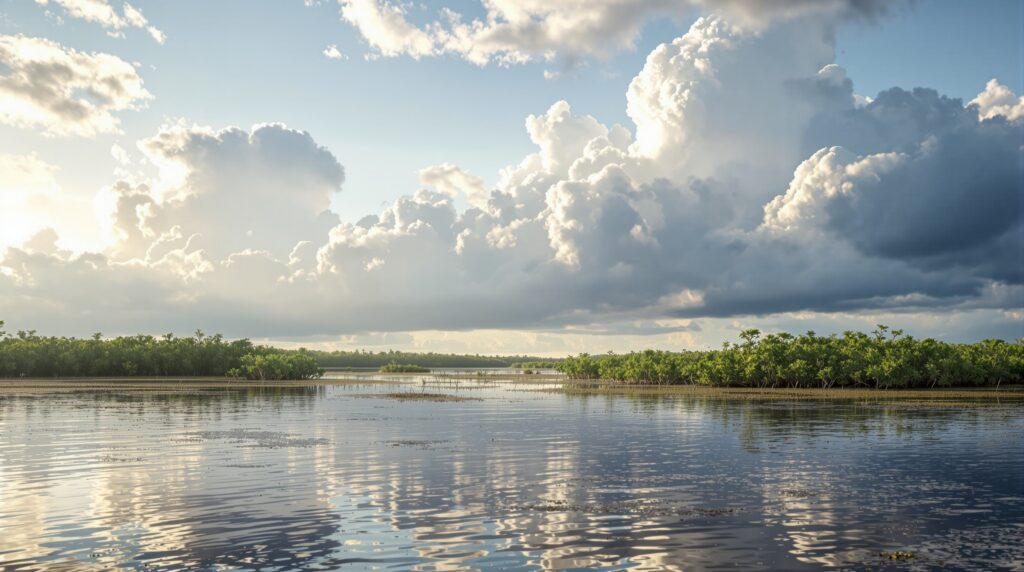
The Everglades is often called a “river of grass” because it is not a traditional swamp or lake. It is a slow-moving sheet of water that flows south from Lake Okeechobee toward Florida Bay. This river can be up to 60 miles wide in some places and moves at a pace so slow you cannot see it with the naked eye.
This flowing wetland is what makes the Everglades feel endless. Unlike a forest or mountain range with visible boundaries, the Everglades blends into the horizon. Sawgrass fields stretch as far as you can see, broken only by tree islands and winding sloughs.
The water that feeds the park comes from rainfall hundreds of miles away. When storms fall in central Florida, the water eventually makes its way south into the Everglades. This means the true “size” of the Everglades water system is far larger than the park itself.
The Greater Everglades Ecosystem
While the national park protects 1.5 million acres, the greater Everglades ecosystem once covered nearly 4 million acres across southern Florida. Urban development, farming, and drainage projects reduced this area dramatically, but restoration efforts aim to reconnect these lands. This larger ecosystem includes Big Cypress Swamp, the Florida Keys, Florida Bay, and underground aquifers that supply drinking water to millions of people. Even though these areas lie outside the official park, they are part of the Everglades system. In other words, the Everglades is not just a park—it is a massive living machine that extends beneath highways, cities, and neighborhoods. Its true footprint is far greater than what appears on a map.
A Landscape Larger Than Some Countries
The Everglades is bigger than many countries around the world. It is larger than Luxembourg, Andorra, and Malta. It rivals the size of small island nations and protected wilderness regions across Europe and Asia.
Yet unlike those countries, the Everglades is almost entirely wild. There are no cities, skyscrapers, or industrial zones inside the park. Its vastness is made up of water, grass, trees, and wildlife, creating one of the last truly untamed landscapes in the United States.
Standing on a raised boardwalk in the middle of the park, you can turn in every direction and see nothing but wetlands stretching to the horizon. That sense of scale is part of what makes the Everglades feel ancient and powerful.
Wildlife Across a Massive Range
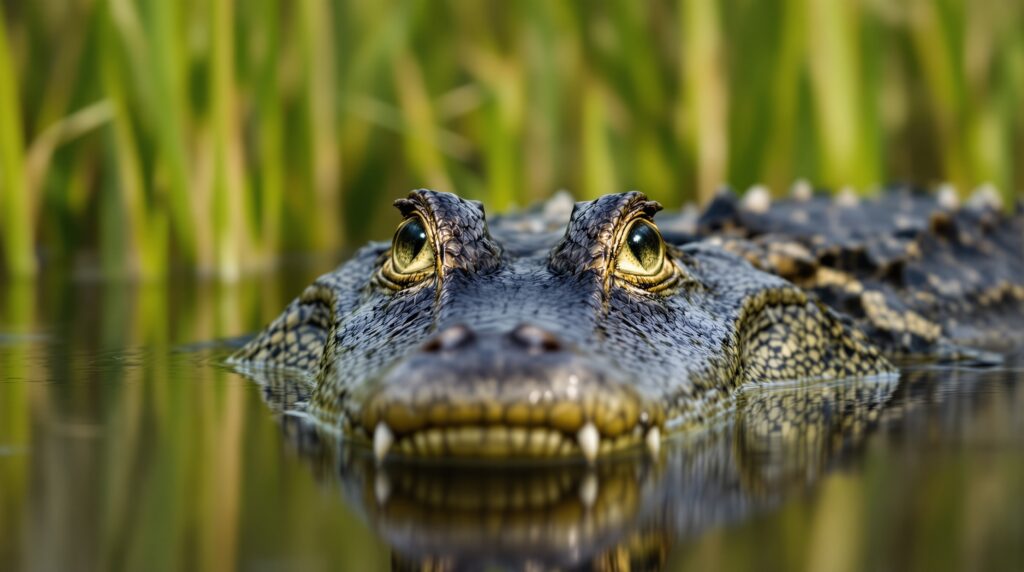
The size of Everglades National Park allows it to support one of the richest collections of wildlife in North America. More than 360 species of birds, 300 species of fish, 40 species of mammals, and dozens of reptiles and amphibians live within its boundaries.
Animals like the Florida panther, American crocodile, and West Indian manatee require large territories to survive. The park’s massive size gives them space to roam, hunt, and migrate. Without this vast protected area, many of these species would disappear. Migratory birds from South America, the Caribbean, and Canada use the Everglades as a resting and feeding ground. This means the park’s influence stretches thousands of miles beyond its borders, connecting ecosystems across the hemisphere.
The Everglades From Coast to Coast
The park stretches from freshwater marshes in the north to saltwater mangrove forests in the south. It touches the Gulf of Mexico and Florida Bay, creating a rare connection between land and sea. This coast-to-coast range adds to the park’s sense of scale. Few places in the world contain such a wide variety of ecosystems in one protected area. From dry pine forests to flooded marshes to tidal estuaries, the Everglades feels like several worlds in one. Each of these zones is enormous on its own, yet they blend seamlessly into a single, continuous wilderness.
How Long Would It Take to Walk Across?
If you attempted to walk across Everglades National Park from one side to the other, it could take several days—even weeks—depending on your route. There are no straight paths through most of the park, and much of the land is covered by shallow water.
The terrain is often muddy, flooded, and thick with vegetation. Movement is slow and exhausting, which makes the park feel even larger than its numbers suggest. This is one of the reasons the Everglades has remained so wild—its size and landscape naturally protect it from heavy development.
A Park That Shapes Florida’s Future
The Everglades does more than provide scenery and wildlife habitat. It plays a critical role in Florida’s water system. Rain that falls in central Florida eventually flows into the Everglades, where it filters through wetlands before reaching underground aquifers.
These aquifers supply drinking water to millions of people in South Florida. The size of the Everglades allows it to act as a natural water purification system, removing pollutants and balancing water levels across the region.
In this way, the park’s size is not just impressive—it is essential for human life.
Why Its Size Truly Matters
The Everglades is not big for the sake of being big. Its size is what allows it to function as a living ecosystem. Water must flow across vast distances, wildlife must have room to migrate, and plant communities must spread naturally. Shrinking this landscape would break the delicate balance that keeps the system alive. Every acre matters, and every mile of wetland plays a role in sustaining the whole. When you look at the Everglades on a map, you see a massive green expanse. But when you step inside it, you realize that its true size is measured not just in miles—but in life, water, and time.