How Big Is China? Exploring the Geography, Population, and Global Influence of the World’s Fourth-Largest Nation
When people ask, “How big is China?” they’re usually thinking about land area. But that simple question opens the door to something much larger. China’s size is not just measured in square miles or kilometers. It’s measured in mountains that scrape the edge of the atmosphere, rivers that feed civilizations, cities that stretch beyond the horizon, and a population so vast it reshapes global economics. To understand how big China truly is, we have to look at geography, population, economy, infrastructure, culture, and influence. Because the real answer is this: China is big in every way imaginable.
The Raw Numbers: How Large Is China in Land Area?
The China covers approximately 9.6 million square kilometers (about 3.7 million square miles). That makes it the fourth-largest country in the world by total land area, behind Russia, Canada, and United States.
To visualize that size, imagine driving from the eastern city of Shanghai to the western region of Xinjiang. You would cross thousands of miles of radically changing landscapes—humid coastlines, fertile plains, deserts, and towering mountain ranges. China stretches roughly 5,000 kilometers (3,100 miles) from east to west and about 5,500 kilometers (3,400 miles) from north to south. That’s the equivalent of traveling from New York to Los Angeles and then continuing further.
China shares borders with 14 countries—more than any other nation except Russia. From India and Mongolia to Vietnam and Pakistan, its borders span deserts, mountains, forests, and rivers.
A Landscape of Extremes
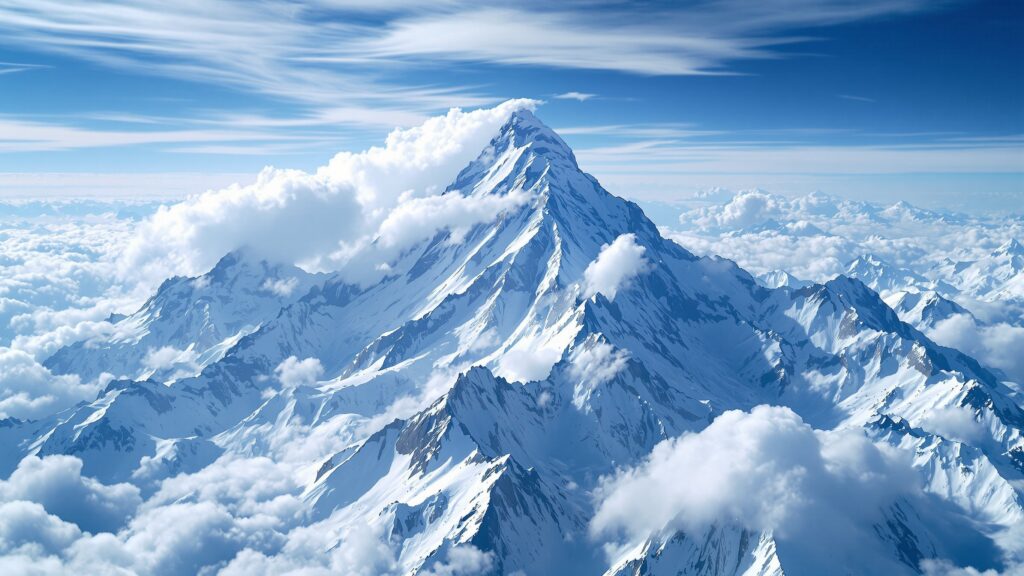
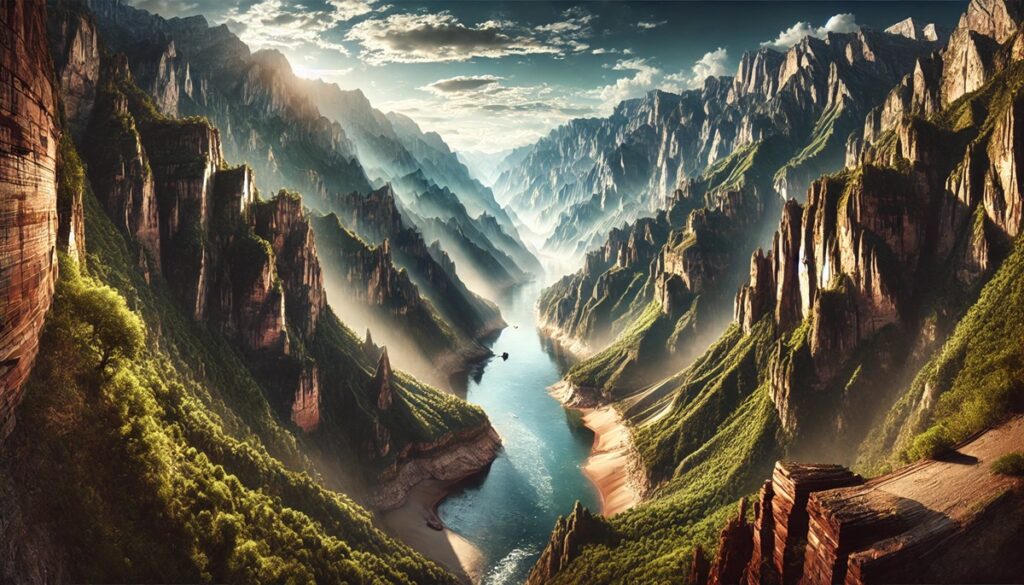
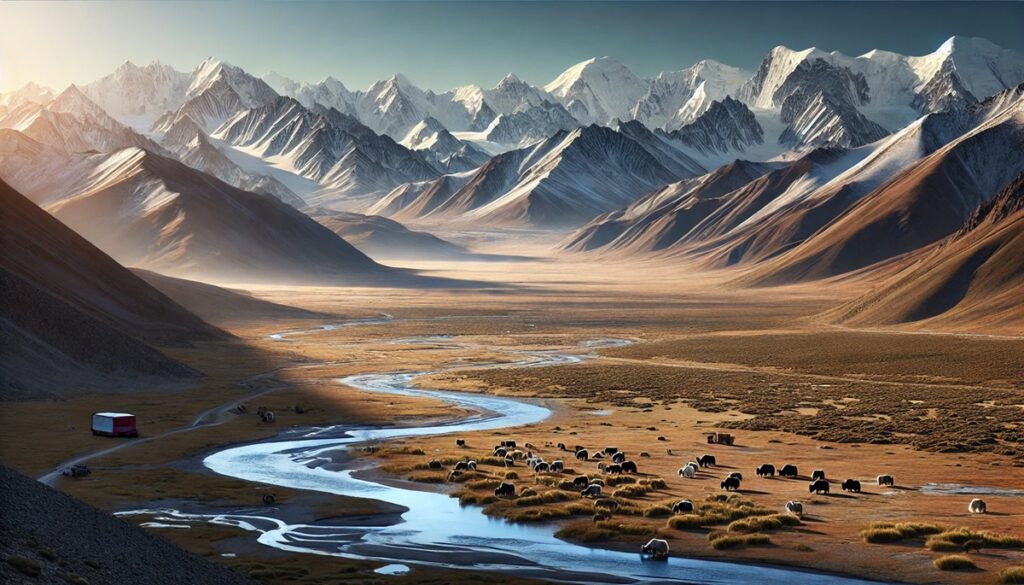
China’s physical geography amplifies its vastness. To the southwest rises the Tibetan Plateau, often called “the Roof of the World.” It contains Mount Everest, the tallest mountain on Earth. The plateau itself averages more than 4,500 meters above sea level. Move north and you encounter the sweeping sands of the Gobi Desert, one of the largest deserts in the world. Head east and you reach the fertile North China Plain, one of the cradles of early Chinese civilization.
Flowing through the country are two of Asia’s great rivers: the Yangtze River, the longest river in Asia, and the Yellow River, often called the “Mother River” of Chinese civilization. From subtropical rainforests in the south to frozen tundra in the north, China contains nearly every climate zone found on Earth. That diversity alone gives a sense of scale that numbers alone cannot capture.
How Big Is China Compared to Other Countries?
If you placed China over a map of Europe, it would cover nearly the entire continent. From Portugal to Poland, from Norway to Greece, China’s footprint would stretch across multiple time zones and cultures.
China is only slightly smaller than the United States in total land area. However, the United States has more arable land and water resources in certain regions, which often surprises people who assume size alone determines agricultural strength.
Compared to India, China is significantly larger in land area, though both nations are densely populated and regionally diverse. When viewed on a globe, China occupies a commanding position in East Asia, touching the Pacific Ocean and anchoring the continent’s eastern edge.
The Population Factor: Bigger Than You Think
For decades, China was the most populous country in the world. Today, it remains home to over 1.4 billion people, roughly one out of every six people on Earth. That means if you gathered a random group of six people anywhere on the planet, statistically, one of them would be Chinese. To put that in perspective, the entire population of the United States is about 330 million. China’s population is more than four times that. The population of Europe combined is still smaller than China’s.
Cities like Shanghai and Beijing have populations exceeding 20 million people in their metropolitan areas. Some individual Chinese cities have more residents than entire countries. This population scale affects everything—housing, infrastructure, transportation, economic production, and global trade.
Urban Scale: Megacities Beyond Imagination

China’s urban growth has been one of the fastest in human history. In just a few decades, it transformed from a largely rural society into a highly urbanized one.
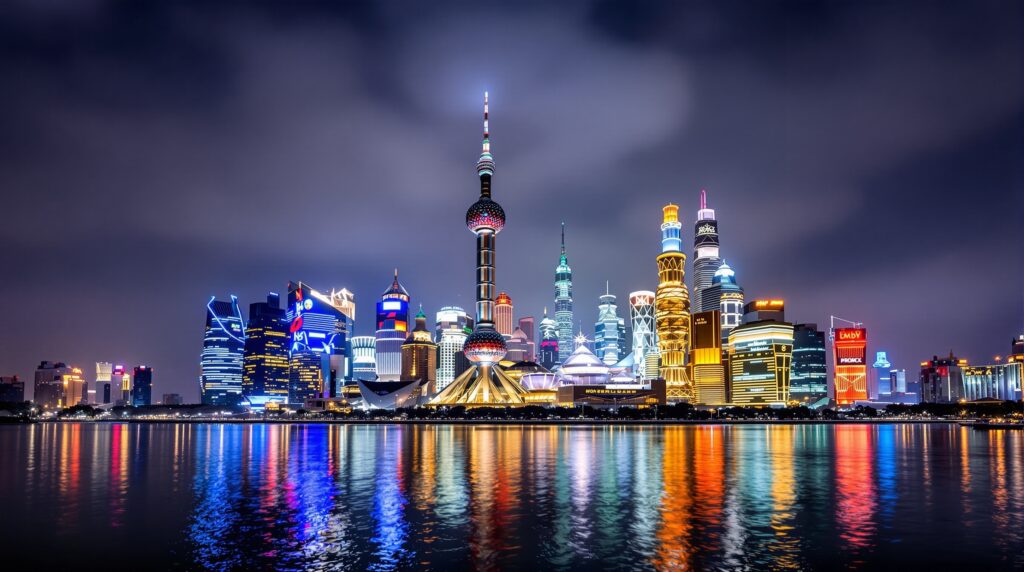
The skyline of Shanghai stretches with futuristic skyscrapers in the Pudong district. Beijing blends ancient palaces with glass towers. Shenzhen, once a fishing village, is now a tech powerhouse metropolis.
Entire city clusters, like the Pearl River Delta, form mega-regions with populations exceeding 60 million people. That’s larger than many European countries combined. China has built thousands of miles of high-speed rail, connecting major cities with bullet trains that travel at over 300 km/h. The scale of this network is unmatched anywhere else in the world.
Economic Size: A Global Giant
China’s economy is the second-largest in the world by nominal GDP and the largest by purchasing power parity. Its manufacturing capacity, export strength, and technological advancements have reshaped global markets. From smartphones and electric vehicles to steel and textiles, Chinese factories produce goods at a scale rarely seen in history.
Cities like Shenzhen are global technology hubs, while industrial centers across the country operate at immense capacity. China’s Belt and Road Initiative extends infrastructure investments across Asia, Africa, and Europe, expanding its economic footprint far beyond its borders. When we ask how big China is economically, the answer extends across oceans and continents.
The Great Wall: A Symbol of Scale
Few structures better symbolize China’s vastness than the Great Wall of China. Stretching more than 21,000 kilometers (13,000 miles) in total length across various dynasties and sections, the Great Wall is not a single wall but a network of fortifications. It snakes over mountains, through deserts, and across plains—an architectural reminder of both the country’s physical size and historical depth.

Cultural Scale: A Civilization Measured in Millennia
China’s cultural scale is just as impressive as its physical size. With over 5,000 years of recorded history, Chinese civilization has influenced art, philosophy, science, and governance across East Asia and beyond.
Mandarin Chinese is the most spoken language in the world. Chinese cuisine varies dramatically by region, from spicy Sichuan dishes to delicate Cantonese dim sum.
Traditional festivals, calligraphy, martial arts, and classical literature all contribute to a cultural presence that extends globally. Size here is measured not in miles, but in influence.
Natural Resources and Biodiversity
China’s vast territory supports diverse ecosystems. It is home to iconic wildlife like the giant panda and snow leopard. Its forests, grasslands, mountains, and coastlines provide natural resources ranging from coal and rare earth minerals to fertile farmland and fisheries. However, such scale also brings environmental challenges, including pollution, desertification, and water management issues. The country’s environmental footprint is as large as its population and economy.
Military and Strategic Size
China maintains one of the largest armed forces in the world. Its geographic position gives it strategic access to key trade routes in the Pacific.
Ports, naval bases, and industrial centers reinforce its global presence. As one of the five permanent members of the United Nations Security Council, China’s diplomatic and military influence extends worldwide. Its size is not just territorial—it is geopolitical.
Comparing Provinces: Internal Scale
China is divided into 23 provinces, five autonomous regions, four municipalities, and two special administrative regions. Some provinces are larger than entire countries. Xinjiang, for example, is bigger than Texas. Inner Mongolia stretches thousands of miles.
Traveling from one region to another can feel like entering a completely different country in terms of language dialect, cuisine, architecture, and climate. The internal diversity adds another layer to understanding how big China truly is.
Infrastructure on a Massive Scale
China’s infrastructure projects redefine scale. The Three Gorges Dam on the Yangtze River is the largest hydroelectric power station in the world.
Highways span remote deserts. Bridges connect coastal cities. Entire artificial islands have been constructed to expand urban space.
Airports in Beijing and Shanghai rank among the busiest globally. Infrastructure in China often feels futuristic because it is built at a pace and magnitude rarely matched elsewhere.
Time Zones and Geographic Reach
Interestingly, despite its enormous width, China officially operates under a single time zone: China Standard Time. In most countries of similar size, multiple time zones exist. China’s decision to maintain one time standard reflects political unity rather than geographic necessity.
In the western regions, the sun may rise hours later than in the east, yet the clocks remain synchronized nationwide. This unique detail highlights how big China is geographically—and how centralized it remains administratively.
So, How Big Is China Really?
China is 9.6 million square kilometers of mountains, rivers, cities, deserts, and coastline.
- It is home to over 1.4 billion people.
- It is one of the world’s largest economies.
- It spans climates from tropical to arctic.
- It holds thousands of years of history and cultural development.
But beyond statistics, China is big in impact. Big in ambition. Big in transformation.
It is a country where ancient temples stand beside modern skyscrapers. Where bullet trains rush past rice fields. Where history and innovation coexist on a scale that is difficult to grasp until you see it for yourself. Understanding how big China is requires more than a map. It requires imagination. Because China isn’t just large. It’s immense.