How Big Is Central Park? A Deep Dive Into New York City’s Iconic Green Giant
Central Park is one of the most recognizable parks in the world, a lush green rectangle carved into the heart of Manhattan. For visitors, it’s a place to stroll, jog, picnic, or simply take a breath away from the chaos of New York City. For locals, it’s a beloved backyard, a natural escape surrounded by steel and glass towers. But here’s a question that often pops up: just how big is Central Park? The answer is both surprising and inspiring—it’s not just a park; it’s a sprawling masterpiece of urban planning and one of the largest man-made green spaces in the world.
Central Park by the Numbers: A Surprising Scale
Central Park covers 843 acres of land right in the middle of Manhattan. That number alone might not mean much until you start to compare it. It’s about 2.5 miles long from north to south and half a mile wide from east to west. Put another way, if you walked around the park’s perimeter, you’d cover about 6 miles—a decent workout by any standard.
Its size makes it nearly impossible to experience in just one visit. The park contains 58 miles of pedestrian paths, 36 bridges and arches, and more than 20,000 trees. With its lakes, meadows, trails, gardens, and even woodlands, Central Park feels less like a single park and more like a collection of worlds stitched together in one massive green canvas.
Central Park Compared to Famous Landmarks and Cities
To truly understand how big Central Park is, it helps to compare it with other familiar places. Central Park is bigger than Monaco, the entire sovereign city-state on the French Riviera. Monaco covers only about 499 acres, which means Central Park could comfortably fit it with acres to spare.
It’s also about six times the size of Vatican City, which measures just 121 acres. In terms of iconic urban landmarks, Central Park is more than twice the size of Disneyland in California. Even when compared to sports stadiums, the park’s scale is jaw-dropping. You could fit more than a dozen Yankee Stadiums inside its borders, and still have room left over for a few extra ballparks.
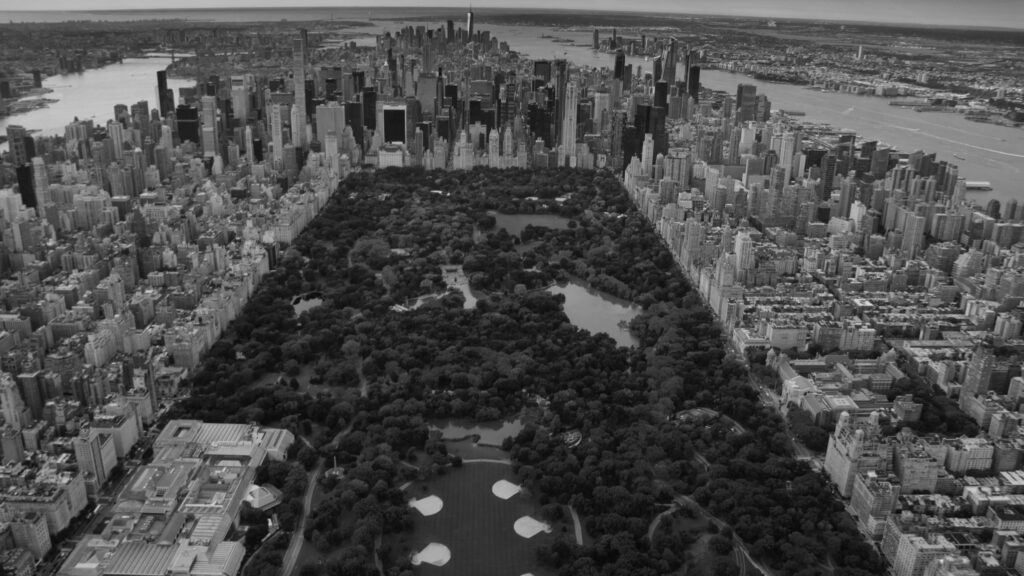
Central Park’s footprint is so vast that when you fly into New York City, you can easily spot it from the air. From above, it looks like a giant green rectangle cutting across the dense grid of Manhattan—an unmistakable visual reminder of just how enormous it really is.
Walking Through the Park: Experiencing Its Size
Numbers and comparisons give us perspective, but walking through Central Park is the best way to feel its immensity. Enter from the bustling southeast corner near 59th Street and Columbus Circle, and you might first encounter The Pond or the iconic Gapstow Bridge. A short walk can feel like a journey, as the skyscrapers of Midtown disappear behind a curtain of trees. Travel deeper, and you’ll find sprawling meadows like the Sheep Meadow or the Great Lawn, each of which alone could pass for a large city park elsewhere. The Ramble offers wooded trails where you can get lost among winding paths, while the Reservoir provides a two-mile running track with one of the best skyline views in the city. It can take hours just to explore one section of the park. Many New Yorkers treat different parts of Central Park as entirely separate destinations—the southern end for picnics, the midsection for jogging and concerts, and the north end for quiet wooded walks. That’s how big it is: one park, but dozens of identities.
The History of Building Something So Massive
Central Park wasn’t always there. In the mid-1800s, as New York City’s population exploded, civic leaders realized the need for a grand public park. The project was ambitious—carving out nearly 850 acres in Manhattan, one of the most valuable stretches of land on Earth.
Frederick Law Olmsted and Calvert Vaux designed the park, blending open meadows, water bodies, and winding paths into an intentional landscape that looked natural but was carefully engineered. They moved millions of cubic yards of soil and rock, planted over 270,000 trees and shrubs, and built lakes, bridges, and carriage drives.
The result was unlike anything else in the world—a park of monumental scale that combined recreation, beauty, and social vision. At its completion, Central Park became not just a recreational retreat but a symbol of democratic space: a park open to everyone, regardless of wealth or status.
Central Park’s Role in Daily New York Life
Central Park’s size makes it more than a green oasis—it’s a stage for New York life. On any given day, you might find joggers circling the Reservoir, couples rowing boats on The Lake, tourists snapping photos at Bethesda Terrace, or kids playing baseball on the North Meadow. Concerts on the Great Lawn draw crowds in the tens of thousands, while Shakespeare in the Park at the Delacorte Theater brings culture under the stars. Winter transforms the park into a wonderland, with ice skating at Wollman Rink and snowy walks through silent paths. The park’s immensity allows it to hold all these activities at once without feeling crowded. It’s big enough to let a million different stories unfold simultaneously, yet intimate enough to provide quiet solitude just steps away from the chaos of Fifth Avenue.
Central Park in Pop Culture and Film
The sheer size and beauty of Central Park have made it a favorite setting for film, television, and literature. From romantic comedies like When Harry Met Sally to superhero blockbusters like The Avengers, the park has appeared in countless productions. Its iconic locations—Bow Bridge, Bethesda Fountain, the Mall—are instantly recognizable worldwide.
Writers and poets, too, have been inspired by its vastness. The park’s many landscapes give creators the ability to set stories in a forest, meadow, or lakeside—all without leaving Manhattan. Central Park is so big, so varied, that it can play a hundred different roles on screen and in the imagination.
Wildlife and Nature in an Urban Giant
It’s easy to forget that Central Park is also an ecological haven. Within its 843 acres live hundreds of bird species, from hawks and owls to colorful warblers that migrate through in spring and fall. Birdwatchers from around the world come here, treating the park as one of the most famous birding sites in the United States. Squirrels, raccoons, and turtles call it home, while its ponds and lakes support fish and amphibians. The Ramble and North Woods feel like wilderness preserves, offering glimpses of nature in the middle of one of the busiest cities on Earth. This biodiversity is only possible because of the park’s sheer size—it’s big enough to sustain habitats that smaller parks could never support.
Central Park Compared to Other Famous Parks
How does Central Park stack up against other world-famous parks? Hyde Park in London, for example, is about 350 acres—less than half the size of Central Park. Paris’s Luxembourg Gardens cover just 60 acres, making them beautiful but tiny by comparison.
Even other U.S. city parks are smaller. Boston Common is about 50 acres, and San Francisco’s Golden Gate Park, though larger at 1,000 acres, is only slightly bigger than Central Park. This places New York’s masterpiece firmly among the largest and most ambitious urban parks ever created, while still holding a unique design and cultural influence that sets it apart.
The Future of Central Park’s Vast Space
Despite being more than 160 years old, Central Park continues to evolve. Its vastness requires constant care, with teams of gardeners, conservationists, and volunteers maintaining its landscapes. The Central Park Conservancy, a nonprofit founded in the 1980s, now manages the park and ensures its 843 acres remain as vibrant as ever. Future projects often focus on balancing the park’s dual identity: a world-famous tourist destination and a beloved local retreat. As the city grows around it, Central Park remains a constant—big enough to adapt, big enough to provide refuge, and big enough to inspire.
Why the Size of Central Park Matters
Asking how big Central Park is goes beyond simple curiosity. Its size is key to its impact. At 843 acres, it is large enough to create true escape, large enough to host concerts and festivals without losing quiet corners, and large enough to serve as a breathing lung for Manhattan.
Its immensity makes it one of the greatest triumphs of urban planning. It proves that even in the densest, busiest city in America, there can be space for nature, play, art, and community. Central Park’s size is not just a measurement; it’s a statement of vision, ambition, and humanity.
Conclusion: Central Park as a Monument to Scale
So, how big is Central Park? It’s 843 acres of living, breathing green space in the middle of Manhattan—a park so large it can hold Monaco, six Vatican Cities, or a dozen Yankee Stadiums. It’s two and a half miles long, half a mile wide, and endlessly diverse. Central Park isn’t just big—it’s monumental. Its size makes it one of the greatest public spaces in the world, a park that belongs to everyone, from lifelong New Yorkers to first-time visitors. In its immensity lies its magic: the ability to be both an escape and a gathering place, both wilderness and stage, both city and sanctuary.