From Delicate Arch to Endless Desert Views: The True Scale of Arches National Park
Arches National Park doesn’t feel big in the way forests sprawl or mountains tower endlessly toward the sky. Instead, it feels vast in a different, almost otherworldly way—like stepping onto a planet shaped entirely by wind, time, and gravity. Red rock fins stretch across the horizon, arches rise impossibly from the desert floor, and silence fills spaces that seem carved rather than built. So how big is Arches National Park? The answer starts with acreage and square miles, but it doesn’t end there. Because Arches is a park where scale is defined by density, geology, and visual drama. It’s not just about how much land it covers—it’s about how much wonder is packed into every mile. Located just outside Moab, Utah, Arches National Park is one of the most visually concentrated landscapes in the United States. It’s a place where the land doesn’t gently unfold—it erupts into form after form, arch after arch, cliff after cliff, each one commanding attention.
The Official Size: A Compact Giant
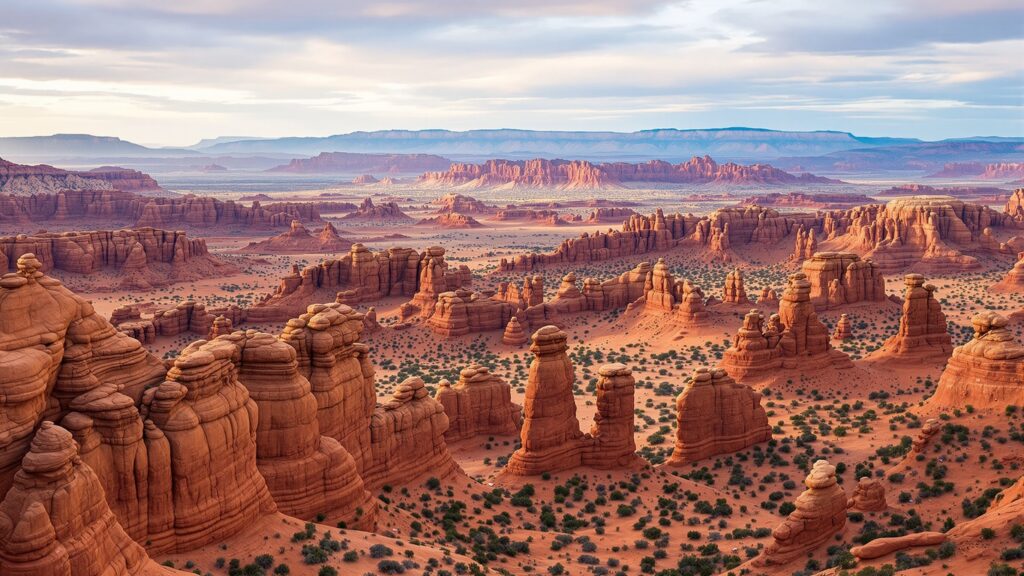
Arches National Park covers approximately 119 square miles, or about 76,500 acres. Compared to massive national parks like Yellowstone or Death Valley, this may sound modest. But Arches proves that size on paper doesn’t always reflect size in experience. Within those 119 square miles are more than 2,000 natural stone arches, along with towering spires, balanced rocks, fins, mesas, and vast open basins. Few parks pack so many iconic formations into such a relatively compact footprint. Every mile feels dense with features, making the park feel far larger than its official measurements suggest.
Why Arches Feels Bigger Than It Is
One of the reasons Arches National Park feels expansive is visibility. The desert landscape is open and unobstructed, allowing views to stretch for miles in every direction. You can often see multiple geological features at once—arches framed by cliffs, distant fins behind foreground rock towers, and open sky above it all.
Unlike forested parks where views are hidden until you reach a lookout, Arches puts its scale on full display. The lack of visual barriers creates a sense of vastness that magnifies the park’s physical size.
A Landscape Shaped by Time, Not Height
Arches National Park isn’t tall in the way mountain parks are. Its elevations range roughly from 4,000 to 5,600 feet above sea level, making it relatively flat compared to alpine landscapes. But the park’s size is expressed horizontally through erosion, spacing, and repetition.
Rock fins stretch across miles of desert. Arches appear one after another, each carved by millions of years of weathering. The land feels expansive because it’s shaped slowly, methodically, and on a massive geological timescale.
Comparing Arches National Park to Cities
To put Arches National Park’s size into perspective, its 119 square miles make it:
- Slightly larger than the city of San Francisco
- About six times the size of Manhattan
- Comparable in area to a mid-sized American city
But unlike a city, Arches has no straight lines, no grids, and no shortcuts. Roads curve around formations, trails weave through rock corridors, and distances feel longer because the terrain demands attention and movement at a human pace.
How Much of Arches Can You See in a Day?
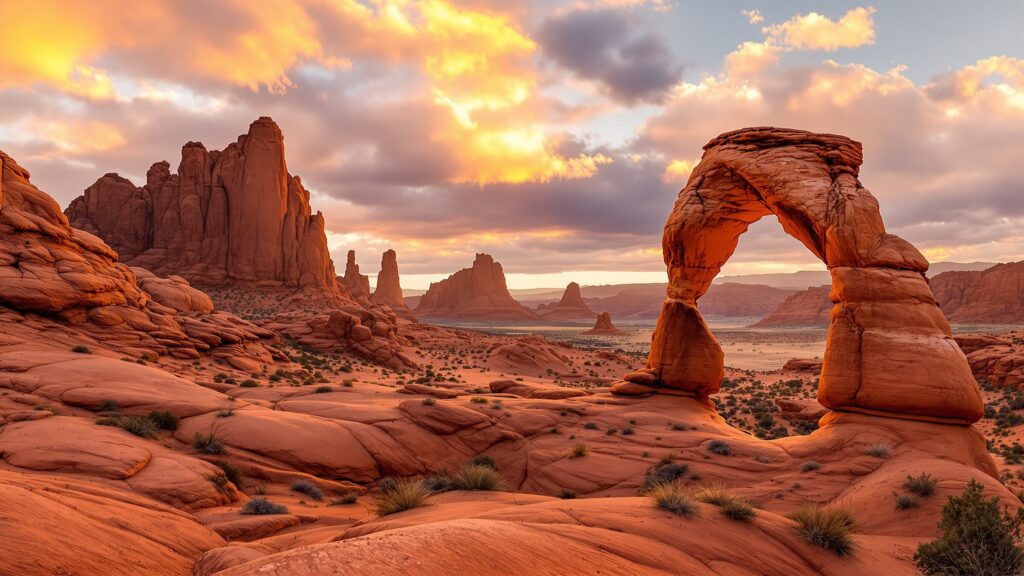
Because Arches National Park is relatively compact, many visitors assume it can be fully explored in a single day. While you can see highlights quickly, the park’s size reveals itself the longer you stay. Short hikes lead to world-famous landmarks like Delicate Arch, Balanced Rock, and The Windows. But exploring deeper—venturing into lesser-known areas or visiting at different times of day—uncovers how much territory there really is. The park unfolds layer by layer, with new formations appearing just beyond the last.

Density: One of the Most Feature-Packed Parks in America
What truly defines the size of Arches National Park is feature density. Few places on Earth contain such a concentration of natural stone arches within such a small area. Some sections of the park feel almost surreal, as if the landscape is competing with itself to create the most dramatic shape.
This density compresses wonder into every mile. You’re rarely traveling without something extraordinary in view, which makes the park feel endlessly engaging and surprisingly large.
The Role of the Sky in Perceived Scale
In Arches National Park, the sky is part of the landscape. Vast open skies stretch above the red rock formations, amplifying the sense of openness. Sunrises and sunsets flood the park with shifting color, while nighttime reveals one of the darkest, most expansive skies in the country. This vertical openness adds another dimension to the park’s size. The land may not be tall, but the space above it feels infinite.
Geological Layers That Multiply Scale
Arches National Park is made up of layers—salt beds deep underground, sandstone fins above, and arches carved at the surface. These layers represent millions of years of geological change stacked beneath your feet.
When you realize how much history is compressed into these formations, the park’s size takes on a new meaning. It’s not just a space you walk through—it’s a cross-section of Earth’s deep past.
How Arches Compares to Other Utah Parks
Compared to Utah’s other national parks, Arches is smaller than Canyonlands and Zion, but it holds its own through concentration and visual impact. Canyonlands sprawls across vast mesas and canyons, while Arches focuses its energy inward, creating a dense gallery of natural sculptures. This difference in scale makes Arches feel intimate yet expansive—a park that invites exploration without overwhelming distance.
Wildlife and Living Space
Despite its desert environment, Arches National Park supports a surprising range of life. Reptiles, birds, mammals, and resilient plant species all inhabit this landscape, adapting to heat, dryness, and exposure.
The park’s size provides enough continuous space to support these ecosystems while remaining accessible to visitors. Wildlife moves across open terrain, reinforcing the sense that the park is larger than its boundaries.
Roads, Trails, and Movement Through the Park
Arches National Park Road runs about 18 miles from the entrance to the far end of the park. Along this route, countless pullouts and trailheads branch off into different worlds. Even short hikes reveal dramatic changes in scenery. Movement through the park emphasizes its scale. What looks close on the horizon often requires a longer walk than expected, and the terrain slows you down, making distances feel greater.
Seasonal Scale: How Time Changes the Park
The perceived size of Arches changes with the seasons. In summer, heat limits movement and concentrates exploration near popular areas. In cooler months, longer hikes become more inviting, and the park seems to open up.
Light also transforms scale. Morning shadows stretch across rock fins, while evening light compresses depth into glowing walls and arches. Each visit reveals a different version of the same space.
Why Arches Feels Monumental Despite Its Size
Arches National Park feels monumental because every formation stands as a focal point. There are no filler landscapes here. Every turn reveals something sculptural, something balanced, something improbably formed. This constant visual engagement makes the park feel larger than it is. You’re not crossing empty miles—you’re moving through a living museum of geological art.
The Emotional Dimension of Size
Perhaps the most overlooked aspect of size is emotional impact. Arches National Park leaves visitors feeling small, not because of towering height, but because of time. These arches formed over millions of years, and their delicate balance feels both permanent and fragile. That sense of time stretching far beyond human scale adds depth to the park’s physical dimensions.
Final Perspective: A Small Park With Massive Presence
At 119 square miles, Arches National Park is not among the largest national parks. But few parks deliver such a powerful sense of scale in such a compact space. Its size is amplified by openness, density, geology, and light.
Arches proves that big landscapes don’t always need big borders. Sometimes, size is about how much awe a place can hold—and Arches National Park holds an extraordinary amount.