
When Campus Creativity Goes Big: Measuring the Impact of University Props
University campuses are places where ideas come to life, traditions take shape, and creativity spills into every corner—from lecture halls to stadiums to open green quads. But beyond the academic experience, there’s a powerful visual layer shaping campus identity: props. These aren’t just decorations—they’re bold statements, storytelling tools, and unforgettable landmarks. So just how big is a university prop? The answer isn’t simple. University props can range from small tabletop displays to towering installations that rival public monuments. They can be temporary or permanent, functional or purely decorative, playful or deeply symbolic. What defines their “size” goes far beyond physical dimensions—it’s about impact, visibility, and the role they play in shaping campus culture. Let’s explore the fascinating world of university props, from their physical scale to their creative ambition, and everything in between.
Defining the University Prop
Before diving into size, it helps to define what a university prop actually is. In this context, a prop refers to any large-scale or purpose-built object used for events, branding, storytelling, or visual engagement on campus. These can include oversized mascots, themed installations, stage sets for ceremonies, interactive displays, or even massive replicas of everyday objects tied to school identity. Unlike traditional stage props, university props often live in open environments. They must withstand weather, crowds, and constant interaction. That alone changes how they are designed—and how big they need to be. A university prop isn’t just seen. It’s experienced.
The Small End of the Scale
At the smallest end, university props might measure just a few feet tall. Think of podium decorations, themed backdrops for speaking events, or tabletop displays used during recruitment fairs. These props are typically portable and designed for quick setup and teardown.
Despite their modest size, these smaller props still play an important role. They help establish visual identity, reinforce branding, and create cohesive themes across events. A well-designed small prop can still make a big impression, especially when used in the right context. But when people ask how big university props are, they’re usually imagining something much larger.
Medium-Sized Props: Campus Staples
Moving up in scale, medium-sized props are where things start to get interesting. These typically range from 6 to 15 feet tall and are commonly seen during campus events, sports games, and seasonal celebrations.
Picture a 10-foot-tall mascot statue placed at the entrance to a football stadium. Or a giant foam letter display spelling out the university’s name across a quad. These props are large enough to draw attention, serve as photo backdrops, and anchor an event visually.
At this size, props begin to interact with architecture. They’re no longer just objects—they become part of the environment. Students gather around them, take photos with them, and use them as meeting points. Their scale invites participation.
Large-Scale Props: The Showstoppers
Now we enter the realm of truly memorable university props. Large-scale installations often range from 15 to 30 feet tall, and sometimes even wider or longer depending on the design.
These are the props that stop people in their tracks.
Imagine a towering inflatable mascot rising above a stadium crowd, or a massive sculptural installation representing the university’s founding story. These props are designed to be seen from a distance. They dominate their surroundings and create a sense of spectacle.
Large-scale props are often used for major events like homecoming, graduation ceremonies, or campus-wide festivals. They act as focal points, drawing people in and anchoring the entire experience.
At this level, size becomes a storytelling device. The bigger the prop, the bigger the message.
Monumental Props: When Props Become Landmarks
At the highest end of the spectrum, university props can rival public art installations or even small buildings. These monumental props can exceed 30 feet in height and stretch across large areas of campus.
Some universities install permanent or semi-permanent props that become iconic landmarks. A giant sculptural mascot, a massive symbolic structure, or an oversized replica tied to school history can define the visual identity of a campus for years.
These props are not just decorations—they are destinations. Students give directions using them. Alumni return to visit them. Prospective students take photos with them during campus tours. Their size ensures they are impossible to ignore, and their presence becomes woven into the fabric of university life.
Size Isn’t Just Height—It’s Presence
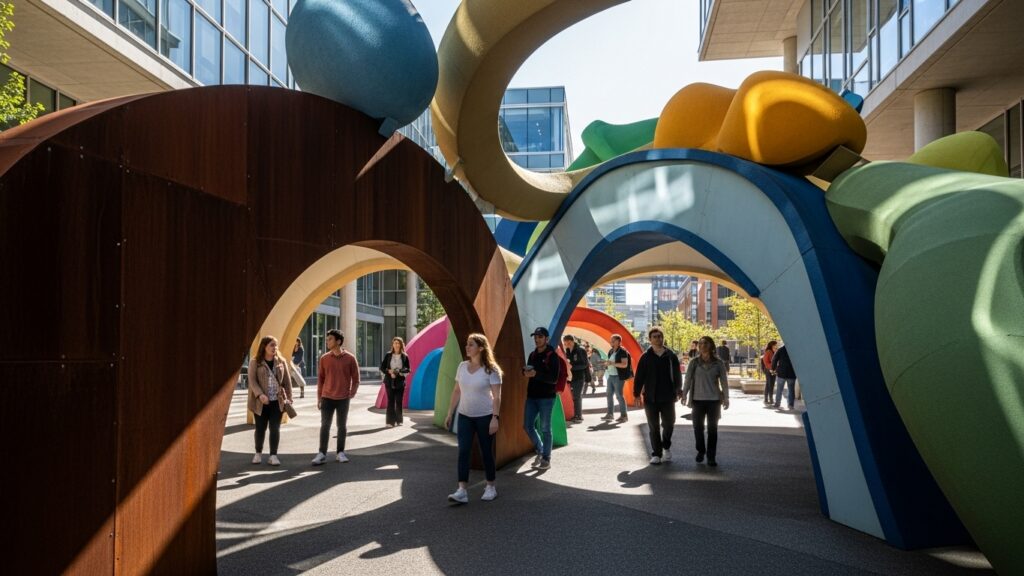
When considering how big a university prop is, it’s important to think beyond height alone. Size can also refer to width, depth, and overall footprint. A prop might not be tall, but it could stretch across an entire plaza. A stage set might span 50 feet wide, creating an immersive environment rather than a vertical focal point. Interactive installations often prioritize space over height, inviting people to walk through or around them. In many cases, the “bigness” of a prop is about how much space it occupies—and how much attention it commands.
Indoor vs. Outdoor Props
The environment plays a major role in determining prop size. Indoor props are typically smaller due to ceiling height limitations and access constraints. They must be designed to fit through doorways, elevators, and corridors.
Outdoor props, on the other hand, have far fewer restrictions. Open spaces allow for much larger designs, and the scale of surrounding buildings often demands bigger props to maintain visual balance.
A prop that feels large indoors might seem tiny outside. That’s why outdoor university props tend to be significantly larger—they need to compete with the scale of the campus itself.
Event Type and Its Influence on Size
Different types of university events call for different prop sizes.
For intimate academic events, smaller props are often more appropriate. They support the theme without overwhelming the space. For large-scale celebrations like commencement or sports events, bigger props are necessary to match the energy and scale of the crowd.
Homecoming events, for example, often feature some of the largest props on campus. These are moments when universities showcase their pride, creativity, and tradition—and size becomes a key part of that expression.
The bigger the audience, the bigger the prop usually needs to be.
The Role of Visibility
Visibility is one of the main drivers behind prop size. A prop must be large enough to be seen clearly from its intended viewing distance.
In a crowded stadium, a small prop would simply disappear. That’s why inflatable structures, large banners, and oversized sculptures are commonly used—they ensure that everyone in the audience can see and engage with the visual.
On an open campus, visibility might mean being seen from across a quad or down a long walkway. Designers must consider sightlines, lighting, and surrounding structures when determining how big a prop should be.
Materials and Structural Considerations
As props increase in size, the materials used to build them become increasingly important. Lightweight materials like foam, fiberglass, and aluminum are often used to keep large props manageable and safe.
Inflatable structures are another popular option for large-scale props. They can reach impressive heights while remaining easy to transport and store. Once deflated, they take up minimal space, making them ideal for temporary installations.
Structural integrity is also a major factor. Large props must be able to withstand wind, weather, and constant interaction. This often requires internal frameworks, anchoring systems, and careful engineering.
The bigger the prop, the more complex its construction becomes.
Portability vs. Permanence
Another factor influencing size is whether the prop is meant to be portable or permanent.
Portable props are designed to be moved, stored, and reused. This often limits their size or requires them to be modular. Large portable props might be built in sections that can be assembled on-site.
Permanent props, on the other hand, can be much larger. Since they don’t need to be moved, they can be designed with heavier materials and more complex structures. These props often become long-term fixtures on campus.
The intended lifespan of a prop plays a big role in determining how big it can realistically be.
The Emotional Scale of a Prop
Beyond physical dimensions, there’s also an emotional component to size. A prop might not be enormous, but if it resonates with people, it can feel much bigger.
A sculpture representing a university’s founding moment, for example, might carry immense symbolic weight. Students and alumni connect with it on a personal level, making it feel larger than life.
This emotional scale is what transforms a prop from a simple object into a meaningful experience.
Social Media and the Push for Bigger Props
In today’s digital world, university props are often designed with social media in mind. Large, visually striking props are more likely to be photographed, shared, and remembered. A 20-foot installation creates a far more dramatic photo opportunity than a 5-foot one. It becomes a backdrop for memories, a centerpiece for posts, and a way for students to express their connection to the university. This has led to a trend toward bigger, bolder props. Universities recognize the value of creating shareable moments, and size plays a key role in achieving that.
Fabrication: How These Massive Props Are Built
Creating a large university prop is no small task. It often involves a combination of design, engineering, and craftsmanship.
The process typically begins with concept development, where designers determine the size, shape, and purpose of the prop. From there, detailed plans are created, taking into account materials, structural requirements, and safety considerations.
Fabrication may involve carving foam, molding fiberglass, welding metal frameworks, or sewing large fabric panels for inflatables. Each component is carefully crafted and then assembled on-site.
For very large props, cranes or specialized equipment may be needed to position and secure the structure. It’s a complex process that requires precision and expertise.
Real-World Examples of University Prop Sizes
Across campuses, examples of university props vary widely in size. Some universities feature mascot statues around 10 to 15 feet tall, serving as popular photo spots. Others go bigger, with inflatable mascots reaching 25 feet or more during game days. Stage sets for graduation ceremonies can span entire fields, incorporating multiple large props to create a cohesive visual experience. Seasonal installations, like holiday displays or themed festivals, often include a mix of medium and large props to transform the campus environment. These examples highlight just how flexible and varied university prop sizes can be.
So, How Big Is a University Prop?
In the end, the size of a university prop depends on its purpose, location, and desired impact. It could be as small as a few feet or as large as a multi-story structure.
But more importantly, its size is defined by how it makes people feel. Does it draw attention? Does it create excitement? Does it tell a story?
A university prop isn’t just measured in feet or inches—it’s measured in moments.
Bigger Than You Think
University props are far more than decorative elements. They are powerful tools for storytelling, branding, and community building. Their size, whether small or monumental, is carefully chosen to match their purpose and amplify their impact. From modest displays to towering installations, these props shape the visual and emotional landscape of a campus. They create memories, spark conversations, and bring people together. So the next time you see a university prop, take a moment to appreciate not just how big it is—but how big a role it plays.