How Big Is a Subdivision? A Simple Question With a Surprisingly Big Answer
“How big is a subdivision?” sounds like an easy question—until you try to answer it. Some subdivisions feel like cozy clusters of homes where everyone knows each other’s dog. Others stretch so far they have their own schools, parks, shopping centers, and traffic patterns. The truth is, subdivisions don’t come in one standard size. They range from intimate pockets of land with a dozen homes to sprawling master-planned communities that feel like entire towns. Understanding subdivision size matters whether you’re buying a home, investing in real estate, planning infrastructure, or simply curious about how neighborhoods are designed. Size influences everything from walkability and privacy to HOA rules, commute times, property values, and long-term growth potential. Let’s explore what really defines the size of a subdivision—and why it’s far more nuanced than a simple acreage number.
What Exactly Is a Subdivision?
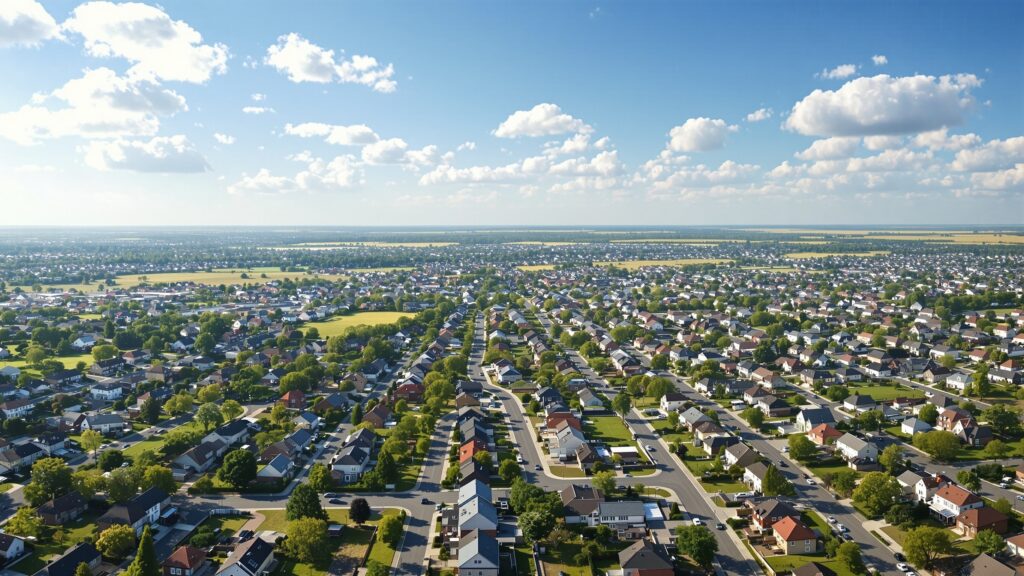
At its core, a subdivision is a tract of land divided into smaller lots for development, usually residential. These lots are mapped out with streets, utilities, drainage, and shared infrastructure before individual homes are built. Subdivisions are created through a legal and planning process that includes zoning approval, plats, and compliance with local development rules. What makes subdivisions unique is that they are planned as a cohesive unit. Streets follow a deliberate layout, lots are similar in size or style, and there’s often a unifying design theme. This planning element is why subdivisions can vary so dramatically in scale—because they’re designed to serve different lifestyles, markets, and land constraints.
The Small End of the Spectrum: Micro Subdivisions
On the smallest end, a subdivision may consist of just a few acres. These micro subdivisions are often found in urban or infill areas where land is limited and expensive. A developer might take a single parcel and divide it into 5 to 20 lots, creating a tight-knit residential pocket.
These subdivisions can be as small as 2 to 10 acres in total. Homes are typically closer together, lot sizes are compact, and streets may be short or even private. Despite their size, these developments still count as subdivisions because the land has been legally divided and planned as a group.
Small subdivisions appeal to buyers who want modern homes, central locations, and low maintenance yards. They’re common near city centers, revitalized downtowns, and growing urban corridors.
Medium-Sized Subdivisions: The Classic Neighborhood
When most people picture a subdivision, they’re usually imagining something in the middle of the size range. These classic subdivisions typically span 30 to 150 acres and contain anywhere from 50 to 300 homes. In this range, you’ll often see curving streets, cul-de-sacs, sidewalks, streetlights, and maybe a neighborhood park or small green space. Lots are larger than in urban developments but still compact enough to create a sense of community. Homes may follow a few architectural styles with slight variations, giving the neighborhood a cohesive look.
Medium-sized subdivisions strike a balance between intimacy and scale. They’re large enough to support amenities and HOA management, but small enough that residents don’t feel lost in the crowd. These are the neighborhoods many families grow up in and return to later in life.
Large Subdivisions and Master-Planned Communities
Once a subdivision crosses into the hundreds of acres, it becomes something more ambitious. Large subdivisions may cover 300 to 2,000 acres and include hundreds or even thousands of homes. These are often referred to as master-planned communities.
In these developments, residential areas are just one piece of a much larger puzzle. You’ll often find multiple neighborhood “pods,” each with its own identity, surrounded by shared amenities like lakes, trails, clubhouses, pools, schools, and commercial zones. Roads are wider, infrastructure is more complex, and planning horizons stretch decades into the future. Some master-planned subdivisions are so large they rival small cities in population. They may take 10 to 30 years to fully build out, evolving over time as market demands shift.
Acreage vs. Number of Homes: Two Ways to Measure Size
Subdivision size can be measured in two main ways: land area and housing density. Acreage tells you how much land the subdivision covers, while the number of homes tells you how intensively that land is used.
A 100-acre subdivision could have 80 homes with large lots and open space, or it could have 400 homes packed closely together. Both are technically the same size in land area, but they feel completely different to live in.
Density is often expressed as homes per acre. Low-density subdivisions may have one home per acre or less, while high-density subdivisions might have five to ten homes per acre. Zoning laws and market preferences heavily influence these numbers.
How Zoning Laws Shape Subdivision Size
Local zoning regulations play a major role in determining how big a subdivision can be and how it’s laid out. Zoning dictates minimum lot sizes, setbacks, road widths, parking requirements, and allowable densities.
- In rural or semi-rural zones, subdivisions may require large minimum lot sizes, leading to sprawling developments with fewer homes spread over more land.
- In suburban zones, lot sizes shrink, allowing more homes per acre.
- Urban zoning often permits townhomes, duplexes, or condos, dramatically increasing density without expanding land area.
Environmental regulations also affect size. Wetlands, floodplains, steep slopes, and protected habitats can reduce buildable land, forcing developers to spread homes out or cluster them creatively.
Infrastructure: The Hidden Space You Don’t See
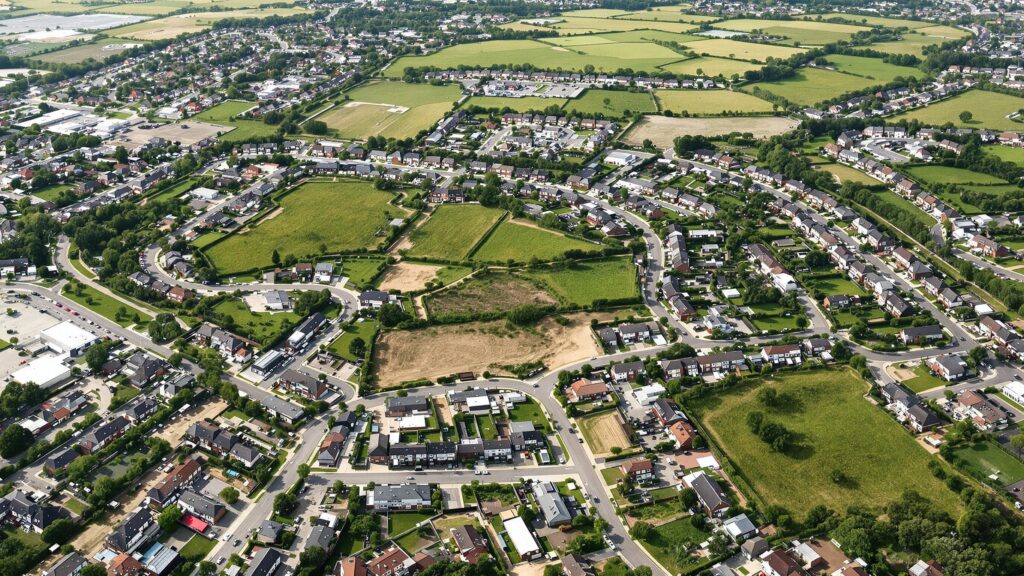
When thinking about subdivision size, it’s easy to focus on homes and yards. But a significant portion of a subdivision’s land is dedicated to infrastructure. Roads, sidewalks, stormwater systems, utility easements, retention ponds, and green buffers all take up space.
In larger subdivisions, this infrastructure can consume 20 to 40 percent of the total land area. Parks, walking trails, and open space requirements further reduce the land available for homes. Ironically, bigger subdivisions often feel more spacious because so much land is reserved for non-residential use.
Subdivision Size and Lifestyle
Size directly impacts how a subdivision feels to live in. Smaller subdivisions tend to feel quieter and more personal. You’re more likely to recognize your neighbors, and traffic is usually minimal. However, amenities may be limited or nonexistent.
Medium-sized subdivisions often offer the best of both worlds, with a strong sense of community and access to shared features like playgrounds or walking paths. Social events and neighborhood groups are more common at this scale.
Large subdivisions offer extensive amenities but can feel more anonymous. You may drive several minutes just to exit the community, and neighbors may feel more spread out socially, even if homes are physically closer together.
How Big Is Too Big?
There’s no universal answer to how big a subdivision should be. For some buyers, anything over 100 homes feels overwhelming. For others, a massive master-planned community feels exciting and full of opportunity.
The key question is whether the subdivision’s size aligns with its design. Well-planned large subdivisions feel organized and intentional, while poorly planned small ones can feel cramped and chaotic. Size alone doesn’t determine quality—planning does.
The Role of Developers in Determining Scale
Developers decide subdivision size based on land availability, market demand, financing, and long-term vision. Smaller developers may focus on compact projects they can complete quickly. Large national developers often take on massive tracts of land, building communities in phases over many years. Phased development allows subdivisions to grow gradually. Early phases may feel small and quiet, while later phases transform the community into something much larger. This evolution is why residents sometimes feel their subdivision “grew up” around them.
Subdivisions vs. Neighborhoods: Are They the Same Size?
The terms “subdivision” and “neighborhood” are often used interchangeably, but they’re not always the same thing. A subdivision is a legal and planning designation. A neighborhood is a social and cultural concept.
A single large subdivision may contain multiple neighborhoods, each with its own name and identity. Conversely, a neighborhood may include several small subdivisions built at different times. This distinction is important when discussing size, because what feels like one community may actually be made up of many smaller pieces.
Subdivision Size and Property Values
Size can influence property values in subtle ways. Smaller subdivisions often command higher prices per home due to exclusivity and limited supply. Larger subdivisions may offer more affordable options, especially in early phases, but values can rise as amenities are completed and the community matures. Consistency also matters. Buyers often prefer subdivisions where homes are similar in age, style, and condition. Very large subdivisions built over decades may show more variation, which can affect resale appeal depending on buyer preferences.
The Future of Subdivision Design
As cities grow and land becomes scarcer, subdivision sizes and layouts are evolving. Many new developments emphasize higher density, walkability, and mixed-use elements rather than sheer land size. Smaller footprints with smarter design are becoming more common.
At the same time, large master-planned communities continue to thrive in fast-growing regions where land is still abundant. The future of subdivisions isn’t about being bigger or smaller—it’s about being better designed.
So, How Big Is a Subdivision Really?
A subdivision can be as small as a few acres with a handful of homes or as large as several thousand acres housing tens of thousands of residents. Size is shaped by zoning, geography, market demand, and vision. What matters most isn’t the number of acres or homes, but how thoughtfully the space is planned and how well it serves the people who live there. When you ask how big a subdivision is, you’re really asking what kind of community it creates. And that answer is as varied as the neighborhoods themselves.