From Small Decorative Figures to Monumental Landmarks, Exploring the True Scale of Statues
Statues have a way of changing the scale of everything around them. A person can walk into a plaza, museum, garden, theme park, memorial site, or city square and instantly feel smaller, more reflective, or more energized simply because a sculpted figure is standing nearby. That reaction has less to do with the exact tape-measure dimensions and more to do with the relationship between the statue, the viewer, and the space it occupies. Still, one of the most common questions people ask is surprisingly simple: how big is a statue? The answer is that statues can be almost any size. A statue may be only a few inches tall, designed for a shelf, desk, or niche. It may be life-size, matching the height and proportions of a real human or animal. It may be monumental, towering over visitors in a public square. Some statues rise so high that they become landmarks visible from great distances, while others are modest in scale but feel immense because of their craftsmanship, symbolism, and placement. Size in statuary is not a single standard. It is a spectrum, and understanding it means looking at art, architecture, engineering, public design, and human perception all at once. When people search for statue size, they are often trying to understand more than a number. They want to know what counts as small, medium, large, monumental, or colossal. They may be comparing a custom garden statue to a museum figure, planning an event prop, commissioning a public artwork, or simply wondering how a famous monument compares to an everyday object. That is what makes this topic so interesting. A statue is not just measured by height. It is also shaped by width, depth, base size, posture, material thickness, and visual presence.

A Statue Can Be Tiny, Life-Size, or Towering
At the smallest end of the scale, statues may be miniature decorative objects. These could range from a few inches to around one foot tall. Small resin, ceramic, wood, or cast metal statues are common in home décor, gift shops, religious spaces, and collector displays. A six-inch statue on a shelf may still have elegant proportions and detailed features, but its size is intended for intimate viewing rather than public impact.
The next step up includes tabletop and accent statues, often somewhere between one and three feet tall. These are popular in interior design, office settings, reception areas, and smaller landscaped spaces. A statue in this range is large enough to read as a focal point but still manageable for indoor placement. It has presence without dominating the room.
Then there are statues designed to feel human in scale. A life-size statue typically matches the dimensions of the subject it represents. For an adult human figure, that often means a sculpture in the neighborhood of five to seven feet tall depending on the pose, footwear, hairstyle, base, and body proportions. A seated figure may be shorter in overall height than a standing one but still occupy substantial visual space. A horse statue, animal figure, or historical character may also be described as life-size if it mirrors natural real-world dimensions.
Beyond life-size is where things start to get dramatic. A statue that is 8, 10, or 12 feet tall can already feel monumental in a gallery, courtyard, lobby, or memorial setting. Even without reaching skyscraper territory, a figure that is double human scale creates a strong emotional effect. It signals importance. It invites photography. It alters the atmosphere of the site around it.
From there, public monuments can stretch far higher. Large civic, religious, commemorative, and tourism-oriented statues may be 20, 30, 50, or more than 100 feet tall. Some famous giant statues are measured not only by the sculpted figure itself but also by the pedestal or base beneath it, which can add substantial height. That detail matters because one source may describe the statue alone, while another gives the total height from ground to top. When comparing sizes, it is always smart to ask whether the base is included.
What Dimensions Actually Matter?
Most people think of size in terms of height first, and that makes sense. Height is the quickest and easiest way to compare statues. But height alone does not tell the whole story. Two statues of equal height can feel completely different depending on their width, depth, pose, and silhouette.
A narrow standing figure with arms close to the body may occupy much less space than a statue of the same height with wings, flowing robes, an outstretched sword, or a dynamic stance. A rearing horse sculpture, for example, may need far more depth and structural support than a calm standing figure. A seated statue can be shorter than a standing one but broader, heavier, and more dominant in a room or plaza.
The base matters too. Some statues sit on low plinths, while others are elevated on dramatic pedestals to improve visibility and symbolism. A five-foot figure on a four-foot base can have a total display height of nine feet, which changes how viewers experience it. In public art and architecture, that difference is huge. A raised statue is often designed to be seen from afar or from below, while a ground-level statue can feel more personal and accessible.
Material also affects the perceived and practical size. A carved marble statue, a cast bronze figure, an inflatable promotional sculpture, and a fabricated foam-core event prop may all stand at the same height but differ radically in weight, internal support, installation needs, and outdoor durability. In other words, size is both visual and structural.
The Difference Between Life-Size and Monumental
One of the biggest points of confusion is the line between life-size and monumental. Life-size means the statue is roughly the size of the real subject. Monumental means it is designed to exceed ordinary scale in order to create impact. That impact may be symbolic, emotional, political, spiritual, or theatrical.
A life-size statue often feels relatable. It places the subject in the viewer’s world. Visitors can stand next to it and easily imagine the represented person or animal as physically present. This is why life-size statues are so effective in museums, memorials, gardens, and figurative sculpture collections. They feel immediate and human.
A monumental statue does something different. It enlarges the subject beyond normal experience. That increase in scale can suggest power, remembrance, reverence, heroism, or spectacle. A ten-foot statue of a person already pushes the subject into a larger-than-life category. At twenty feet and above, the emotional tone shifts even more. The figure is no longer just representing someone. It is commanding space.
That does not mean bigger is always better. A giant statue can be impressive, but if it is too large for the site, it may feel awkward or overwhelming. Likewise, a modest statue placed perfectly can feel unforgettable. Smart design is about proportion. The best statue size is the one that matches the purpose of the piece and the environment where it will live.
How Big Are Famous Statues Compared to Everyday Objects?
One fun way to understand statue size is to compare it to things we see all the time. A two-foot statue is about the height of a small side table. A six-foot statue is around the height of an average adult man. A ten-foot statue is taller than a standard residential ceiling. A twenty-foot statue is comparable to a two-story building. A thirty- to forty-foot statue starts to rival mature trees, storefront façades, and billboard structures. Once a statue reaches fifty feet and beyond, it begins to operate more like architecture than décor.
That shift is important. Small statues are objects in a space. Giant statues become part of the space itself. They influence traffic flow, sightlines, photography angles, shade patterns, and even how a place is remembered. Think about the difference between a sculpture on a pedestal in a courtyard and a giant landmark that people use as a meeting point. The role of the object changes with scale.
This is also why event designers, theme park builders, public artists, and city planners spend so much time thinking about proportion. A statue seen up close in a museum needs different dimensions than one viewed from a moving car, a crowded festival route, or a broad civic plaza. Distance changes what size feels appropriate. The farther away the audience will be, the larger and bolder the statue usually needs to be.
Why Some Statues Feel Bigger Than They Really Are
Perception plays tricks in the best possible way. A statue does not have to be enormous to feel enormous. Designers can make a medium-size statue appear more dramatic through pose, placement, lighting, color, and base design.
For instance, a figure placed at the end of a long walkway feels more important because the approach builds anticipation. A statue positioned against open sky appears taller because there are fewer nearby reference points. A dark bronze sculpture with sweeping lines may read as heavier and more powerful than a pale, compact figure of the same dimensions. Even posture changes the emotional scale. Outstretched arms, lifted heads, wind-swept garments, and elevated bases all amplify presence.
Surrounding architecture matters too. Put a statue in a narrow garden surrounded by low walls and it may feel large. Put the same statue in the center of a massive urban plaza lined with tall buildings and it may suddenly seem modest. This is why designers talk so much about context. Size is never experienced in isolation.
There is also the matter of detail. Large statues often require exaggerated features so they can read correctly from a distance. Hands, facial features, folds in clothing, and accessories may be stylized or enlarged to maintain visual clarity. In that sense, the true design size of a statue is not only its measured dimensions but also the scale of its details.
Indoor Statues vs Outdoor Statues
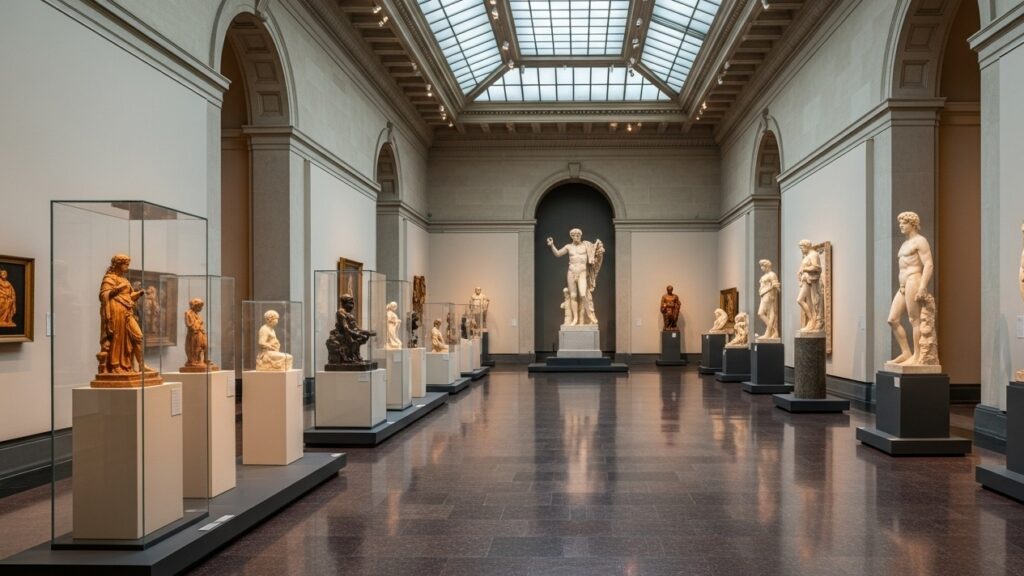
Where a statue is placed has a huge effect on what size works best. Indoor statues must respond to ceiling height, doorway clearance, flooring capacity, lighting, and viewing distance. Even a seven-foot figure may feel imposing in a home, boutique, or small lobby. In a grand hotel atrium or museum hall, that same figure may feel perfectly balanced.
Outdoor statues have more freedom, but they also face more demands. Open spaces can visually shrink objects, so statues intended for parks, plazas, campuses, resorts, memorial gardens, and streetscapes often need extra scale to maintain impact. At the same time, outdoor works must handle wind loads, rain, sun exposure, base anchoring, and long-range visibility.
A statue designed for an intimate courtyard might be six to eight feet tall. A signature piece for a resort entrance or event venue might be ten to twenty feet. A major public landmark may go far beyond that. There is no single rule, but the general pattern is simple: the larger and more open the site, the more generous the statue size usually needs to be.
How Materials Influence Practical Size
Material choice changes what is possible.
- Stone and marble can produce timeless, elegant statues, but they are heavy and may be limited by carving methods, transport logistics, and structural concerns.
- Bronze is a classic choice for public sculpture because it offers durability and fine detail, though large bronze pieces often require advanced casting, segmented construction, and skilled installation.
- Resin and fiberglass are popular for decorative, commercial, and themed environments because they can create large visual forms with less weight.
- Fabricated foam, hard coatings, welded frames, and mixed-media assemblies are common in event props, theatrical pieces, seasonal displays, and branded installations.
These methods can make statues appear massive without requiring the same material mass as stone or solid metal.
That is one reason a person asking “How big is a statue?” may really be asking “How big can my statue be?” The answer depends on budget, purpose, materials, transport, indoor or outdoor use, and installation conditions. A 12-foot foam-and-fiberglass prop for an event has very different constraints than a 12-foot carved granite memorial.
Measuring a Statue Correctly
If you are buying, commissioning, designing, or comparing statues, careful measurement matters. Height should be measured from the lowest visible point of the piece or base to the highest point of the sculpture. Width is measured at the broadest horizontal span. Depth is measured from frontmost to rearmost point. If the base is separate, it helps to list statue dimensions and total installed dimensions separately.
That kind of clarity avoids confusion. A seller might describe a statue as eight feet tall, but if that only refers to the sculpted figure and not the pedestal, the installed result may be much taller. Likewise, shipping dimensions may be different from assembled dimensions if the statue arrives in parts.
For custom pieces, scale drawings, 3D renderings, and mockups are especially helpful. A statue that sounds manageable on paper may look much larger once placed into a real-world scene. Designers often use digital visualizations or printed silhouettes to test how a statue will feel in a location before fabrication begins.
When Does a Statue Become Colossal?
There is no universal cutoff, but many people use terms like monumental and colossal for statues that clearly exceed everyday human scale by a wide margin. A colossal statue usually suggests something truly extraordinary, often large enough to serve as a landmark or destination in its own right. Once a statue begins to dominate a skyline, hillside, waterfront, or major civic site, it enters that category in the minds of most viewers.
But language around scale is flexible. One museum may call a ten-foot interior sculpture monumental because of its dramatic effect in the gallery. Another designer may reserve that word for statues twenty feet and above. In practice, the most useful approach is not getting too hung up on labels. Instead, ask how the piece functions in its environment. Does it read as intimate, architectural, heroic, ceremonial, theatrical, or iconic? That tells you more than a label alone.
Why Statue Size Matters Emotionally
The size of a statue shapes the feeling it creates. Small statues invite close attention. They reward detail and contemplation. Medium-size statues can anchor a room or garden without overpowering it. Life-size statues create connection because they meet viewers at familiar scale. Monumental statues generate awe, pride, memory, excitement, and sometimes even intimidation.
This emotional dimension is one reason statues remain so powerful across cultures and centuries. They do not just represent people, ideas, or stories. They physically stage those ideas in space. Size becomes part of the message. A modest figure can communicate intimacy or humility. A giant figure can project reverence, strength, grandeur, or public significance.
That is also why custom statue projects often spend as much time discussing mood and impact as measurements. People are rarely chasing dimensions for their own sake. They want the right effect. They want visitors to stop, look, photograph, reflect, smile, or remember. The chosen size helps make that happen.
So, How Big Is a Statue?
A statue can be as small as a handheld decorative object or as massive as a city-defining monument. Many home and tabletop statues range from a few inches to a few feet tall. Life-size human statues are often around five to seven feet. Large decorative and commercial statues may reach eight to twenty feet. Monumental public works can extend far beyond that, especially when bases and pedestals are included. The better answer, though, is that a statue is only as big as its purpose, setting, and design demand it to be. Size is not just a number. It is a choice that affects visibility, symbolism, engineering, cost, and emotional impact. A beautifully designed six-foot statue may be perfect for one environment, while another site may call for a dramatic twenty-foot centerpiece. Both can be successful because both are responding to context.
That is what makes the question so fascinating. Asking how big a statue is opens the door to deeper questions about art, space, scale, materials, and human experience. In the end, statues are measured in feet and inches, but they are remembered in feeling. Some are small enough to fit on a shelf. Others tower over skylines. All of them, when designed well, understand one essential truth: size means more when it serves the story.