The Sacred Scale of Faith and Art
If art reflects the soul of humanity, religious statues are its most powerful expression in stone, bronze, and marble. They stand as symbols of devotion, cultural pride, and artistic mastery — from the humble figures gracing home altars to the colossal monuments rising above city skylines. But here’s the fascinating question: just how big is a religious statue? The answer stretches from the size of your fingertip to the height of skyscrapers. Across centuries and continents, artists and believers have used scale to communicate divine presence — from the intimate to the immense. Let’s journey through the sacred world of religious statues and discover how their size shapes meaning, emotion, and connection.
From Handheld to Heavenly: The Spectrum of Sacred Scale
Religious statues exist in every imaginable size, but they all share a single purpose — to connect the human with the divine. At one end, there are tiny prayer statues — small enough to rest in your palm or sit upon a home altar. At the other, monumental sculptures rise hundreds of feet into the air, visible for miles, symbolizing humanity’s yearning to reach toward heaven. In between lies a vast range: church statues, courtyard icons, and temple guardians — each crafted with scale that suits its spiritual setting. The result is a breathtaking diversity of size, each imbued with meaning.
The Humble Icons: Small Religious Statues with Big Significance
Small religious statues, often just a few inches tall, are among the most personal and cherished forms of sacred art. These figurines – from a serene Buddha on a desk to a miniature Virgin Mary on a nightstand – represent faith that travels with you. They are intimate companions, silent reminders of belief in everyday life.
Crafted from materials like wood, resin, or ceramic, these miniatures often depict deities, saints, or sacred animals. Their small size makes them ideal for home shrines, travel altars, or meditation spaces. But don’t let their scale fool you — the craftsmanship is often intricate, with delicate folds in robes, gentle facial expressions, and fine detailing that feels alive. In many traditions, small religious statues are part of daily rituals: lit candles beside them, whispered prayers before them, and fresh flowers laid at their feet. Their very size symbolizes closeness — faith brought near, personal, and tangible.
The Everyday Sacred: Life-Sized Religious Statues
Step outside homes and into temples, cathedrals, or monasteries, and you’ll often find life-sized statues, powerful enough to command presence yet human enough to feel familiar.
These range from four to six feet tall — the size of an actual person — allowing worshippers to stand eye-to-eye with their faith. In Christian cathedrals, life-sized saints and angels line corridors or stand near altars, creating a silent congregation that embodies the spiritual world. In Buddhist temples, monks meditate before life-sized representations of the Buddha, each posture radiating serenity.
The beauty of life-sized statues lies in empathy. They remind us that divinity can take human form — reachable, relatable, and compassionate. To stand before one is to feel seen by the divine.
The Majestic Giants: Monumental Religious Sculptures
And then, the scale expands — dramatically. Across the world, colossal religious statues rise like mountains of devotion. These are the giants of sacred art — awe-inspiring creations that merge architecture, engineering, and spirituality.
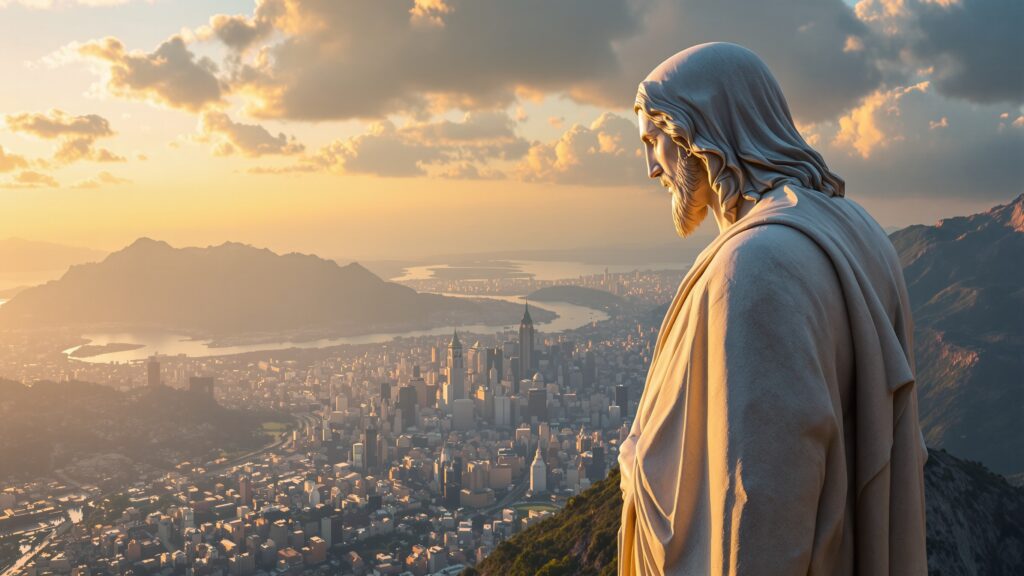
Take Christ the Redeemer in Rio de Janeiro, standing 98 feet tall atop the Corcovado Mountain, arms outstretched in eternal blessing. Or The Spring Temple Buddha in China, soaring 420 feet — taller than the Statue of Liberty. These massive forms are more than art; they are national and cultural symbols.
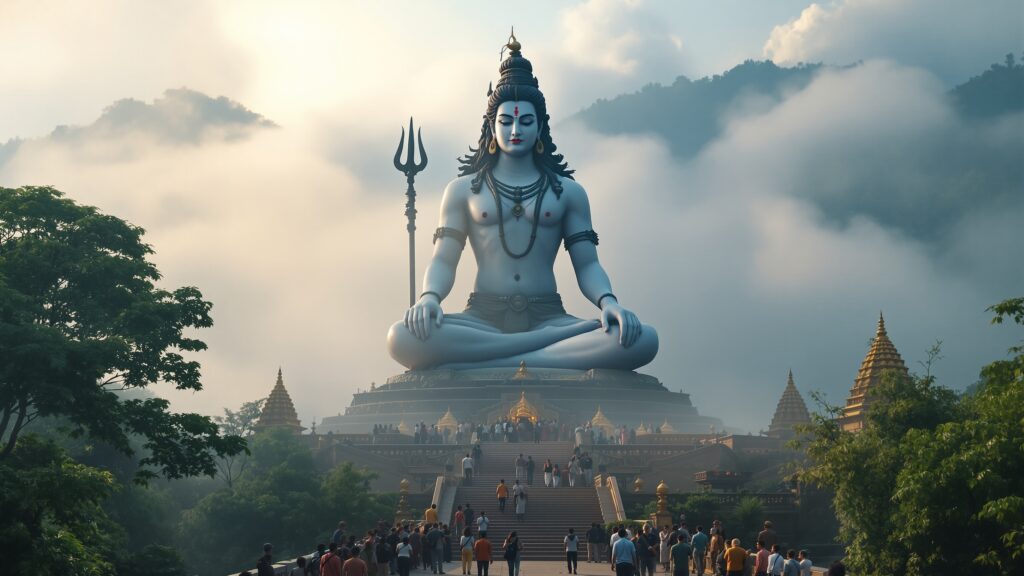
In India, The Statue of Unity — though secular in theme — inspired a new generation of monumental religious statues like the Statue of Belief (Vishwas Swaroopam) in Rajasthan, which stands 369 feet tall. Each of these immense creations turns the landscape itself into a stage for faith, making belief visible on a planetary scale.
To stand before one is to experience the sublime — the feeling of being small in the presence of something infinite.
Why Size Matters: The Spiritual Power of Scale
The size of a religious statue is more than a design choice — it’s a theological statement. Scale communicates how a faith envisions the divine and how humans relate to it.
- A small statue invites intimacy. It says, the divine is near, within reach, part of your daily life.
- A monumental statue, on the other hand, proclaims transcendence — the divine is vast, eternal, and beyond human comprehension.
In Christianity, larger statues often symbolize glory and resurrection — think of towering cathedral Madonnas or soaring Christ figures that represent triumph over death. In Buddhism, the immense Buddhas represent enlightenment that transcends individual self. In Hinduism, the towering forms of Shiva, Vishnu, or Durga embody cosmic power — deities whose stories stretch across universes. Scale becomes language — every inch, every foot, shaping how worshippers feel and think about their gods.
Engineering the Divine: How Massive Statues Are Built
Creating monumental religious statues is a feat of art, science, and devotion. These structures require meticulous planning, advanced materials, and often, decades of work.
Engineers design internal steel skeletons to support the outer layers, which may be made of bronze, copper, reinforced concrete, or even gilded stone. Each element must withstand weather, earthquakes, and the test of centuries.
Artisans then sculpt details by hand — the curl of hair, the folds of robes, the serene eyes — sometimes hundreds of feet above ground. In some cases, like Japan’s Ushiku Daibutsu (394 feet tall), internal chambers allow visitors to climb inside, turning faith into an immersive experience. These statues are not only religious expressions but technological marvels — monuments to human ingenuity driven by spiritual purpose.
Famous Religious Statues and Their Astonishing Heights
Let’s take a quick look at some of the most renowned religious statues that have redefined human understanding of size and sanctity:
- Spring Temple Buddha (China) – 420 feet tall, one of the tallest statues in the world.
- Statue of Belief, Vishwas Swaroopam (India) – 369 feet tall, depicting Lord Shiva.
- Ushiku Daibutsu (Japan) – 394 feet tall, symbolizing boundless compassion.
- Christ the Redeemer (Brazil) – 98 feet tall, overlooking Rio with open arms.
- Our Lady of the Rockies (USA) – 90 feet tall, a massive Virgin Mary overlooking Montana.
- The Motherland Calls (Russia) – Though secular in theme, inspired by monumental religious symbolism, standing at 279 feet.
Each statue tells a story through its height — of national identity, faith, and humanity’s unending fascination with the divine.
Cultural Differences in Sacred Scale
Different cultures interpret divine scale differently. In some traditions, vastness equals reverence; in others, simplicity equals purity.
- In Christianity, cathedrals and basilicas often feature larger-than-life saints and angels — reminders of heavenly grandeur. Yet, the same faith also values small icons, like prayer-room crucifixes and tabletop Madonnas, as symbols of personal devotion.
- In Buddhism, grand statues of the Buddha represent enlightenment and serenity, while smaller meditative Buddhas serve as tools for focus and mindfulness.
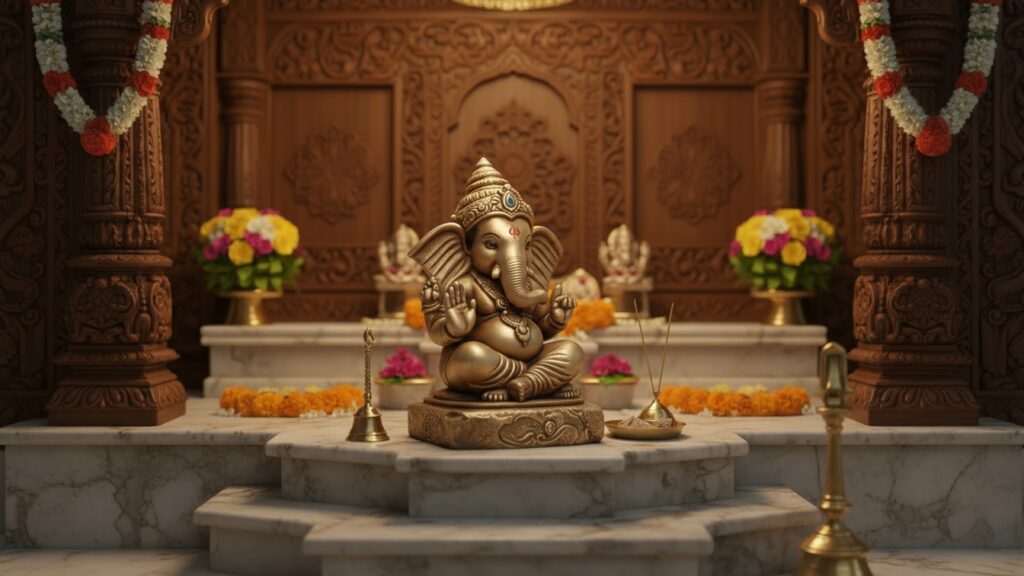
- In Hinduism, statues range from tiny brass Ganeshas kept in home temples to colossal stone Shivas guarding mountain shrines — each form representing a different spiritual energy.
Even within a single religion, size shifts meaning: small for the soul’s connection, large for the world’s admiration.
The Emotional Language of Size
Size affects not only what we see, but how we feel. Small religious statues evoke comfort and closeness. They’re part of daily life — the kind you dust gently, move carefully, and place near candles or incense. Their familiarity breeds tenderness. Large statues, however, create awe. They demand attention. The sheer scale pulls you out of ordinary thought and into reverence. They transform space into sacred territory. That’s the paradox of scale in faith — both the small and the monumental serve the same purpose: to help us experience something greater than ourselves.
Materials and Meaning: Why Bigger Isn’t Always Better
A statue’s size is tied closely to its material. A ten-inch ceramic Madonna may glow with warmth, while a hundred-foot steel deity radiates strength.
Each material brings different energy.:
- Bronze, marble, and stone are traditional favorites for their durability and beauty.
- Resin and wood lend intimacy to smaller icons.
- Modern monumental sculptures often use reinforced concrete, steel, or even fiber composites — materials that can support massive weight without losing detail.
But size alone doesn’t create holiness — it’s the spirit infused by the maker and the reverence of those who behold it. In a sense, a one-inch figurine can hold as much sacred power as a towering monument if approached with devotion.
The Modern Renaissance of Religious Sculpture
In the 21st century, religious statues are experiencing a global renaissance. Nations are building larger, more ambitious figures as symbols of pride, unity, and peace.
Advances in 3D modeling and digital sculpting have allowed artists to plan enormous works with millimeter precision. Countries like India, Thailand, and Vietnam are competing to create the tallest statues on Earth — blending ancient faith with modern engineering.
Meanwhile, smaller-scale artisans continue to thrive, hand-carving traditional figures from wood or clay, ensuring the personal touch of faith endures in homes and temples worldwide. Technology meets tradition — and the result is breathtaking.
From Ground to Sky: What These Statues Teach Us
Religious statues — whether they stand three inches or three hundred feet — share one message: faith is both personal and universal. Their size tells us something about humanity’s spiritual imagination. Small statues remind us to look inward. Large ones remind us to look upward. Together, they mirror our eternal search for meaning — a desire to connect earth and heaven, human and divine. Every statue, no matter its height, becomes a meeting point between belief and beauty. In its silence, it speaks of everything words cannot express.
Final Reflection: The Measure of the Divine
So, how big is a religious statue? It can fit in your palm — or stretch taller than a cathedral. It can stand quietly on a bedside table — or watch over entire cities. But in truth, its real size isn’t measured in feet or meters. It’s measured in impact — how deeply it moves the soul. From the smallest Buddha to the grandest Christ, religious statues remind us that faith, like art, transcends scale. What matters most is the feeling they stir — that fleeting, eternal sense that something far greater than ourselves is present, watching, and listening.