From Backyard Acres to Vast Open Ranges, Exploring the True Scale of Ranch Land
Ask someone how big a ranch is, and you’ll probably hear answers like “huge,” “massive,” or “bigger than you can imagine.” And while those responses aren’t wrong, they don’t tell the whole story. Ranches come in a staggering range of sizes, from modest family-owned properties to landholdings so large they rival entire counties. Understanding ranch size isn’t just about acreage—it’s about purpose, geography, history, and how land is actually used. Whether you’re dreaming of owning land, curious about ranch life, or researching rural real estate, the size of a ranch shapes everything from daily operations to long-term value. Let’s explore what really determines how big a ranch is—and why there’s no single answer that fits them all.
What Is a Ranch, Really?
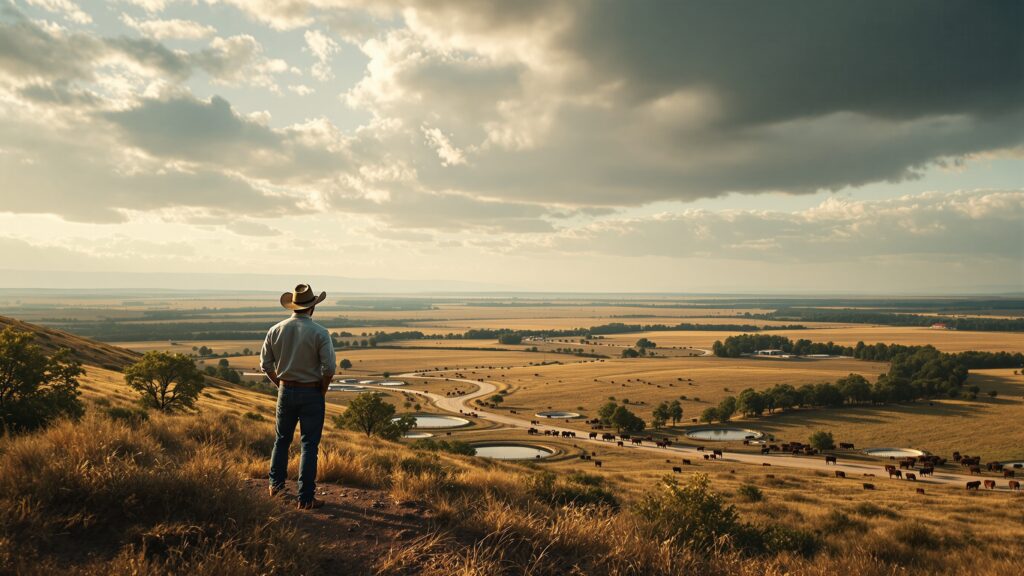
At its simplest, a ranch is a large property primarily used for raising livestock such as cattle, horses, sheep, or goats. Some ranches also include farming, wildlife conservation, recreation, or tourism. Unlike farms, which often focus on crops, ranches are typically defined by grazing land and open space. The word “ranch” often conjures images of endless plains, cattle drives, and wide-open skies—and for good reason. Ranching evolved in regions where land was plentiful but productivity per acre was lower. That reality is one of the biggest reasons ranches can grow so large.
The Small End of Ranch Life
Not every ranch spans thousands of acres. Small ranches exist all over the country and often range from 10 to 100 acres. These properties are sometimes called hobby ranches or ranchettes, especially when livestock is kept on a limited scale.
A small ranch might support a few horses, a small herd of cattle, or a mix of animals alongside other uses like hay production or agritourism. These ranches are common near growing towns and suburban edges, where land is valuable but rural lifestyles are still appealing. While smaller ranches don’t match the scale of classic Western operations, they still offer open space, privacy, and the ranching lifestyle on a more manageable level.
Mid-Sized Ranches: Where Ranching Becomes a Business
Once a ranch grows into the hundreds or low thousands of acres, it usually shifts from lifestyle property to full-scale agricultural operation. Ranches in the 500 to 5,000-acre range are common across much of the United States, particularly in regions with moderate rainfall and fertile grazing land.
These ranches typically support working herds, employ staff or family labor, and operate as businesses rather than hobbies. The land may include a mix of pasture, rangeland, water sources, barns, fencing, and ranch houses.
At this size, land management becomes critical. Rotational grazing, water access, and fencing strategies determine how effectively the land can support livestock. Two ranches of identical size may have vastly different capacities depending on terrain and climate.
The Giants: Massive Ranches That Seem Unreal
Some ranches are so large they defy imagination. In the American West, it’s not unusual to find ranches spanning tens of thousands of acres. The largest ranches can exceed 100,000 acres, and a few historic operations cover even more.
For perspective, a 100,000-acre ranch is roughly 156 square miles—larger than many cities. These ranches often stretch across varied landscapes, including grasslands, hills, river valleys, and desert terrain. Massive ranches exist because certain environments require enormous land areas to support livestock sustainably. In arid regions, cattle may need dozens of acres per animal due to limited vegetation. Bigger land isn’t about excess—it’s about survival.
Ranch Size by Region
Where a ranch is located plays a huge role in how big it needs to be. In regions with high rainfall and rich soil, like parts of the Midwest or Southeast, a relatively small acreage can support a healthy herd. In dry, rugged areas like West Texas, Nevada, or eastern Montana, ranches must be far larger to sustain the same number of animals. This regional variation explains why ranch sizes vary so dramatically across the country. A 1,000-acre ranch in one state might be considered massive, while in another it’s barely enough to operate. Geography also affects how land can be used. Mountainous terrain, rocky soil, and limited water sources all reduce grazing efficiency, pushing ranch sizes higher.
Acres vs. Carrying Capacity
Acreage alone doesn’t tell you how “big” a ranch really is. A more meaningful measure is carrying capacity—the number of animals the land can sustainably support.
Two ranches may both be 2,000 acres, but one might support twice as many cattle due to better grass, water access, and soil quality. Ranchers often measure land in terms of animal units per acre rather than raw size.
This is why some ranches appear enormous but run relatively small herds. The land is spread out to protect fragile ecosystems and prevent overgrazing.
Public vs. Private Land in Ranching
Many large ranching operations rely on a combination of private land and leased public land. In Western states, ranchers may own a core property and lease adjacent federal or state land for grazing. When people hear that a ranch covers hundreds of thousands of acres, that number often includes leased land. While the rancher doesn’t own it outright, it still functions as part of the ranch’s operational footprint. This blending of land types allows ranches to grow far beyond what private ownership alone might allow.
Ranches and Wildlife Conservation
Some of the largest ranches today serve dual purposes: livestock production and conservation. Conservation ranches may span thousands of acres to preserve wildlife corridors, protect watersheds, and maintain native ecosystems.
These ranches often work with environmental organizations and government programs, blending ranching with land stewardship. In these cases, size becomes a tool for ecological balance rather than purely economic output.
Large, contiguous land areas allow wildlife to roam naturally, making big ranches critical to conservation efforts.
How Big Is a Ranch Compared to a Farm?
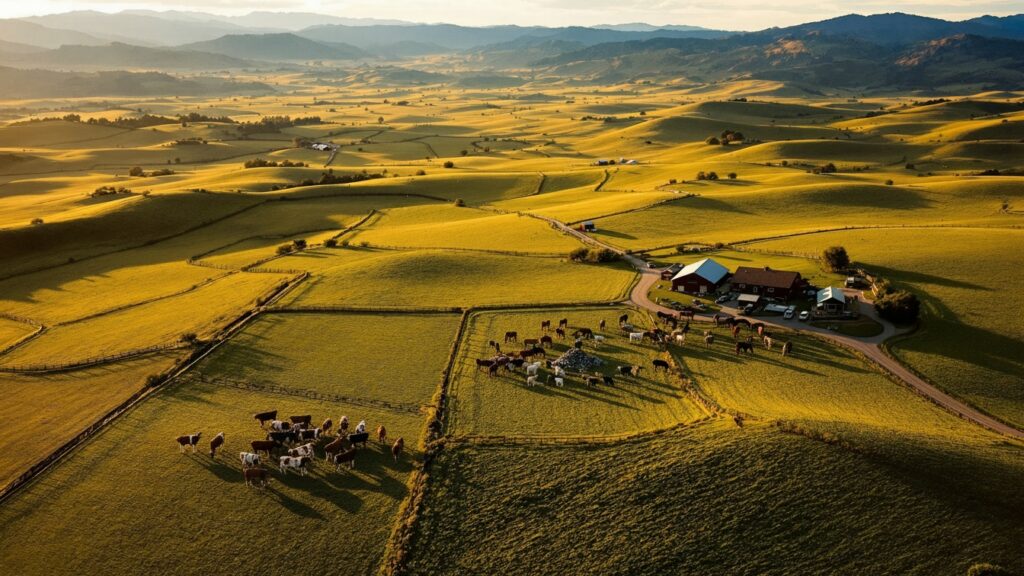
Farms and ranches overlap in many ways, but ranches are typically much larger in land area. Farms focus on crop yield per acre, while ranches depend on grazing land spread across wide spaces.
A productive farm might thrive on 100 acres, while a ranch in the same region may need several times that amount. In drier climates, the difference becomes even more extreme. This contrast highlights why ranch size often surprises people—it reflects land use efficiency rather than ambition.
The Economics Behind Ranch Size
Bigger isn’t always better, but scale matters in ranching. Larger ranches can spread costs over more land and livestock, making operations more resilient to market swings. However, they also face higher expenses for fencing, water systems, equipment, and labor.
Smaller ranches may rely on niche markets, premium beef, or agritourism to remain profitable. Larger ranches often focus on volume and long-term land appreciation.
In both cases, size influences financial strategy as much as lifestyle.
Ranch Size and the Lifestyle Factor
For many people, the appeal of a ranch isn’t just business—it’s lifestyle. Space, privacy, and connection to the land draw people to ranch ownership.
- Smaller ranches offer hands-on involvement and close connection to daily operations.
- Large ranches provide vast solitude, long horizons, and a sense of scale that’s hard to find elsewhere.
The “right” size depends on how involved the owner wants to be and what they want the land to provide.
Historic Ranches and Their Massive Footprints
Historically, ranches were often far larger than modern operations. In the 19th century, open-range ranching allowed cattle to roam freely across enormous tracts of land. As land was fenced and regulated, ranch sizes became more defined, but some historic ranches retained massive footprints that continue today. These legacy properties shape modern perceptions of what a ranch looks like.
How Big Is a Ranch in Real Terms?
To put ranch size into perspective, consider this: a 5,000-acre ranch could take over an hour to drive across. A 50,000-acre ranch may require multiple vehicles, staff, and infrastructure just to manage daily operations.
At the extreme end, some ranches are so large they contain their own roads, airstrips, rivers, and ecosystems. In these cases, ranches function almost like self-contained worlds.
The Future of Ranch Size
As land values rise and development pressure increases, average ranch sizes in some regions are shrinking. Large ranches are sometimes subdivided, while others are preserved through conservation easements.
At the same time, mega-ranches continue to exist where land remains plentiful and ranching traditions run deep. The future of ranch size will likely be shaped by sustainability, conservation, and changing market demands rather than sheer expansion.
So, How Big Is a Ranch?
A ranch can be as small as a few dozen acres or as vast as hundreds of thousands. Size depends on climate, purpose, land quality, and history. More than anything, a ranch’s size reflects how land and life intersect in a given place. When you ask how big a ranch is, you’re not just asking about acreage—you’re asking about lifestyle, ecology, economics, and tradition. And that’s what makes the answer so fascinating.