The Monumental Scale of Memory and Meaning
Military statues are more than sculpted figures cast in bronze or carved from stone—they are physical embodiments of history, sacrifice, identity, and national pride. But when we ask, “How big is a military statue?” we’re not just asking about height or weight. We’re exploring scale in a much broader sense: emotional impact, historical importance, and the sheer physical presence that commands attention in public spaces. From towering war memorials that dominate city skylines to life-sized figures quietly honoring fallen soldiers in small-town squares, military statues exist across a fascinating range of sizes. Some stretch hundreds of feet into the sky, while others stand at eye level, inviting intimate reflection. Understanding their size means looking at both the physical dimensions and the intention behind their design.
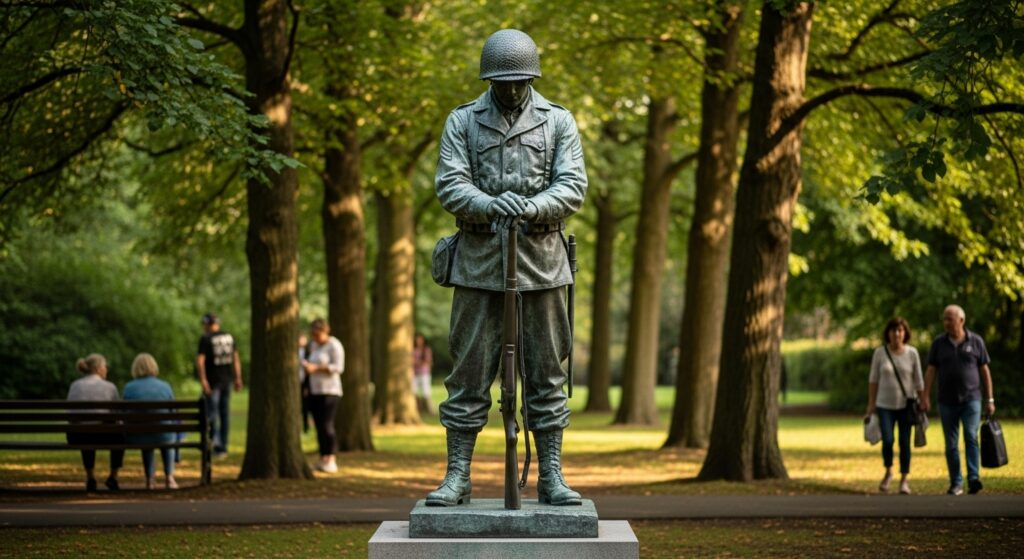
What Defines a Military Statue?
A military statue typically commemorates soldiers, battles, victories, or moments of sacrifice. These statues can depict individual soldiers, groups in action, or symbolic representations of military ideals like courage, duty, and resilience. They often serve as focal points in memorial parks, government buildings, cemeteries, and historic sites.
The size of these statues varies dramatically depending on purpose, location, and cultural context. A statue meant to dominate a national capital will likely be far larger than one intended for a local memorial garden. Yet both carry equal emotional weight for those who engage with them.
Average Size: From Life-Sized to Larger-Than-Life
Most military statues fall into a few general size categories. At the smallest end are life-sized statues, typically ranging from 5 to 7 feet tall, matching the average height of a human figure. These are often used in intimate memorials where viewers can connect directly with the sculpture, almost as if standing beside the soldier it represents.
Moving up in scale, many statues are “larger-than-life,” standing between 8 and 20 feet tall. This slight exaggeration elevates the figure—literally and symbolically—making it more visible and impactful without overwhelming the space. These are common in parks and civic centers.
Then there are monumental statues, which can range from 30 feet to well over 100 feet tall. These are designed to be seen from a distance and often become landmarks in their own right. At this scale, the statue is not just a tribute—it becomes part of the landscape.
Giant Military Statues: When Scale Becomes Spectacle
Some of the largest military statues in the world push the boundaries of what we consider sculpture. These massive works can exceed 200 feet in height and require advanced engineering, architectural planning, and significant resources to construct.
At this level, the statue transitions into something closer to a building than a traditional sculpture. Internal frameworks, staircases, and maintenance systems are often hidden within the structure. Materials must withstand wind, weather, and time, making durability just as important as aesthetics.
These giant statues are typically commissioned for national or historical significance. They aim to inspire awe, evoke patriotism, and create a lasting visual legacy that can be seen for miles.
Width, Depth, and Weight: The Hidden Dimensions
Height often gets the spotlight, but a military statue’s full size includes its width, depth, and overall mass. A standing figure might be 15 feet tall, but with a wide stance, extended arm, or detailed base, it can span 20 to 30 feet across.
Depth also plays a crucial role, especially in dynamic sculptures depicting movement or action. A soldier lunging forward, holding a rifle, or interacting with others adds complexity and physical space to the design.
Weight is another significant factor. Smaller bronze statues can weigh several hundred pounds, while larger ones can reach tens or even hundreds of tons. Stone monuments, particularly those carved from granite or marble, can be even heavier.
These dimensions influence not only the visual impact but also the logistics of transportation, installation, and long-term maintenance.
The Base Matters: Pedestals and Foundations
When considering how big a military statue is, it’s essential to include its base or pedestal. Often, the base can be as tall—or taller—than the statue itself. This elevates the figure, making it more prominent and visible from a distance.
Pedestals also provide space for inscriptions, names, and historical context. They ground the statue both physically and symbolically, connecting it to the site and its meaning.
In large memorials, the base can expand into a full architectural structure, complete with steps, walls, and surrounding elements like fountains or gardens. This transforms the statue into part of a broader commemorative environment.
Why Size Matters in Military Statues
The size of a military statue is rarely arbitrary. It is carefully chosen to reflect the importance of what is being commemorated. Larger statues often signify national significance or major historical events, while smaller ones may focus on local stories or individual sacrifices. Scale also affects how people interact with the statue. A towering monument inspires awe and reverence, creating a sense of distance and grandeur. A smaller, life-sized statue invites closer inspection and personal connection. Designers and planners consider visibility, location, and audience when determining size. A statue in a busy urban square must compete with buildings and traffic, while one in a quiet park can afford to be more modest.
Materials and Their Influence on Size
The material used in a military statue can greatly influence its size and structure. Bronze is one of the most popular materials due to its durability and ability to capture fine detail. It is commonly used for both small and large statues.
Stone, such as granite or marble, is often used for monumental works. These materials are incredibly durable but require significant effort to carve and transport, which can limit or shape the design.
Modern statues may incorporate steel frameworks, concrete cores, and composite materials to achieve greater heights and more complex forms. These innovations allow artists and engineers to push the limits of scale while maintaining structural integrity.
Fabrication: How Large Military Statues Are Made
Creating a large military statue is a complex, multi-step process that blends art and engineering. It typically begins with a small-scale model, often made from clay or digital design. This model is refined until the proportions and details are perfect.
For larger statues, the design is then scaled up using techniques like grid enlargement or 3D modeling. The sculpture may be divided into sections for easier casting or carving. Bronze statues are often cast in parts and then welded together, while stone statues are carved block by block.
Internal supports are added to ensure stability, especially for tall or dynamic figures. Once assembled, the statue is transported—sometimes in multiple pieces—to its final location, where it is installed on a prepared foundation.
The entire process can take months or even years, depending on the size and complexity of the project.
Military Statues Around the World: A Range of Scales
Across the globe, military statues reflect diverse approaches to size and design. In some countries, monumental statues dominate cityscapes, symbolizing strength and unity. In others, smaller, more personal memorials emphasize reflection and remembrance.
Urban environments often feature larger statues to stand out among buildings, while rural or historical sites may favor more understated designs that blend with the landscape. Cultural preferences, historical context, and available resources all play a role in determining scale.
The Emotional Impact of Size
One of the most fascinating aspects of military statues is how size influences emotional response. A massive statue can make viewers feel small, evoking humility and respect. It can create a sense of permanence and importance, reinforcing the idea that the sacrifices it represents will never be forgotten.
On the other hand, a smaller statue can feel more personal and relatable. It allows viewers to see the human side of the soldier, to imagine their story, and to connect on an individual level.
Both approaches are powerful in their own way, and the choice between them depends on the message the creators wish to convey.
Designing for Visibility and Perspective
When determining the size of a military statue, designers must consider how it will be viewed. A statue that looks perfectly proportioned up close may appear distorted when seen from a distance or from below.
To address this, sculptors often adjust proportions, making certain features slightly larger or more exaggerated. This ensures that the statue looks natural and balanced from its intended viewing angles.
Lighting, surroundings, and sightlines also play a role. A well-placed statue, even if smaller, can have a greater impact than a larger one that is poorly positioned.
Maintenance and Longevity
Size also affects how a military statue is maintained over time. Larger statues require more extensive upkeep, including cleaning, repairs, and structural inspections. Exposure to weather can cause wear and corrosion, particularly for metal sculptures.
Designers often plan for maintenance from the beginning, incorporating access points and durable materials to ensure the statue can be preserved for generations.
The Future of Military Statues
As technology advances, the possibilities for military statues continue to expand. Digital modeling, advanced materials, and new construction techniques are allowing for more ambitious designs and larger scales than ever before.
At the same time, there is a growing emphasis on storytelling and inclusivity, with statues representing a wider range of perspectives and experiences. This evolution may influence not only what military statues look like but also how big they are and where they are placed.
So, How Big Is a Military Statue?
In the end, there is no single answer. A military statue can be as small as a life-sized figure standing quietly in a local park or as massive as a towering monument visible from miles away. Its size depends on purpose, location, materials, and the message it seeks to convey.
What remains constant is the intention behind it: to honor, to remember, and to inspire. Whether modest or monumental, every military statue carries a weight far greater than its physical dimensions.
Final Thoughts: Measuring More Than Height
When we think about the size of a military statue, it’s tempting to focus on numbers—feet, tons, dimensions. But the true measure of these works lies in their impact. They shape how we remember history, how we honor those who served, and how we connect with the past. In that sense, even the smallest military statue can feel immense.