A Street-Level Guide to the Size, Scale, and Secrets of Urban Blocks
“Meet me in two blocks.” It sounds simple—until you’re late, sweaty, and realizing that those “two blocks” feel like four. The city block is one of the most common distance units in everyday life, yet one of the least understood. It changes from city to city, from era to era, and sometimes even from neighborhood to neighborhood. Some blocks are breezy strolls that pass in seconds. Others feel like urban marathons, stretching endlessly past storefronts, traffic lights, and towering skylines. So, how big is a city block? The surprising answer is: it depends. But behind that simple truth lies a fascinating story of planning, history, geography, economics, and human behavior. City blocks are the DNA of urban life. They shape how we move, how businesses thrive, how neighborhoods feel, and how a city breathes. In this deep dive, we’ll walk through the origins of city blocks, compare famous grids, measure them in real-world terms, and uncover why these rectangular parcels quietly control the rhythm of modern life.
The Basic Definition: What Is a City Block?
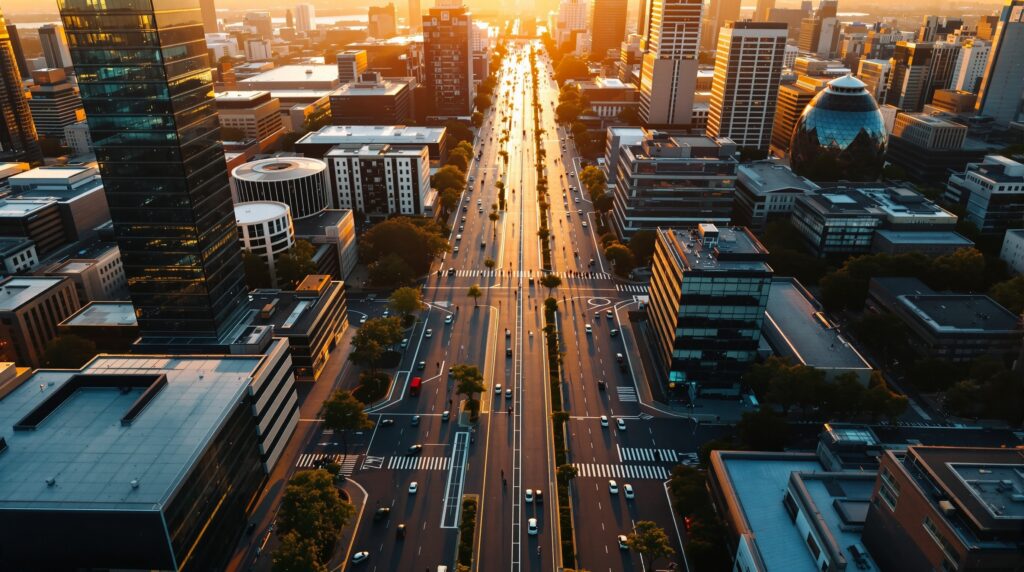
A city block is the area of land bounded by streets on all sides. In most grid-based cities, blocks are roughly rectangular, although in older or more organic cities they may be irregular, curved, or wedge-shaped. A block can contain homes, offices, parks, schools, stores, or all of them combined.
While people often think of a city block as a unit of distance, it is technically an area unit. Still, in everyday language, “one block” usually means the distance between two parallel streets. That distance is what most people care about when walking, running, or estimating travel time.
There is no universal size for a city block. Instead, block dimensions reflect a city’s planning philosophy, historical period, geography, and density goals. Some blocks were designed for horse-drawn carriages, others for modern cars, and still others for foot traffic alone.
The “Average” City Block: A Working Estimate
Even though there’s no single standard, urban planners often use a rough average when making comparisons. In many American cities, a city block is commonly estimated at about 300 feet (91 meters) on one side. This is not a rule—just a helpful mental shortcut.
If you hear someone say, “It’s five blocks away,” they usually mean around 1,500 feet, or a little under one-third of a mile. At a normal walking speed, that’s about five minutes. But this estimate can swing wildly depending on where you are. In Manhattan, for example, north–south blocks are much shorter than east–west ones. In Chicago, blocks are longer and more uniform. In older European cities, block sizes can vary dramatically from street to street.
How History Shaped City Blocks
The size of a city block is a living artifact of the time and culture that created it.
In ancient cities, streets followed natural terrain, water sources, and defensive walls. Blocks were irregular, shaped by paths rather than plans. Medieval European cities, for example, grew organically over centuries, producing narrow winding streets and compact blocks.
The Renaissance introduced formal planning, favoring symmetry and order. This philosophy reached its peak in the 18th and 19th centuries with grid-based city designs. The idea was simple: straight streets, predictable blocks, and efficient land division.
In the United States, the Land Ordinance of 1785 encouraged grid systems in new towns. This made surveying and selling land easier and faster. Over time, city blocks became standardized enough that people could casually refer to them as distance markers.
Famous City Block Sizes Around the World
Some cities are so iconic that their block sizes have become famous in their own right.
- Manhattan’s grid is one of the most studied. The north–south blocks are about 264 feet long, while the east–west blocks stretch roughly 900 feet. That means walking one block “uptown” feels quick, but crossing avenues feels much longer.
- Chicago’s downtown blocks average about 330 feet, creating a comfortable rhythm for walking and traffic. Portland’s blocks are famously short—around 200 feet—making the city extremely walkable and full of intersections.
- Salt Lake City stands at the opposite extreme, with massive blocks nearly 660 feet long. They were designed in the 19th century to accommodate wagons turning around without reversing.
- European cities tell a different story. Paris blocks often vary between 300 and 500 feet, depending on the district. London’s blocks are famously inconsistent, shaped by centuries of layered development.
Measuring a Block by Walking Time
One of the easiest ways to understand a city block is to translate it into time. At an average walking speed of about 3 miles per hour, a person covers 264 feet in roughly one minute. That means a short block, like those in Manhattan, might take about a minute to walk. A longer block, such as in Salt Lake City, can take two to three minutes. This time-based understanding is why people often underestimate distances. Two long blocks can feel like four short ones. Our brains don’t measure in feet; they measure in effort and time.
City Blocks and Urban Density
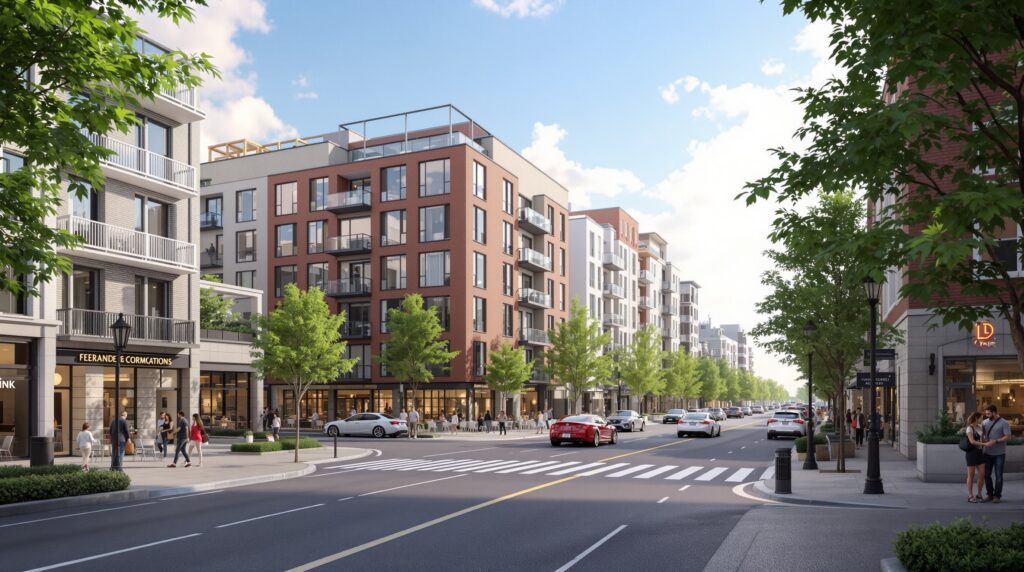
Block size plays a massive role in how dense a city feels. Smaller blocks mean more intersections, more storefronts, more corners, and more foot traffic. They encourage walking, spontaneous exploration, and street-level commerce. This is why cities like Portland, New York, and Barcelona feel lively and navigable.
Larger blocks, on the other hand, reduce intersections and lengthen walking distances. They favor cars and create wide, open streetscapes. Salt Lake City and Phoenix are good examples of cities where large blocks contribute to a more automobile-oriented culture. In many modern urban redesigns, planners are breaking up oversized blocks with pedestrian pathways, mid-block crossings, and green corridors to improve walkability.
The Psychological Side of Block Size
Block size doesn’t just affect how far you walk—it affects how you feel.
- Short blocks create a sense of progress. Every intersection feels like a milestone. Your destination seems closer, even if the total distance is the same.
- Long blocks can feel exhausting, especially when there’s little visual change. The same storefronts, the same walls, the same traffic—your brain interprets this as more effort, even when the distance is equal.
This is why two neighborhoods with identical square mileage can feel completely different in scale and energy.
City Blocks in Popular Culture
The city block has become a symbol of urban life itself. Movies, music, and literature often use “the block” as shorthand for community, territory, or identity. Hip-hop culture frequently references “my block” as a place of origin and loyalty. Crime dramas use blocks as invisible boundaries between rival territories. Romantic comedies treat blocks as charming walking distances between lovers. The block is not just a unit of space—it’s a unit of story.
How Big Is a City Block in Sports Terms?
To make scale more relatable, imagine this: an American football field, including end zones, is 360 feet long. That’s longer than most city blocks.
So, in many cities, a single football field is about the same length as one block. In Salt Lake City, a block can be nearly two football fields end to end. In Portland, it’s barely half a field. This comparison helps explain why people often misjudge distance in urban settings.
The Economics of a Block
Every block is an economic ecosystem. A short block can host more storefronts and more entrances, increasing foot traffic and retail opportunities. A long block may hold fewer businesses but larger ones, such as office towers or malls. Property values often rise on corners, where visibility is higher. This makes block geometry a quiet but powerful force in real estate and urban economics.
The Future of the City Block
As cities adapt to climate change, remote work, and population shifts, block design is evolving.
Urban planners are experimenting with “superblocks,” which group multiple traditional blocks into car-free zones filled with green space and pedestrian paths. Barcelona’s superblock program is a famous example.
At the same time, many cities are “unzipping” long blocks to create more walkable micro-streets. The future city block is becoming more flexible, human-centered, and sustainable.
The Block as the Beating Heart of the City
So, how big is a city block? It can be 200 feet or 900 feet. It can take one minute or five. It can feel cozy or endless. But no matter the size, the city block is the fundamental building unit of urban life. Every café, park, apartment, and street corner lives inside a block. It’s where people meet, businesses grow, and stories unfold. The next time you hear “just a few blocks away,” you’ll know there’s a whole world of design, history, and psychology hidden inside that simple phrase.