
Statue Ideas for Visitor Attractions
A statue for a visitor attraction can mark an arrival, represent a place, support interpretation, or become part of the route through a destination. Its subject and scale should come from that role, the surrounding landscape or architecture, and the distance at which guests first encounter it.
Discuss an Attraction Statue
Choose a subject that belongs to the destination
The statue may represent a local figure, an original character, a natural feature, a historical object, or another subject already central to the attraction. Begin with the story visitors should understand rather than selecting a large object first. The visual treatment can be realistic, stylized, or interpretive as long as it supports that story.
If the subject is a real person, protected character, mascot, artwork, or trademarked design, identify the rights authority and provide approved references. For a historical or educational subject, determine which facts and visual details are essential before the figure is developed.
Place the statue at a deliberate point in the journey
The same subject can take a different form depending on when and why visitors encounter it.
Arrival landmark
Favor a broad outline and a clear relationship to the entrance, road, plaza, or ticketing approach.
Interpretive stop
Allow closer viewing and coordinate the figure with labels, artifacts, audio, or surrounding exhibit content.
Orientation point
Use the statue as a memorable meeting location without blocking signs, paths, or the view toward the next destination.
Permanent exhibit
Resolve the figure with its case, platform, room, landscape, or architectural context rather than as a movable event object.
Connect a recognizable figure to a specific institution
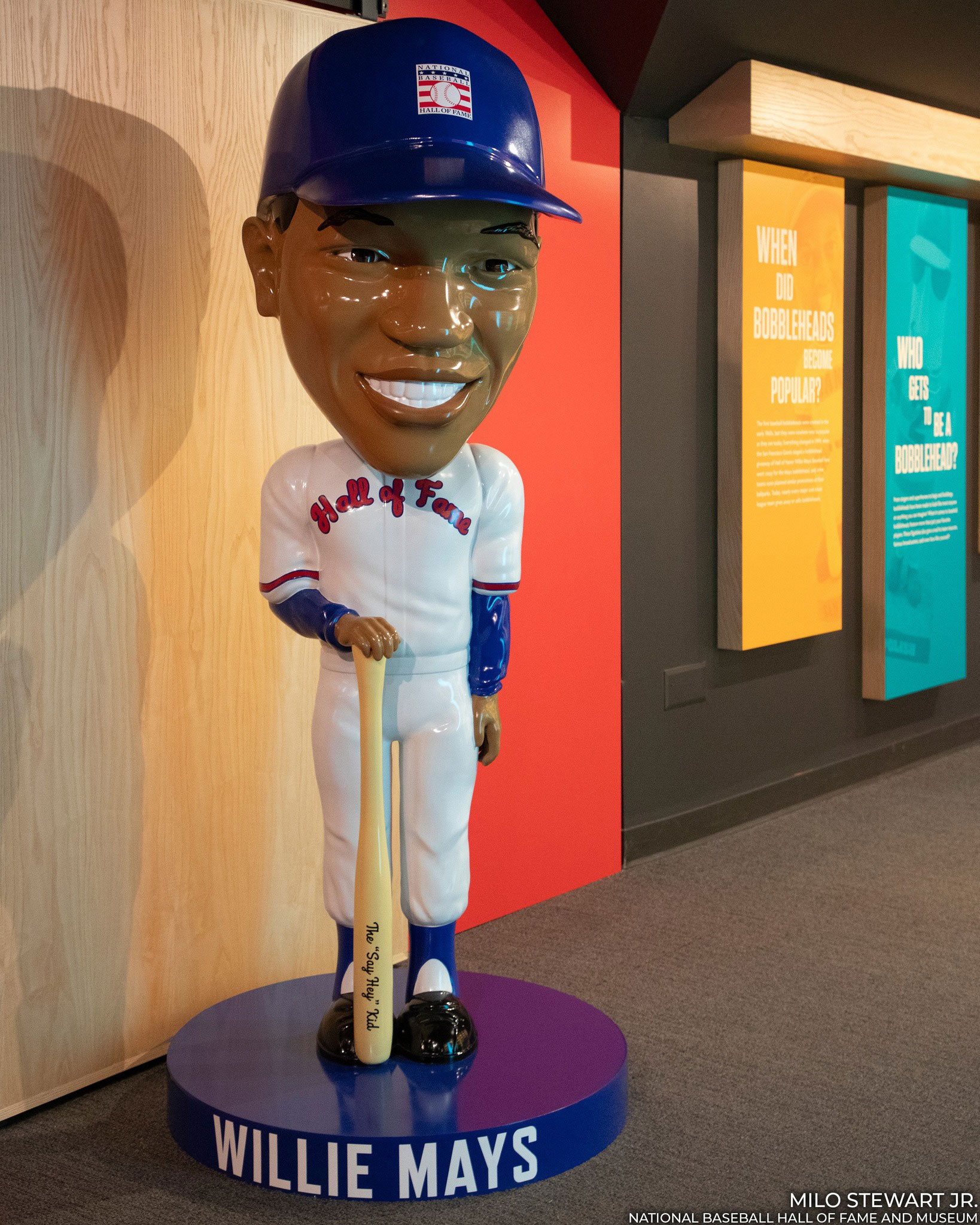
WhiteClouds fabricated the giant working Willie Mays bobblehead shown here for permanent display at the National Baseball Hall of Fame. The subject has a direct relationship to the institution and gives visitors a large-scale interpretation of a familiar collectible form. The mountain and coastal scenes remain conceptual attraction ideas.

Judge the figure from the visitor's actual path
Supply views from the road, gate, trail, lobby, or gallery where guests first see the proposed location. Mark competing signs, trees, roofs, cases, railings, and exhibits. A statue meant to read across a landscape needs a different outline and detail hierarchy than one encountered in a narrow interior gallery.
Then document the closest viewing position and any point where guests pause. The shift from distant landmark to close exhibit should feel intentional. Scale, base height, gaze direction, and visible detail can be considered against both distances instead of chosen from an isolated rendering.
Information to assemble for an attraction statue
A concise story-and-site package keeps the design tied to the venue.
- Subject, visitor story, and intended interpretation
- Approved visual references and rights authority
- Arrival route and first recognition distance
- Closest view, gathering point, and public reach
- Target dimensions and available footprint
- Landscape, architecture, signs, and exhibit context
- Indoor or outdoor placement and intended permanence
- Access route, destination, and opening schedule
Request a quote for a visitor-attraction statue
Share the attraction story, approved subject references, intended visitor role, target scale, site plan, arrival and close-view photographs, interpretive context, public-access needs, placement conditions, destination, and opening date.