
How Partial-Depth and Hybrid 2D/3D Designs Reduce Custom Statue Costs
Strategic use of partial-depth sculpture, flat graphic elements, and controlled viewing angles can reduce fabrication, shipping, and installation requirements without sacrificing visual impact.
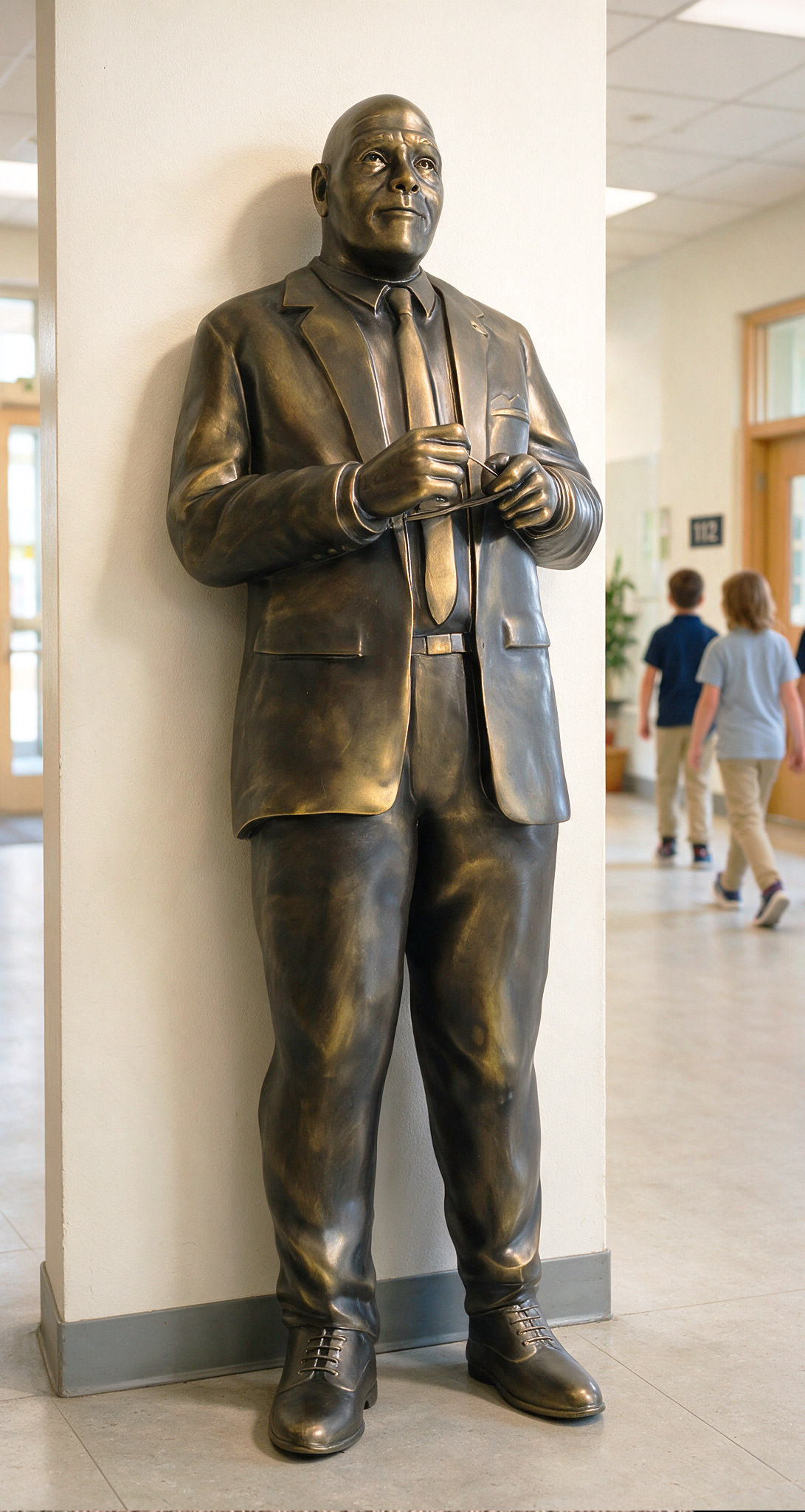
A custom statue does not always need to be fully sculpted on every side. When its primary viewing angle and installation environment are known, three-dimensional fabrication can be concentrated where it creates the strongest effect. The result can still appear substantial and highly dimensional while requiring less material, labor, structural support, shipping space, and installation work.
Why sculptural depth affects fabrication cost
A fully dimensional statue must be designed, sculpted, reinforced, and finished on every visible side. Even surfaces that receive little attention from viewers can add material, production time, weight, and shipping volume.
Partial-depth construction reduces the amount of physical sculpture while preserving the important frontal silhouette, recognizable features, and areas of visual emphasis. This is especially useful for wall-mounted installations, exhibits, branded environments, trade-show displays, and other projects with predictable viewing positions.
The goal is not simply to make less sculpture. It is to place the dimensional fabrication where it provides the greatest visual value.
Partial-depth and flat-back statues
A partial-depth statue presents a highly dimensional front while reducing or eliminating the portion that would normally extend behind the figure. The sculpture may be mounted directly to a wall, architectural column, graphic panel, or custom support structure.
Example: Wall-mounted life-size statue
In the school installation shown above, the figure reads as a complete life-size statue from the normal hallway approach. Because the back is integrated with the wall, the project does not require the same amount of backside sculpting, finishing, internal structure, or floor space as a freestanding figure.
This approach can work well for commemorative figures, historical personalities, mascots, branded characters, architectural features, and environmental storytelling. A custom character or statue fabrication team should plan the sculptural depth and attachment system together so the final installation remains secure and visually convincing.
Combining printed graphics with 3D sculpture
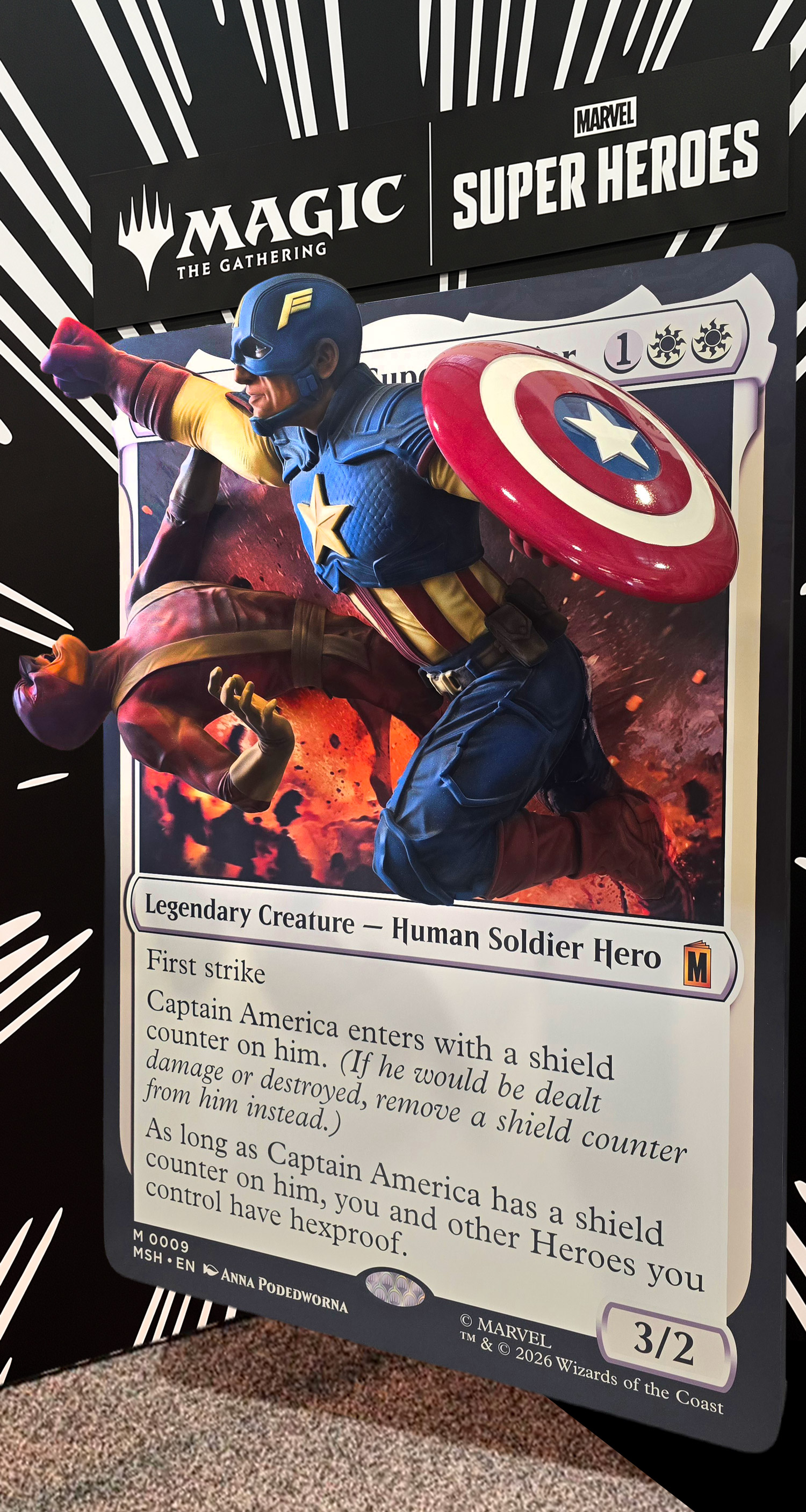
A hybrid display uses a printed or fabricated flat background for much of the visual information, then adds sculpted elements only where physical depth creates the strongest effect.
Example: Characters emerging from a giant graphic
In the oversized card display, the graphic supplies the card layout, background artwork, typography, and much of the surrounding action. Selected character elements extend forward from the surface, making the scene appear to break out of the printed image.
The viewer experiences a dimensional action scene, but the entire background does not need to be sculpted. Production effort is concentrated on the faces, poses, costumes, shield, and overlapping forms that create the illusion.
This method is particularly effective for custom props , promotional displays, branded photo opportunities, exhibits, event environments, and trade-show installations.
Using partial-depth props to create a larger visual effect
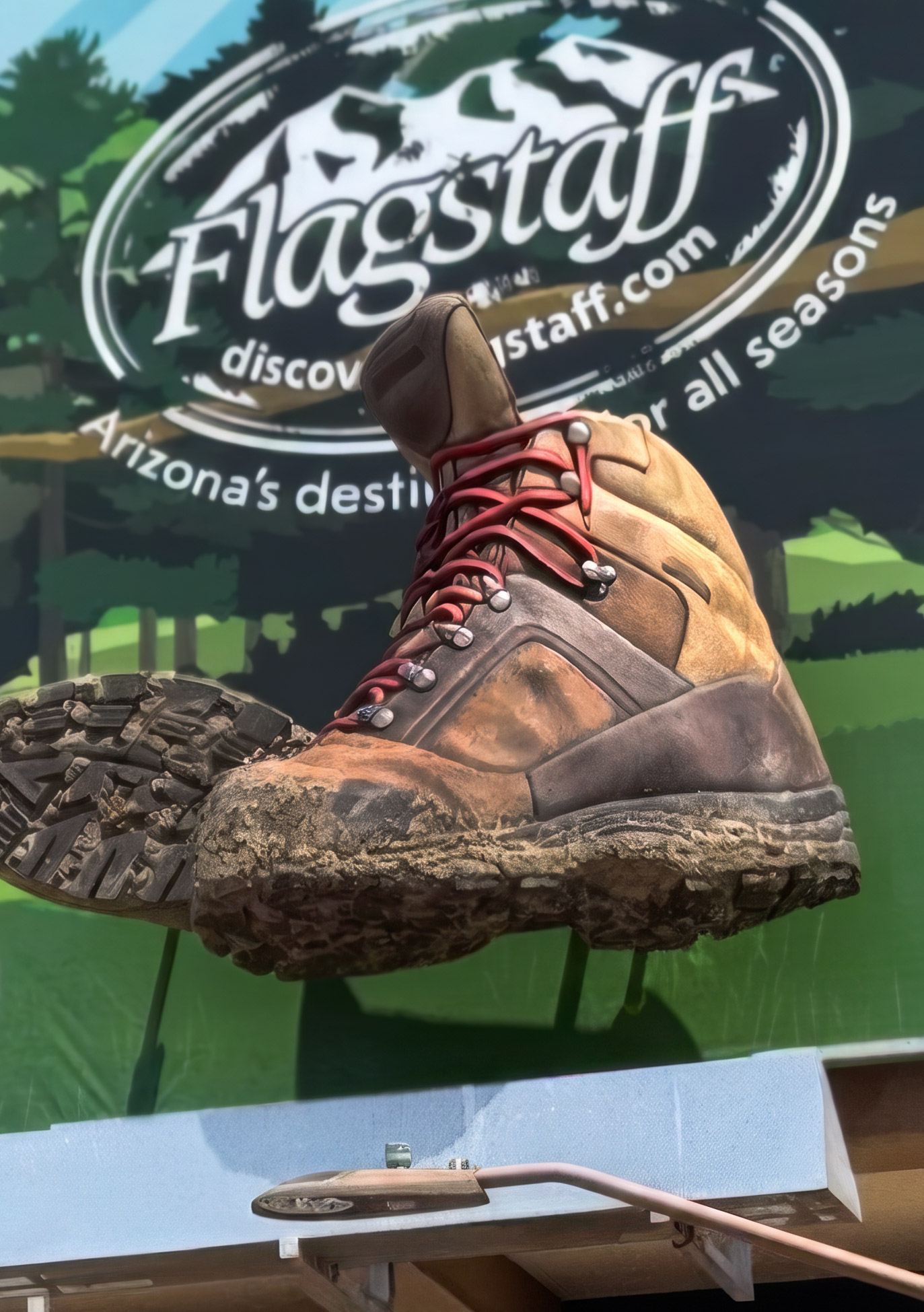
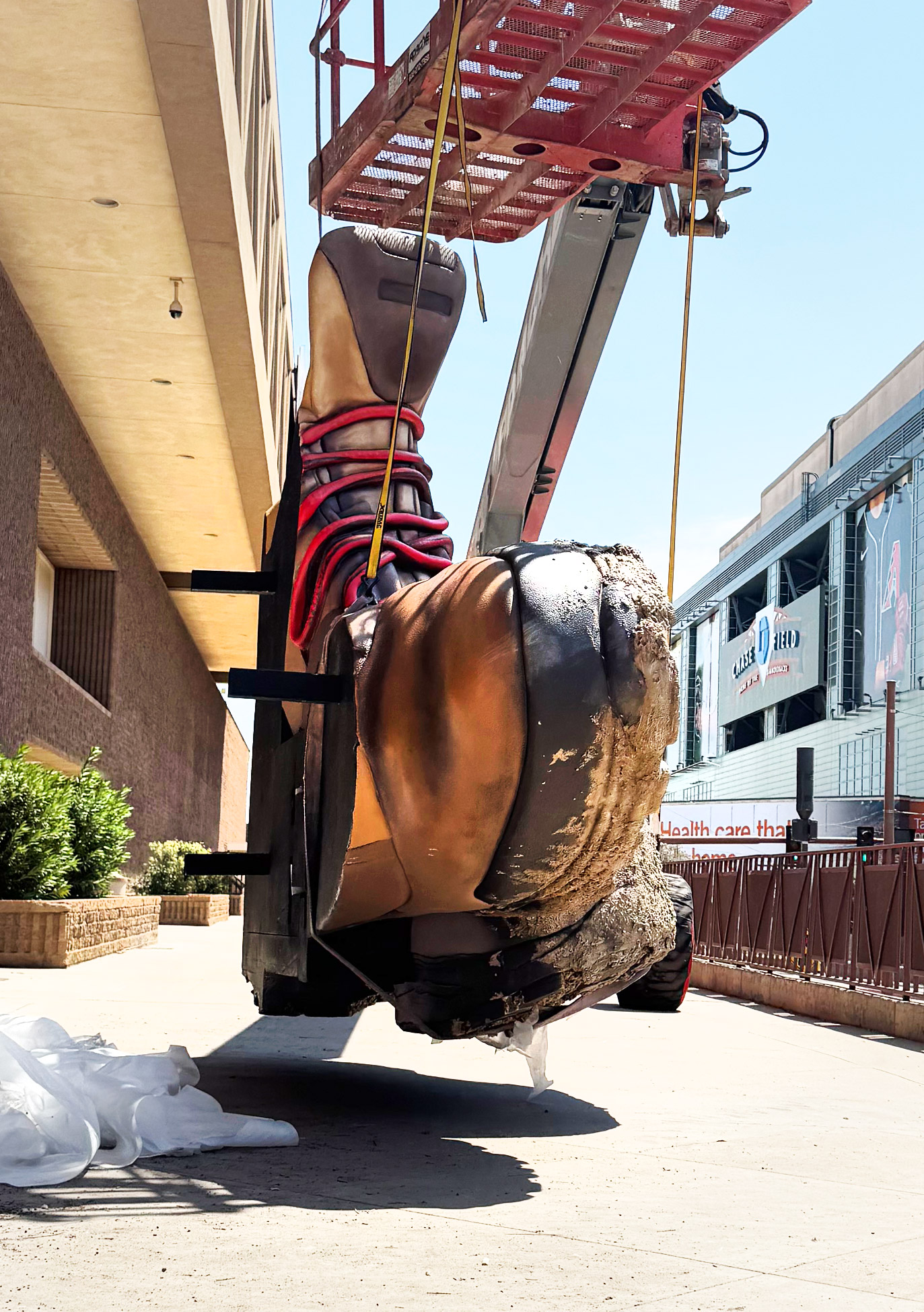
Partial-depth construction can also make an installation appear much larger than the amount of physical sculpture used to create it. For this outdoor billboard, WhiteClouds fabricated one approximately 75-inch-tall hiking boot with a flat back and a partial second boot element as one coordinated dimensional assembly.
From the intended viewing position, the two forms read as a much larger pair of boots projecting from the billboard. The installation creates substantial depth and visual scale without requiring two complete, fully rounded sculptures.
How the design reduced fabrication requirements
This strategy can be especially effective for dimensional billboard elements , large product features, architectural graphics, and giant shoe props designed around a limited number of important viewing angles.
Levels of dimensional construction
| Approach | Description | Common applications |
|---|---|---|
| Full-round | Completely finished for viewing from all sides. | Open plazas, freestanding statues, and installations with 360-degree access. |
| Three-quarter-depth | Strong frontal dimension with a reduced, shallow, or flattened back. | Wall-mounted figures, billboard props, architectural features, and shallow exhibit installations. |
| Half-depth | Approximately half of the complete sculptural volume. | Branded walls, character installations, and environmental graphics. |
| High relief | Forms project substantially from a supporting background. | Murals, signs, decorative panels, and exhibit walls. |
| Hybrid 2D/3D | Printed or fabricated flat graphics combined with selected dimensional forms. | Event displays, billboards, exhibits, branded photo opportunities, and promotional installations. |
Other ways to use dimensional fabrication selectively
The appropriate solution depends on the viewing conditions and the visual role of the display. Other cost-conscious approaches can include:
- Character busts instead of complete figures
- Heads, hands, or objects emerging from walls
- Relief sculptures integrated with graphic murals
- Dimensional logos over printed environments
- Layered CNC-cut foreground and background elements
- Partial vehicles, products, or architectural features
- Sculpted foreground elements over flat scenic graphics
- Forced-perspective elements designed for photography
- Modular components reused across multiple displays
These methods can also reduce freight and installation requirements, which may be as important to the total project cost as fabrication itself.
When partial-depth construction works best
Strong applications
- The primary viewing direction is predictable.
- The sculpture will be installed against a wall.
- Visitors cannot walk completely around the piece.
- The display is intended for frontal photography.
- Floor space or shipping depth is limited.
- A graphic background contributes to the story.
When full-round may be better
- Visitors can approach the statue from all sides.
- The sculpture will occupy an open public space.
- Every side will be photographed or filmed.
- The piece must be moved independently.
- The rear silhouette is visually important.
- The statue cannot rely on a background structure.
Information that helps reduce cost during planning
Fabrication options can be evaluated more accurately when the project team understands:
- Approximate overall dimensions
- Primary and secondary viewing angles
- Indoor or outdoor placement
- Available wall or structural support
- Expected visitor interaction
- Desired finish and level of detail
- Shipping destination and installation access
- Required lifespan
- Deadline and approximate budget range
Identifying these conditions early allows the design to be built around the real use case rather than paying to fabricate portions of a statue that viewers may rarely or never see.
Less fabrication does not have to mean less impact
Reducing the cost of a custom statue does not necessarily mean making it smaller, less detailed, or less engaging. It can mean combining sculpture, graphics, architecture, and controlled viewing angles so each element performs the job it does best.
A well-designed partial-depth or hybrid display can appear dramatic, substantial, and highly dimensional while avoiding the cost of constructing surfaces and volumes that contribute little to the audience's experience.
Related custom fabrication resources
See WhiteClouds fabrication services and completed projects for custom character props and 3D statues.
Get Pricing for a Custom Statue or Character Display
Share the approximate size, installation location, intended viewing angles, desired finish, deadline, and budget range. WhiteClouds can recommend where full-dimensional sculpture is necessary and where partial-depth or graphic elements may reduce cost.