
Planning a Custom 3D Map of Pleasant Mountain
A Pleasant Mountain physical map can support daytime orientation while also accounting for a defined night-skiing network. The display brief should determine whether night terrain is a primary message, a secondary layer, or information that needs to change over time.
Plan a Pleasant Mountain Map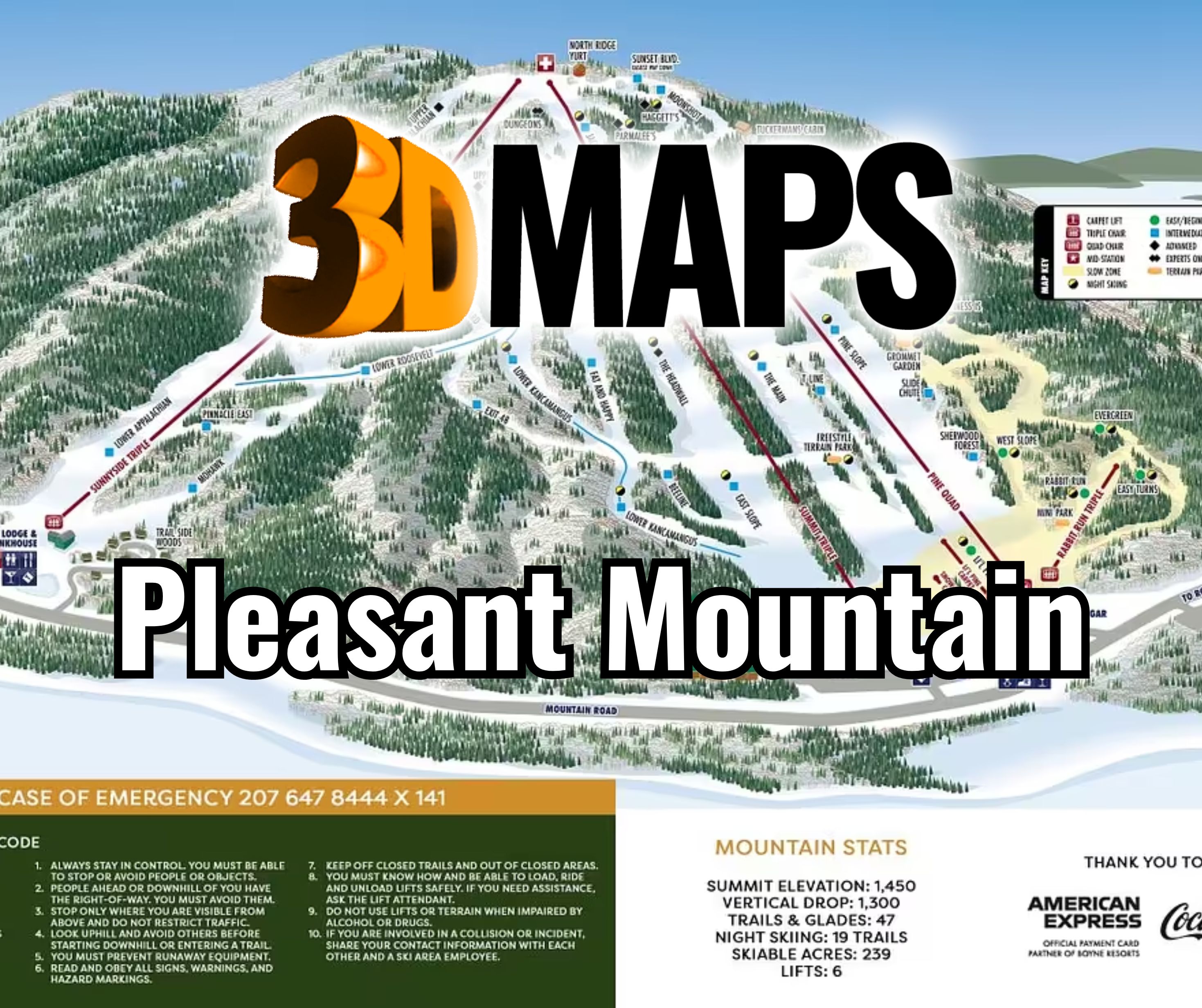
Decide what the Pleasant Mountain map must communicate after dark
A standard trail display and a night-program display may use the same terrain but emphasize different routes. If night orientation is central, the graphic hierarchy should make the lit network obvious without asking viewers to compare two dense legends. If night use is secondary, a concise key or changeable overlay may be enough.
Define the physical boundary from the lift-served mountain and base relationship. Night information should fit within that stable terrain rather than forcing an unrelated expansion of the map.
Review a Park City ski-trail display
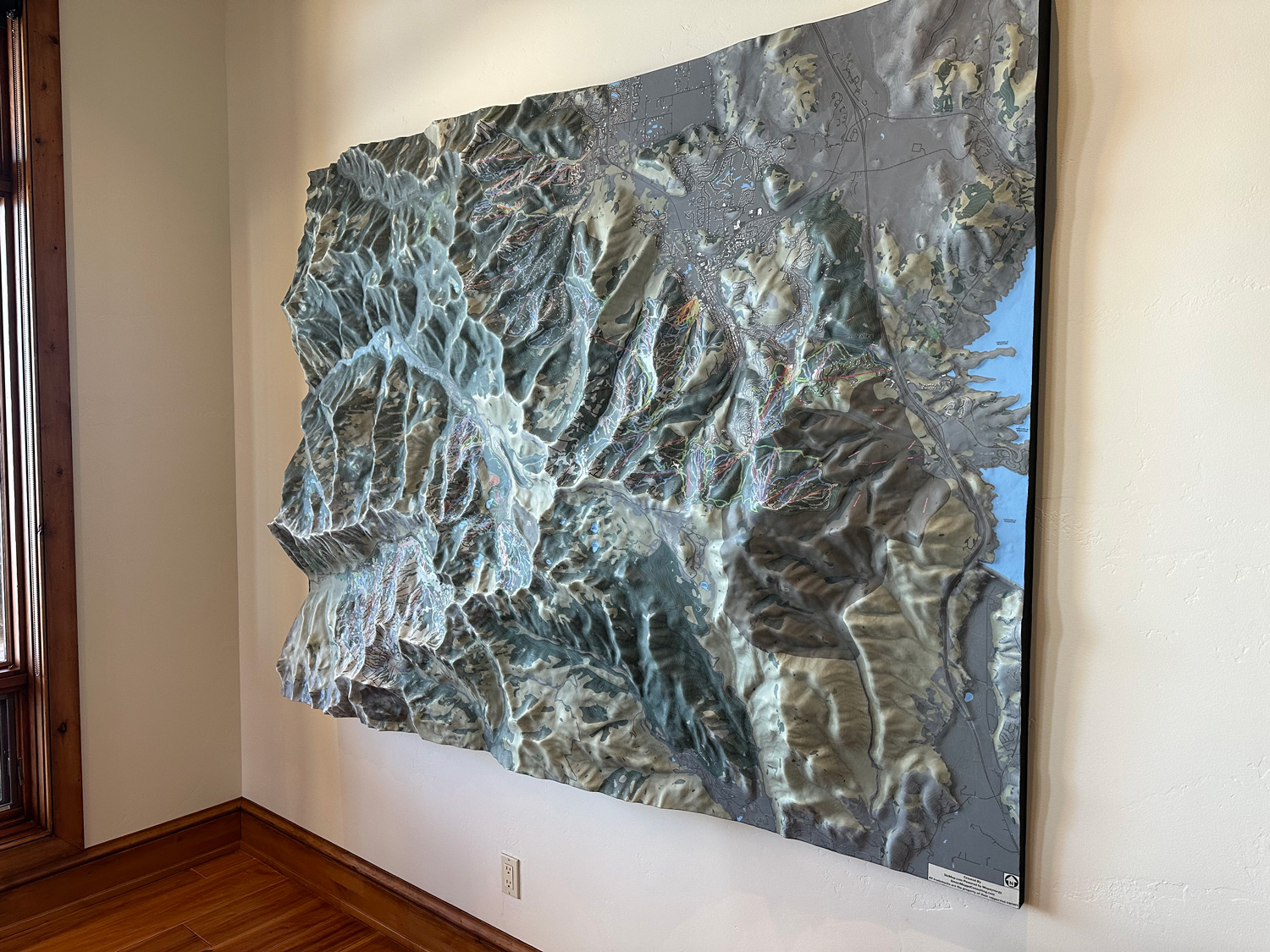
The supporting image shows a completed WhiteClouds raised-relief wall map of the Park City, Utah area with ski trails. It demonstrates a large residential display format. It is not a Pleasant Mountain project and contributes no Pleasant Mountain terrain or operating data.
Make operating status understandable without clutter
Day and night information should share one visual system.
Stable terrain
Use the mountain form and base relationship as the permanent orientation layer.
Day routes
Show the broader trail system at a contrast level that supports, rather than obscures, the night network.
Night routes
Use an approved symbol, color, or lighting treatment for the defined night-served terrain.
Updates
Plan replaceable graphics when operational details are expected to change during the display's life.
Coordinate the terrain and operating sources
The current approved source set should identify both the mountain and the night network.
- Exact mountain boundary and primary orientation
- Current trail and lift map
- Approved night trails and lifts
- Permanent or updateable information strategy
- Required base facilities and legend
- Dimensions, relief, lighting, and viewing distance
- Placement, access, destination, and schedule
Test relief and night graphics in the real environment
A night-oriented display may be viewed under lower ambient light than a daytime lodge map. Test route contrast, relief shadows, and any integrated illumination under conditions similar to the installation. Decorative lighting should not be assumed to communicate operating status unless that function is explicitly designed.
Review labels at full size from the expected distance. If two operating states must remain visible together, simplify secondary labels before reducing critical route information.
Include the proposed legend in that test so its symbols can be read under the same conditions as the terrain.
Request pricing for a Pleasant Mountain 3D map
Provide the approved terrain boundary, current day and night source files, operating-layer strategy, dimensions, orientation, lighting and placement details, destination, and schedule.