
Designing a Mythological Creature Statue
A mythological creature statue needs a single, coherent anatomy even when the subject combines features from several animals or traditions. Define the creature, pose, wings or other projections, expression, and degree of realism before selecting decorative texture or a dramatic setting.
Discuss a Creature Statue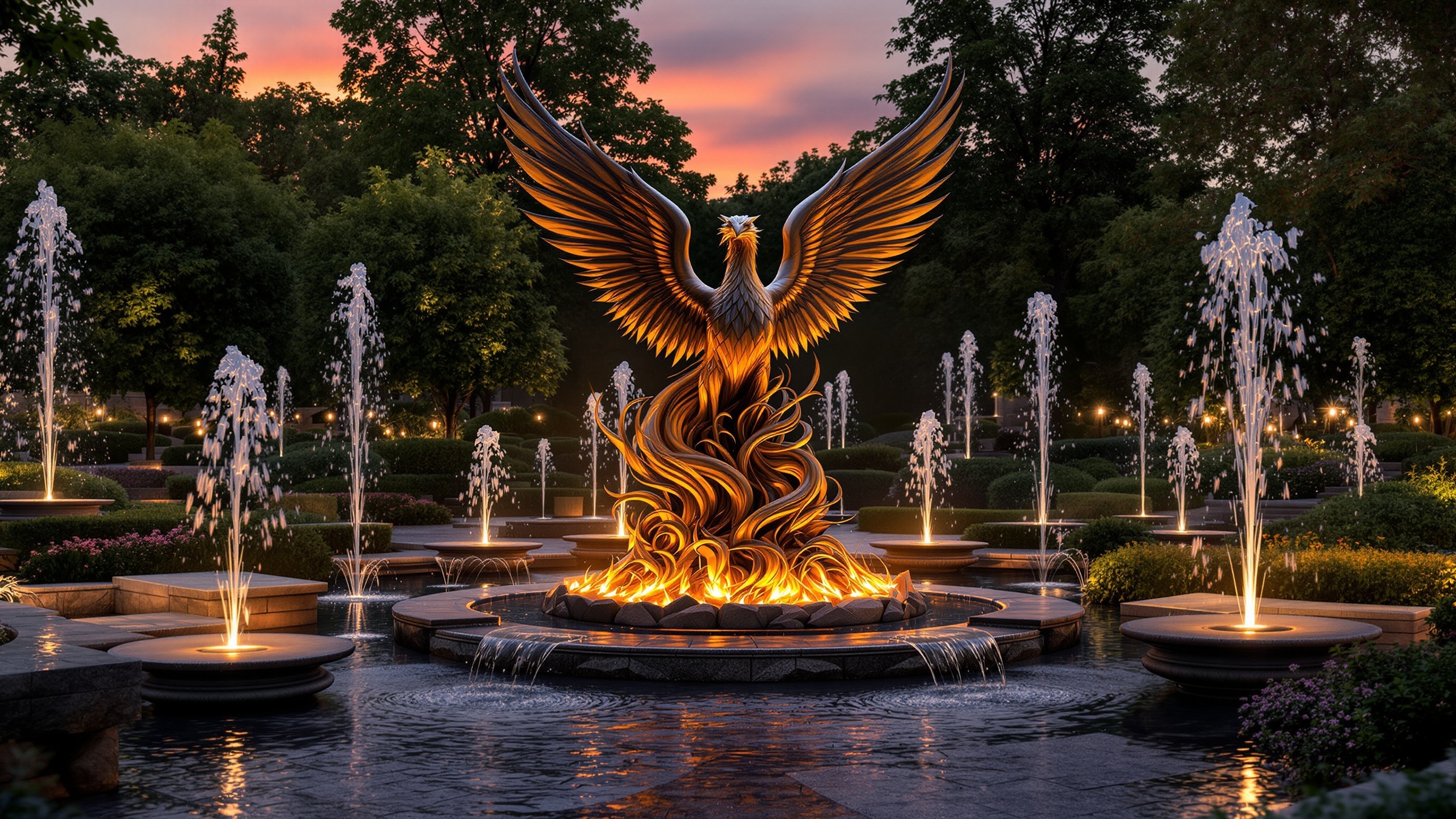
Write the anatomy rules before choosing ornament
Name the creature and gather views that agree about its body. A hybrid may combine a bird's wings, a feline torso, horns, scales, talons, or a serpent tail, but each transition should be deliberate. When several source images conflict, mark one as the controlling design and use the others only for specific details.
Traditional imagery can vary by period, region, and artist. If a particular interpretation matters, provide the exact reference and identify the features that cannot change. For an original creature, front, side, back, and expression views prevent the sculptural model from being assembled from assumptions.
Compare grounded mass with suspended motion
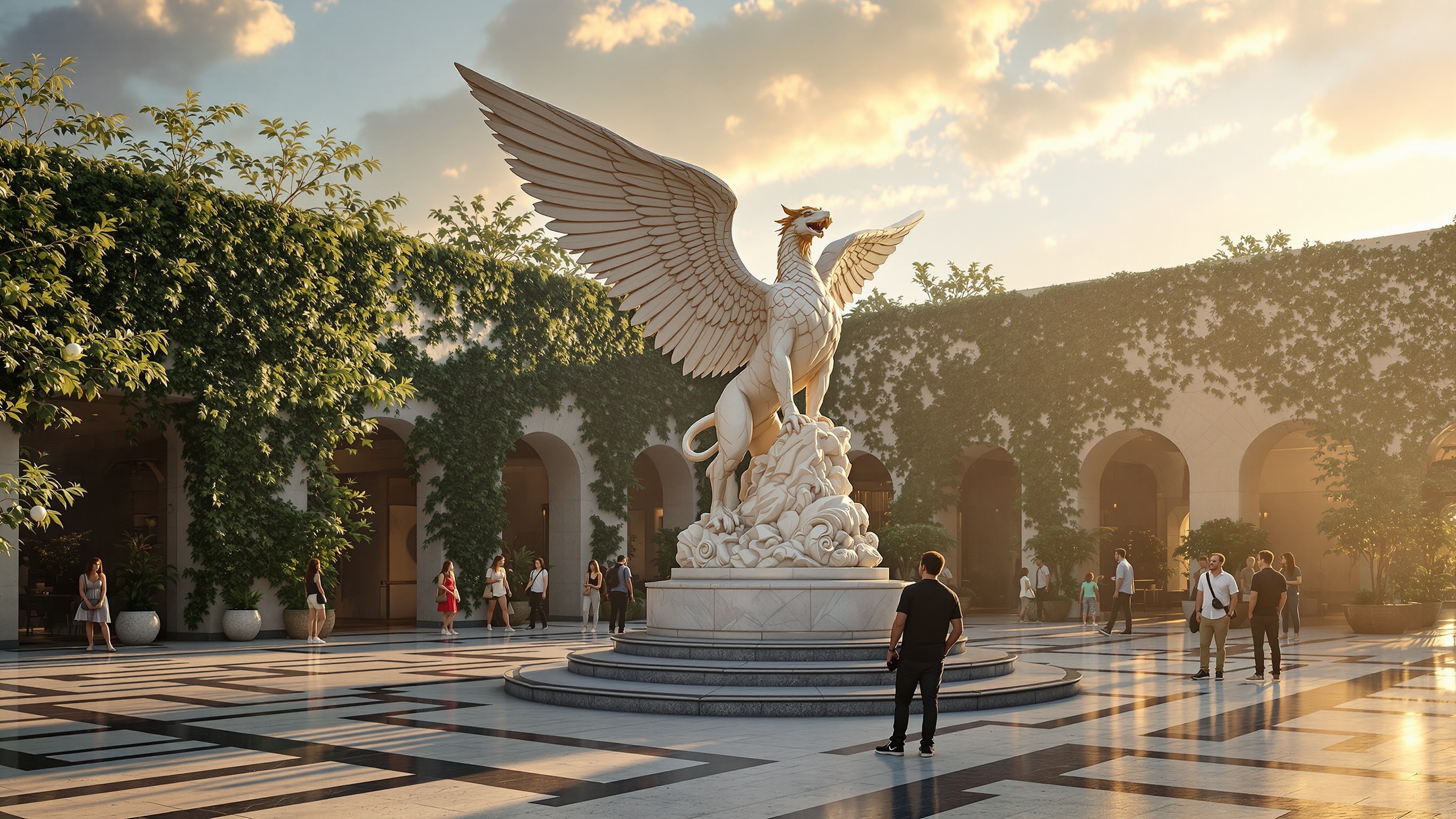
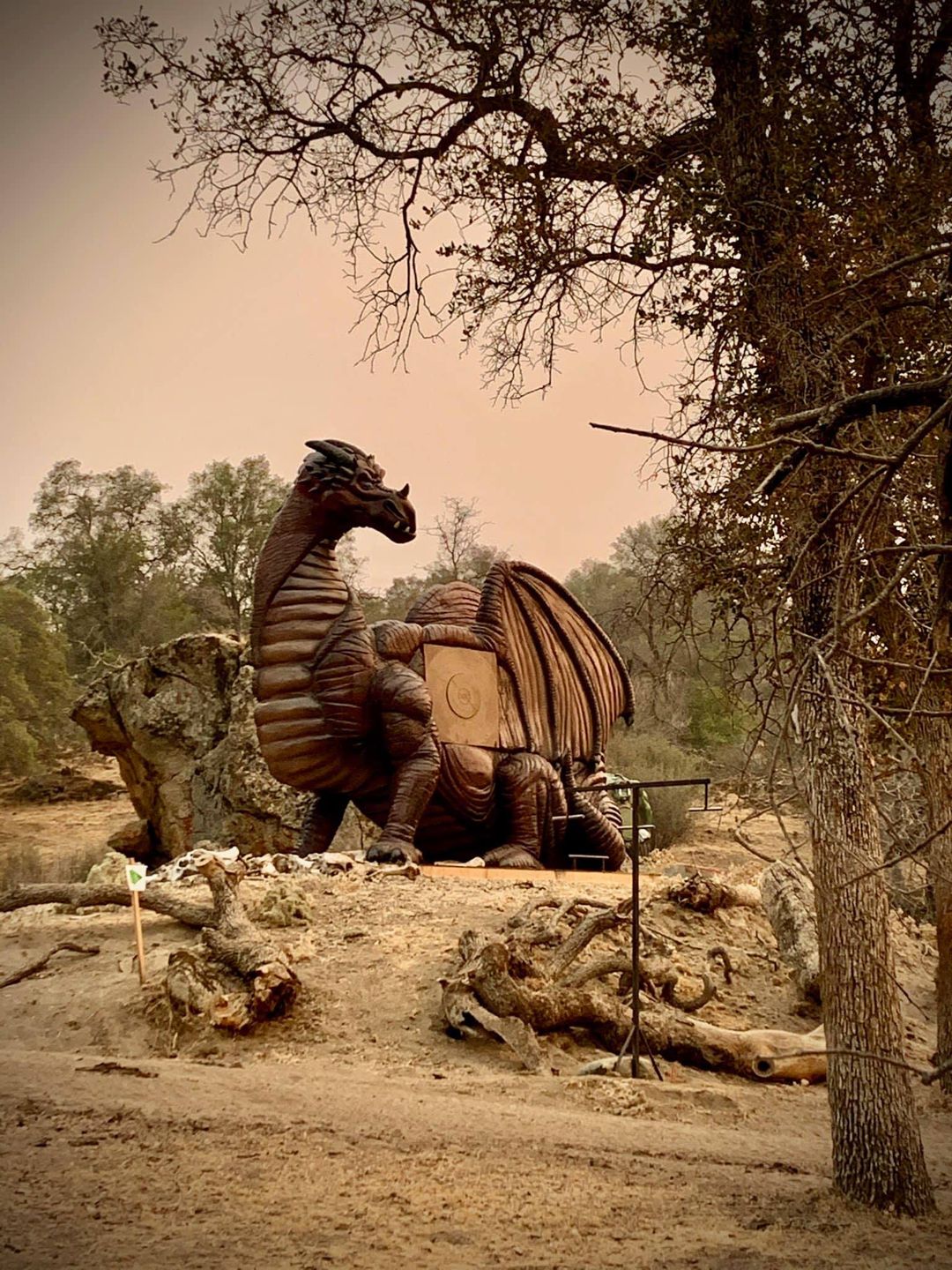
WhiteClouds fabricated the grounded dragon as an archery-target statue and the six-foot flying dragon as a hanging office mascot. One concentrates the body near the ground with folded wings; the other extends the wings and body into an airborne pose. They are separate examples of creature fabrication, not versions of the illustrated phoenix or winged plaza figure.

Let one action organize the silhouette
A clear verb is often more useful than a long list of decorative features.
Guarding
A planted stance, lowered center of gravity, and directed gaze can frame an entry or object without requiring a large airborne span.
Rising
Lift through the chest, tail, feathers, or flame-like shapes can create upward movement while keeping the base visually connected.
Flying
Extended wings and horizontal body position require a defined overhead volume, preferred viewing height, and suspension relationship.
Formal repose
Symmetry and a restrained pose suit architectural settings where the figure must align with stairs, fountains, doors, or a pedestal.
Measure the span created by wings, tails, and horns
Overall height is only one part of the envelope. Record maximum wing span, tail reach, horn height, and the lowest and highest projections. In a public-facing setting, show paths, railings, camera positions, and overhead elements around that envelope. For a suspended request, include the desired body angle and the volume that must remain open below it.
A base can look like rock, architecture, landscape, or a quiet plinth, but it should support the creature's pose rather than introduce a second subject. If the statue is viewed from several levels, provide those sightlines because the top of wings and back may become prominent. Access dimensions should be checked against the largest body or wing section.
Inputs that keep a fantasy figure internally consistent
The first package should make anatomy, motion, and display location equally clear.
- Named creature and controlling visual reference
- Front, side, back, and expression views
- Required hybrid-anatomy features
- Pose and direction of attention
- Maximum wing, horn, and tail envelope
- Base, pedestal, or suspension concept
- Audience paths and viewing elevations
- Site access, destination, and completion date
Request a quote for a mythological creature statue
Share the controlling creature artwork, anatomy rules, pose, expression, overall scale, projection span, viewing sides, base or suspension idea, site volume, access limits, destination, and required date.