
Planning a Custom Mascot Statue
A mascot statue has to preserve the identity people already know while resolving details that may never have existed in the original artwork. Back views, hand shapes, footwear, costume seams, and the depth of facial features all become visible once the mascot occupies physical space.
Discuss a Mascot Statue
Build from the current mascot standard
Begin with the artwork the organization presently approves, not a mixture of historical logos, costume photographs, and fan interpretations. A character guide should establish proportions, colors, markings, uniform elements, and any version-specific differences. When artwork lacks a rear view, identify who will approve the newly resolved details.
Mascot costumes can supply useful volume references, but a statue does not need to copy every soft fold or performer-driven posture. Decide which traits belong to the identity and which belong only to a particular costume photograph. This distinction keeps the figure consistent and avoids accidental design changes.
Select a pose with a clear mascot attitude
The pose might be welcoming, competitive, celebratory, or neutral, but it should be described physically: arm angle, hand gesture, head turn, stance, and facial expression. A ball, sign, tool, or other accessory needs its own dimensions and approved artwork. Extended parts also increase the required display and packing space.
Consider how the character will be photographed without promising a particular audience response. A front three-quarter pose often shows the face and body action together. If people can circle the statue, the back and side silhouette deserve equal attention. A wall position may permit a more concentrated front-facing composition.
Compare completed mascots with different body plans
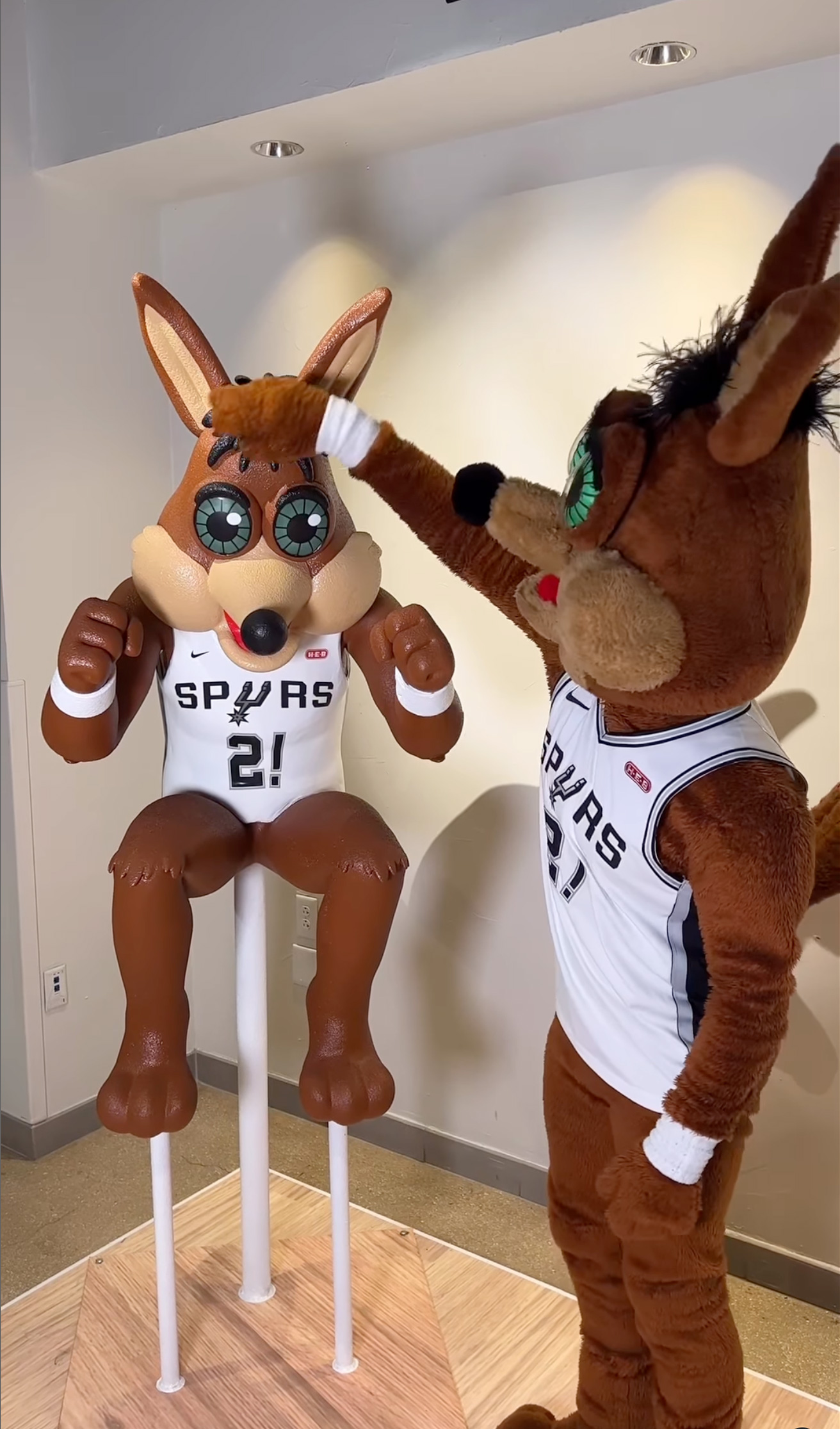
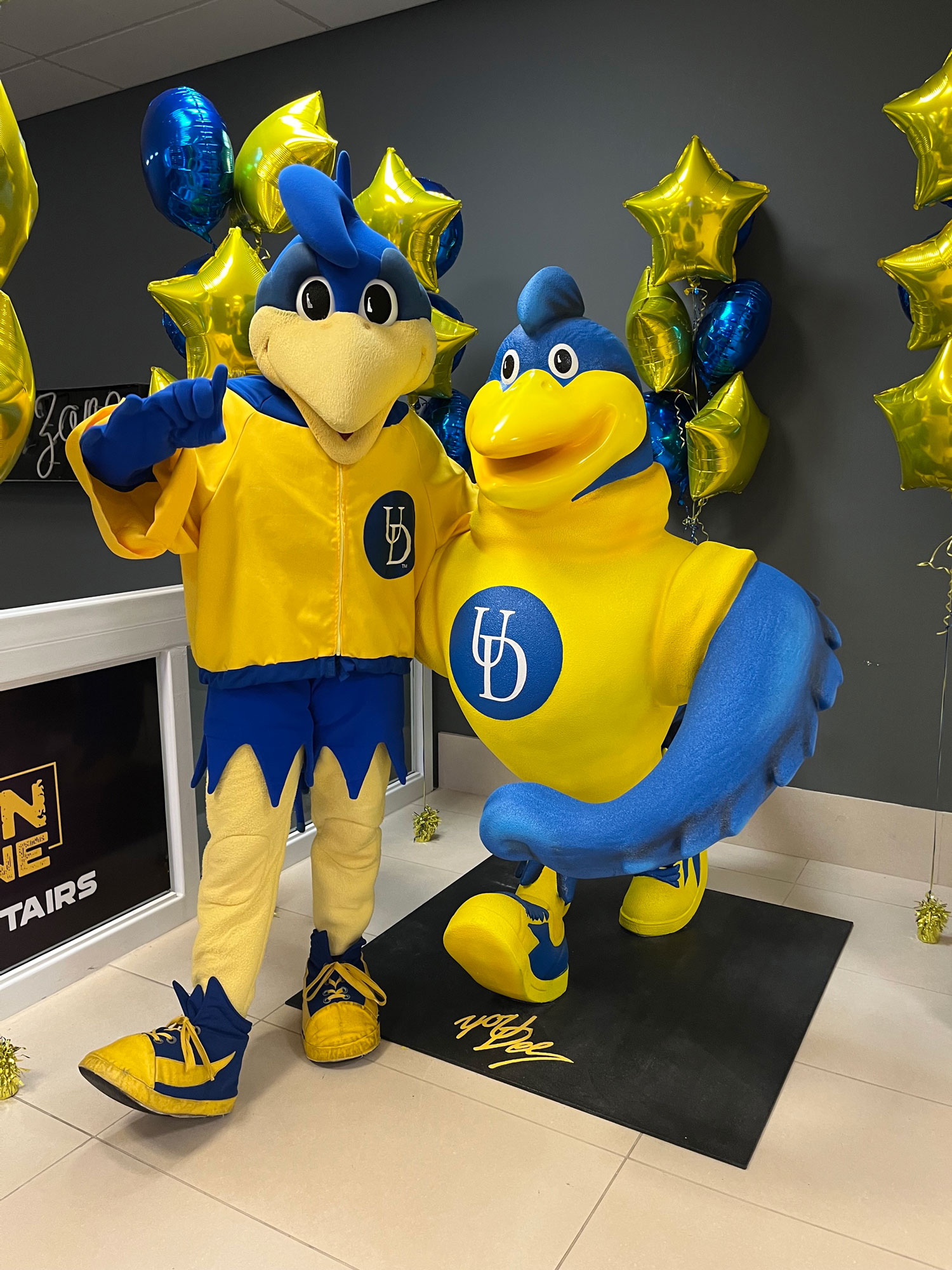
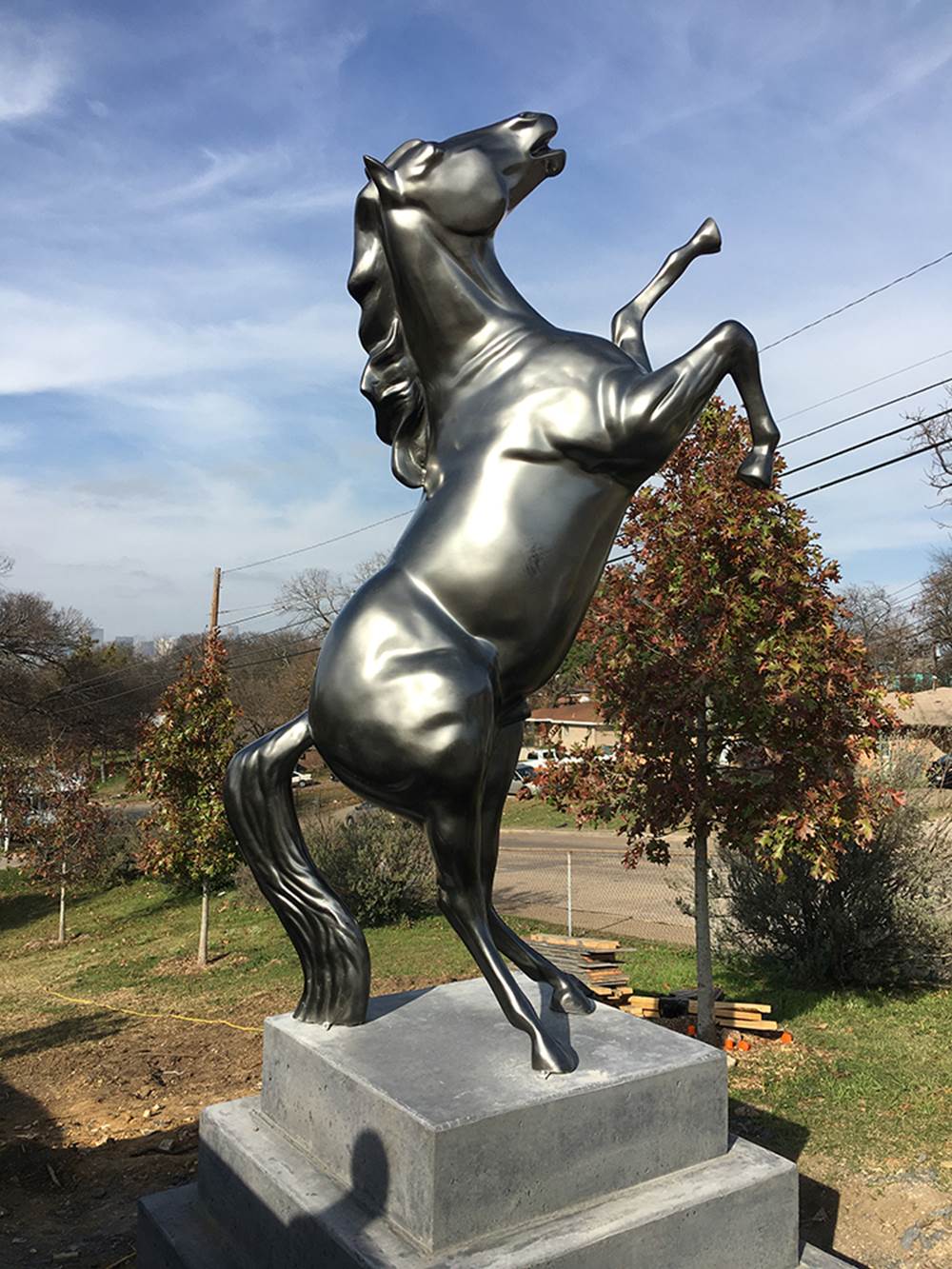
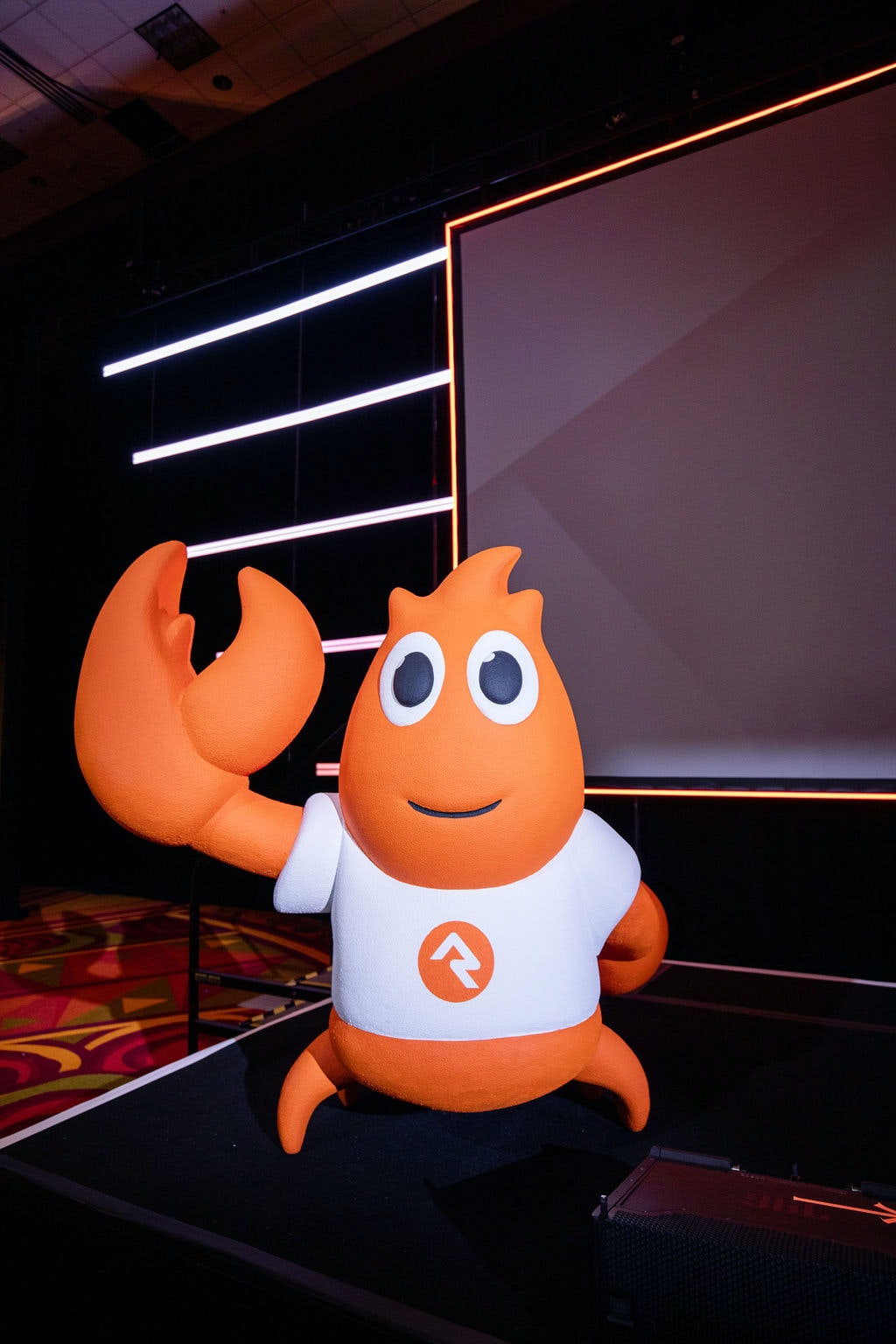
The retained WhiteClouds projects include upright, four-legged, athletic, avian, and crustacean character forms. Their variety shows why each mascot needs an individual pose and support plan. Names and identities are used only to describe the pictured completed work.
Coordinate the base with the character
A base should support the intended setting without competing with the mascot's recognizable features.
Footprint
Set maximum width and depth from the real installation area, including extended limbs and accessories.
Graphic face
A name, school mark, sponsor panel, or blank base should be identified with approved art and visible sides.
Mobility
State whether the statue remains fixed, moves occasionally, or travels with recurring setup and packing.
Added features
Lighting, movement, touch, seating, or outdoor exposure must be requested explicitly and reviewed as separate requirements.
Files and dimensions for a mascot discussion
The initial scope should connect brand approval with practical display constraints.
- Current mascot style guide
- Front, side, and back references
- Approved pose and expression
- Target height and maximum footprint
- Uniform, logos, and accessories
- Base wording or artwork
- Site access and handling plan
- Delivery address and required date
Request pricing for a custom mascot statue
Provide approved mascot artwork, pose, dimensions, uniform details, accessory files, base requirements, viewing sides, access conditions, destination, and deadline. Identify the person or team responsible for visual approvals so the statue can follow the correct identity standard.