
Illuminated Metal Letters vs. Traditional Campus Signs: Which is Better?
A campus-signage comparison based on identity, context, night visibility, construction, power, maintenance, and installation
Illuminated metal letters and traditional monument signs solve different campus tasks. The better choice depends on location, architecture, viewing conditions, brand standards, infrastructure, review requirements, and the institution's maintenance plan.
Technical Overview
Start With the Campus Signage Job
A main entrance marker, building identification, donor feature, athletics display, directional sign, and student photo landmark each serve different audiences and viewing distances. Define the task before comparing materials or deciding that one style represents the entire institution.
Context includes surrounding architecture, landscape, traffic speed, pedestrian routes, daytime contrast, night use, nearby lighting, and historic or design-review requirements. A sign should belong to its location as well as to the broader campus identity.
Understand Traditional Monument Signs
Traditional campus signs often combine masonry, stone, wood, metal plaques, or dimensional letters in a grounded monument form. They can align with established architecture and provide a substantial entrance or wayfinding element without relying on internal lighting.
These signs still need material, foundation, drainage, finish, contrast, landscape, and lighting decisions. Traditional appearance does not mean maintenance-free, and a familiar material should not be assumed suitable for every climate or substrate without project review.
Understand What Illumination Adds
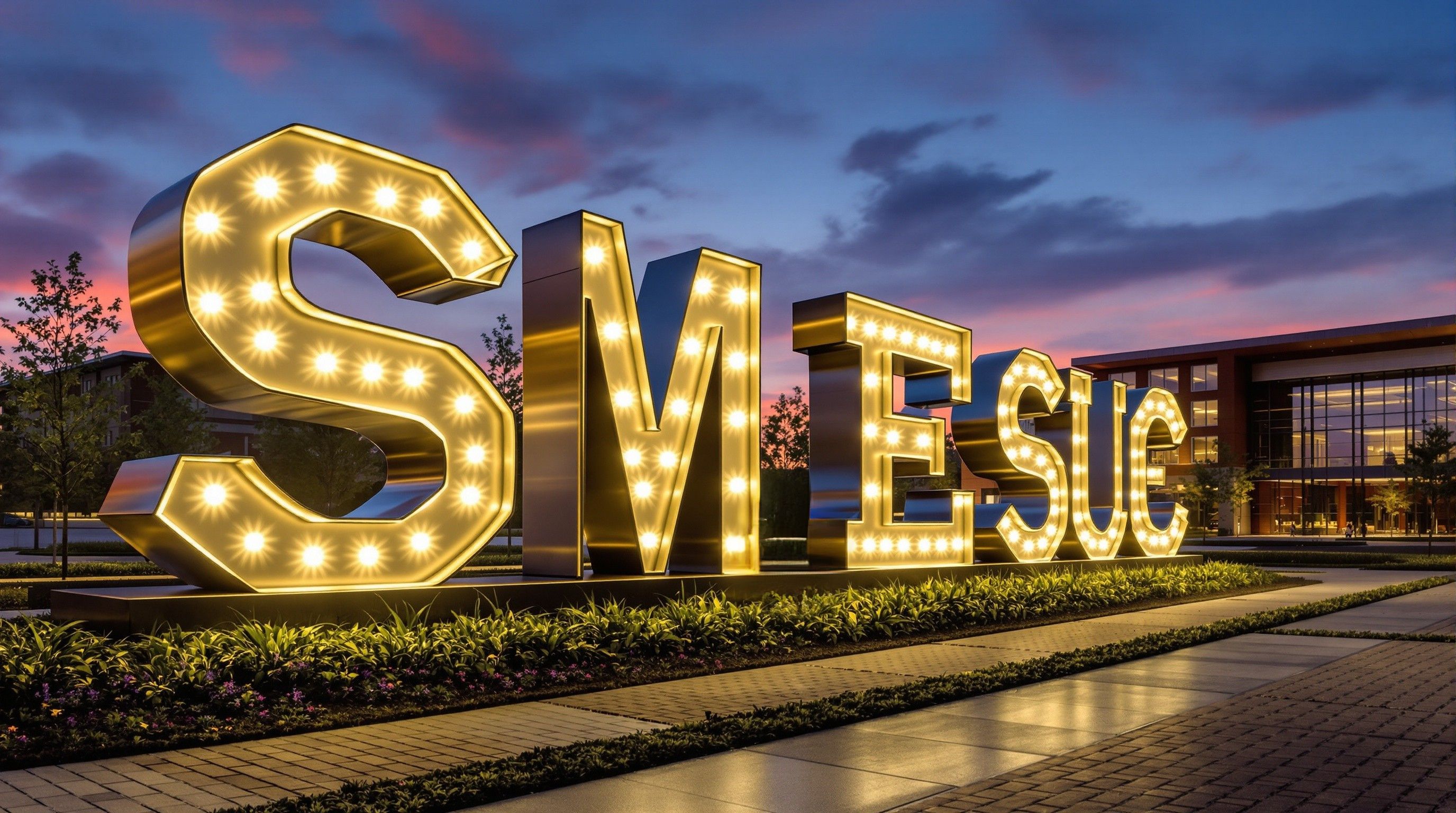
Illuminated metal letters can use face lighting, halo lighting, edge effects, or external fixtures to keep an identity visible after dark. The treatment can be subtle or prominent depending on letter depth, face material, return finish, standoff, wall color, and brightness control.
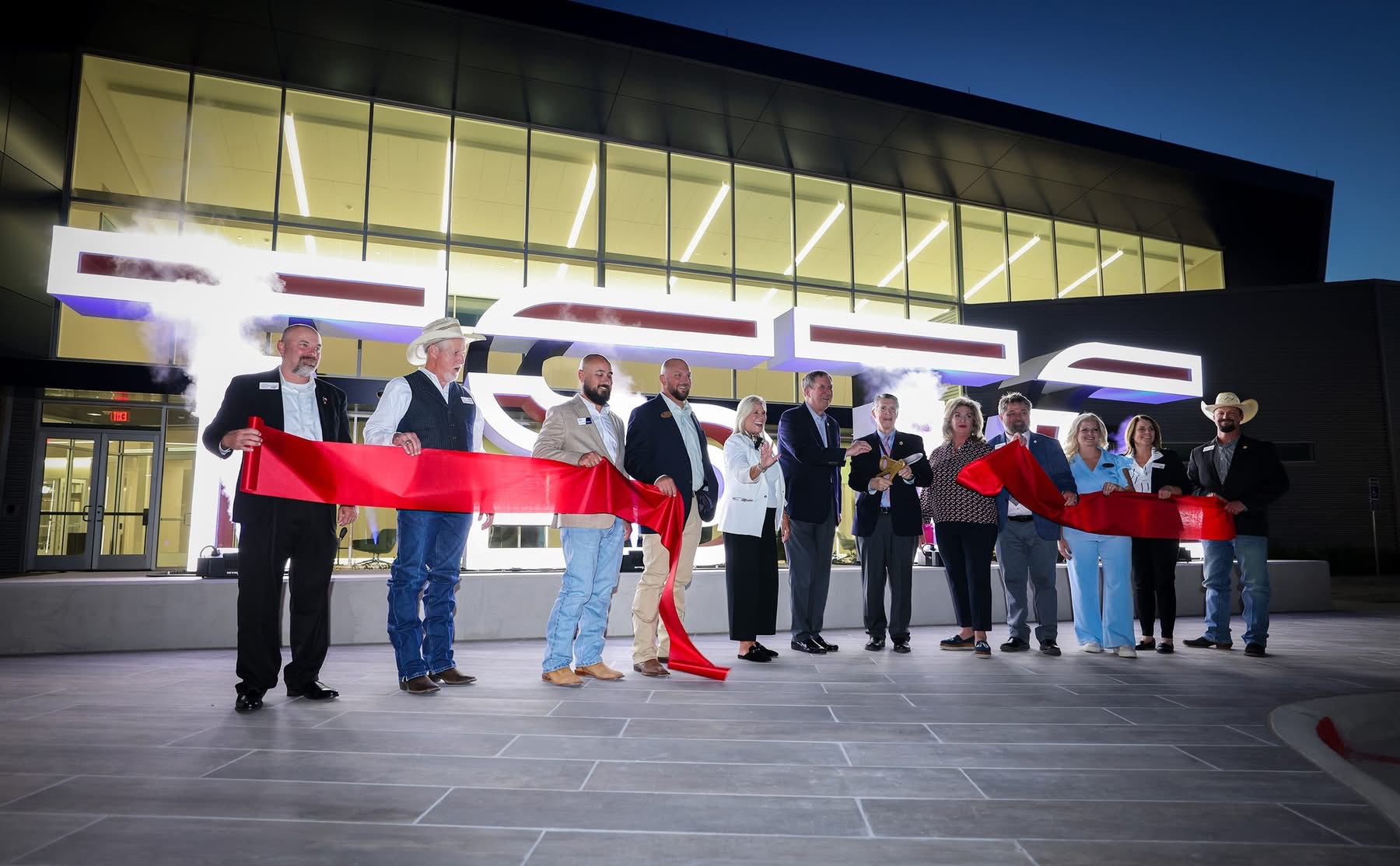
WhiteClouds imagery documents the lit campus landmark display for Texas State Technical College's Power and Mechanical Center in Waco, with letters approximately eight feet tall. It is a useful scale reference, not a default specification for another campus.
Compare Infrastructure and Maintenance
Illuminated letters require power, wiring paths, listed components where applicable, controls, drainage, and service access. Traditional monument signs may avoid internal electrical components but can introduce masonry, foundation, landscape, staining, joint, or finish maintenance.
Compare the actual proposed systems rather than broad categories. Access for cleaning, replacement parts, finish repair, snow or irrigation exposure, and the institution's maintenance resources can be more decisive than the initial visual style.
Coordinate Branding, Readability, and Review
Typeface, logo proportions, color, letter spacing, scale, and contrast should follow current identity standards while remaining readable at the required distance and speed. Night appearance needs its own review because a bright face or halo changes perceived stroke weight.
Campus planning, facilities, brand, accessibility, electrical, structural, historic, and local review may all affect the final sign. Required approvals and documentation should be identified before fabrication and site work are scheduled.
Prepare the Campus Sign Comparison
Provide the sign purpose, site survey, photographs, viewing distances, traffic conditions, architecture, brand files, desired size, night-use requirements, available power, substrate or foundation information, review process, maintenance expectations, and installation responsibility.
WhiteClouds can develop dimensional metal letter options from that information, allowing the campus team to compare a specific illuminated solution with its actual traditional-sign alternatives.
Compare custom campus letter options
Review metal letter fabrication, completed installations, and broader dimensional-letter planning guidance.
Tell us what your model needs to communicate
Share the intended audience, approximate size, level of detail, available source files, and project timeline.