
Historical Replicas Without Bronze Casting
Lightweight physical replicas that reproduce approved historical forms and bronze-like visual finishes without foundry casting
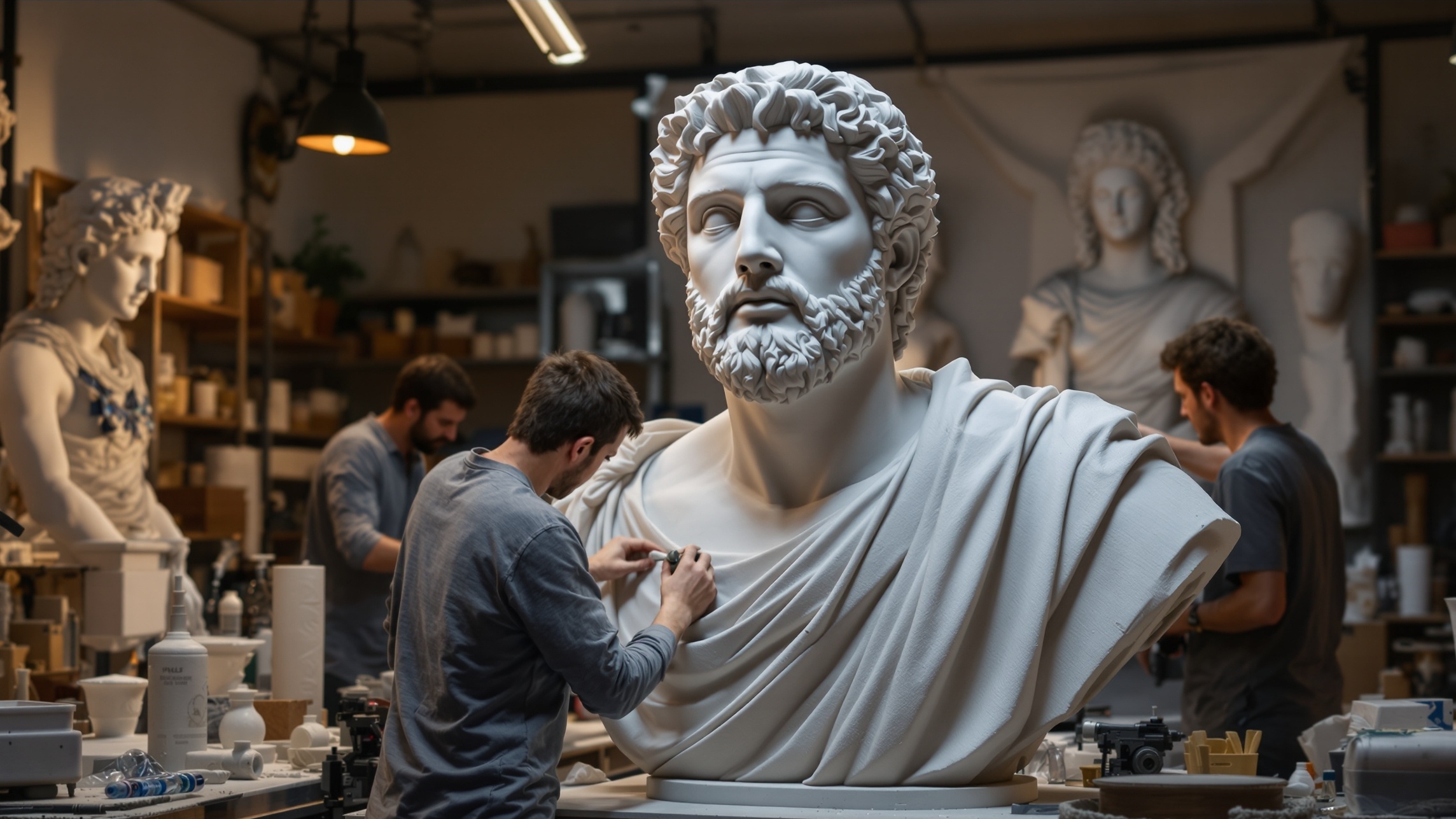
A historical replica can use digital capture, sculpting, foam, printed parts, resin, fiberglass, and layered paint to present an approved form without casting it in bronze. Accuracy, rights, context, structure, and finish all need separate review.
Technical Overview
Establish the Replica's Purpose and Authority
A replica may support an exhibit, classroom, stage, commemorative display, conservation plan, or public interpretation. The commissioning team should identify whether the goal is measured reproduction, visual resemblance, partial reconstruction, or a clearly labeled creative interpretation.
Use source material that the project is permitted to reproduce, including scans, measurements, photography, drawings, or an authorized digital model. Ownership, cultural context, credit, and restrictions should be resolved before fabrication rather than inferred from the age or visibility of the subject.
Control Accuracy and Reconstruction
Three-dimensional scans can capture accessible surface geometry, while photographs and drawings can support areas not covered by scan data. Missing or damaged portions require documented decisions based on the evidence and the interpretive standard chosen for the project.
A replica should not be described as exact unless its data, scale, tolerances, and review support that claim. Tool marks, surface wear, asymmetry, and historical damage may be important evidence rather than defects to be smoothed away automatically.
Build the Form With an Appropriate Method
Foam carving, CNC machining, additive manufacturing, molded or cast resin parts, fiberglass shells, and hand sculpting can be combined according to scale and detail. The method should follow the geometry, required surface, handling, exposure, and number of copies.
Large forms may need an internal support, modular sections, or a rigid shell, but no single assembly applies to every replica. Structure and joints are designed around the finished size, center of gravity, mounting, transport, and installation conditions.
Create a Bronze-Like Finish Without Bronze
Metallic base colors, translucent layers, washes, highlights, and controlled patina effects can suggest bronze, copper, brass, or aged metal on a compatible prepared surface. The visual result comes from color, reflectivity, texture, and the way the layers settle around relief.
A finish sample should be reviewed under lighting similar to the display setting. Bronze appearance varies widely, so references should identify the desired warmth, value, sheen, patina color, variation, and degree of age rather than relying on the word bronze alone.
Plan Display, Interpretation, and Care
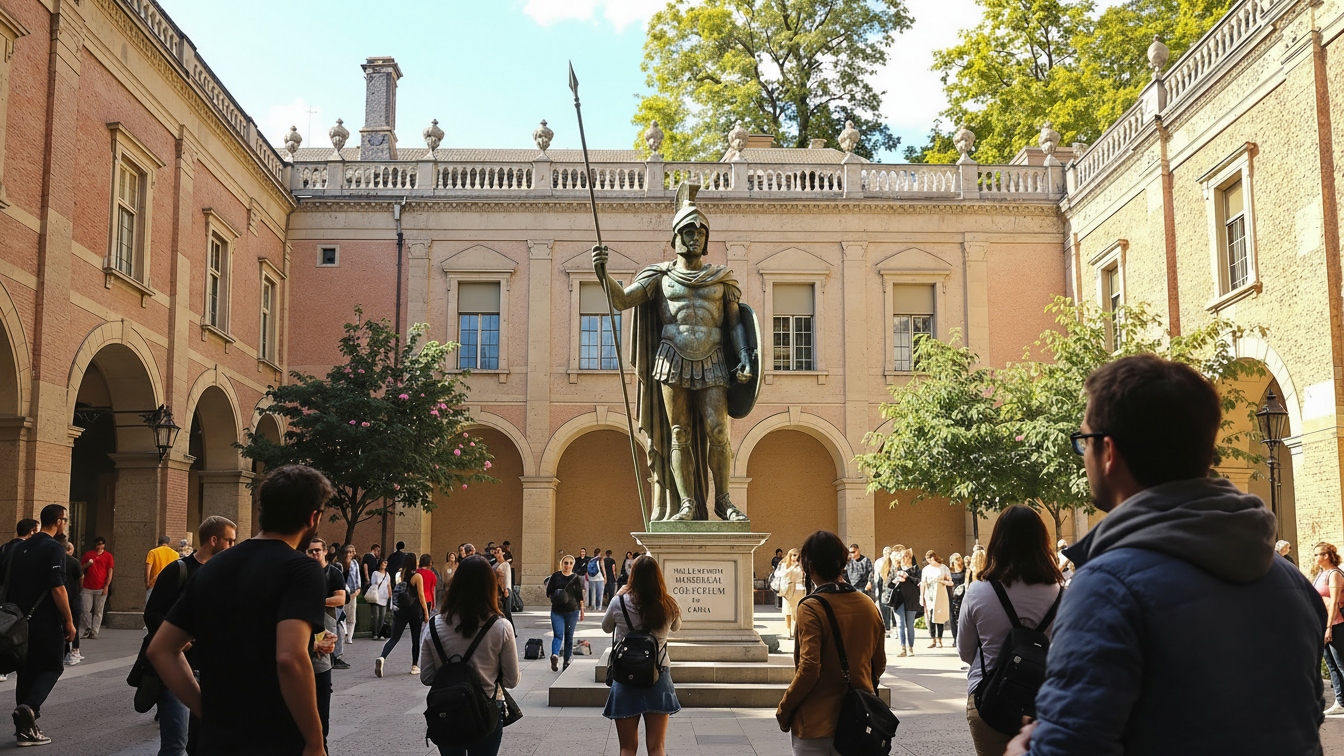
The base, label, barriers, lighting, touch policy, mounting, and viewing height affect how the replica is understood. Public interpretation should make clear when an object is a replica or reconstruction and should use language approved by the responsible institution.
Cleaning and repair instructions should match the actual coatings and applied finishes. Abrasive treatment or an incompatible solvent can damage a metallic effect even when the underlying shell remains intact.
Prepare the Historical Replica Package
Provide the authorized source data, scale, accuracy standard, reconstruction decisions, rights and credits, display context, finish references, labels, handling, mounting, exposure, delivery access, review authority, and schedule.
WhiteClouds can evaluate those requirements and develop a non-bronze replica whose form, structure, surface, and presentation support the approved historical or interpretive purpose.
Plan a lightweight historical replica
Review large replica fabrication and examples of WhiteClouds custom physical product and object displays.
Tell us what your model needs to communicate
Share the intended audience, approximate size, level of detail, available source files, and project timeline.