
Planning a Giant Wristwatch Prop
Giant Wristwatch Prop: one oversized wristwatch prop defined by a central case and dial, bezel, crown, paired lugs, and a strap or bracelet that establishes wrist-worn identity. Recognition depends on the dial perimeter, hour markers, hands, bezel, case thickness, side crown, lug transitions, strap or bracelet segments, buckle or clasp cue, and selected display time. The central scale question is that the case must remain dominant while the much longer strap or bracelet stays proportionate and visibly connected through the lugs instead of reading as a clock with decorative bands. The images are wristwatch design concepts rather than photographs of completed WhiteClouds work.
Plan a Wristwatch Display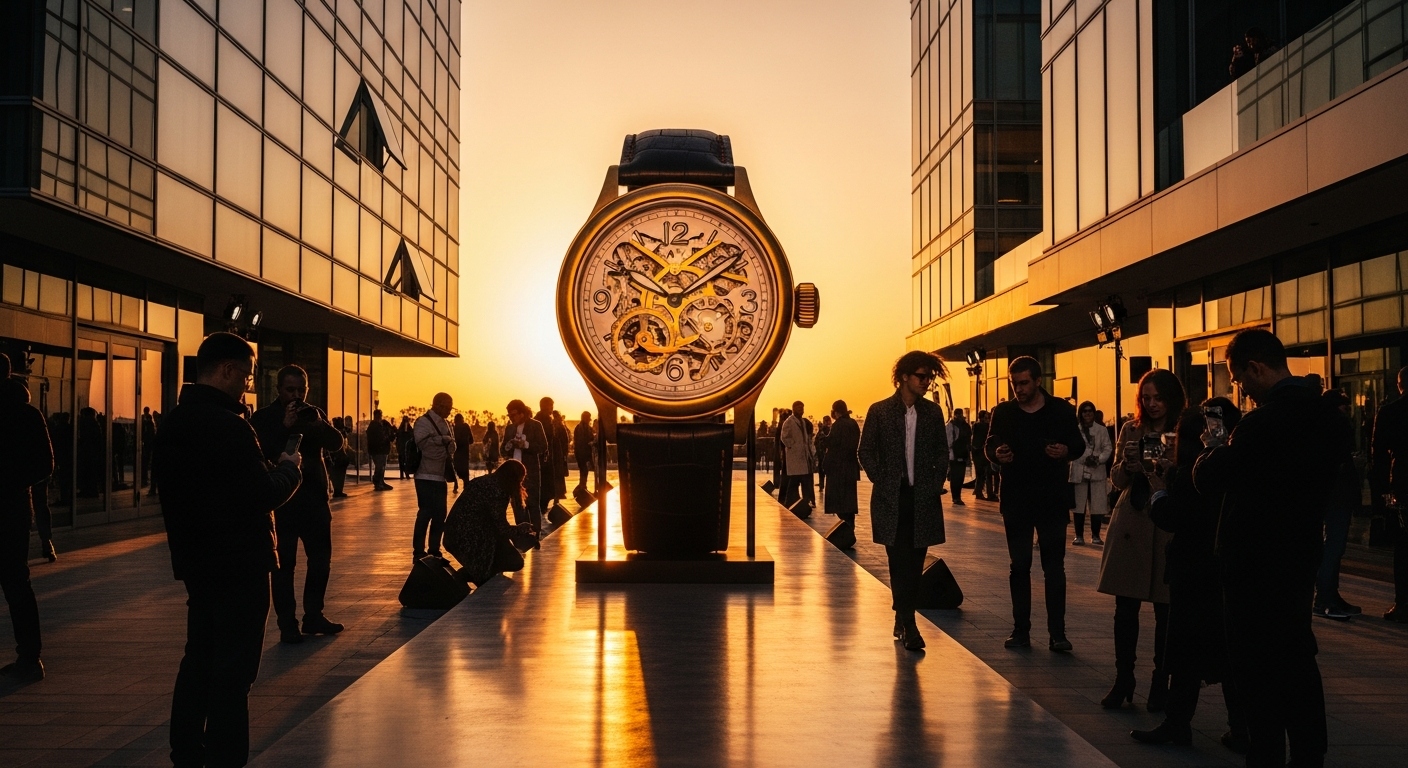
Define the Wristwatch Form
Wristwatch physical scope: one oversized wristwatch prop defined by a central case and dial, bezel, crown, paired lugs, and a strap or bracelet that establishes wrist-worn identity. Its geometry includes case diameter and depth, dial opening, bezel width, crown position, lug spacing and angle, strap width and length, buckle or clasp dimensions, hand lengths, and fixed display pose. Its defining visual cues are the dial perimeter, hour markers, hands, bezel, case thickness, side crown, lug transitions, strap or bracelet segments, buckle or clasp cue, and selected display time.
Wristwatch presentation: a static wristwatch replica presented flat, upright, curved around a support, or posed with a declared strap path that keeps the wrist-worn construction visible. The visual treatment can use approved dial artwork, numeral or marker system, case and bezel treatment, strap color or bracelet pattern, restrained metal-like accents, and authorized branding. Keep the wristwatch scope separate from pocket-watch bows and chains, wall or tower clocks, freestanding general clock faces, smart-device functionality, working timekeeping, moving hands, wearable use, unlicensed marks, and invented brand endorsements.
The strap-to-case system is the durable boundary for this page. Start with the case shape and dial, then locate the bezel, crown, pushers when supplied, lug geometry, spring-bar-like transition, strap or bracelet construction, keeper, holes, buckle, or clasp. A front elevation controls the dial and selected hand position; side and end views establish case depth, crown projection, lug angle, and strap path. If the prop curves around a support, provide the inside radius and camera side. The watch remains a static scenic object, not a wearable, functional timekeeper, smart device, or endorsed luxury product.
Dial design should be supplied as a deliberate artwork system. Set the chapter ring, hour markers or numerals, minute marks, logo area, subdials when applicable, date-like window, hand shapes, hand lengths, and one fixed displayed time. The bezel may be plain, faceted, numbered, fluted-looking, or another documented profile. Face graphics should be reviewed at final diameter so line weights and small marks remain readable. A decorative second hand or subdial does not imply motion, precision, calendar behavior, or working timekeeping.
The strap or bracelet is not an optional border; it is what separates a wristwatch from a general clock and from a pocket watch. For a strap, document taper, hole pattern, keeper count, buckle shape, edge treatment, and the transition into each lug. For a bracelet, define link count, repeating link geometry, width, curvature, and clasp-like cue. State whether the band lies flat, rises behind the case, wraps around a pedestal, or forms part of the support. That fixed path determines overall length, footprint, and which dial side faces the audience.
Brand and product references require care. A buyer may supply authorized dial art, logos, color standards, and case details, but this page should not infer a luxury brand, model, endorsement, movement type, water resistance, precious material, or mechanical specification from the concept images. Generic timepiece styling is sufficient for early planning. A rights-sensitive mark or recognizable protected design should enter production only with approved files and permission.
Control the Details That Identify the Wristwatch
Wristwatch planning variables include case diameter and depth, dial opening, bezel width, crown position, lug spacing and angle, strap width and length, buckle or clasp dimensions, hand lengths, and fixed display pose; the dial perimeter, hour markers, hands, bezel, case thickness, side crown, lug transitions, strap or bracelet segments, buckle or clasp cue, and selected display time; approved dial artwork, numeral or marker system, case and bezel treatment, strap color or bracelet pattern, restrained metal-like accents, and authorized branding; and a static wristwatch replica presented flat, upright, curved around a support, or posed with a declared strap path that keeps the wrist-worn construction visible.
Wristwatch form
For the wristwatch, set case diameter and depth, dial opening, bezel width, crown position, lug spacing and angle, strap width and length, buckle or clasp dimensions, hand lengths, and fixed display pose. Show one oversized wristwatch prop defined by a central case and dial, bezel, crown, paired lugs, and a strap or bracelet that establishes wrist-worn identity, and keep the complete outline readable from the primary approach.
Wristwatch recognition
Review the wristwatch from the dial outward. Keep the case, crown, lugs, and band connection unmistakable at the expected distance, and note which secondary markers or bracelet details can be simplified without turning the object into a general clock.
Wristwatch surface
Develop approved dial artwork, numeral or marker system, case and bezel treatment, strap color or bracelet pattern, restrained metal-like accents, and authorized branding. Place each requested wristwatch graphic on the reference views with usable artwork, orientation, and scale.
Wristwatch setting
Plan a static wristwatch replica presented flat, upright, curved around a support, or posed with a declared strap path that keeps the wrist-worn construction visible. Record the footprint and visible sides for the wristwatch, then add circulation around the wristwatch, access limits, support preference, and fixed site constraints.
Plan Scale, Viewing, and Placement
Wristwatch scale issue: the case must remain dominant while the much longer strap or bracelet stays proportionate and visibly connected through the lugs instead of reading as a clock with decorative bands. Resolve that relationship through case diameter and depth, dial opening, bezel width, crown position, lug spacing and angle, strap width and length, buckle or clasp dimensions, hand lengths, and fixed display pose, then test the wristwatch against its principal view and available floor or site area.
Wristwatch concepts may serve a timepiece or fashion campaign, a countdown or horology exhibit, or a retail, trade-show, museum, stage, or photo installation. Supply the case reference, dial file, fixed band pose, selected time, dimensions, marks, access route, and required date. Call out any requested visitor contact, lighting, motion, outdoor use, or other performance separately.
Compare Wristwatch Directions
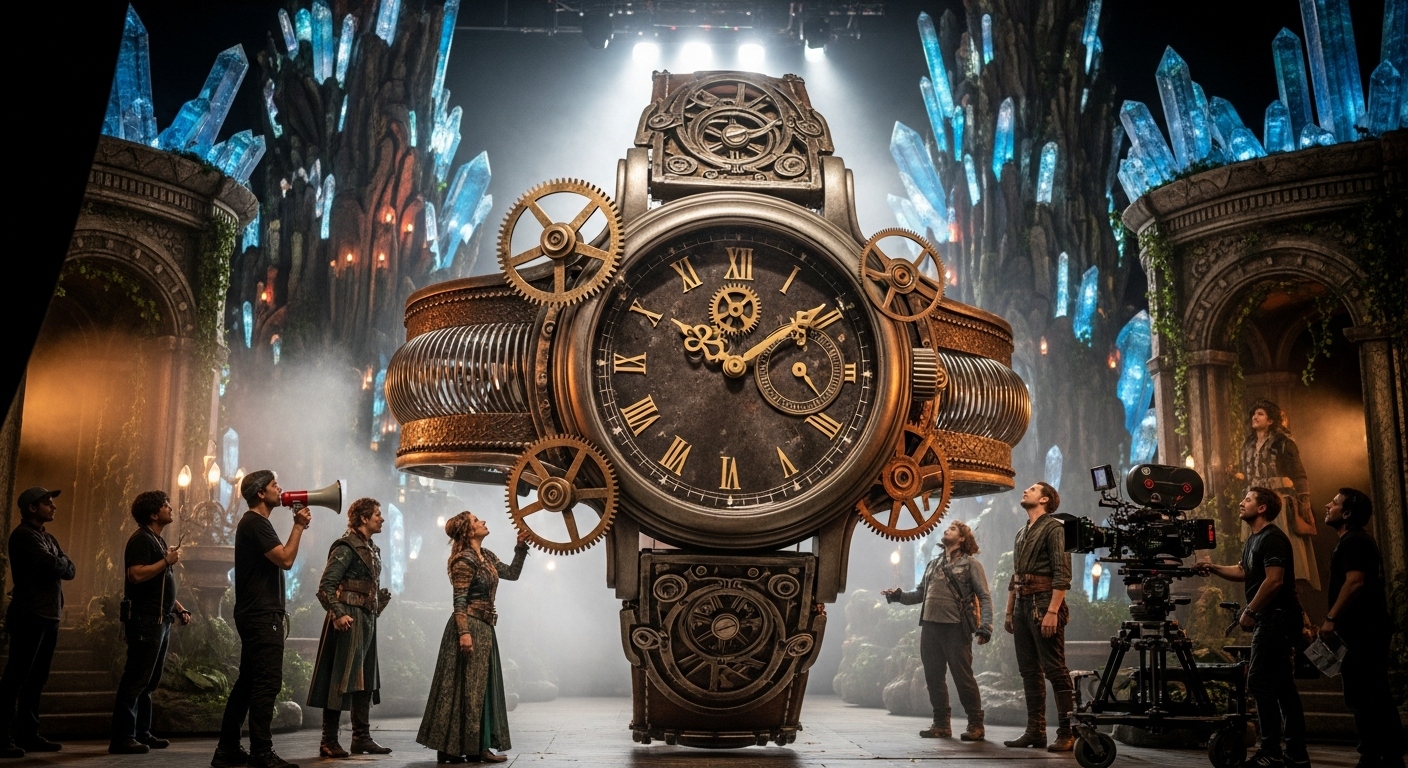
Wristwatch reference 1: Shows the case, dial, crown, and strap relationship at public-display scale. Wristwatch reference 2: Provides a second case and band direction with strong front-face detail.
Compare the wristwatch concepts as visual directions. They do not identify a prior wristwatch customer or commission. Use the wristwatch views to compare case diameter and depth, dial opening, bezel width, crown position, lug spacing and angle, strap width and length, buckle or clasp dimensions, hand lengths, and fixed display pose and approved dial artwork, numeral or marker system, case and bezel treatment, strap color or bracelet pattern, restrained metal-like accents, and authorized branding. The images do not establish final wristwatch dimensions, construction, performance, transport, installation, interaction, or outcome.
Prepare the Wristwatch Project Brief
The wristwatch quote brief should lock the case-and-band identity before decorative choices multiply. Use the checklist below to define dial artwork, fixed time, lugs, strap or bracelet path, dimensions, display pose, finish direction, and delivery conditions.
- specific wristwatch reference
- case, dial, and overall dimensions
- strap or bracelet type and fixed pose
- dial artwork and selected time
- approved colors, marks, and graphics
- site, access route, and date
- Physical subject: one oversized wristwatch prop defined by a central case and dial, bezel, crown, paired lugs, and a strap or bracelet that establishes wrist-worn identity
- Geometry: case diameter and depth, dial opening, bezel width, crown position, lug spacing and angle, strap width and length, buckle or clasp dimensions, hand lengths, and fixed display pose
- Recognition cues: the dial perimeter, hour markers, hands, bezel, case thickness, side crown, lug transitions, strap or bracelet segments, buckle or clasp cue, and selected display time
- Surface direction: approved dial artwork, numeral or marker system, case and bezel treatment, strap color or bracelet pattern, restrained metal-like accents, and authorized branding
- Display direction: a static wristwatch replica presented flat, upright, curved around a support, or posed with a declared strap path that keeps the wrist-worn construction visible
- Scale issue: the case must remain dominant while the much longer strap or bracelet stays proportionate and visibly connected through the lugs instead of reading as a clock with decorative bands
- Wristwatch setting: timepiece, fashion, or product campaign
- Wristwatch setting: countdown, launch, or horology exhibit
- Wristwatch setting: retail, trade-show, stage, museum, or photo display
- Excluded scope: pocket-watch bows and chains, wall or tower clocks, freestanding general clock faces, smart-device functionality, working timekeeping, moving hands, wearable use, unlicensed marks, and invented brand endorsements
- Requested wristwatch contact, movement, lighting, occupancy, or exterior exposure
Request a Custom Quote
Send the wristwatch reference, specific wristwatch reference, case, dial, and overall dimensions, strap or bracelet type and fixed pose, dial artwork and selected time, approved colors, marks, and graphics, site, access route, and date, destination, and required date. Also describe a static wristwatch replica presented flat, upright, curved around a support, or posed with a declared strap path that keeps the wrist-worn construction visible. WhiteClouds can review the defined scope and prepare a custom quote. The concept images support visual planning and do not depict a completed WhiteClouds project.