
Planning a Giant Wind-Up Key Prop
A giant wind-up key prop is recognized by the shape of its bow or handle, the shaft, and the lower blades or tabs. Its orientation and attachment point matter just as much as its outline, especially when the key appears to belong to a supplied toy, character, machine, or scenic object.
Plan a Giant Wind-Up Key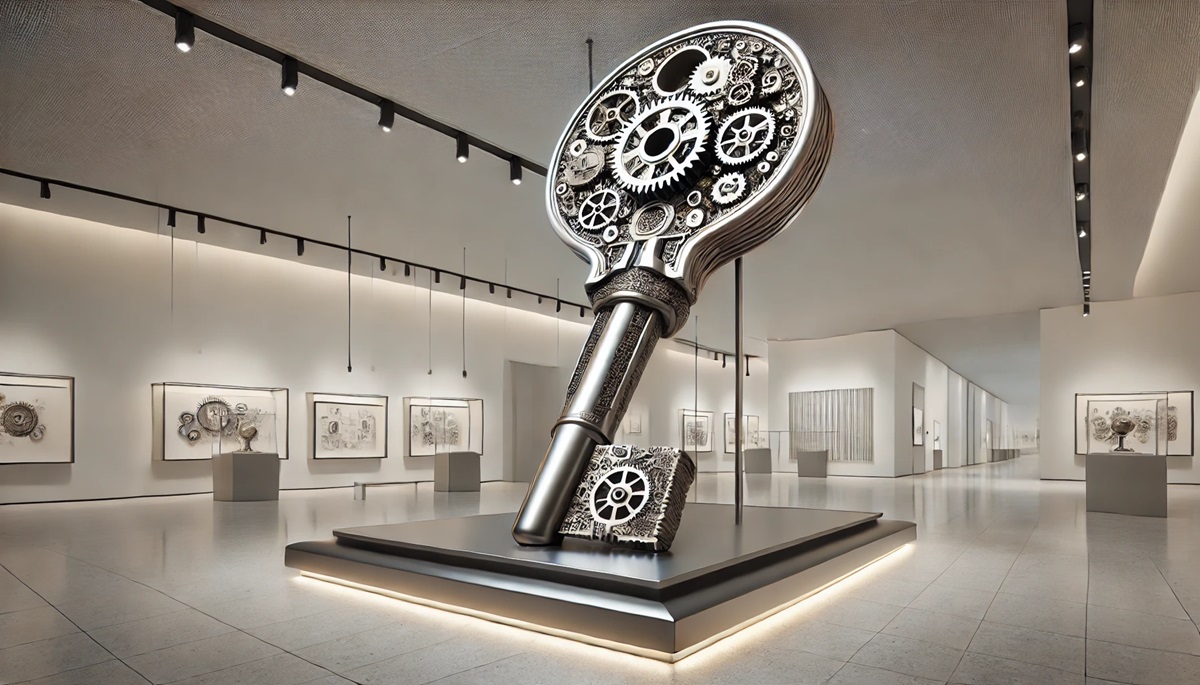
Draw the bow, shaft, and lower tabs as one object
Supply a front reference and mark the outer bow, internal cutouts, shaft centerline, lower shoulders, and final tabs or blades. Decide whether the shape should look clean and geometric, toy-like, ornate, mechanical, or based on approved original artwork.
Check the silhouette at the actual viewing distance. Small cutouts can close visually, while a very wide bow can overpower the shaft and make the lower key shape difficult to recognize.
Choose how the key occupies the setting
The same silhouette creates different tasks depending on its relationship to another object.
Standalone
A freestanding key needs a clear base relationship and enough depth to show its edge from angled views.
Attached-looking
When the key appears to emerge from a supplied toy or scenic object, show the exact intersection and visible collar.
Wall-integrated
A shallow key can sit against a backdrop when the side profile is intentionally limited and the front view carries the design.
Tilted presentation
A fixed angle can reveal thickness and cutouts, but it increases the full width and depth of the occupied envelope.
Plan the key as a static visual element
Choose a vertical, horizontal, diagonal, or supplied original orientation and mark the principal view. If the key belongs visually to a character or object, include that surrounding reference and the exact location of the apparent connection.
A wind-up silhouette does not imply a working mechanism. Rotation, torque, gears, moving parts, and public interaction should not be promised or assumed; any such feature would require separate design and review.
Compare circular and open-frame bow treatments
One concept uses a broad circular top with internal mechanical-looking detail. The other emphasizes open cutouts and a taller freestanding silhouette, changing both the visual weight and surrounding clearance.
Both are conceptual references only. A new request should define the approved key artwork, dimensions, thickness, orientation, attachment relationship, and site conditions.

Define the static clockwork form
The front silhouette and placement should be supplied together.
- Approved bow, cutout, shaft, and lower-tab reference
- Overall height, bow width, shaft length, and thickness
- Front, edge, and rear treatment
- Vertical, horizontal, diagonal, or other fixed orientation
- Standalone base or apparent attachment point
- Approved colors, graphics, and original artwork
- Primary view and surrounding clearances
- Access route, destination, display conditions, and schedule
Request pricing for a giant wind-up key prop
Send the approved key reference, dimensions, thickness, orientation, visible sides, base or attachment relationship, placement conditions, access information, destination, and schedule.