
Planning a Giant Turkey Leg Prop
Giant Turkey Leg Prop: one oversized cooked-turkey-leg prop defined by a broad irregular meat form, tapered bone, exposed bone end, and supplied serving orientation. Recognition depends on the heavy rounded meat volume, tapered transition to the bone, knuckle-like end, cooked surface color, irregular contours, and selected grip or platter relationship. The central scale question is that the thick irregular meat form and much narrower bone must stay balanced so the object reads as a turkey leg rather than a generic club or bone. The images are turkey leg design concepts rather than photographs of completed WhiteClouds work.
Plan a Turkey Leg Display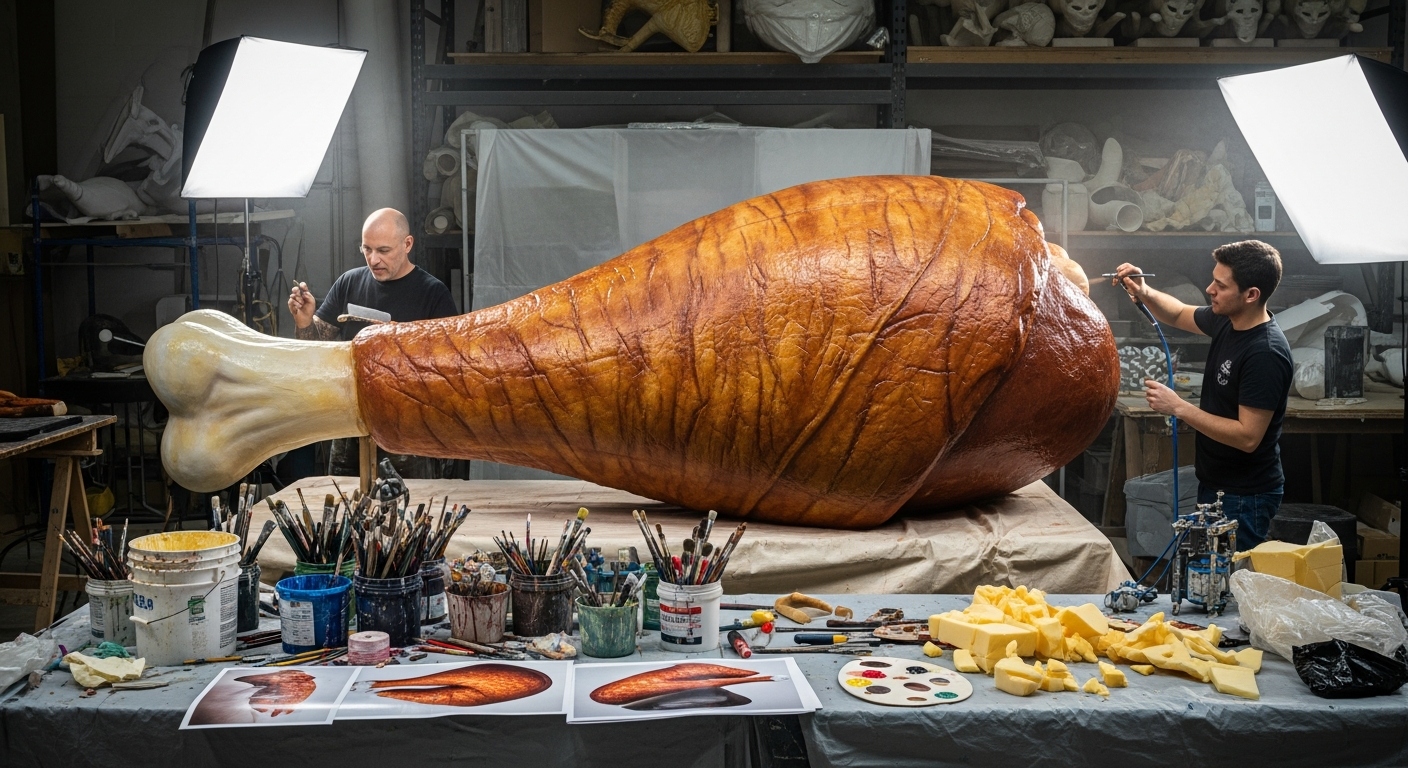
Define the Turkey Leg Form
Turkey Leg physical scope: one oversized cooked-turkey-leg prop defined by a broad irregular meat form, tapered bone, exposed bone end, and supplied serving orientation. Its geometry includes overall length, maximum meat width and depth, bone length and diameter, transition profile, end shape, pose angle, base contact, and support footprint. Its defining visual cues are the heavy rounded meat volume, tapered transition to the bone, knuckle-like end, cooked surface color, irregular contours, and selected grip or platter relationship.
Turkey Leg presentation: a static food-form replica posed horizontally, angled, or upright with the meat-to-bone transition and serving orientation clearly readable. The visual treatment can use approved roasted-looking color variation, browned texture direction, subtle highlight cues, and an optional supplied wrapper, tray, or sign element. Keep the turkey leg scope separate from menus, food service, edible use, real cooking methods, generic food catalogs, other poultry parts, animal anatomy claims, climbable use, and invented commissions.
Define one prepared serving form rather than a general food category. Use front, side, and end views to map the rounded meat mass, high and low points, skin-like folds, tapered neck, exposed bone shaft, and knuckle end. The pose determines the footprint: horizontal emphasizes length, a raised bone creates a diagonal, and upright presentation makes the support more visible. Any wrap, platter, skewer, sign, or scenic food-stall context is separate scope. Color and texture can suggest a cooked appearance without claiming an actual ingredient, recipe, heat process, or edible surface.
Surface reference should describe the visual hierarchy rather than invent a recipe. Broad roasted-looking color fields read from a distance; raised folds, browned edges, dimples, and highlight transitions matter closer to the object. The bone end needs its own shape and color boundary so it does not merge with the meat form. A paper-like grip wrap can create another texture and graphic field when intentionally requested. If the prop sits on a tray or counter, dimension that support separately. Grouped servings, other foods, utensils, characters, and complete festival-stall scenery belong to a broader composition and should not be folded silently into this single-object quote.
Control the Details That Identify the Turkey Leg
Turkey Leg planning variables include overall length, maximum meat width and depth, bone length and diameter, transition profile, end shape, pose angle, base contact, and support footprint; the heavy rounded meat volume, tapered transition to the bone, knuckle-like end, cooked surface color, irregular contours, and selected grip or platter relationship; approved roasted-looking color variation, browned texture direction, subtle highlight cues, and an optional supplied wrapper, tray, or sign element; and a static food-form replica posed horizontally, angled, or upright with the meat-to-bone transition and serving orientation clearly readable.
Turkey Leg form
For the turkey leg, set overall length, maximum meat width and depth, bone length and diameter, transition profile, end shape, pose angle, base contact, and support footprint. Show one oversized cooked-turkey-leg prop defined by a broad irregular meat form, tapered bone, exposed bone end, and supplied serving orientation, and keep the complete outline readable from the primary approach.
Turkey Leg recognition
Preserve the heavy rounded meat volume, tapered transition to the bone, knuckle-like end, cooked surface color, irregular contours, and selected grip or platter relationship. Rank the turkey leg cues for the expected viewing distance, and make every permitted simplification explicit.
Turkey Leg surface
Develop approved roasted-looking color variation, browned texture direction, subtle highlight cues, and an optional supplied wrapper, tray, or sign element. Place each requested turkey leg graphic on the reference views with usable artwork, orientation, and scale.
Turkey Leg setting
Plan a static food-form replica posed horizontally, angled, or upright with the meat-to-bone transition and serving orientation clearly readable. Record the footprint and visible sides for the turkey leg, then add circulation around the turkey leg, access limits, support preference, and fixed site constraints.
Plan Scale, Viewing, and Placement
Turkey Leg scale issue: the thick irregular meat form and much narrower bone must stay balanced so the object reads as a turkey leg rather than a generic club or bone. Resolve that relationship through overall length, maximum meat width and depth, bone length and diameter, transition profile, end shape, pose angle, base contact, and support footprint, then test the turkey leg against its principal view and available floor or site area.
Turkey Leg settings may include food or hospitality campaign; festival, fair, or themed setting; retail, event, stage, exhibit, or photo display. Useful buyer inputs include turkey-leg reference and serving state; overall and component dimensions; meat and bone proportions; pose and visible sides; approved surface and supporting elements; site and date. State any requested turkey leg contact, movement, lighting, or exterior exposure as a separate requirement.
Compare Turkey Leg Directions
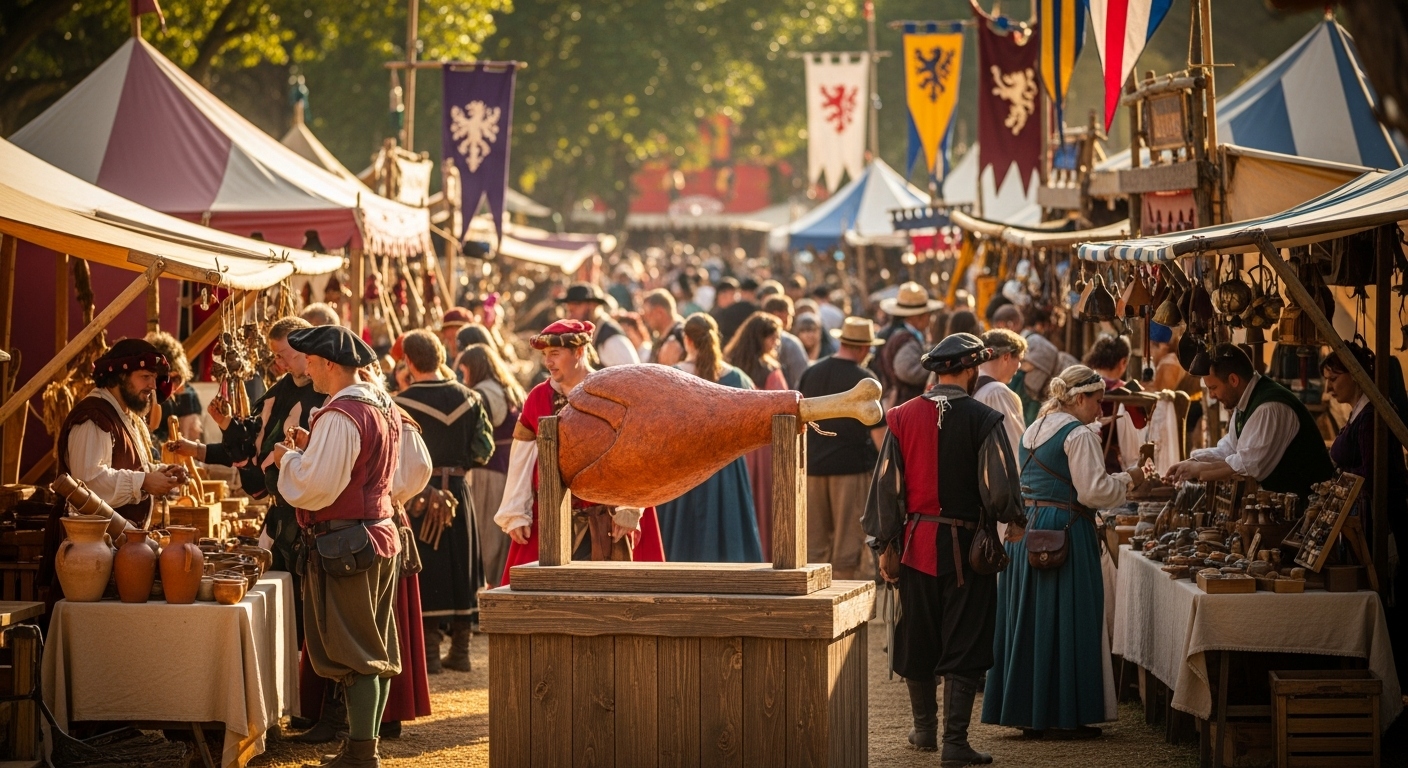
Turkey Leg reference 1: Shows the meat-to-bone geometry and irregular surface clearly. Turkey Leg reference 2: Provides a second serving orientation and visitor scale.
Compare the turkey leg concepts as visual directions. They do not identify a prior turkey leg customer or commission. Use the turkey leg views to compare overall length, maximum meat width and depth, bone length and diameter, transition profile, end shape, pose angle, base contact, and support footprint and approved roasted-looking color variation, browned texture direction, subtle highlight cues, and an optional supplied wrapper, tray, or sign element. The images do not establish final turkey leg dimensions, construction, performance, transport, installation, or outcome.
Prepare the Turkey Leg Project Brief
Turkey Leg quote inputs should connect the defining turkey leg cues with its intended dimensions and display setting. Include each applicable turkey leg item below.
- turkey-leg reference and serving state
- overall and component dimensions
- meat and bone proportions
- pose and visible sides
- approved surface and supporting elements
- site and date
- Physical subject: one oversized cooked-turkey-leg prop defined by a broad irregular meat form, tapered bone, exposed bone end, and supplied serving orientation
- Geometry: overall length, maximum meat width and depth, bone length and diameter, transition profile, end shape, pose angle, base contact, and support footprint
- Recognition cues: the heavy rounded meat volume, tapered transition to the bone, knuckle-like end, cooked surface color, irregular contours, and selected grip or platter relationship
- Surface direction: approved roasted-looking color variation, browned texture direction, subtle highlight cues, and an optional supplied wrapper, tray, or sign element
- Display direction: a static food-form replica posed horizontally, angled, or upright with the meat-to-bone transition and serving orientation clearly readable
- Scale issue: the thick irregular meat form and much narrower bone must stay balanced so the object reads as a turkey leg rather than a generic club or bone
- Turkey Leg setting: food or hospitality campaign
- Turkey Leg setting: festival, fair, or themed setting
- Turkey Leg setting: retail, event, stage, exhibit, or photo display
- Excluded scope: menus, food service, edible use, real cooking methods, generic food catalogs, other poultry parts, animal anatomy claims, climbable use, and invented commissions
- Requested turkey leg contact, movement, lighting, or exterior exposure
Request a Custom Quote
Send the turkey leg reference, turkey-leg reference and serving state, overall and component dimensions, meat and bone proportions, pose and visible sides, approved surface and supporting elements, site and date, destination, and required date. Also describe a static food-form replica posed horizontally, angled, or upright with the meat-to-bone transition and serving orientation clearly readable. WhiteClouds can review the defined scope and prepare a custom quote. The concept images support visual planning and do not depict a completed WhiteClouds project.