
Planning a Giant Truck Prop
Giant Truck Prop: one oversized static truck prop based on a supplied pickup, heavy-truck, or other clearly defined truck reference. Recognition depends on the cab profile, hood or flat front, windshield, grille, wheel count, wheel arches, bed or body, mirrors, lights, and chassis line. The central scale question is that the long body, wheelbase, and cab need enough separation to read as a truck without creating a usable or drivable vehicle. The images are truck design concepts rather than photographs of completed WhiteClouds work.
Plan a Truck Display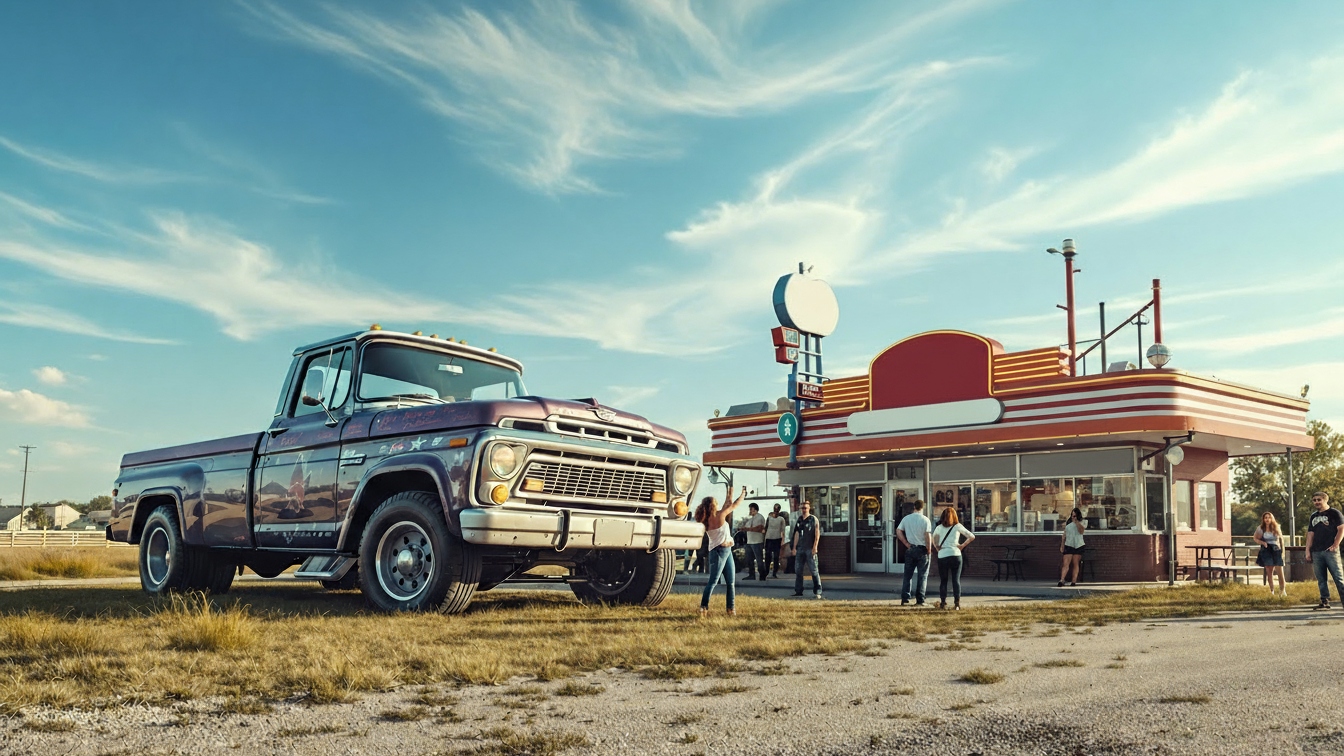
Define the Truck Form
Truck physical scope: one oversized static truck prop based on a supplied pickup, heavy-truck, or other clearly defined truck reference. Its geometry includes overall length, width and height, wheelbase, cab and body proportions, wheel diameter, ground clearance, mirror span, and base footprint. Its defining visual cues are the cab profile, hood or flat front, windshield, grille, wheel count, wheel arches, bed or body, mirrors, lights, and chassis line.
Truck presentation: a nonoperating truck-form landmark planned around the primary side, front recognition, wheel visibility, and visitor clearance. The visual treatment can use approved vehicle colors, window and tire-like treatments, authorized graphics, and selected trim without implying roadworthy materials. Keep the truck scope separate from passenger-car-only forms, driveability, working wheels or doors, engines, road use, load capacity, exact branded replication without permission, and invented customers.
Truck planning starts with the vehicle type. A pickup needs a clear cab-to-bed break; a heavy truck may use a tall grille, separate hood or flat front, larger wheel count, and a different chassis rhythm. The reference should define wheelbase, cab height, body length, mirrors, grille, windows, and the primary viewing side before graphics are placed. Wheel wells and ground clearance help the vehicle read from a distance, but the support should not suggest road operation. Doors, steering, suspension, engines, and cargo capacity are outside the static visual replica unless separately evidenced and approved.
Name the truck configuration at the start. A pickup is organized around hood, passenger cab, cab-to-bed break, open or covered bed, two axles, and a relatively low body. A conventional heavy truck adds a prominent hood and tall grille ahead of the cab. A cab-over places the front face and windshield above the forward wheels, while a box truck continues into a tall enclosed body. Wheel count, wheelbase, cab height, body length, roofline, mirror span, bumper profile, grille openings, lights, windows, and wheel arches should all come from one approved reference.
The principal side usually carries the longest silhouette and any authorized fleet graphic. A front three-quarter view helps the grille and cab volume read, but it can shorten the visible body, so both views belong in the dimensional brief. Decide whether tires touch a low plinth, appear partly embedded in a scenic road surface, or remain fully visible. Trailer combinations, cargo, roof equipment, steps, exhaust stacks, and accessories are optional scope rather than assumed truck details. The replica is a stationary display: no engine, steering, suspension, opening cab, load bed, road clearance, rolling wheels, or transportation function is represented.
Control the Details That Identify the Truck
Truck planning variables include overall length, width and height, wheelbase, cab and body proportions, wheel diameter, ground clearance, mirror span, and base footprint; the cab profile, hood or flat front, windshield, grille, wheel count, wheel arches, bed or body, mirrors, lights, and chassis line; approved vehicle colors, window and tire-like treatments, authorized graphics, and selected trim without implying roadworthy materials; and a nonoperating truck-form landmark planned around the primary side, front recognition, wheel visibility, and visitor clearance.
Truck form
For the truck, set overall length, width and height, wheelbase, cab and body proportions, wheel diameter, ground clearance, mirror span, and base footprint. Show one oversized static truck prop based on a supplied pickup, heavy-truck, or other clearly defined truck reference, and keep the complete outline readable from the primary approach.
Truck recognition
Preserve the cab profile, hood or flat front, windshield, grille, wheel count, wheel arches, bed or body, mirrors, lights, and chassis line. Rank the truck cues for the expected viewing distance, and make every permitted simplification explicit.
Truck surface
Develop approved vehicle colors, window and tire-like treatments, authorized graphics, and selected trim without implying roadworthy materials. Place each requested truck graphic on the reference views with usable artwork, orientation, and scale.
Truck setting
Plan a nonoperating truck-form landmark planned around the primary side, front recognition, wheel visibility, and visitor clearance. Record the footprint and visible sides for the truck, then add circulation around the truck, access limits, support preference, and fixed site constraints.
Plan Scale, Viewing, and Placement
Truck scale issue: the long body, wheelbase, and cab need enough separation to read as a truck without creating a usable or drivable vehicle. Resolve that relationship through overall length, width and height, wheelbase, cab and body proportions, wheel diameter, ground clearance, mirror span, and base footprint, then test the truck against its principal view and available floor or site area.
Truck settings may include vehicle or logistics campaign; roadside, museum, or destination display; trade-show, stage, retail, or photo setting. Useful buyer inputs include specific truck type and reference; overall dimensions and wheelbase; cab and body or bed details; viewing sides; approved graphics and colors; site access and deadline. State any requested truck contact, movement, lighting, or exterior exposure as a separate requirement.
Compare Truck Directions
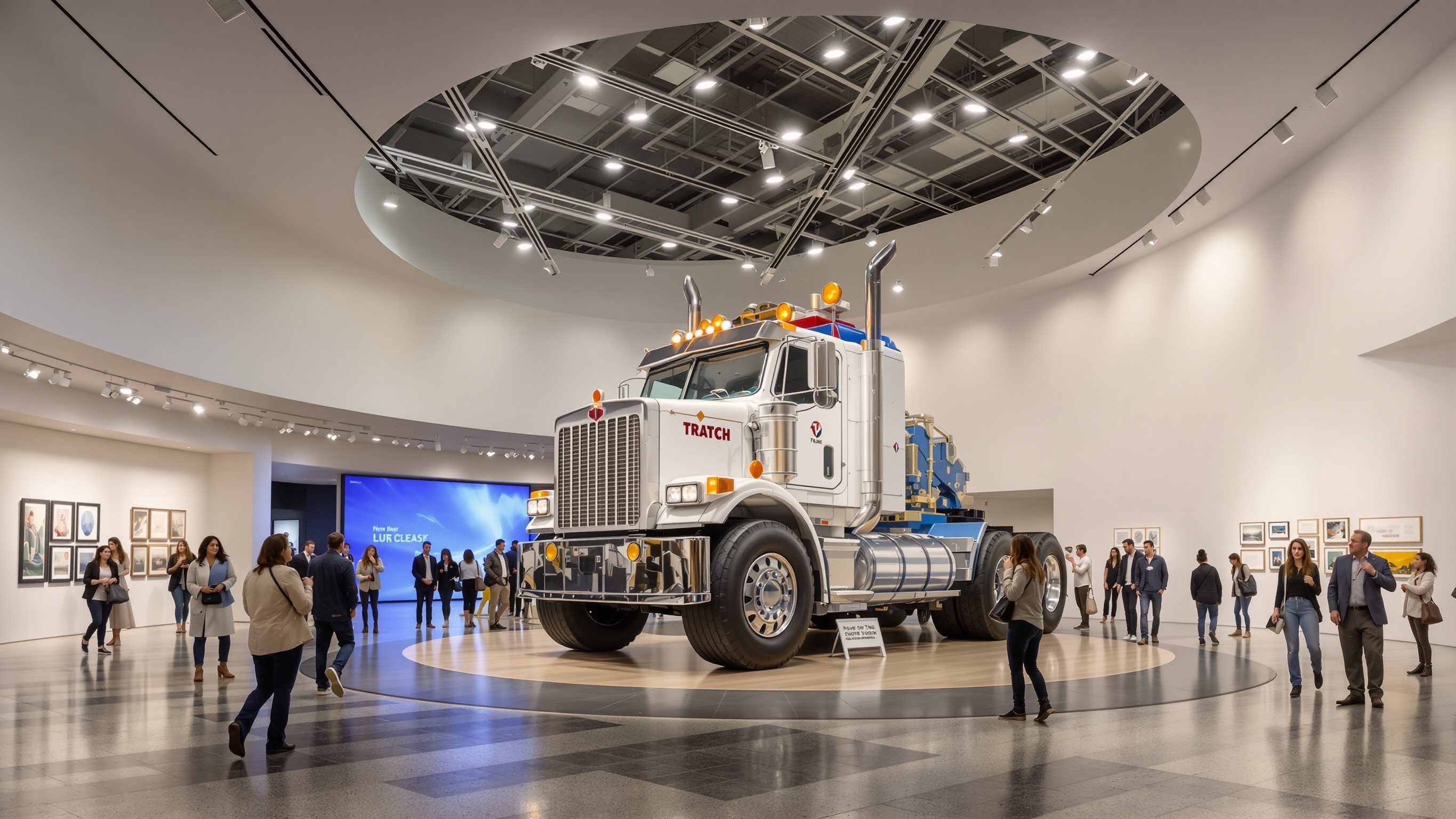
Truck reference 1: Shows the cab-to-bed relationship that separates a truck from a passenger car. Truck reference 2: Provides a second truck type and clearer front recognition cues.
Compare the truck concepts as visual directions. They do not identify a prior truck customer or commission. Use the truck views to compare overall length, width and height, wheelbase, cab and body proportions, wheel diameter, ground clearance, mirror span, and base footprint and approved vehicle colors, window and tire-like treatments, authorized graphics, and selected trim without implying roadworthy materials. The images do not establish final truck dimensions, construction, performance, transport, installation, or outcome.
Prepare the Truck Project Brief
Truck quote inputs should connect the defining truck cues with its intended dimensions and display setting. Include each applicable truck item below.
- specific truck type and reference
- overall dimensions and wheelbase
- cab and body or bed details
- viewing sides
- approved graphics and colors
- site access and deadline
- Physical subject: one oversized static truck prop based on a supplied pickup, heavy-truck, or other clearly defined truck reference
- Geometry: overall length, width and height, wheelbase, cab and body proportions, wheel diameter, ground clearance, mirror span, and base footprint
- Recognition cues: the cab profile, hood or flat front, windshield, grille, wheel count, wheel arches, bed or body, mirrors, lights, and chassis line
- Surface direction: approved vehicle colors, window and tire-like treatments, authorized graphics, and selected trim without implying roadworthy materials
- Display direction: a nonoperating truck-form landmark planned around the primary side, front recognition, wheel visibility, and visitor clearance
- Scale issue: the long body, wheelbase, and cab need enough separation to read as a truck without creating a usable or drivable vehicle
- Truck setting: vehicle or logistics campaign
- Truck setting: roadside, museum, or destination display
- Truck setting: trade-show, stage, retail, or photo setting
- Excluded scope: passenger-car-only forms, driveability, working wheels or doors, engines, road use, load capacity, exact branded replication without permission, and invented customers
- Requested truck contact, movement, lighting, or exterior exposure
Request a Custom Quote
Send the truck reference, specific truck type and reference, overall dimensions and wheelbase, cab and body or bed details, viewing sides, approved graphics and colors, site access and deadline, destination, and required date. Also describe a nonoperating truck-form landmark planned around the primary side, front recognition, wheel visibility, and visitor clearance. WhiteClouds can review the defined scope and prepare a custom quote. The concept images support visual planning and do not depict a completed WhiteClouds project.