
Planning a Giant Tortilla Prop
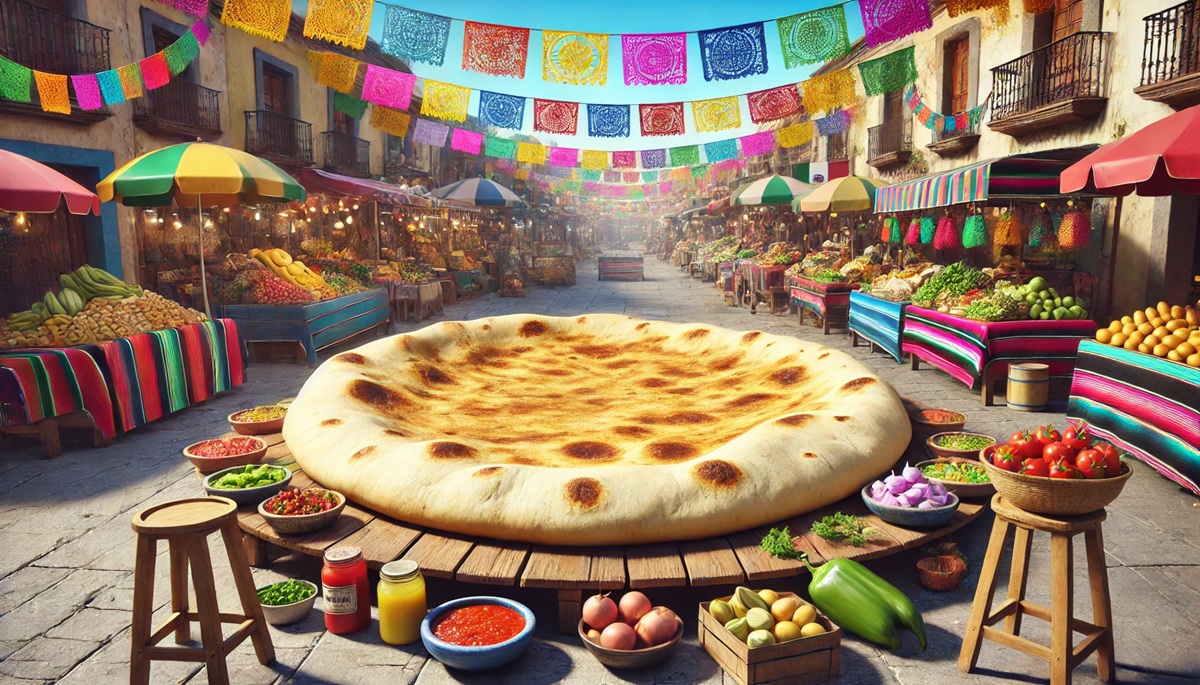
Giant Tortilla Prop: one oversized flat tortilla shown as a whole round, folded sheet, stack, or supplied serving state. Recognition depends on a thin circular profile, irregular edge, toasted spots, shallow blistering, and a broad readable face. Scale question: the broad thin form must remain visibly tortilla-like rather than becoming a generic disc, pizza base, or stage platform. The images are tortilla concepts, not completed-project records.
Plan a Tortilla Display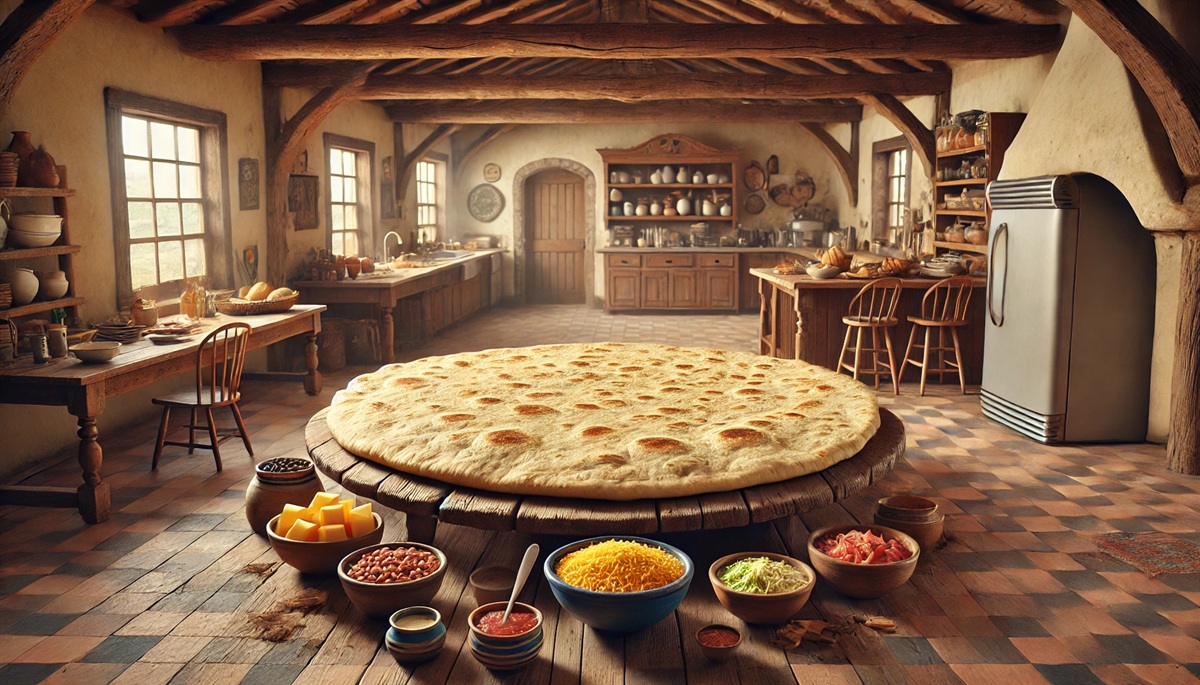
Define the Tortilla Form
Tortilla physical scope: one oversized flat tortilla shown as a whole round, folded sheet, stack, or supplied serving state. Tortilla geometry: diameter, thickness, edge waviness, fold or stack arrangement, tilt, and support. Tortilla identity: a thin circular profile, irregular edge, toasted spots, shallow blistering, and a broad readable face.
Tortilla presentation: a restaurant, food-brand, cultural, retail, or scenic installation focused on the tortilla itself. Tortilla visual treatment: warm grain color, scattered toast marks, subtle pores, and restrained raised texture. Exclude from this tortilla request: filled burritos, tacos, finished pizzas, recipes, edible claims, and invented restaurant projects.
A tortilla is a broad thin sheet, so edge behavior and top-surface pattern carry more identity than volume. Choose a single round, a shallow stack, a soft fold, or another supplied serving state. Diameter, thickness, waviness, overlap, and support angle should be coordinated so the form does not read as a platform. Toast spots can vary in size and darkness; small pores, blister pockets, grain flecks, and dry-looking creases can provide scale texture. A steep tilt reveals the face, while a lower angle emphasizes thinness and edge irregularity. Keep toppings, melted cheese, filled pockets, taco folds, and completed pizza composition outside the tortilla-only boundary unless a later approved scope replaces it.
Control the Details That Identify the Tortilla
Tortilla planning variables: diameter, thickness, edge waviness, fold or stack arrangement, tilt, and support; a thin circular profile, irregular edge, toasted spots, shallow blistering, and a broad readable face; warm grain color, scattered toast marks, subtle pores, and restrained raised texture; and a restaurant, food-brand, cultural, retail, or scenic installation focused on the tortilla itself.
Tortilla form
Plan diameter, thickness, edge waviness, fold or stack arrangement, tilt, and support. Show one oversized flat tortilla shown as a whole round, folded sheet, stack, or supplied serving state. Keep the tortilla outline readable from the primary view.
Tortilla recognition
Preserve a thin circular profile, irregular edge, toasted spots, shallow blistering, and a broad readable face. Rank the tortilla details for the expected viewing distance. Mark any permitted simplification.
Tortilla surface
Use warm grain color, scattered toast marks, subtle pores, and restrained raised texture. Supply authorized tortilla artwork and mark each graphic location on the reference views.
Tortilla setting
Plan a restaurant, food-brand, cultural, retail, or scenic installation focused on the tortilla itself. Include the tortilla footprint, approach, circulation, support preference, and fixed site limits.
Plan Scale, Viewing, and Placement
Tortilla scale issue: the broad thin form must remain visibly tortilla-like rather than becoming a generic disc, pizza base, or stage platform. Resolve it through diameter, thickness, edge waviness, fold or stack arrangement, tilt, and support. Relate those measurements to a restaurant, food-brand, cultural, retail, or scenic installation focused on the tortilla itself.
Tortilla settings: restaurant or ingredient campaign; food festival or cultural display; retail window, stage, or photo setting. Tortilla buyer inputs: approved tortilla reference; whole, folded, or stacked format; diameter and thickness; toast pattern; viewing angle; site and schedule. State requested tortilla movement, lighting, contact, or exterior exposure separately.
Compare Two Tortilla Directions
Tortilla concept one: Shows the circular outline, top-surface pattern, thickness, and floor footprint. Tortilla concept two: Compares edge waviness, color variation, and an open public setting.
Compare diameter, thickness, edge waviness, fold or stack arrangement, tilt, and support. Compare warm grain color, scattered toast marks, subtle pores, and restrained raised texture. These tortilla concepts support visual selection only. No tortilla customer or commission is documented. Final tortilla dimensions, construction, performance, transport, installation, and outcome remain unconfirmed.
Prepare the Tortilla Project Brief
Tortilla quote inputs should connect a thin circular profile, irregular edge, toasted spots, shallow blistering, and a broad readable face with diameter, thickness, edge waviness, fold or stack arrangement, tilt, and support. Include each applicable item below.
- approved tortilla reference
- whole, folded, or stacked format
- diameter and thickness
- toast pattern
- viewing angle
- site and schedule
- Physical subject: one oversized flat tortilla shown as a whole round, folded sheet, stack, or supplied serving state
- Geometry: diameter, thickness, edge waviness, fold or stack arrangement, tilt, and support
- Recognition cues: a thin circular profile, irregular edge, toasted spots, shallow blistering, and a broad readable face
- Surface direction: warm grain color, scattered toast marks, subtle pores, and restrained raised texture
- Display direction: a restaurant, food-brand, cultural, retail, or scenic installation focused on the tortilla itself
- Scale issue: the broad thin form must remain visibly tortilla-like rather than becoming a generic disc, pizza base, or stage platform
- Tortilla setting: restaurant or ingredient campaign
- Tortilla setting: food festival or cultural display
- Tortilla setting: retail window, stage, or photo setting
- Excluded scope: filled burritos, tacos, finished pizzas, recipes, edible claims, and invented restaurant projects
- Requested contact, movement, lighting, or exterior exposure for the tortilla
Request a Custom Quote
Send the tortilla reference, approved tortilla reference, whole, folded, or stacked format, diameter and thickness, toast pattern, viewing angle, site and schedule, destination, and required date. Also identify a restaurant, food-brand, cultural, retail, or scenic installation focused on the tortilla itself. WhiteClouds can review that defined tortilla scope and prepare a custom quote. The concept images support visual planning only and are not evidence of a prior customer project.