
Shaping a Giant Tentacle Prop
A giant tentacle prop is a single tapered appendage whose curve, twist, sucker side, tip direction, emergence point, and scenic contacts create the entire physical idea. It can imply a larger unseen creature without requiring a complete octopus body and eight-arm composition.
Plan a Giant Tentacle Prop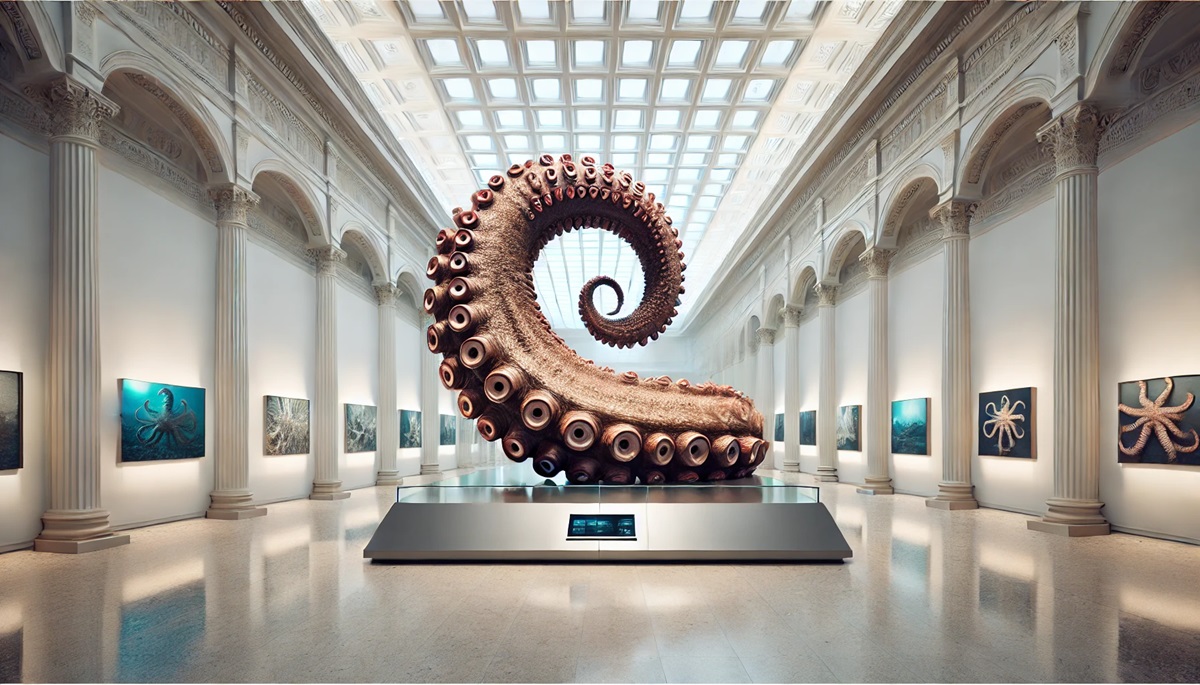
Draw the tentacle from emergence point to tip
Begin with a plan or elevation that marks the base, the centerline curve, each major change in direction, the highest and widest points, and the final tip. The route should respond to the actual wall, floor, platform, window, or scenic object around it.
Set the base diameter and visible length, then show how quickly the form tapers. A sudden taper creates a different character from a long gradual reduction and affects how the curve reads from the principal view.
Coordinate curve, twist, suckers, and tip
The tentacle remains legible when its surface details follow the larger route.
Primary curve
Choose one dominant sweep or rise that remains visible before adding smaller bends.
Twist
Rotate the form deliberately so the sucker side appears and disappears according to the approved views.
Sucker field
Set the visible rows, relative scale, and density for the viewing distance without turning the page into biological instruction.
Tip curl
Use a straight taper, open hook, tight spiral, or supplied original tip that fits the available clearance.
Make the emergence point part of the composition
Show whether the tentacle appears from behind a wall, below a platform, through a supplied opening, around another object, or from a concealed base. Mark every place where it visually touches the setting.
Unless separately designed and documented, the prop should be treated as static and view-only. Curved form does not imply that it bends, moves, grips, supports people, or wraps around existing architecture without site review.
Compare an upright curl with a long sweeping route
One concept concentrates the visible length into a tall spiral with the suckers facing the audience. The other travels farther across the setting and uses a broader curve before reaching its tip.
These are conceptual directions only. A new request should define the actual emergence point, centerline route, dimensions, sucker side, scenic contacts, and site conditions.

Define one appendage from base to tip
The route through the setting is the core drawing.
- Emergence point and final tip location
- Base diameter, visible length, and taper rate
- Centerline curve and changes of plane
- Twist and visible sucker-side orientation
- Tip curl and maximum height, width, and depth
- Floor, wall, object, and scenic contacts
- Primary approach and secondary views
- Access route, destination, display conditions, and schedule
Request pricing for a giant tentacle prop
Send the emergence point, route drawing, base and tip dimensions, taper, twist, sucker direction, scenic contacts, viewing plan, display conditions, access information, destination, and schedule.