
Planning a Giant Spinach Prop
A giant spinach prop is shaped as a bunch or cluster of broad leaf blades that converge through visible stems. The leaf outline, layered spread, stem junction, color, footprint, and primary viewing direction establish the form. This page stays on that broad-leaf composition rather than celery stalks, an unresolved sprout subject, or a collection of vegetables.
Plan a Giant Spinach Prop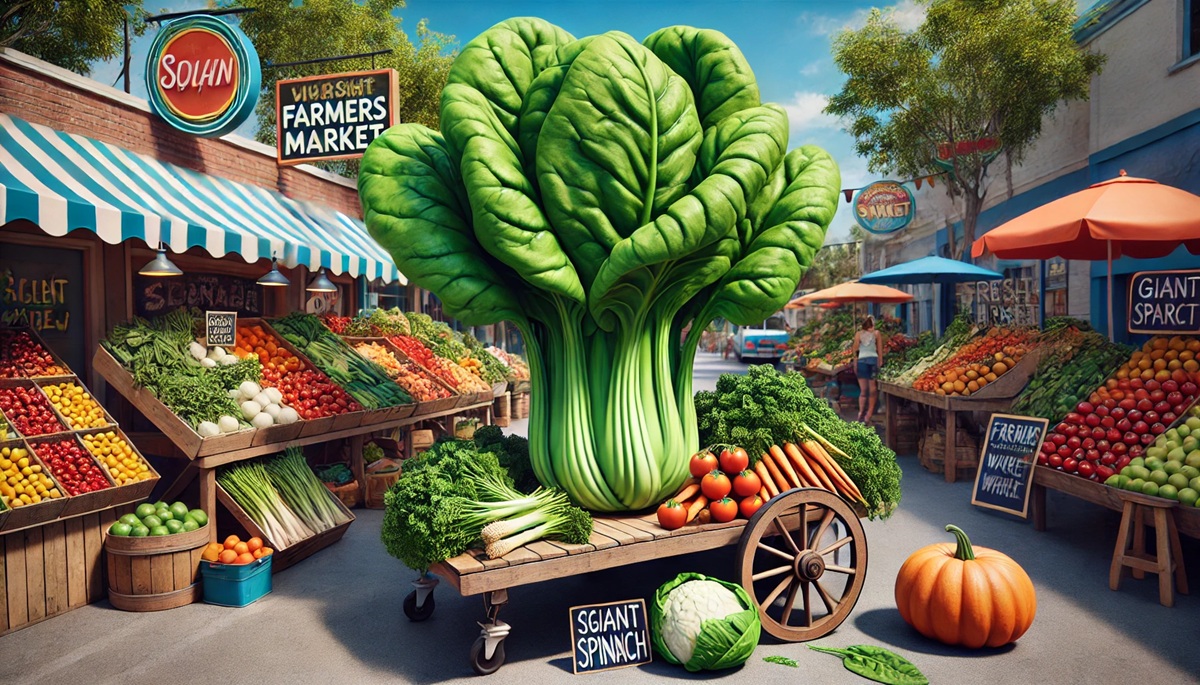
Choose the Leaf Blades and Overall Spread
Select reference views with complete leaves and visible stems. Identify the broadest blades, narrower supporting leaves, outermost reach, total height, and lower gathering point. The goal is a clear spinach-like bunch based on supplied visual references, not an unsupported claim about a precise cultivar.
Decide whether the cluster is narrow and upright, wide and fan-shaped, or arranged in another approved profile. Mark the principal audience or camera direction because the overlap can look dense from one side and sparse from another.
Arrange the Blades, Stems, Layers, and Edges
Build a readable leaf hierarchy rather than repeating one identical shape around the bunch.
Blade outlines
Draw the large leaf silhouettes first, including their length-to-width ratio, rounded or pointed tip, shoulder, and transition into the stem.
Stem convergence
Show the visible stem lengths, angles, thickness relationships, and exact gathering area. Keep the lower structure distinct from celery's tall ribbed stalk bundle.
Layered spread
Place front, middle, rear, and side leaves so their overlaps create depth while preserving intentional gaps. Check the cluster from every audience-facing side.
Edges and veins
Choose the amount of edge movement and primary vein relief that should survive at the planned viewing distance. Omit fine detail that is not supported by the reference.
Set the Main View and Lower Support
A front-facing fan emphasizes blade variety, while a turned bunch reveals more depth and stem layering. Provide the display height, maximum width, depth, and available floor or platform area. Also state whether the rear needs the same level of finish and detail as the primary side.
Indicate how much of the lower stems and support may remain visible. If the proposal includes lighting, movement, handling, or audience contact, describe those functions separately. They are not established by the static concept images.
Compare Two Broad-Leaf Cluster Concepts
The market concept uses a tall central group with leaves that rise close together. The garden concept opens the cluster into a broader fan with more side reach and visible gaps. Comparing them helps set the final leaf count, overlap, width, viewing side, and footprint.
These illustrations support visual planning only. They do not verify a WhiteClouds commission, botanical variety, measurements, material, internal structure, fabrication technique, finish, weather rating, or installation.

Prepare the Spinach Display Brief
The request should connect each important leaf decision to the complete bunch.
- Approved whole-bunch and individual broad-leaf references
- Overall height, maximum spread, depth, and usable footprint
- Leaf count range and priority blade silhouettes
- Front, middle, rear, and side overlap arrangement
- Stem lengths, angles, convergence, and base visibility
- Edge movement, vein relief, green range, and graphics
- Primary view, all exposed sides, orientation, and support preference
- Access route, destination, placement conditions, and required date
Request a Custom Prop Quote
Send the spinach references, desired bunch profile, dimensions, leaf and stem arrangement, colors, primary view, exposed sides, support preference, site constraints, access information, destination, and required date for review.