
Giant Spider Statue Planning
A giant spider statue is shaped less by body height than by leg span, body-to-leg proportion, and how the figure occupies the air above or around visitors. Species cues, stance, suspension or ground contact, and audience clearance should be resolved before surface texture and dramatic effects are considered.
Plan a Spider Statue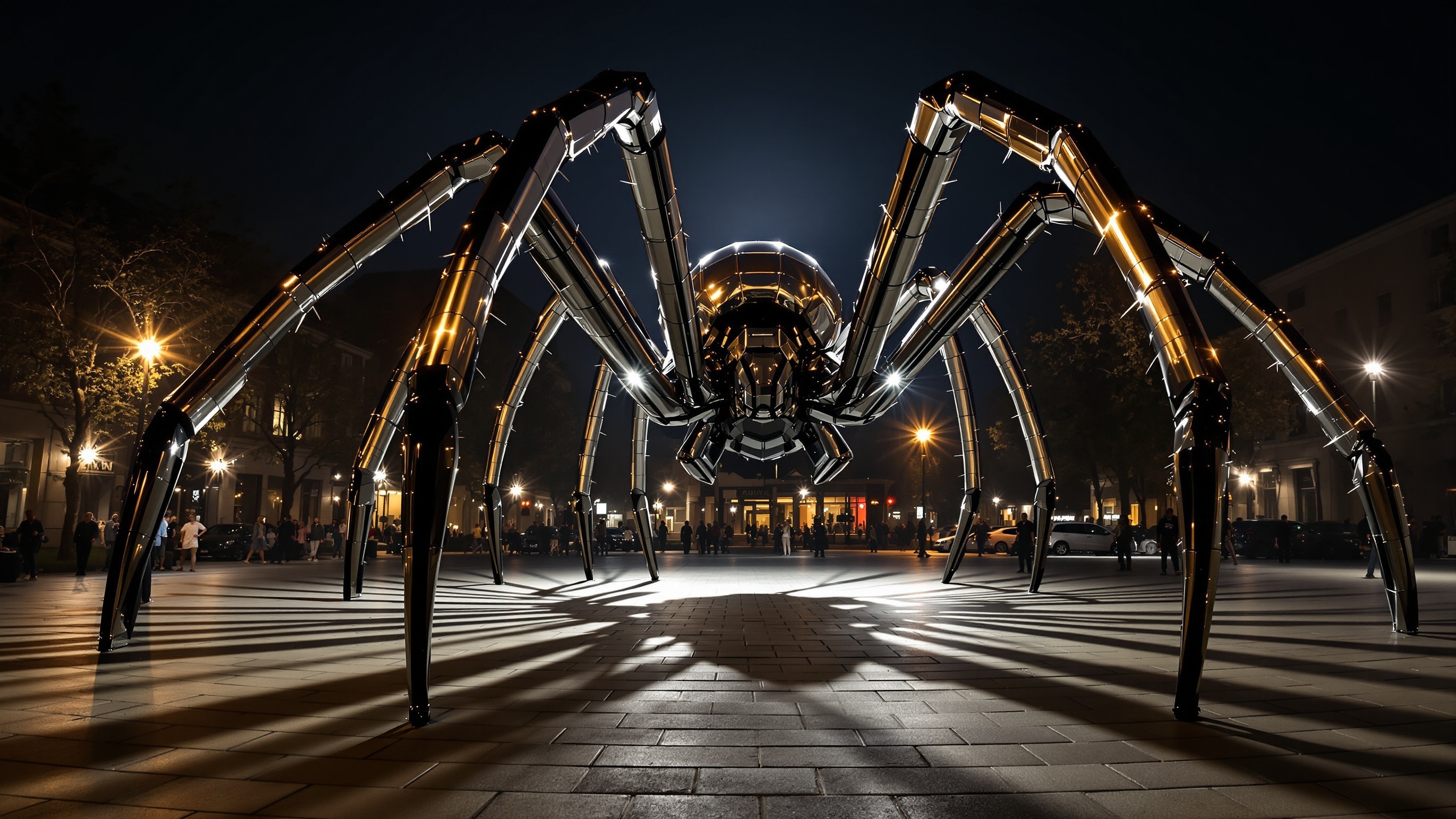
Dimension the body and every leg joint
Start with the abdomen and cephalothorax, then locate each leg at the body, first joint, second joint, and foot or attachment point. Record the complete side-to-side and front-to-back span. A spider described only by overall height can grow far beyond the available floor area once the legs are posed.
Leg rhythm matters visually. A symmetrical stance can feel formal and architectural, while irregular heights and directions can suggest motion. Check that the rear legs do not disappear behind the front pair from the main approach and that the body remains visible within the crossing lines.
See how an overhead spider changes the room
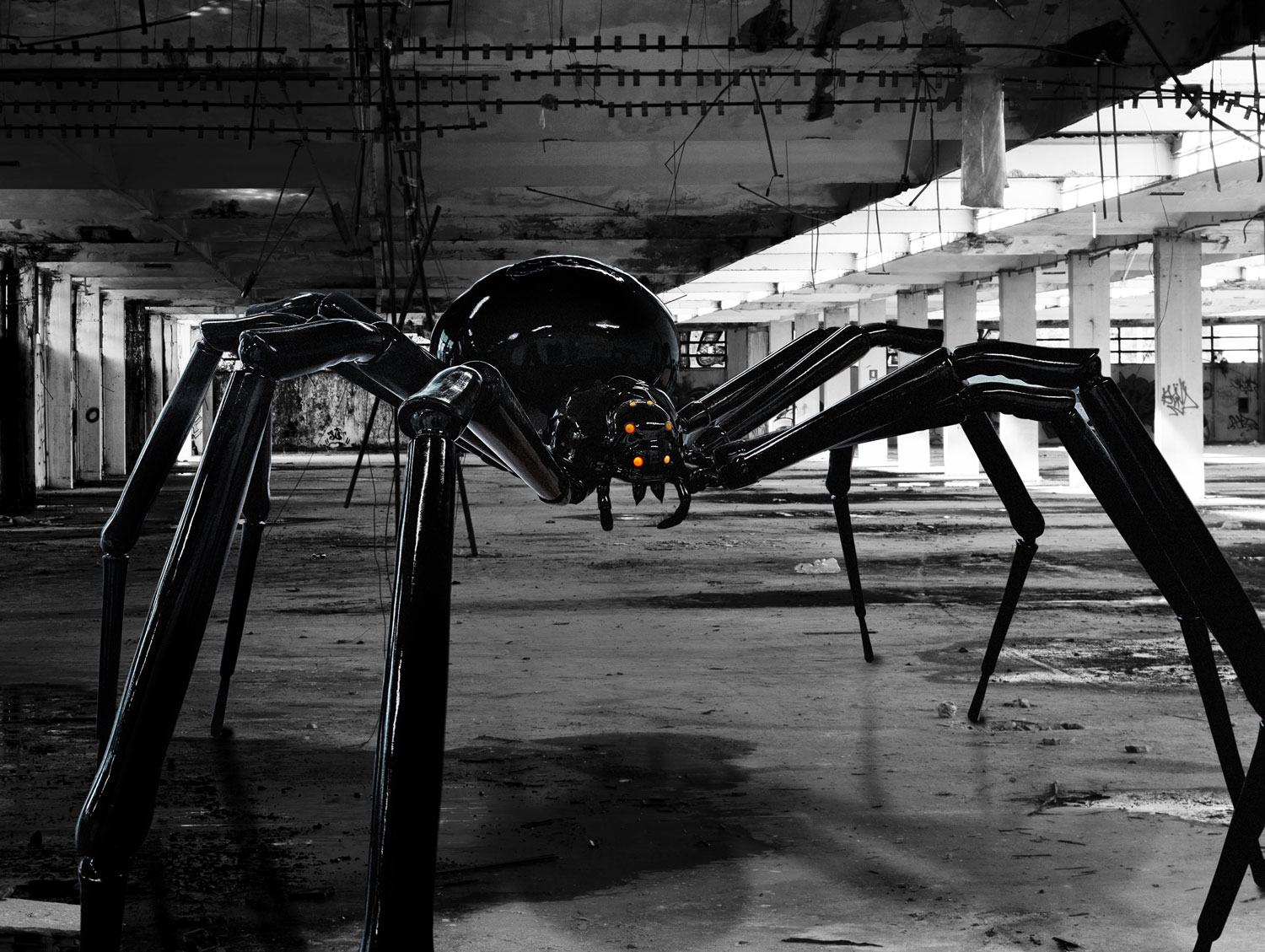
WhiteClouds fabricated the 10-foot black widow shown here for ceiling suspension in a retail store. Its dark body, hourglass marking, and illuminated eyes create a clear species direction, while the overhead format keeps the leg network above the floor. It is separate from the two illustrated ground-based concepts.
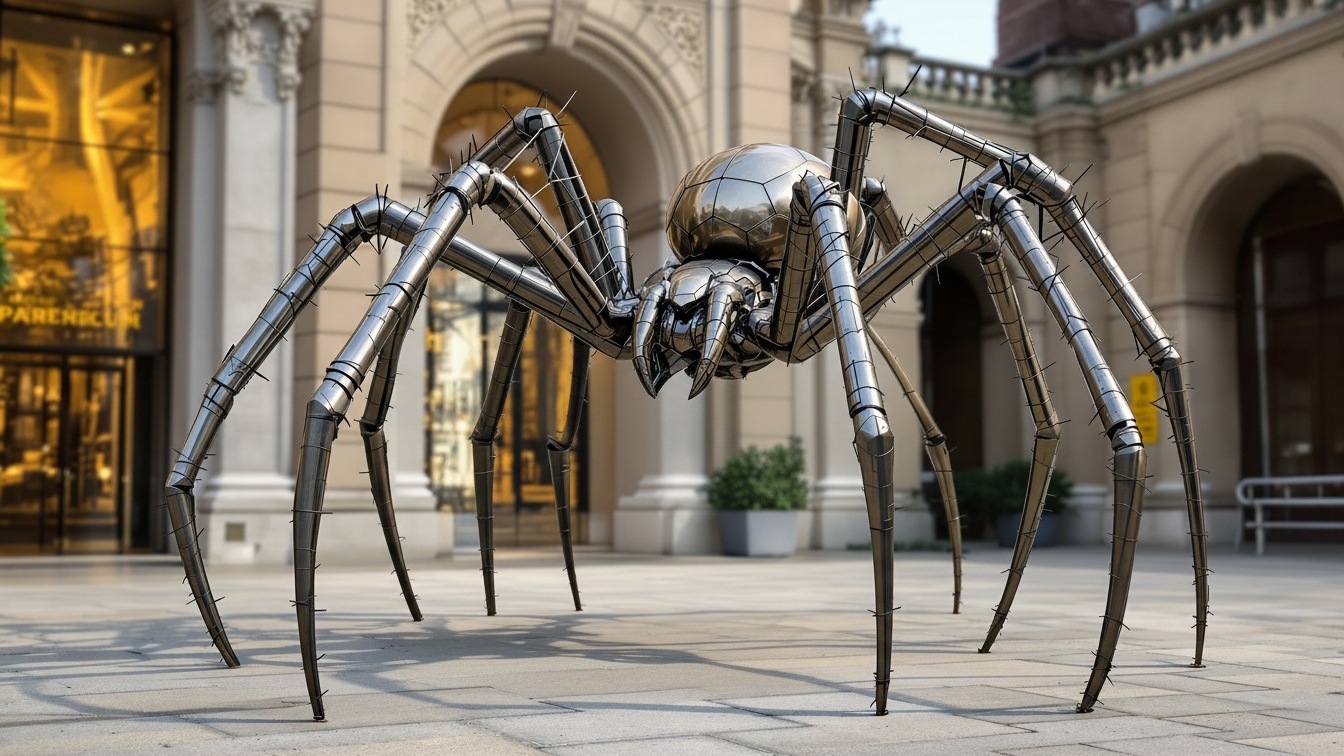
Choose ground contact, climbing, or suspension
Each format creates a different clearance problem and different important views.
- Grounded stance with all feet or selected feet planted
- Wall or facade climbing angle
- Ceiling suspension height and body orientation
- Maximum leg span in both directions
- Lowest projection above walking areas
- Primary view of the abdomen, face, and markings
- Visitor route, camera point, and boundary
- Site structure, access path, destination, and date
Use a few traits to establish the spider
Body ratio, leg thickness, eye treatment, and markings should come from one selected direction.
Naturalistic species
Provide reliable dorsal, side, face, and leg references plus the exact color and marking pattern that identifies the spider.
Graphic silhouette
Simplify small anatomy while preserving eight distinct legs, a readable body division, and strong color blocks for distance viewing.
Seasonal creature
Expression and texture can become more theatrical, but the design should remain one spider rather than a collection of unrelated horror details.
Illuminated feature
Specify the requested lit areas, colors, viewing conditions, controls, and power environment as defined behavior, not a presumed effect.
Draw people inside the full leg envelope
For a grounded display, show whether visitors remain outside the feet, walk between selected legs, or pose near the body. Keep sharp-looking tips and low joints out of unplanned circulation. For an overhead spider, provide the floor-to-ceiling height, lowest desired projection, support locations, and all activity beneath it.
The figure may need to split into body and leg components for access. Give the largest acceptable component, dock and doorway dimensions, elevator limits, and final assembly area. If the spider travels, include packing and repeat-setup goals in the initial scope because long legs can drive the handling plan.
Request pricing for a giant spider statue
Send the species or approved design, body size, all leg-joint positions, full span, grounded or suspended format, visitor and overhead clearances, markings, any requested lighting behavior, site conditions, access, destination, and deadline.