
Planning a Giant Shop Vacuum Prop
Giant Shop Vacuum Prop: one oversized shop-vacuum prop defined by a cylindrical canister, upper motor-cap form, carrying handle, inlet, flexible-looking hose, nozzle, and caster-like base. Recognition depends on the round tank, domed or stepped top, top handle, front inlet, long hose path, rigid nozzle, latch and switch cues, and low wheel or caster ring. The central scale question is that the long hose can dominate the footprint, so its fixed route must support recognition without hiding the tank, inlet, cap, or caster base. The images are shop vacuum design concepts rather than photographs of completed WhiteClouds work.
Plan a Shop Vacuum Display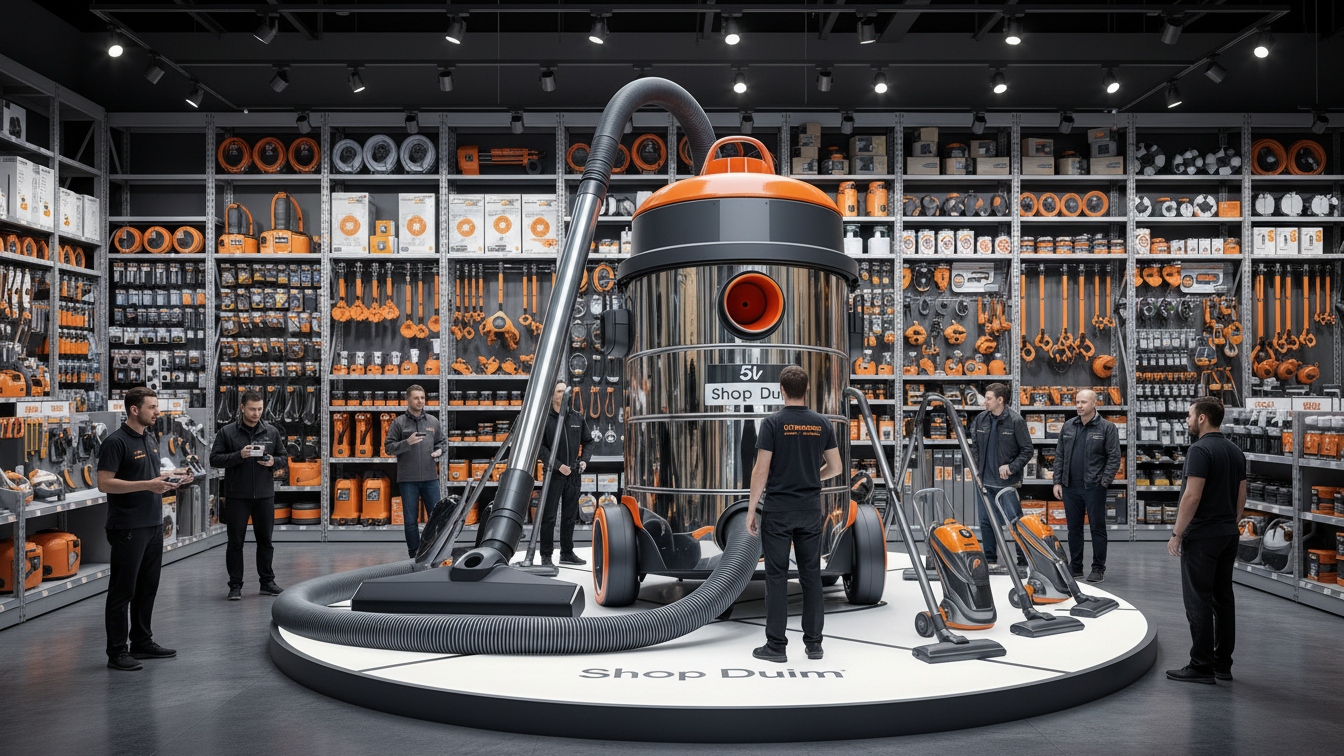
Define the Shop Vacuum Form
Shop Vacuum physical scope: one oversized shop-vacuum prop defined by a cylindrical canister, upper motor-cap form, carrying handle, inlet, flexible-looking hose, nozzle, and caster-like base. Its geometry includes overall height and tank diameter, cap profile, handle opening, inlet size, hose diameter and route, nozzle length, caster spacing, and support footprint. Its defining visual cues are the round tank, domed or stepped top, top handle, front inlet, long hose path, rigid nozzle, latch and switch cues, and low wheel or caster ring.
Shop Vacuum presentation: a nonoperating wet-dry-vacuum replica presented with a fixed hose and nozzle arrangement that keeps the canister silhouette visible. The visual treatment can use a palette tied to the supplied shop-vac reference, visible canister bands, hose-rib cues, restrained metal-like tank accents, and authorized label graphics. Keep the shop vacuum scope separate from upright household vacuums, robotic vacuums, suction, wet or dry pickup, motors, filters, powered operation, working hoses, cleaning performance, and invented brands.
A shop vacuum is identified by its canister-and-hose architecture. Set tank diameter and height, lower rim, caster rhythm, cap profile, top handle, latches, inlet, switch-like details, hose diameter, bend radius, and nozzle form from one supplied model. The hose can loop beside the canister, rise to a fixed nozzle, or extend across a defined scenic area, but its route should be measured so it does not block the label face. The object remains a static replica with no motor, suction, filtration, collection, liquid handling, or movable cleaning attachment.
The hose is both an identifying detail and a major spatial constraint. Document its connection point, outside diameter, rib rhythm, minimum scenic bend, total visible length, and fixed relationship to the nozzle. A tight loop keeps the display compact; an extended hose creates a larger floor envelope and may become the first element a visitor encounters. The canister reference should also mark cap seams, handle opening, latch count, inlet ring, label field, lower rim, and caster-like shapes. Dust, debris, tools, workers, cleaning demonstrations, and animated movement are optional scene ideas, not evidence that the replica performs shop-vac functions.
Control the Details That Identify the Shop Vacuum
Shop Vacuum planning variables include overall height and tank diameter, cap profile, handle opening, inlet size, hose diameter and route, nozzle length, caster spacing, and support footprint; the round tank, domed or stepped top, top handle, front inlet, long hose path, rigid nozzle, latch and switch cues, and low wheel or caster ring; a palette tied to the supplied shop-vac reference, visible canister bands, hose-rib cues, restrained metal-like tank accents, and authorized label graphics; and a nonoperating wet-dry-vacuum replica presented with a fixed hose and nozzle arrangement that keeps the canister silhouette visible.
Shop Vacuum form
For the shop vacuum, set overall height and tank diameter, cap profile, handle opening, inlet size, hose diameter and route, nozzle length, caster spacing, and support footprint. Show one oversized shop-vacuum prop defined by a cylindrical canister, upper motor-cap form, carrying handle, inlet, flexible-looking hose, nozzle, and caster-like base, and keep the complete outline readable from the primary approach.
Shop Vacuum recognition
Preserve the round tank, domed or stepped top, top handle, front inlet, long hose path, rigid nozzle, latch and switch cues, and low wheel or caster ring. Rank the shop vacuum cues for the expected viewing distance, and make every permitted simplification explicit.
Shop Vacuum surface
Develop a palette tied to the supplied shop-vac reference, visible canister bands, hose-rib cues, restrained metal-like tank accents, and authorized label graphics. Place each requested shop vacuum graphic on the reference views with usable artwork, orientation, and scale.
Shop Vacuum setting
Plan a nonoperating wet-dry-vacuum replica presented with a fixed hose and nozzle arrangement that keeps the canister silhouette visible. Record the footprint and visible sides for the shop vacuum, then add circulation around the shop vacuum, access limits, support preference, and fixed site constraints.
Plan Scale, Viewing, and Placement
Shop Vacuum scale issue: the long hose can dominate the footprint, so its fixed route must support recognition without hiding the tank, inlet, cap, or caster base. Resolve that relationship through overall height and tank diameter, cap profile, handle opening, inlet size, hose diameter and route, nozzle length, caster spacing, and support footprint, then test the shop vacuum against its principal view and available floor or site area.
Shop Vacuum settings may include tool or hardware campaign; workshop or industrial exhibit; retail, trade-show, stage, or photo display. Useful buyer inputs include shop-vac reference; tank and overall dimensions; cap, handle, and inlet details; hose and nozzle route; approved colors and graphics; site and date. State any requested shop vacuum contact, movement, lighting, or exterior exposure as a separate requirement.
Compare Shop Vacuum Directions
Shop Vacuum reference 1: Shows the complete canister-and-hose relationship in a retail setting. Shop Vacuum reference 2: Provides a second hose route and a clear full-object silhouette.
Compare the shop vacuum concepts as visual directions. They do not identify a prior shop vacuum customer or commission. Use the shop vacuum views to compare overall height and tank diameter, cap profile, handle opening, inlet size, hose diameter and route, nozzle length, caster spacing, and support footprint and a palette tied to the supplied shop-vac reference, visible canister bands, hose-rib cues, restrained metal-like tank accents, and authorized label graphics. The images do not establish final shop vacuum dimensions, construction, performance, transport, installation, or outcome.

Prepare the Shop Vacuum Project Brief
Shop Vacuum quote inputs should connect the defining shop vacuum cues with its intended dimensions and display setting. Include each applicable shop vacuum item below.
- shop-vac reference
- tank and overall dimensions
- cap, handle, and inlet details
- hose and nozzle route
- approved colors and graphics
- site and date
- Physical subject: one oversized shop-vacuum prop defined by a cylindrical canister, upper motor-cap form, carrying handle, inlet, flexible-looking hose, nozzle, and caster-like base
- Geometry: overall height and tank diameter, cap profile, handle opening, inlet size, hose diameter and route, nozzle length, caster spacing, and support footprint
- Recognition cues: the round tank, domed or stepped top, top handle, front inlet, long hose path, rigid nozzle, latch and switch cues, and low wheel or caster ring
- Surface direction: a palette tied to the supplied shop-vac reference, visible canister bands, hose-rib cues, restrained metal-like tank accents, and authorized label graphics
- Display direction: a nonoperating wet-dry-vacuum replica presented with a fixed hose and nozzle arrangement that keeps the canister silhouette visible
- Scale issue: the long hose can dominate the footprint, so its fixed route must support recognition without hiding the tank, inlet, cap, or caster base
- Shop Vacuum setting: tool or hardware campaign
- Shop Vacuum setting: workshop or industrial exhibit
- Shop Vacuum setting: retail, trade-show, stage, or photo display
- Excluded scope: upright household vacuums, robotic vacuums, suction, wet or dry pickup, motors, filters, powered operation, working hoses, cleaning performance, and invented brands
- Requested shop vacuum contact, movement, lighting, or exterior exposure
Request a Custom Quote
Send the shop vacuum reference, shop-vac reference, tank and overall dimensions, cap, handle, and inlet details, hose and nozzle route, approved colors and graphics, site and date, destination, and required date. Also describe a nonoperating wet-dry-vacuum replica presented with a fixed hose and nozzle arrangement that keeps the canister silhouette visible. WhiteClouds can review the defined scope and prepare a custom quote. The concept images support visual planning and do not depict a completed WhiteClouds project.