
Planning an Irregular Giant Oyster Shell Prop
A giant oyster shell prop can be defined by an uneven outline, layered growth edge, off-center hinge, and cupped interior. Those oyster-specific features create a different physical brief from a symmetrical fan-shaped clam shell or a closed paired-valve clam.
Plan an Oyster Shell Prop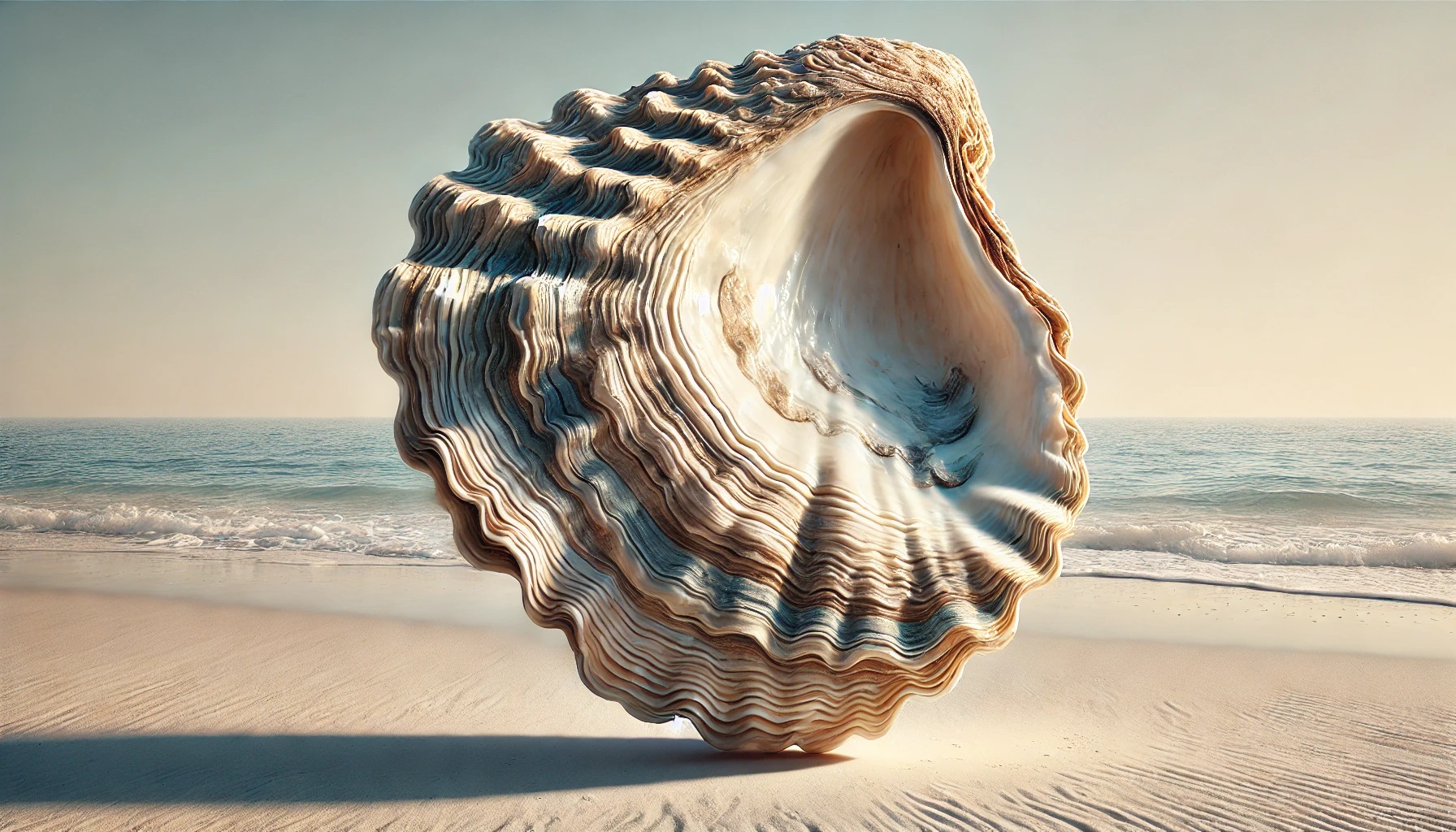
Use asymmetry as the starting point
Provide a clear oyster-shell reference with the hinge, deepest cup, widest edge, and most irregular section marked. Decide whether the goal is a natural-looking specimen, a simplified graphic shell, or an approved original variation.
Avoid smoothing the outline into a symmetrical fan. The uneven rim, layered edge, and offset mass are the useful visual cues that separate an oyster shell from the existing clam authorities.
Control the cup, layers, hinge, and rim
A few connected decisions establish the oyster morphology.
Cupped interior
Set the depth and opening so the inside reads from the principal view without becoming a space for a person or product.
Layered edge
Choose how many broad growth layers should remain visible and where the roughest rim belongs.
Offset hinge
Place the hinge and narrow end according to the reference instead of centering the shell automatically.
Uneven outline
Retain the approved high and low points around the perimeter so the silhouette does not become a generic scallop or clam fan.
Show the interior without creating a photo frame
Draw the shell in side view and mark the floor, base, wall, or scenic surface. A more upright angle exposes the cup but increases the visible profile; a lower angle emphasizes the rough rim and occupied footprint.
Keep the composition view-only unless a separately engineered interaction is expressly included. This page does not cover seating, climbable shells, people inside the opening, pearls, or product reveals.
Compare a single cupped shell with a shallow paired form
One concept shows a single shell with a deep irregular interior and heavy layered edge. The other uses a shallow open relationship between uneven halves while keeping the shell itself, rather than a guest or product, as the subject.
Both images are conceptual references only. They do not document a WhiteClouds commission or prove any material, size, mechanism, or installation method.
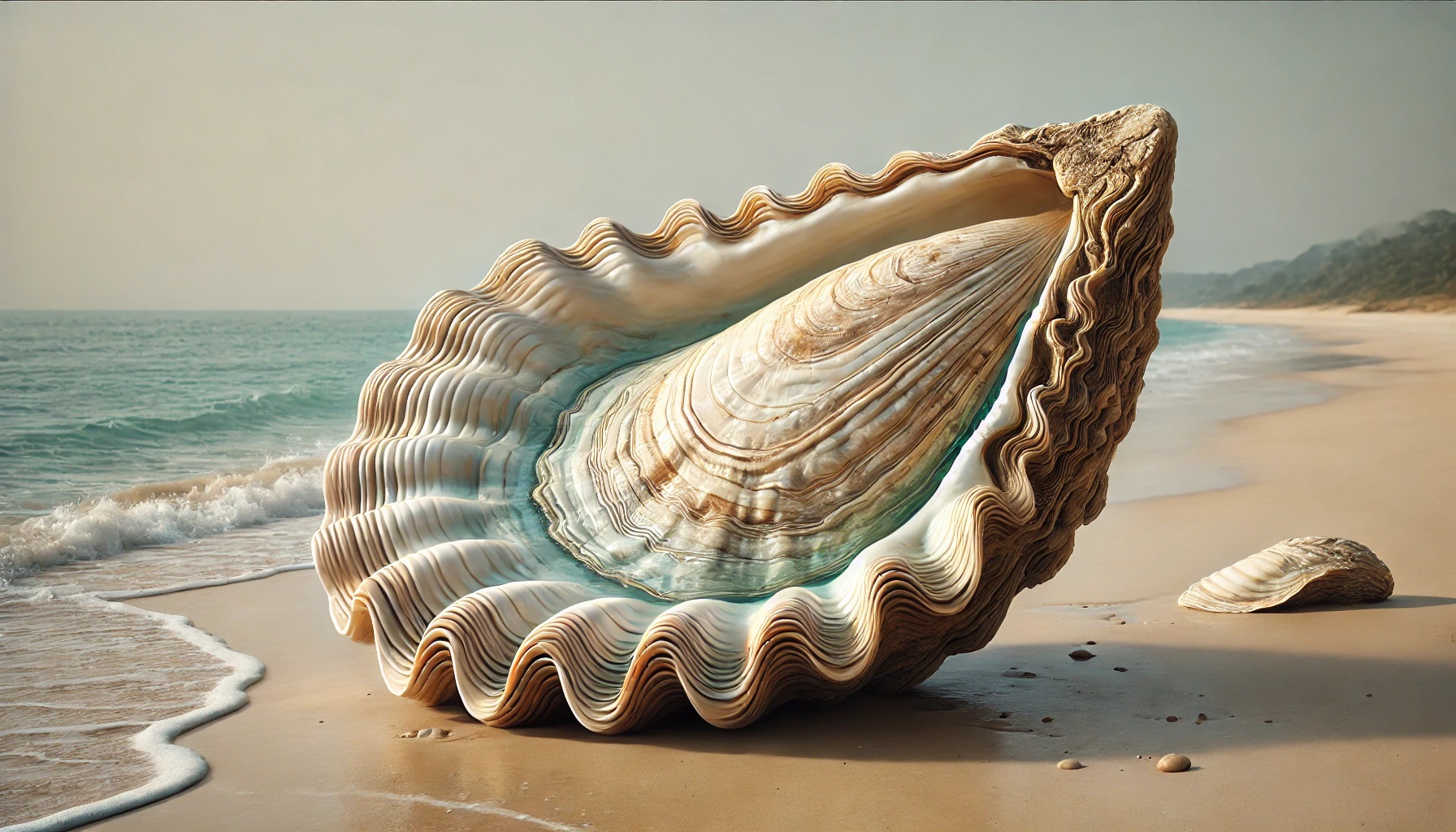
Define the irregular form and its principal view
An oyster-specific request should stay on the physical shell rather than a broad coastal scene.
- Approved species or stylized oyster-shell reference
- Overall width, height, depth, and opening
- Cupped-interior depth and visible area
- Layered-rim pattern and irregular perimeter
- Hinge position and upper-versus-lower shell relationship
- Resting angle, base visibility, and principal view
- Interior, sheltered, or fully exposed setting
- Doorway limits, receiving location, show dates, and deadline
Request pricing for a giant oyster shell prop
Send the approved oyster reference, dimensions, opening, layered-edge direction, principal view, resting angle, placement conditions, access information, destination, and schedule.