
Planning a Giant Marvel Character Statue
A giant Marvel character statue can center on one unmistakable silhouette or bring several figures into a shared composition. The character choice, pose, scale, viewing distance, and placement should be resolved together so the display reads clearly before costume details and surface treatment are developed.
Discuss a Character Statue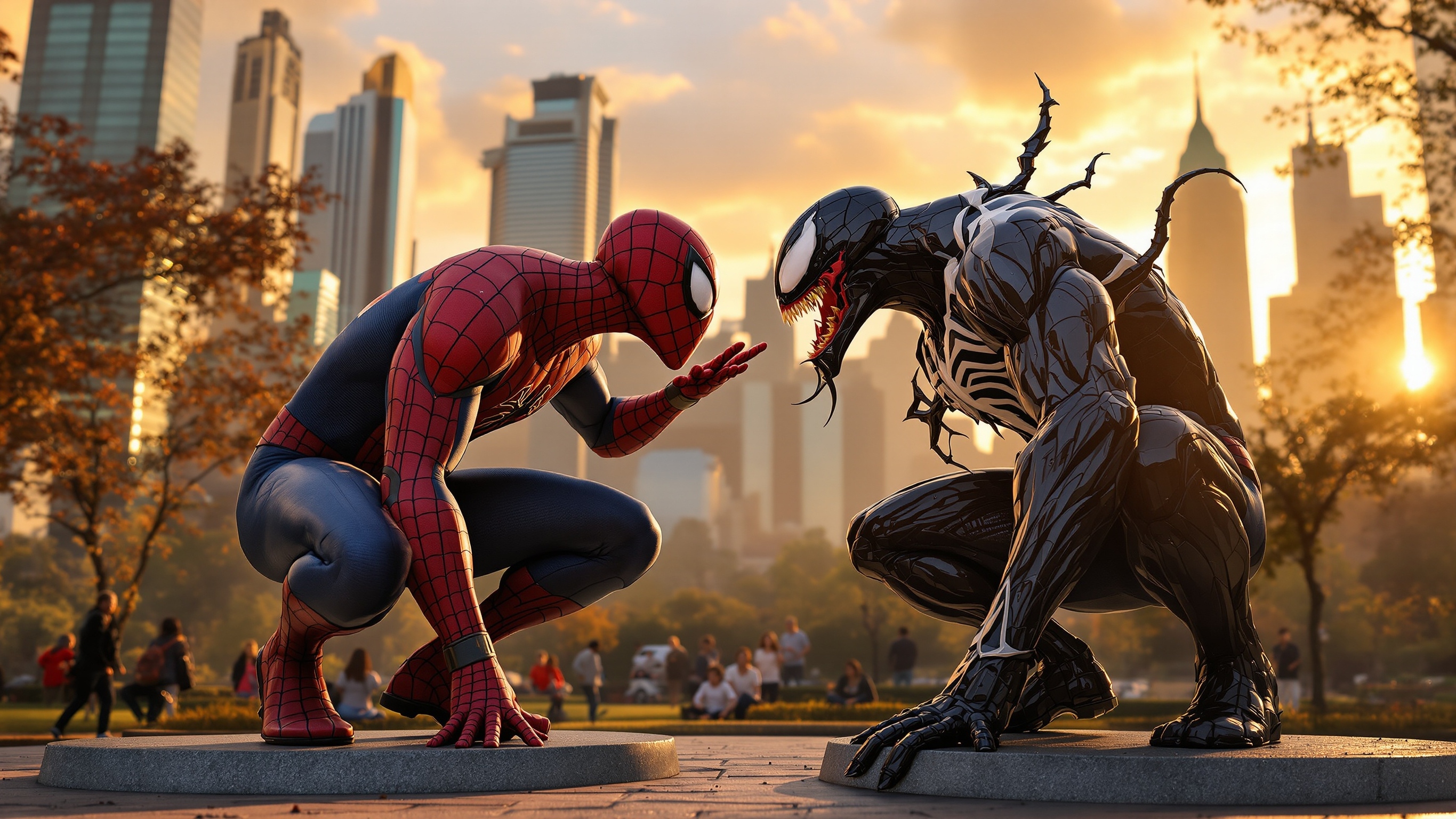
Choose the character and the view that must read first
A recognizable statue begins with a clean outline. A shield, helmet, cape, stance, or other defining feature may carry more identity at a distance than small costume details. Select the primary character and mark the features that cannot be simplified, then identify whether visitors will approach from the front, from one side, or from all directions.
For a group, decide whether the characters should feel like one scene or a coordinated lineup. A shared eye line, consistent scale, and deliberate spacing can make separate figures read as a single installation. If one figure is the focal point, its height and position should lead the composition without hiding the others.
Match the statue arrangement to the available space
The footprint is shaped by pose and spacing as much as by the stated height.
Solo figure
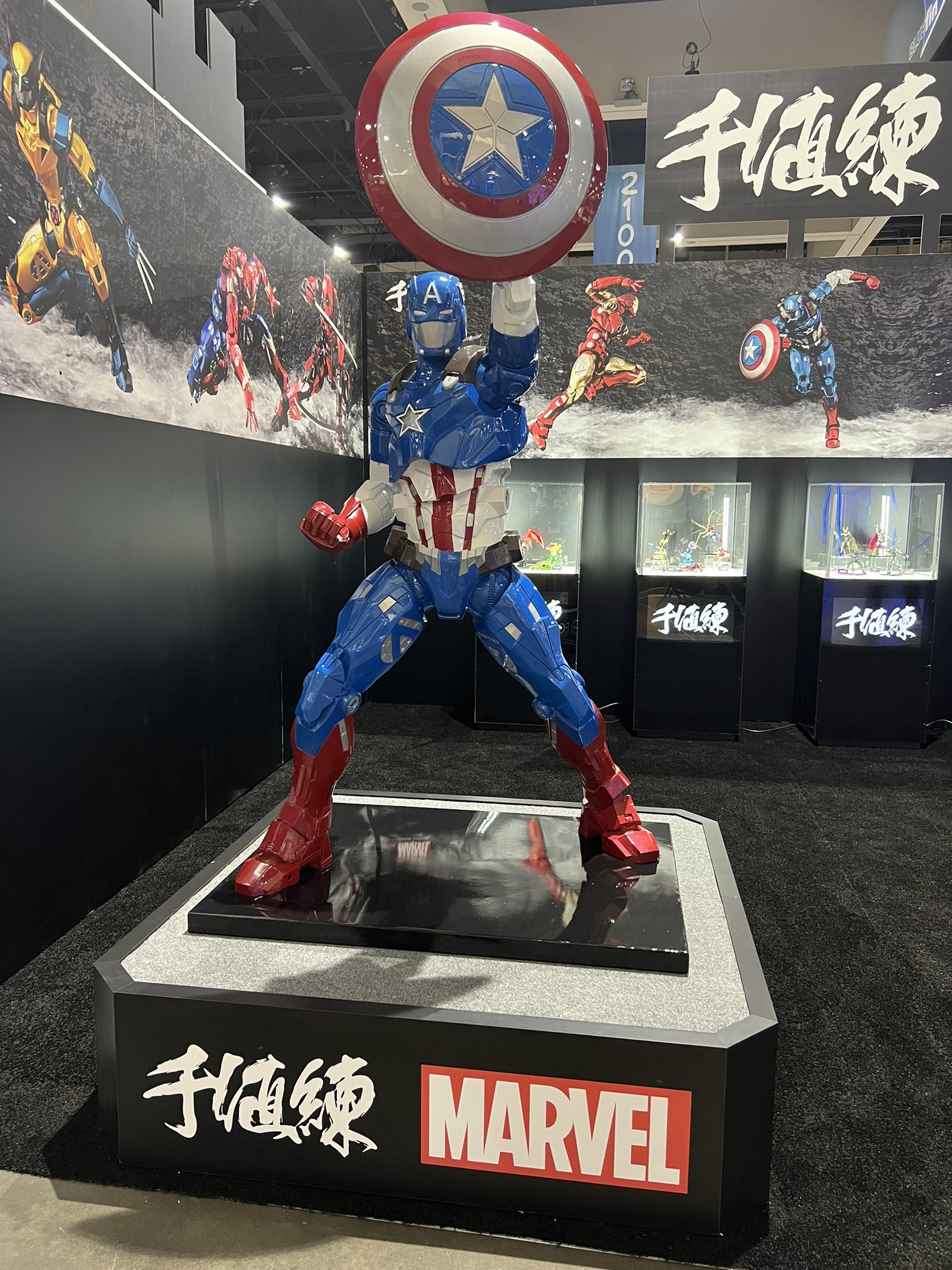
One character can hold a strong front-facing pose, turn toward an entrance, or stand on a graphic base with a compact footprint.
Character pair
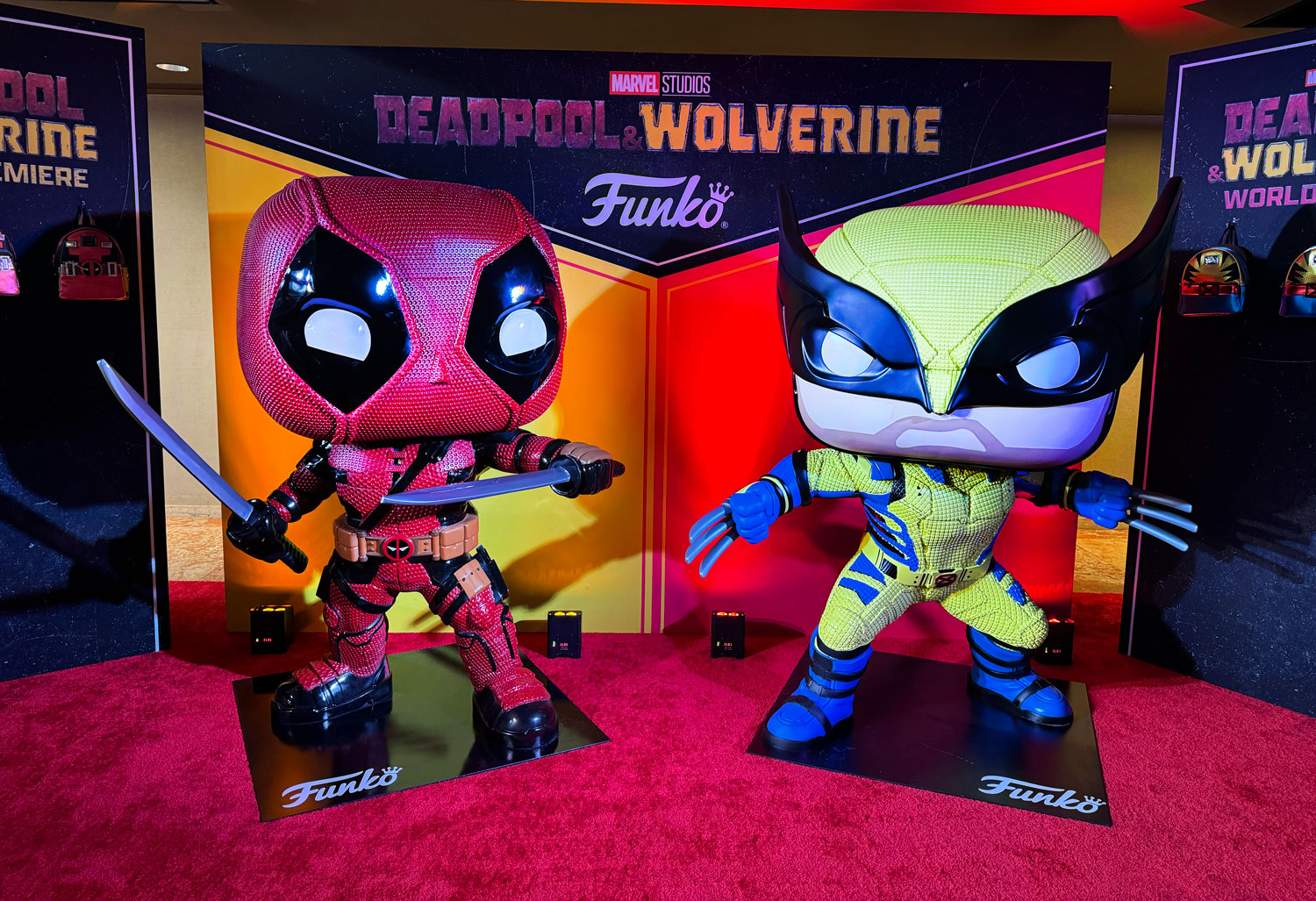
Two figures need a planned relationship: facing each other, sharing an action, or presenting complementary poses toward the audience.
Ensemble
A multi-character grouping should define hierarchy, clear gaps between silhouettes, and a practical order for setup and transport.
Photo setting
A photo-oriented display needs camera position, visitor clearance, and a pose that remains legible when people stand nearby.
Compare three separate WhiteClouds character projects
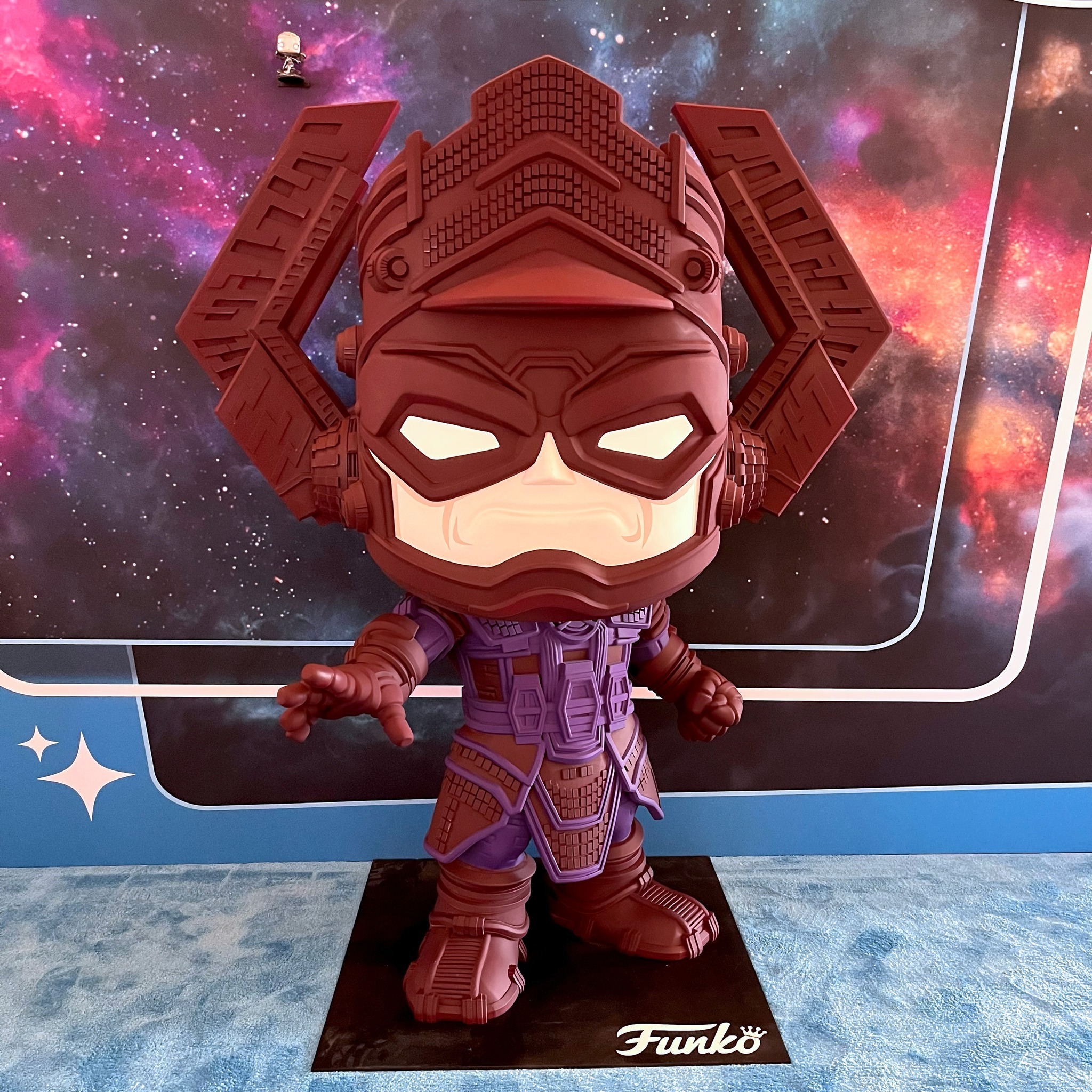
The Captain America, Deadpool and Wolverine, and Galactus displays shown here are completed WhiteClouds projects. They demonstrate full-size, paired, and graphic collectible-style approaches. Each was developed for its own references and setting; a new statue should be scoped around its own character, audience, and physical constraints.
Plan the figure for real sightlines and access
A wide stance, extended arm, weapon, cape, or crouched pose can require much more width and depth than an upright figure. Establish the maximum envelope as well as the desired height. Doorways, elevators, loading paths, ceiling height, and the final display footprint should be measured before a dramatic pose becomes fixed.
Indoor, covered, and exposed placements can lead to different decisions about finish, support, mounting, and maintenance. State the actual environment, duration, visitor proximity, and whether the display will remain in place or travel. Lighting, motion, separable components, or interactive features should be requested explicitly rather than assumed from the character concept.
Prepare the inputs for a useful first estimate
A focused reference package helps connect the visual idea to the display site.
- Final character artwork or visual reference
- Solo, paired, or ensemble arrangement
- Preferred pose and expression
- Overall height and maximum footprint
- Primary and secondary viewing angles
- Base, mounting, or photo-op requirements
- Site access and display conditions
- Delivery location and required date
Request pricing for a giant Marvel character statue
Send the character reference, pose, target size, viewing sides, intended environment, access measurements, destination, and deadline. Include any base, lighting, motion, packing, or installation requirements that belong in the initial scope.