
Planning a Giant Marlin Photo-Op Prop
A giant marlin photo-op prop is planned as one camera-facing composition. The marlin body, bill, fins, tail, participant position, surrounding scenic forms, and final frame must work together before the object is detailed. This page focuses on that participant-integrated marlin structure rather than a general photo booth or a standalone fish sculpture.
Plan a Marlin Photo-Op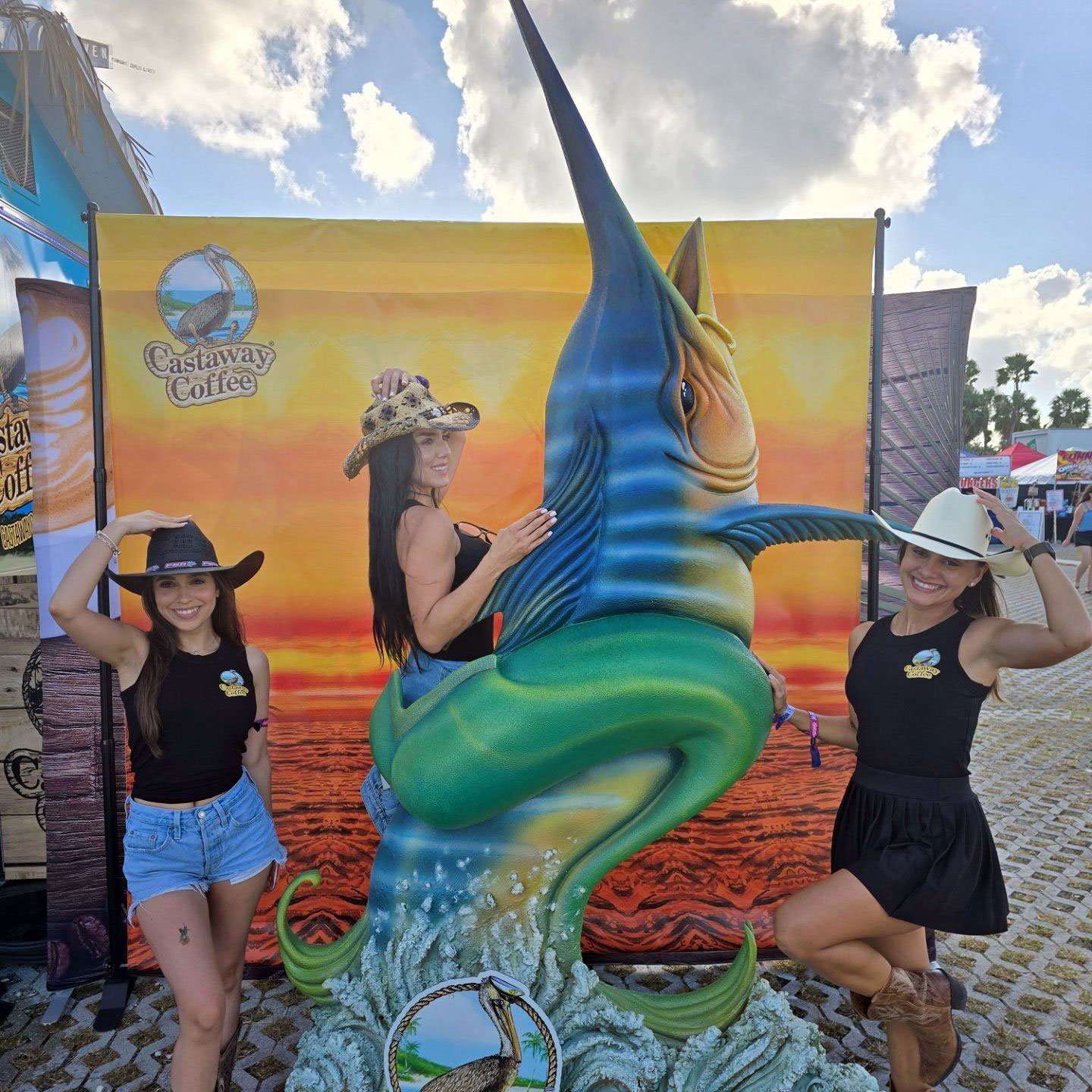
Compose the Marlin, Participant, and Camera Together
Begin with the intended photograph. Mark the camera position, lens height, participant mark, crop, and the direction the marlin should face. Then place the bill, eye, dorsal fin, tail, scenic figure, and backdrop within that frame. This keeps the long fish profile from pushing the participant out of the composition.
Also provide a site elevation that shows the complete physical envelope outside the crop. A strong final photograph can conceal how far the bill projects, how the tail meets the participant area, or how much space the base and backdrop occupy. Both the camera view and the full-site view are needed for useful planning.
Shape the Body Around the Participant Position
Treat the participant position as a measured part of the composition without inferring structural capacity from a photograph.
Marlin profile
Set the body length, bill projection, eye placement, dorsal outline, fin positions, and tail angle from the principal camera view.
Participant mark
Show where the person is expected to stand or otherwise appear in the frame, along with the intended pose and clear approach to that location.
Tail and scenic figure
Define whether the tail, mermaid figure, wave, or other supplied scenic form visually frames the participant and where those forms overlap in the photograph.
View-only boundaries
State every intended contact or no-contact area. A visible participant position in a reference photograph does not by itself establish seating, climbing, or load-bearing use for a new display.
Coordinate the Base and Backdrop
Map the base, scenic ground line, and backdrop to the final crop. The support area should stay visually quiet where possible, while the backdrop needs enough height and width to complete the scene from the selected camera position. Note any wall, floor, platform, or supplied scenery that will meet the structure.
Also document the participant approach, exit, nearby circulation, and staff sightlines. If a new concept includes any physical contact, that intended use must be stated and reviewed for the actual design. The reference photographs should not be used to infer dimensions, materials, weather performance, or engineering capacity.
Study Participant Positioning in Physical References
The three photographs show different views of a physical marlin-and-mermaid photo structure. Together they make the participant area, long fish profile, raised body, tail relationship, and surrounding scenic composition easier to compare than a single front image would.
The photographs are useful visual references, but they do not identify the fabricator or customer and do not verify dimensions, materials, construction, finish, weather rating, or load capacity. A new request should define those requirements independently for its own site and intended use.


Send the Marlin Photo-Op Brief
A complete request should show both the desired photograph and the full physical setting.
- Approved marlin, mermaid, wave, and scenic artwork
- Target fish length, bill projection, body height, and full envelope
- Participant mark, intended pose, and approach path
- Camera position, lens height, principal view, and final crop
- Tail, fin, scenic-figure, base, and backdrop relationships
- Every intended contact and no-contact area
- Floor, platform, wall, or scenic placement information
- Access route, destination, display conditions, and required date
Request a Custom Prop Quote
Send the marlin and scenic artwork, participant position, camera plan, dimensions, base and backdrop relationship, intended contact boundaries, site information, access details, destination, and schedule. WhiteClouds can review the scope and prepare a custom quote.