
Planning a Giant Mango Prop
A giant mango prop is identified by an asymmetrical oval body, fuller shoulder, curved side, and tapered or beak-like end. Color can help, but the profile should remain convincing before green, yellow, orange, or red transitions are applied.
Plan a Giant Mango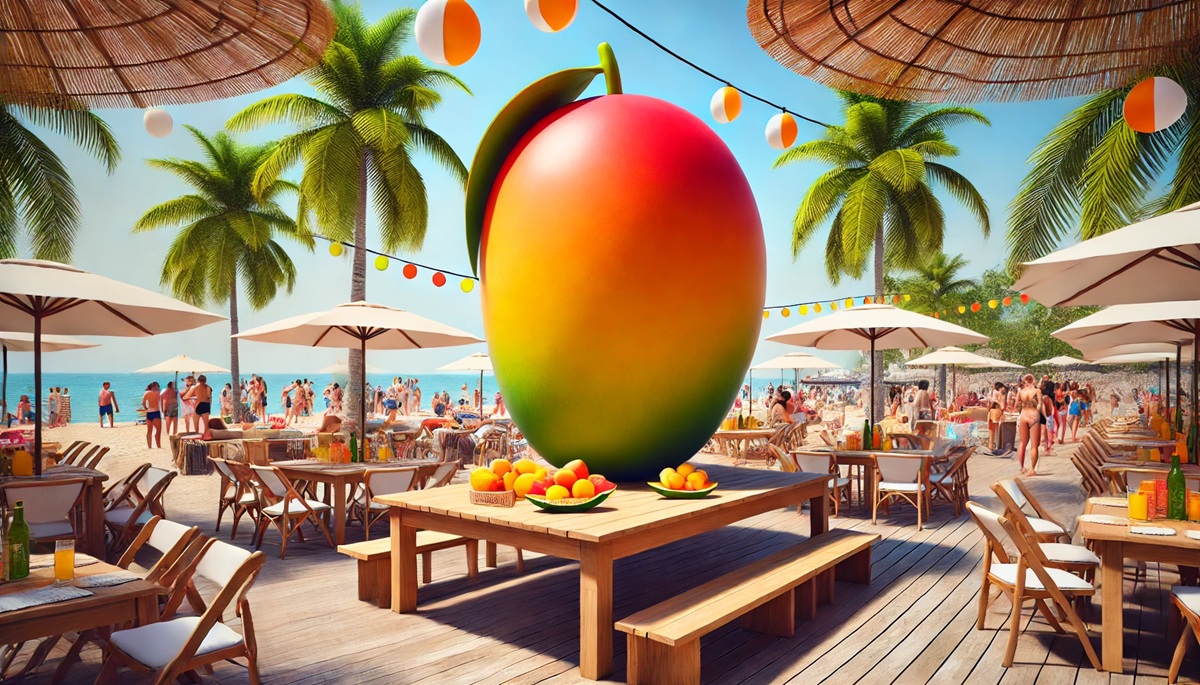
Preserve the shoulder and tapered beak
A mango rarely reads as a balanced oval. Use the selected variety to locate its fuller shoulder, convex side, flatter or indented side, stem recess, and pointed or beak-like lower end.
Lock the resting angle early. Rotating the fruit changes which bulge dominates the silhouette and where green, yellow, orange, and red areas appear to flow across the visible face.
Let contour lead the color transition
Color strengthens a mango, but the enlarged body should remain recognizable when viewed as a plain silhouette.
Full shoulder
Place the broad upper mass and stem recess off center when the reference calls for it, avoiding a perfectly mirrored top.
Beak-like end
Shape the lower taper and directional tip on coordinated front and profile drawings so it remains visible after the fruit is tilted.
Color field
Chart every green, yellow, orange, and red transition around the volume; do not assume one photographic face describes the unseen side.
Stem or leaf
Treat a leaf as an optional projecting component with its own curve, thickness, angle, and shipping envelope.
Select the side that carries the mango gesture
A vertical pose can emphasize the top-to-tip sweep, while a side-resting mango makes the full shoulder and lower beak easier to compare. Draw the base contact and primary camera axis on the same view.
If the request involves a branded package, sliced fruit, character face, basket, or several varieties, define those additions explicitly. This page addresses the single mango-shaped physical object.
Compare shoulder, tip, and color movement
The two mango concepts explore asymmetrical profiles, different stem-and-leaf treatments, warm blush placement, and alternate resting angles. They are concept imagery, not finished WhiteClouds projects.

Capture the asymmetry from several sides
A single front photograph can hide the side indentation and the direction of the lower tip.
- Mango variety or approved original shape
- Front, side, top, and bottom photographs
- Shoulder width and off-center stem location
- Lower taper, tip direction, and complete depth
- Fixed vertical, tilted, or side-resting pose
- Mapped green-to-warm color transitions
- Leaf geometry, platform, and audience approach
- Site dimensions, freight destination, and deadline
Request pricing for a giant mango prop
Send the mango variety, multi-view references, shoulder and tip measurements, pose, color map, site plan, destination, and target date.