
Planning a Giant Iron Man Statue
A giant Iron Man statue needs a clear armored silhouette before the panel lines and small mechanical details are addressed. Pose, limb position, scale, surface direction, viewing angle, and any requested lighting should work as one display concept rather than a list of separate effects.
Plan an Armored Statue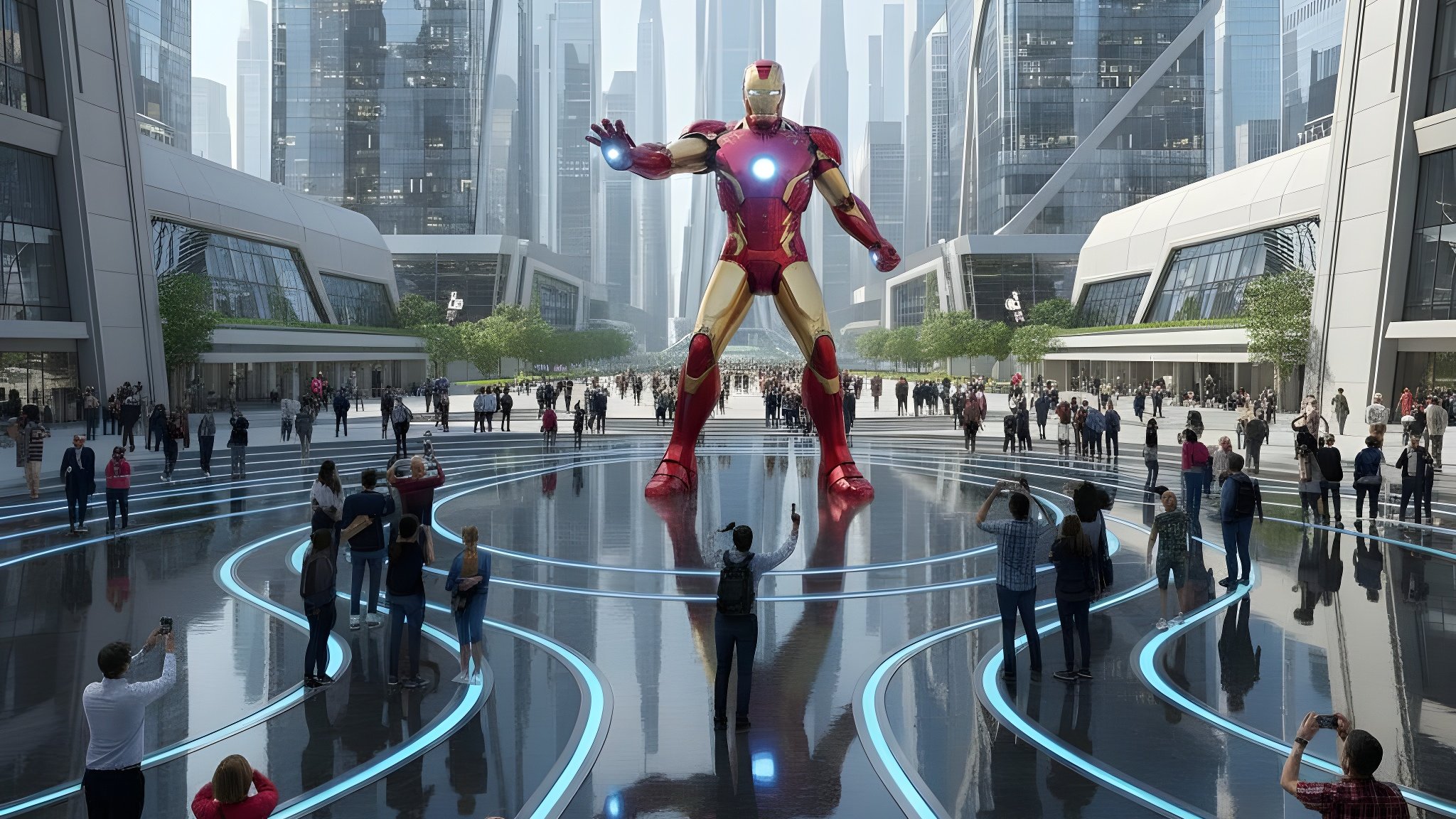
Set the large forms before the panel lines
The helmet, chest, shoulders, hands, boots, and overall stance carry the character at normal viewing distance. Establish those masses first, then rank the smaller seams, vents, and layered plates that matter most. Trying to reproduce every line equally can make the figure visually noisy without improving recognition.
Use consistent front, side, back, and three-quarter references for the chosen armor direction. If the source art differs between views, resolve those differences before scale and pose are finalized. Mark the chest element, palms, eyes, and any other feature intended to receive special visual emphasis.
Choose between monument, action, and photo-friendly stances
Arm and leg position determine the footprint, sightlines, and support questions.
Upright stance
A balanced standing pose keeps the full armor visible and usually occupies less floor area than an extended action pose.
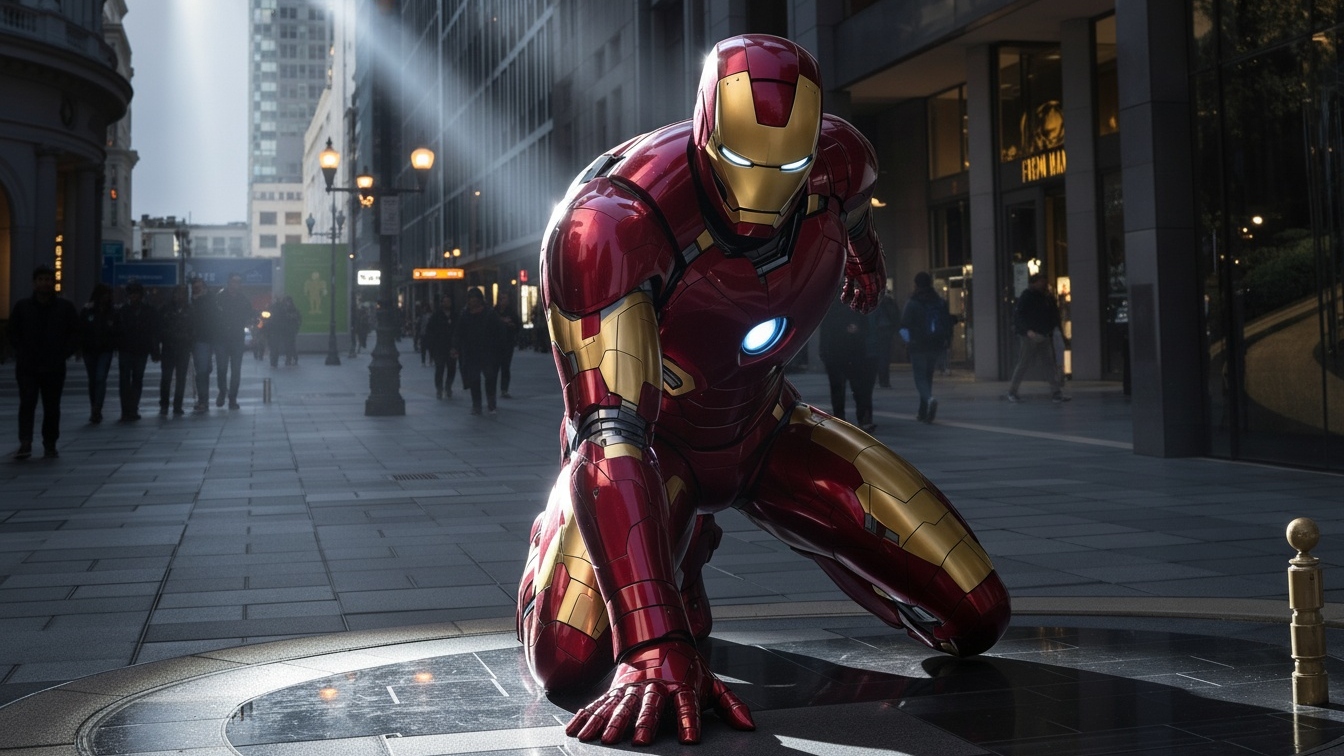
Crouched pose
A low stance creates energy and width, but visitors may see the face and chest differently depending on eye level.
Raised hand
An open palm can become a strong focal point and may be paired with an explicitly requested lighted effect.
Flight gesture
A tilted or elevated arrangement needs the full angle, overhead clearance, and base relationship resolved early.
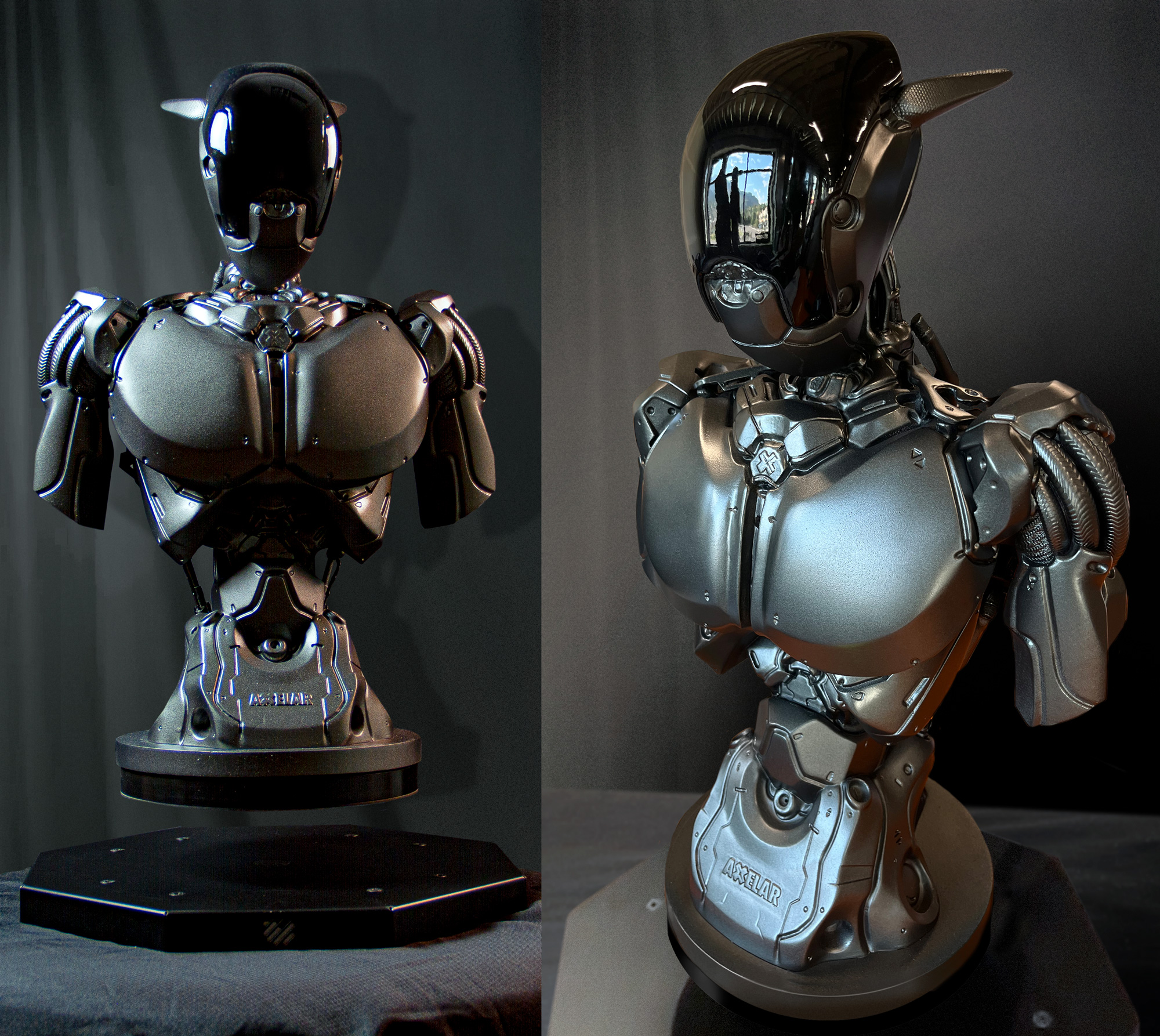
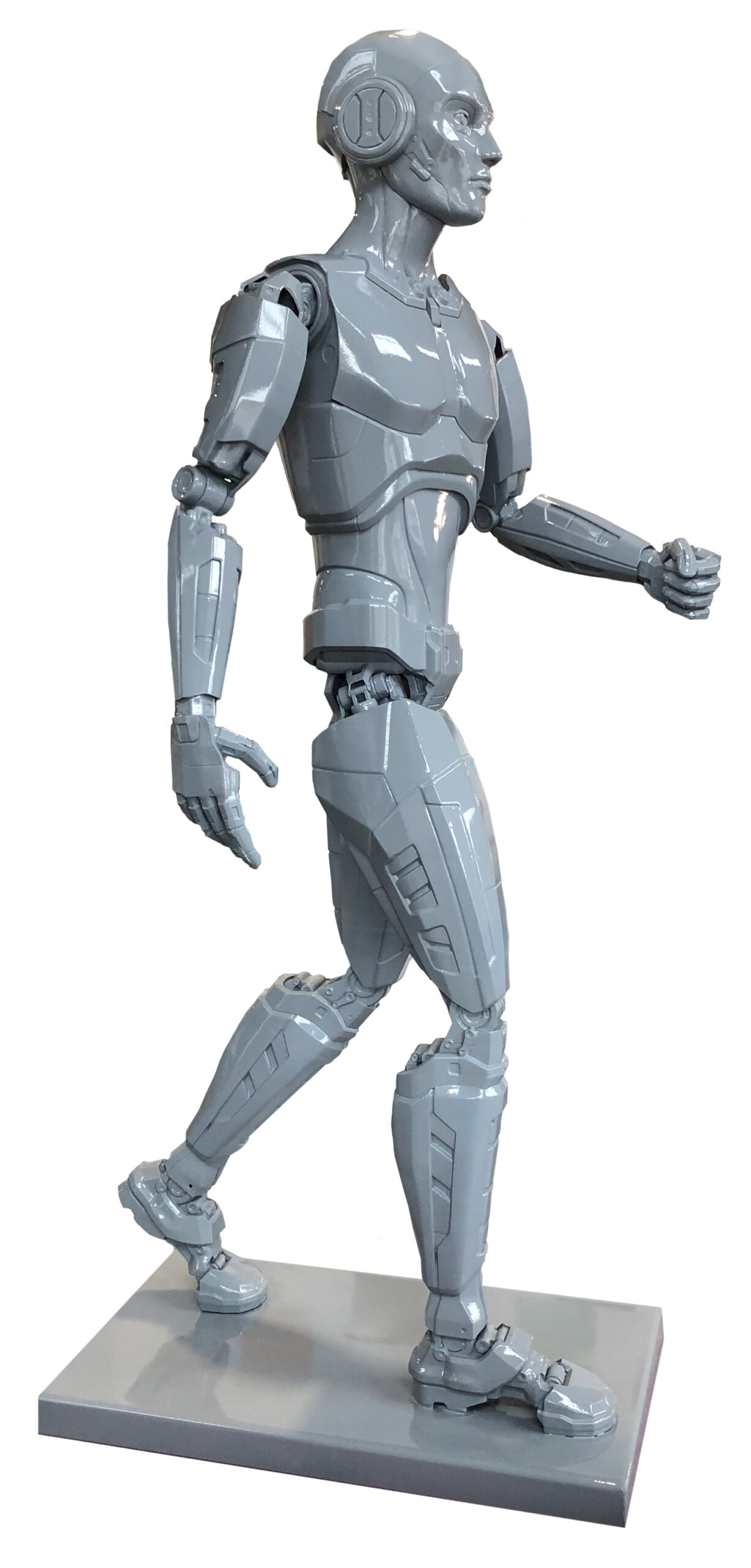
Compare two completed WhiteClouds hard-surface characters
The Axelar robot bust demonstrates a compact mechanical character with illumination and a presentation base. The full-body futuristic robot shows a different approach to articulated limbs and layered surface geometry. These projects offer practical references for organizing complex armor-like forms.
Use contrast to keep the armor legible
Broad color zones and controlled differences in sheen can separate major armor plates at a distance. Fine weathering, wear, or metallic-looking effects should be described with visual references and tied to the intended tone. A clean display, battle-worn interpretation, and monument-like treatment lead to different surface direction.
If illuminated eyes, chest, palms, or base elements are desired, identify each location, expected operating setting, access needs, and control preference. State whether the statue will remain indoors, sit under cover, or face exposed conditions, and whether it must travel or divide for access.
Define the armored figure before requesting pricing
The most useful brief combines accurate character views with real site limits.
- Chosen armor reference
- Pose and head direction
- Target height and maximum footprint
- Priority panel and costume details
- Color and surface references
- Requested illuminated features
- Access route and display environment
- Destination and needed date
Request a quote for a giant Iron Man statue
Provide the armor reference, pose, target size, viewing sides, surface direction, lighting request, base requirements, environment, access measurements, destination, and deadline. Include packing or installation needs when the figure must travel or arrive in sections.