

Giant Head Statue: A Monumental Tribute to Human Creativity
Monuments have long been our way of celebrating stories, beliefs, and cultural achievements. Among the most striking of these are giant head statues, towering works of art that magnify human identity, expression, and imagination on a monumental scale. Whether carved from stone, cast in metal, or built from modern materials, giant head statues carry an almost mystical quality. They stare into the horizon with silent wisdom, inviting reflection and awe. This article explores the world of giant head statues: their history, symbolism, cultural significance, and the fascinating engineering that brings them to life.
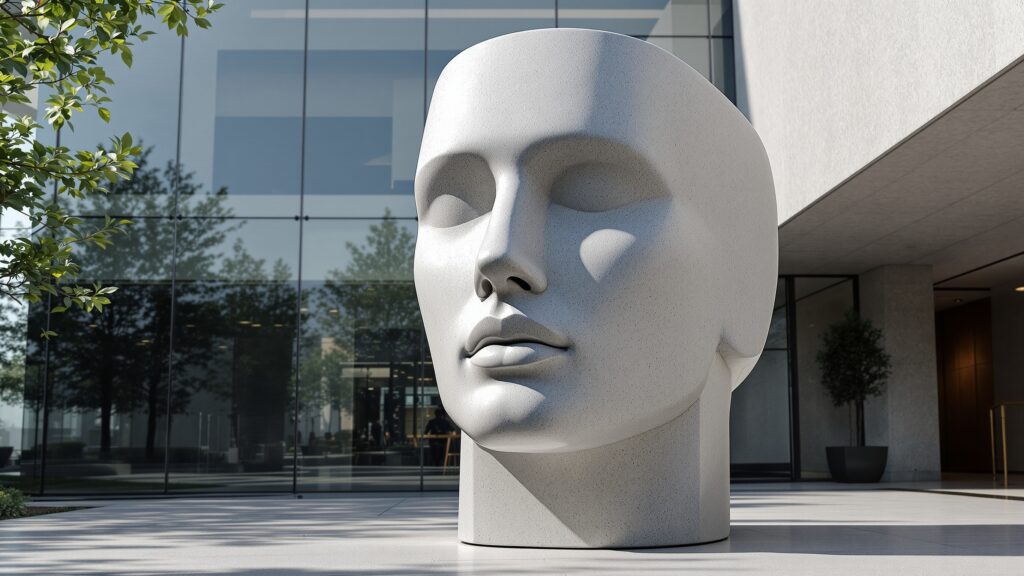
The Fascination with Human Faces
From ancient times to modern art, the human face has been one of the most enduring subjects in sculpture. It is how we recognize one another, how we express emotion, and how we connect across generations. When magnified into a giant head statue, the face becomes more than a likeness—it becomes a statement.A giant head is at once intimate and monumental. Unlike a full-body statue that emphasizes posture or gesture, a head focuses attention entirely on expression and identity. It can evoke wisdom, power, mystery, or even vulnerability. By enlarging the human face, artists elevate it into a universal symbol of humanity itself.
Ancient Inspirations: The Roots of Colossal Heads
Giant head statues are not new. Some of the most famous examples date back thousands of years.
One iconic example is the Olmec colossal heads of Mesoamerica. Carved between 1200 and 400 BCE, these massive basalt sculptures—some weighing over 20 tons—depict the faces of rulers or deities. Their sheer size and presence still inspire wonder today, and they remain among the most recognizable artifacts of ancient American civilizations.
Similarly, the Moai statues of Easter Island, while full-bodied, emphasize enormous heads with elongated features. These statues, carved between the 13th and 16th centuries, represent ancestral figures and carry spiritual and cultural significance.
In Egypt, the Great Sphinx of Giza stands as perhaps the most iconic example of a giant head combined with a monumental body. Its enigmatic face has fascinated scholars and visitors for centuries, symbolizing both the mystery and permanence of ancient civilizations. These historic works demonstrate that the impulse to carve monumental heads is deeply rooted in human culture. They reflect our need to honor leaders, connect with the divine, and leave behind markers of identity for future generations.
Modern Giant Head Statues: Artistic Boldness
In the contemporary world, giant head statues take on new meanings. No longer confined to representing rulers or deities, they often serve as bold artistic statements or cultural landmarks.
For instance, Spanish artist Jaume Plensa has created numerous large-scale head sculptures around the world. His serene, elongated heads, often made of stainless steel or glass, reflect themes of meditation, memory, and the universality of human identity. In Barcelona, the “Carmela” sculpture stands near the Palau de la Música, its elongated form blending classical inspiration with modern minimalism. Similarly, Plensa’s work in Chicago’s Millennium Park—giant projected faces on glass towers—captures the vibrancy of contemporary public art. These modern statues push boundaries not only in scale but also in interpretation. A giant head today may represent collective memory, unity across cultures, or even serve as a playful installation in urban spaces.
Why Giant Head Statues Captivate Us
So why are we so drawn to giant head statues? The answer lies in their universal resonance. Everyone recognizes a face. It’s the first thing we learn to identify as infants, and it remains central to how we connect with others. Seeing a familiar form enlarged to monumental scale triggers a unique reaction: awe mixed with intimacy. Standing beneath a towering head statue, you may feel small, yet connected. The sculpture mirrors humanity back to itself—our triumphs, our fragility, and our imagination. It’s a reminder that even in stone or steel, the essence of human identity endures.
How a Giant Head Statue Might Be Fabricated
The creation of a giant head statue is both an artistic and engineering challenge. Sculptors must balance aesthetics with technical feasibility, ensuring that the statue can withstand weather, time, and even natural disasters.
Concept and Design
The process begins with detailed concept sketches and digital 3D modeling. Sculptors study facial proportions, expression, and texture, scaling them up without losing nuance. Every curve of the lips, crease of the eyelid, and contour of the cheekbone must translate effectively to monumental size.
Material Selection
Material choice depends on the desired look and longevity. Traditional options include stone, marble, and bronze. Modern statues often use concrete reinforced with steel, fiberglass composites, or stainless steel for durability. Weather resistance and maintenance are key considerations.
Internal Framework
A giant head statue requires an internal skeleton or framework, especially if hollow. This steel structure provides stability and ensures the outer material remains supported. Engineers design the framework much like the structure of a skyscraper, accounting for wind, rain, and seismic activity.
Sculpting and Casting
Depending on the material, the surface may be hand-carved or cast from molds. For stone, artisans work with chisels and heavy equipment, shaping features directly into massive blocks. For metals or composites, molds are created from scaled-up clay or digital models, then cast and assembled.
Assembly
Large statues are often fabricated in sections. The forehead, nose, or chin might each be separate pieces, transported to the site and lifted into place by cranes. Once assembled, joints are sealed, polished, and finished to ensure seamless integration.
Surface Finishing
Detailing is crucial. Artists apply textures, polish, or patinas to bring out expression and highlight features. Weatherproof coatings may also be applied for protection. In some cases, lighting is added to enhance the dramatic effect at night.
The result is a breathtaking monument that blends artistry with engineering precision—a head that towers over the landscape while reflecting the essence of humanity.
Giant Head Statues as Cultural and Tourist Icons
Much like giant hand or body statues, giant head statues often become landmarks. They attract tourists, spark local pride, and serve as symbols of place.
Consider Mount Rushmore in the United States, where four presidential heads are carved into the Black Hills. While controversial in its historical context, it has become one of the most recognizable monuments in the country, drawing millions of visitors each year. Elsewhere, contemporary head sculptures grace city centers, serving as conversation pieces and selfie magnets. Their recognizable forms make them instantly shareable, ensuring their presence resonates both in person and across social media.
The Emotional Experience of Standing Before a Giant Head
Standing before a giant head statue can feel almost otherworldly. The features loom above you, larger than life, demanding your attention. Some statues appear serene, their closed eyes suggesting wisdom or meditation. Others are stern, commanding respect or awe. For many, the experience is reflective. A giant head statue makes you consider your own place in the human story. It transforms a simple face into something timeless, anchoring memory and meaning in monumental form.
The Future of Giant Head Statues
As technology advances, so do the possibilities for giant head statues. 3D printing, for example, opens new doors for precision and efficiency in fabrication. Artists can design intricate head forms digitally, then print molds or even direct sections of the statue at large scale. Interactive elements may also play a role. Imagine a giant head with projection mapping, its expression shifting to reflect emotions or seasons. Or a statue integrated with augmented reality, allowing visitors to see historical figures come to life through their smartphones. Sustainability will likely be another factor. Future giant head statues may incorporate recycled materials, solar-powered lighting, or even vegetation integrated into the design, blending art with eco-conscious innovation.
Final Thoughts: Humanity Reflected in Stone and Steel
The Giant Head Statue is more than an oversized sculpture. It is a celebration of human identity, expression, and imagination on a monumental scale. From the Olmec heads of ancient Mesoamerica to contemporary installations in bustling cities, these statues carry timeless appeal. They invite us to look up, reflect, and recognize ourselves in their towering faces. Whether carved from stone, cast in bronze, or built with futuristic materials, giant head statues are testaments to our creativity and ambition. They remind us that even in silence, a face can speak volumes—and when magnified to monumental scale, it tells the story of humanity itself.
Check out WhiteClouds’ 3D Statues for more information.
Contact us today to learn more about our 3D services and how we can help you achieve your goals.