
Planning an Oversized Hand Saw Display
An oversized hand saw is defined by a long manual blade, repeated tooth line, and a handle that works visually with the blade rather than a motor housing. Blade profile, tooth scale, grip opening, orientation, and support should be resolved together.
Plan a Hand Saw
Select the manual blade before setting scale
A panel saw, rip saw, backsaw, pruning saw, or stylized hand saw carries a different blade outline and tooth pattern. Supply one principal reference and mark the features that should remain exact. The heel, toe, back edge, cutting edge, and handle connection should be visible in the elevation.
Set overall blade length separately from blade height and thickness. An enlarged prop may need thicker-looking edges so the object reads in perspective, but that decision should be evaluated against the desired reference rather than assumed.
Coordinate teeth, handle, and blade face
The identifying details should remain clear without suggesting a usable cutting tool.
Tooth rhythm
Choose a fine, coarse, regular, or stylized tooth line and state which side or sides need that profile.
Handle opening
Define the outside handle contour, grip opening, fastener cues, and the transition into the blade.
Blade markings
Provide approved graphics, measurement marks, patina direction, or solid-color treatment as final artwork or clear visual references.
Tip and heel
Dimension both ends so the blade does not become a generic rectangle once enlarged.
Plan support around the long blade
A horizontal saw emphasizes length and provides a broad graphic face. A diagonal pose adds height but increases the floor and overhead envelope. A wall-mounted or suspended-looking composition has different attachment and access questions from a freestanding floor display.
Identify the principal audience path, the finished sides, and the required clearance around the tooth edge and tip. Any request for people to hold, climb on, or move the prop must be stated as a separate interaction requirement.
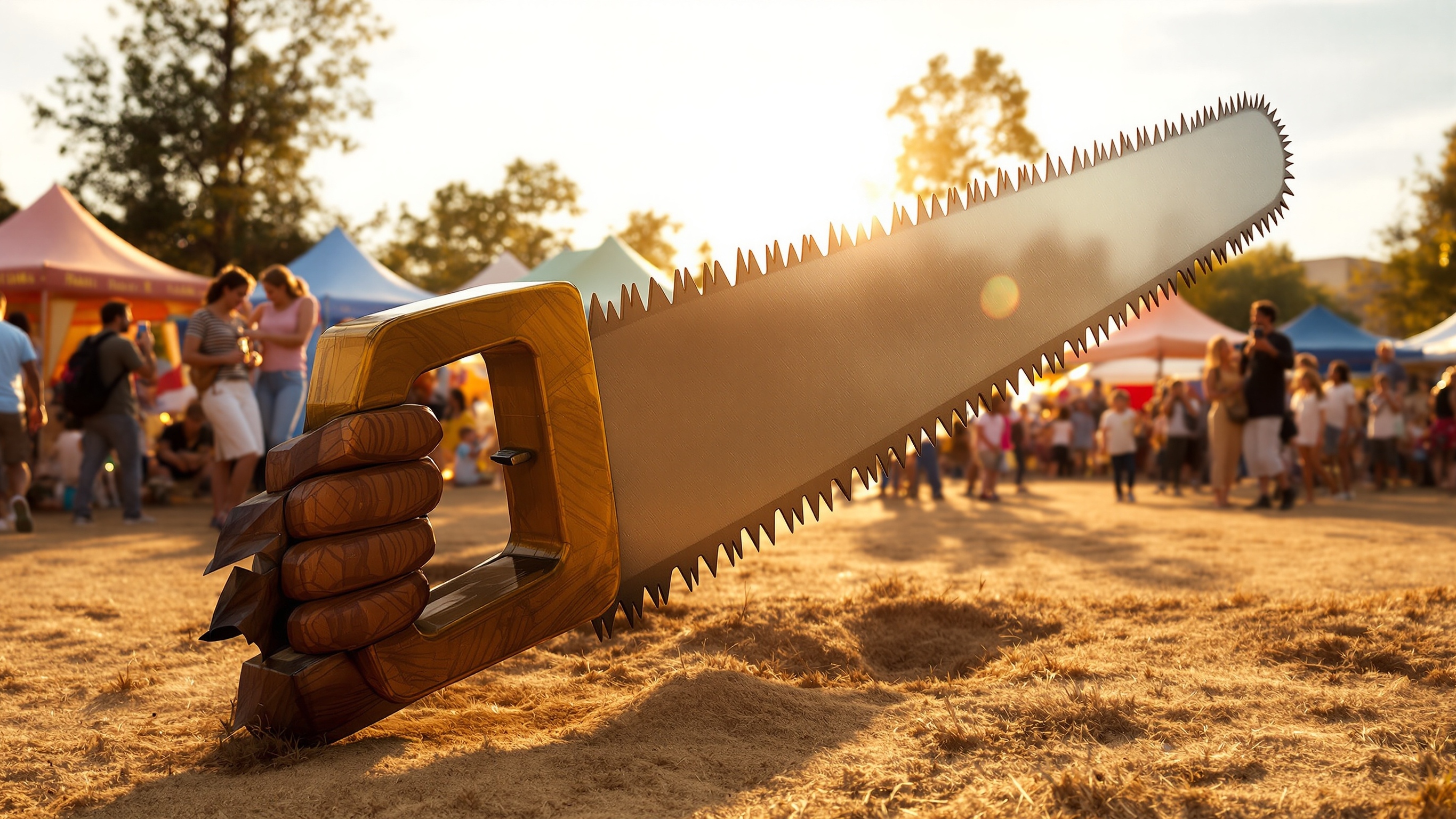
Study horizontal and angled hand-saw arrangements
These images are illustrative studies. They do not document fabricated WhiteClouds projects or establish a material, support method, or finished scale. Use them to compare silhouette and orientation, then provide the actual saw and site references.
Define the tool and its display position
Include enough information to distinguish the hand saw from powered-saw concepts.
- Saw type and reference views
- Blade length, height, thickness, and taper
- Tooth count or visual tooth rhythm
- Handle contour, grip opening, and visible fasteners
- Graphics or surface direction
- Horizontal, diagonal, wall, suspended-looking, or freestanding pose
- Viewer clearance and interaction limits
- Access route, destination, and required date
Request pricing for an oversized hand saw prop
Share the saw reference, blade and handle dimensions, tooth treatment, graphics, display orientation, finished sides, support conditions, clearance, destination, and schedule.