
Planning a Coordinated Giant Halloween Prop Display
A coordinated Halloween prop display uses a deliberate hierarchy of silhouettes rather than a random collection of seasonal objects. The planning task is to choose one visual anchor, assign supporting forms to distinct depth and height zones, and preserve the intended path or camera view.
Plan a Halloween Prop Set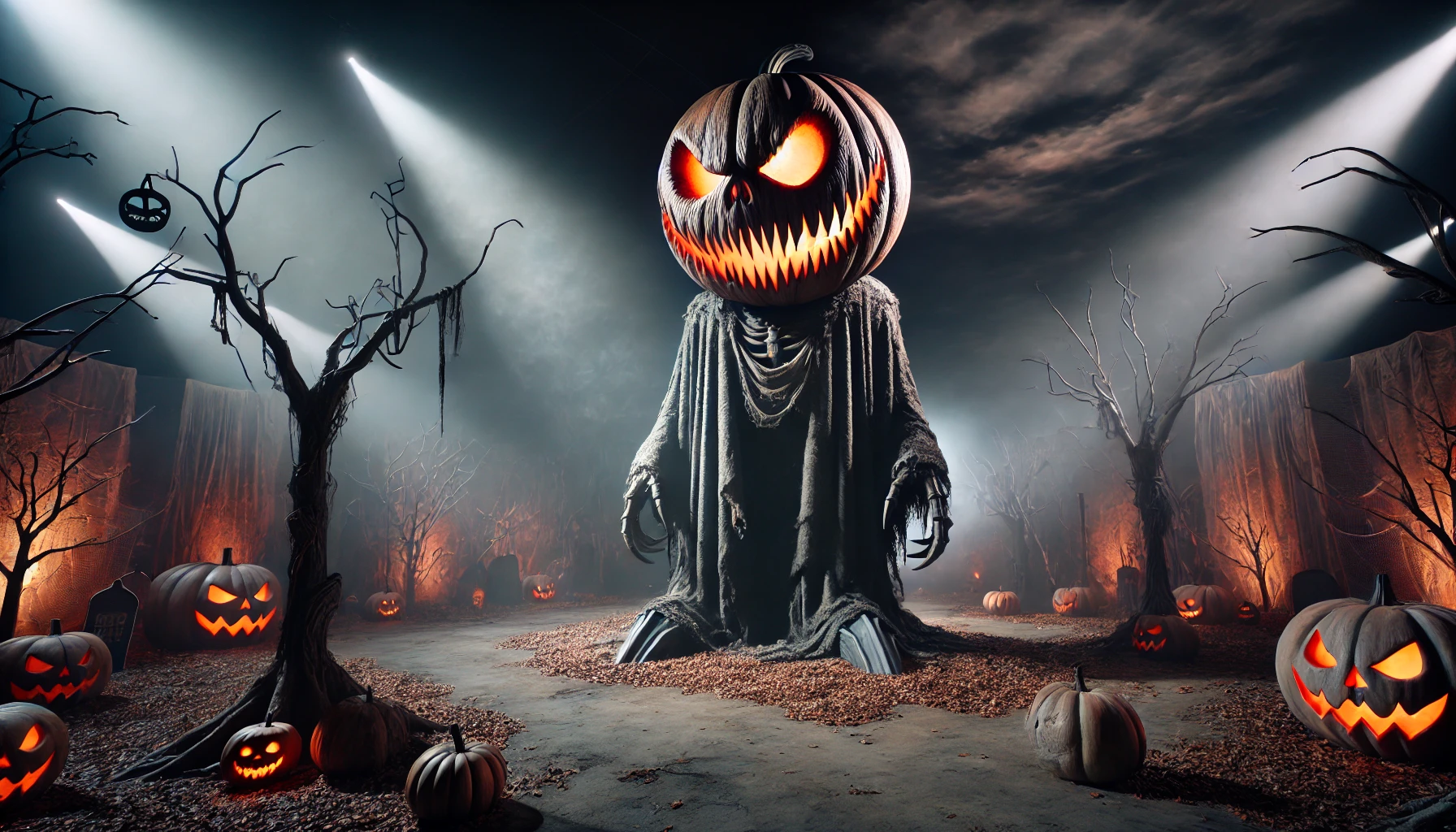
Choose the anchor before selecting supporting props
Begin with the one form that should carry the composition from the main approach. Record its height, width, depth, pose, and principal face, then reserve enough open space around its silhouette.
Choose supporting pieces because they contribute a different shape or depth layer. A low rounded object, a tall figure, a broad winged form, and a wall element create clearer separation than several similarly sized upright figures.
Assign every prop to a defined zone
A simple elevation can prevent visual and physical conflicts among the pieces.
Foreground
Low or compact forms can frame the approach without hiding the main subject or narrowing the path.
Middle layer
Secondary figures and objects can connect the anchor to the edges of the display while retaining space between silhouettes.
Background
Tall forms, facades, or signs can close the scene visually, provided their important features remain visible above the front layers.
Elevated zone
Bats, signs, branches, or other overhead-looking elements need their own projected envelope and ceiling relationship.
Compare upright, rounded, and character silhouettes
The concepts illustrate several possible visual roles: one broad primary figure, one upright animal character, and one jack-o-lantern form with a rounded head. They do not depict completed WhiteClouds commissions.
A new set can use different subjects. What matters is the relationship among the chosen silhouettes, the available volume, and the intended viewer path rather than the number of familiar Halloween motifs.


Reserve the path and camera view as physical space
Draw visitor circulation, barriers, merchandise, stage edges, doors, and the preferred camera direction on the same plan as the props. A photo position should include the people as part of the required composition instead of being added after the objects are sized.
State whether every piece is view-only or whether a specific opening, touch point, pass-through area, or standing position is required. Any movement, lighting, sound, or electronic behavior needs separate scope rather than being assumed from the seasonal theme.
Describe the composition as a connected group
The initial brief should identify both the pieces and their relationships.
- Ranked anchor and supporting prop subjects
- Overall display width, depth, and height
- Foreground, middle, background, wall, and elevated zones
- Shared visual references, color direction, and level of stylization
- Principal approach, viewing sides, and camera position
- Visitor path, barriers, doors, and nearby fixed elements
- View-only versus separately defined contact points
- Access route, destination, display period, and required date
Request pricing for a coordinated Halloween prop display
Send the ranked prop list, display plan, dimensions, visual references, zone assignments, viewing path, audience-contact limits, access information, destination, and schedule.