
Planning a Giant Garlic Prop
A giant garlic prop combines a rounded bulb with visible clove divisions, a narrowing neck, and a small root end. Those transitions give the enlarged object its identity. Planning the lobes, outer contour, top, base, skin-like color treatment, orientation, and support keeps the page on one garlic bulb instead of a generic food display.
Plan a Giant Garlic Prop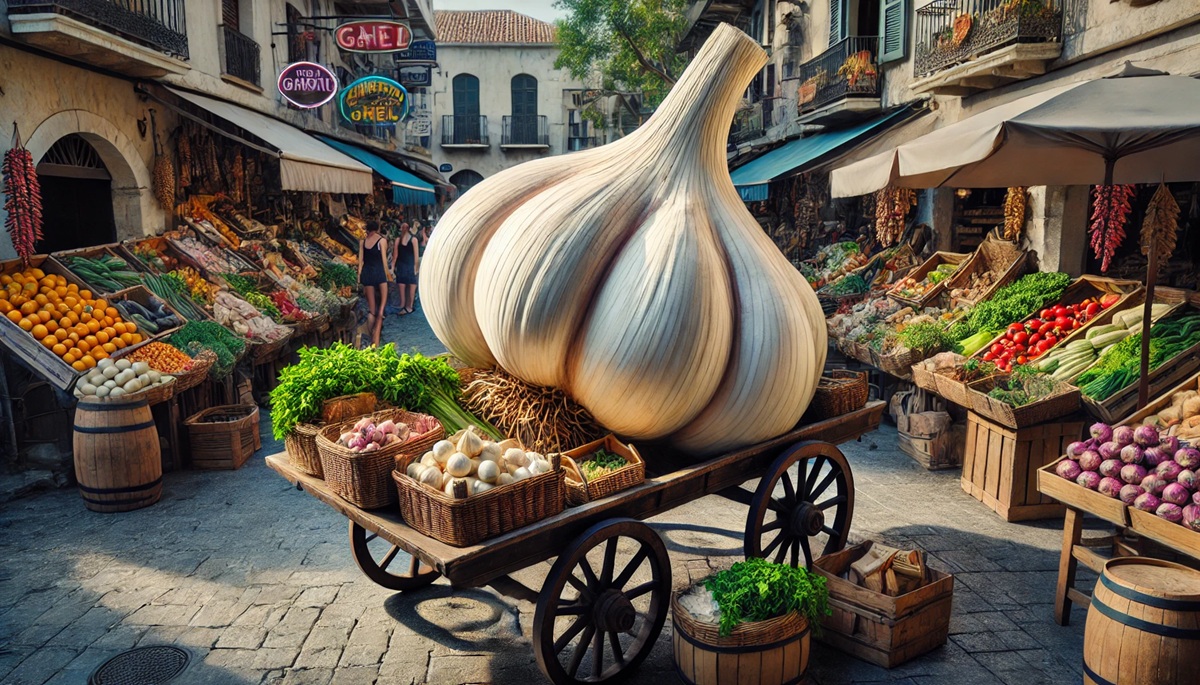
Choose the Garlic Bulb and Neck Silhouette
Choose a whole-bulb reference with an unobstructed outline. Mark the maximum width, shoulder height, total height, and the point where the bulb narrows into its neck. Some bulbs are low and broad; others have taller shoulders and a longer dried-stem shape. The selected profile should remain consistent from every required side.
Decide whether the bulb stands upright, turns slightly to reveal a preferred clove pattern, or uses another supplied orientation. Add an upper and lower view when the neck opening or root end will be visible to the audience.
Shape the Lobes, Divisions, Neck, and Root
The major clove rhythm should be established before fine surface lines or color variation are considered.
Lobe rhythm
Set the number of primary clove forms visible around the bulb, their relative widths, and the way each one rounds into the shoulder.
Division depth
Map the channels between cloves and decide how strongly they should read from the planned distance. Keep each valley connected to the overall bulb rather than cutting the form apart.
Neck transition
Define where the clove shoulders converge and how the upper profile twists, tapers, or ends. Supply exact reference for any irregular top treatment.
Root end and support
Show the central root area, lower lobe edges, and point of contact with the base. Indicate which support surfaces may remain visible.
Plan the Pale Surface Without Losing the Form
Provide color references for the warm white, cream, tan, pale violet, or other approved range. Use darker values selectively in clove divisions and around the root or neck so the segmentation remains visible. Avoid adding botanical markings that are not present in the chosen reference.
Name the main camera or audience position and the normal viewing distance. A very subtle lobe pattern may work at close range but disappear across a room. Conversely, deep grooves can make a nearby bulb look carved into separate pieces.
Compare Two Upright Garlic Concepts
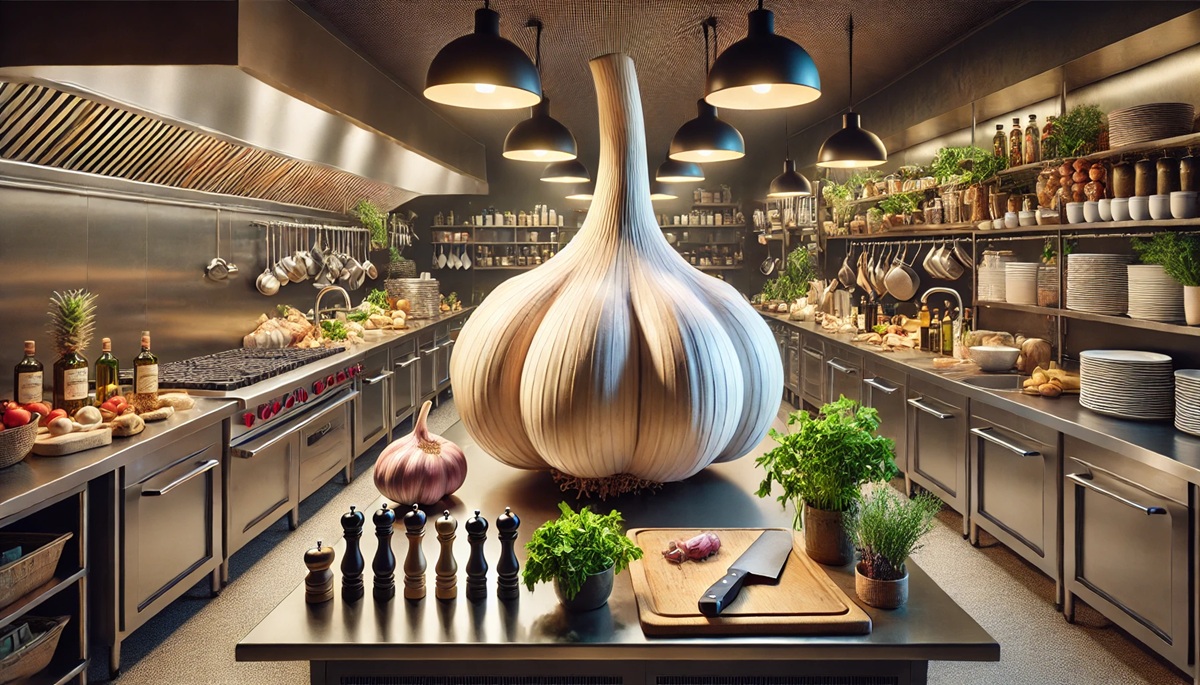
The market concept uses a compact body with a softly curved neck and pronounced lower divisions. The kitchen concept gives the bulb a taller upper taper and smoother elongated lobes. These differences clarify choices about width, shoulder height, segmentation, root contact, and visible support.
The pictures are concept studies, not records of fabricated WhiteClouds work. They do not prove a customer, final size, construction, material, finish, structural capacity, weather performance, or site installation.
Document the Garlic Prop Requirements
A useful brief describes the complete bulb before addressing small skin-like details.
- Approved whole-bulb front, side, top, and root-end views
- Total height, maximum width, shoulder level, and footprint
- Primary lobe count, widths, rounding, and division depth
- Neck height, taper, twist, opening, or supplied top treatment
- Root-end size, lower-lobe shape, and base visibility
- Surface color range, shadow values, markings, and graphics
- Upright or turned orientation and every audience-facing side
- Placement, access route, destination, and required date
Request a Custom Prop Quote
Send the garlic reference, dimensions, lobe and neck design, root treatment, color direction, orientation, exposed sides, base preference, site and access information, destination, and timeline for review.