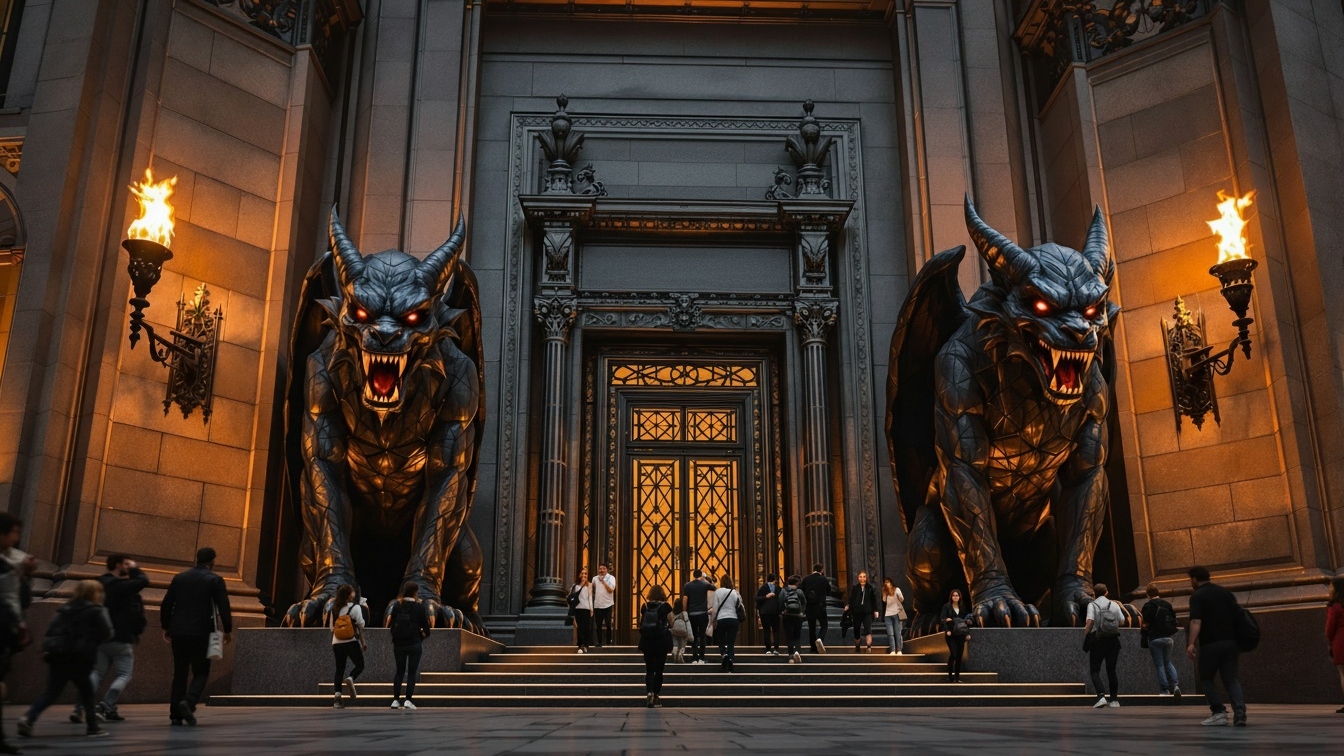
Giant Gargoyle Statue

Giant Gargoyle Statue

We Build Custom Giant Gargoyle Statues

Did you know we make

custom

giant statues?

Giant Gargoyle Statue Museum

The Giant Gargoyle Statue: A Colossal Fusion of Myth, Mystery, and Art

For centuries, gargoyles have fascinated us. Perched high on Gothic cathedrals, castles, and universities, these winged, often grotesque creatures have served as both practical water spouts and symbolic guardians. Imagine, then, taking that tradition and magnifying it into something even more imposing: the Giant Gargoyle Statue. Towering over plazas, parks, or even city skylines, such statues transform medieval mystery into monumental public art. To encounter a giant gargoyle is to experience both awe and unease. Its wings stretch toward the sky, claws grip the pedestal, and its stone eyes seem to follow you. It is a piece of history reimagined on a colossal scale, blending architectural heritage, mythology, and modern creativity into a single unforgettable monument.

Giant Gargoyle Statue-Rooftop

A Brief History of Gargoyles

The word “gargoyle” comes from the French gargouille, meaning “throat” or “gullet,” referencing their function as decorative water spouts. By channeling rainwater away from building walls, gargoyles helped preserve masonry. But beyond their utility, they became deeply symbolic in medieval Europe.

Carved in fantastical, monstrous forms, gargoyles were thought to ward off evil spirits and protect sacred spaces. Some represented demons being cast out, reminders of sin and salvation. Others took animal or hybrid forms, combining wings, claws, and human-like faces into eerie guardians. Over time, gargoyles evolved into cultural icons, appearing in literature, film, and art. From Victor Hugo’s The Hunchback of Notre Dame to modern fantasy stories, they embody the mysterious edge between beauty and terror.

Why Build a Giant Gargoyle?

If ordinary gargoyles inspire awe, why not magnify that power? A giant gargoyle statue is not just a sculpture—it is a cultural statement. By enlarging the figure to 25 feet or more, artists elevate the gargoyle from architectural detail to centerpiece, forcing viewers to confront its presence. Such a monument serves multiple roles. It is a dramatic tourist attraction, drawing visitors intrigued by Gothic fantasy. It is a celebration of medieval craftsmanship, connecting modern communities with centuries-old traditions. And it is a symbolic guardian, reminding us of the timeless human fascination with myth and the supernatural.

Famous Gargoyle Inspirations

While full-scale giant gargoyle statues are relatively rare, countless buildings across Europe and beyond provide inspiration. The gargoyles of Notre Dame Cathedral in Paris remain among the most famous, their haunting silhouettes overlooking the city for centuries. Other landmarks, from Westminster Abbey to the cathedrals of Cologne and Milan, boast thousands of unique gargoyle designs—each with its own personality. Some are fearsome, with snarling jaws and fangs. Others are humorous, depicting animals or caricatures of people. A giant gargoyle statue often borrows from these traditions, incorporating winged forms, elongated claws, and expressive faces. But it also allows artists freedom to invent entirely new designs, creating hybrids that exist only in monumental imagination.

The Artistic Appeal of Gargoyles

From an artistic perspective, gargoyles are irresistible subjects. Their grotesque forms offer endless creative possibilities—twisted wings, curling tails, grimacing faces. Sculptors revel in exaggeration, transforming stone into living fantasy. A giant gargoyle statue exaggerates this further. Its wings may span dozens of feet. Its claws could clutch entire ledges. Every vein in its wings, every wrinkle in its snarling face becomes a canvas for expression. For viewers, the appeal lies in the blend of beauty and horror. The grotesque elements make the statue unsettling, while its craftsmanship inspires admiration. This balance is what makes gargoyles timeless icons of art and imagination.

How a Giant Gargoyle Statue Might Be Fabricated

Turning a mythic creature into a towering monument requires both artistic vision and structural expertise. Here’s how a giant gargoyle statue could be brought to life:

Concept and Design

The process begins with sketches and scale models. Sculptors decide on the pose—perched on its haunches with wings folded, or crouched ready to leap with wings outstretched. Small clay or digital models allow artists to refine details like facial expression, wing shape, and muscle definition.

Internal Framework

Because gargoyles are heavy and complex in form, a steel framework is essential. This skeleton supports the weight of the statue and prevents collapse. Engineers must calculate wind loads, especially if the wings are large, since they act like sails.

Outer Shell

The body of the statue can be built from concrete, fiberglass, or bronze. Concrete captures the classic Gothic stone look, while fiberglass is lighter and easier to transport. Bronze adds a timeless, dramatic finish but is costly.

Surface Detailing

The gargoyle’s menacing textures are carved or molded into the outer shell. Artisans sculpt wrinkles, veins, and scales into the surface, creating a lifelike appearance. For concrete or stone finishes, chisel-like detailing creates authenticity. Patinas and weatherproof coatings enhance the statue’s durability.

Assembly and Installation

A giant gargoyle is typically fabricated in sections. The body, wings, and base may be cast separately, then transported and assembled on-site using cranes. A reinforced concrete foundation anchors the statue, ensuring stability.

The final result is a towering fusion of art and engineering, a monument that feels like it could take flight at any moment.

Gargoyles in Modern Culture

Gargoyles are no longer confined to medieval cathedrals. They have become fixtures of popular culture, appearing in animated shows, comic books, and fantasy novels. Disney’s Gargoyles series introduced the creatures to a new generation, while films like Ghostbusters and The Hunchback of Notre Dame reinforced their mystique. A giant gargoyle statue taps into this cultural fascination. It attracts not only art lovers but also fans of fantasy, horror, and Gothic aesthetics. It serves as a tangible connection to the supernatural stories that continue to capture our imaginations.

The Emotional Impact of a Giant Gargoyle

Standing beneath a giant gargoyle is both thrilling and unnerving. Its sharp claws, snarling mouth, and looming wings create a sense of intimidation, while its artistry inspires awe. The emotional impact is amplified by scale—you feel small and vulnerable in its shadow, yet protected by its watchful gaze. This duality is what makes gargoyles so compelling. They embody both menace and guardianship, reflecting the contradictions of human imagination. A giant statue crystallizes this tension, making it an unforgettable experience.

Tourism and Community Identity

Like other oversized statues, a giant gargoyle has the power to become a tourist magnet. Travelers will flock to see it, snapping photos and sharing them online. Restaurants, shops, and events often spring up around such attractions, boosting local economies. Beyond tourism, the statue can become a symbol of community identity. Cities that embrace Gothic architecture or fantasy culture might adopt the gargoyle as a mascot. Festivals, Halloween events, or art exhibits could center around the statue, strengthening local pride and cultural cohesion.

Realism vs. Stylization

Should a giant gargoyle statue be terrifyingly realistic or more stylized? Both options offer unique appeal.

  • Realistic designs emphasize lifelike anatomy, capturing sinewy muscles, leathery wings, and snarling jaws. These statues lean into intimidation and awe.
  • Stylized designs exaggerate features, leaning toward fantasy and surrealism. Curved wings, exaggerated claws, or even humorous expressions make the statue more approachable.

The choice often depends on context. A city plaza may prefer a majestic, stylized gargoyle, while a theme park or haunted attraction might opt for a hyper-realistic beast.

The Future of Giant Gargoyle Statues

As technology advances, gargoyle statues could incorporate interactive features. Imagine motion sensors that trigger glowing eyes or wing movements as visitors approach. Augmented reality apps might let people view digital projections of gargoyles taking flight. Lighting design could also play a major role, with LED systems highlighting wings, claws, and faces at night, turning the statue into a glowing nocturnal sentinel. Sustainability may shape future gargoyles, with recycled stone composites or eco-friendly construction materials reducing environmental impact.

Why We Love Gargoyles

Gargoyles endure because they embody mystery and imagination. They sit at the intersection of myth, art, and architecture, reminding us of humanity’s desire to give form to the unseen. A giant gargoyle statue magnifies this impulse, transforming architectural detail into monumental presence. We love them because they are paradoxical: grotesque yet beautiful, frightening yet protective. They speak to our fascination with the strange and the unknown.

Conclusion: The Guardian Reborn

The Giant Gargoyle Statue is more than a piece of public art—it is a rebirth of medieval mystery for the modern age. Towering, watchful, and intricately detailed, it captures the imagination and stirs emotions in ways few monuments can. It connects us with centuries of tradition while adding a new chapter to the story of gargoyles. It sparks tourism, builds community pride, and creates unforgettable encounters.

To stand beneath a giant gargoyle is to feel both small and secure, unsettled yet inspired. It is a reminder of the power of art to transform myth into reality, and of our enduring fascination with creatures that straddle the line between nightmare and guardian. In an age where so much feels ordinary, the Giant Gargoyle Statue stands as a testament to the extraordinary—the embodiment of mystery, myth, and monumental imagination.

Check out WhiteClouds’ 3D Statues for more information.
 
Contact us today to learn more about our 3D services and how we can help you achieve your goals.     

Get a Free Quote on a Custom 3D Billboard

Get a Free Quote