
Planning a Giant Fountain Pen Prop
A giant fountain pen prop is defined by the relationship between its nib, feed, section, cap, clip, and barrel. Planning those parts together keeps the object recognizable as a fountain pen while establishing the scale, viewing direction, and support needs of the display.
Plan a Giant Fountain Pen Prop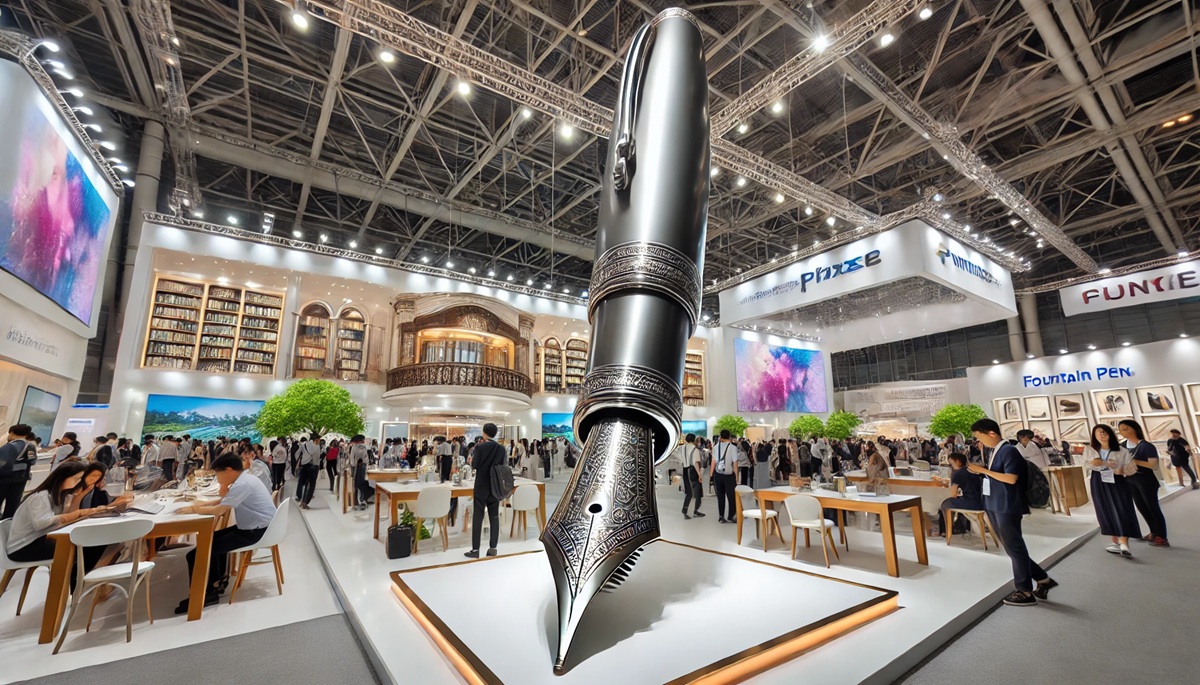
Define the Nib and Feed Profile
Begin with a clear reference for the nib rather than scaling a generic pen tip. Mark the outline, shoulders, point, center slit, breather-hole treatment, and any engraved or graphic detail that must remain visible. The feed area beneath the nib and the transition into the gripping section also affect whether the enlarged object reads as a fountain pen from the intended distance.
Choose the principal viewing side before approving the profile. A straight-on view emphasizes the symmetry of the nib, while a three-quarter view reveals more of the feed, section, and barrel transition. If both sides will be public, provide references for each visible face instead of assuming the reverse can repeat the front.
Set the Cap, Clip, and Barrel Relationship
A fountain pen is recognized as a coordinated assembly. Resolve the following relationships before treating color and finish as final.
Nib and section
Confirm how far the nib projects, how the feed area is represented, and where the section changes into the barrel. These transitions should remain readable after enlargement.
Barrel profile
Provide the intended taper, end shape, maximum diameter, and any bands or breaks that control the silhouette. A side elevation is more useful than a perspective image alone.
Cap state
Specify whether the pen is shown uncapped, capped, posted, or accompanied by a separate cap. A separate cap becomes its own measured object with a defined position and viewing side.
Clip orientation
Mark the clip's length, attachment point, curve, and relationship to the cap artwork. Confirm whether it faces the audience, the camera, or another fixed direction.
Choose the Display Orientation
A horizontal pen can keep the full length and nib profile in one sightline. An angled presentation can give the nib more prominence, while an upright composition uses less floor width but changes how the barrel, cap, and support are perceived. Select the orientation from the actual room, stage, retail area, or photo viewpoint rather than from the concept image alone.
Define the available footprint, height, nearby circulation, and every public viewing side. Also state whether the cap sits on the pen or appears as a separate display element. The support approach can then be considered around the approved orientation and site conditions. Unless a separate engineered function is documented, plan the prop as a view-only display rather than a working pen or hand-held object.
Compare Two Fountain Pen Proportion Studies
The first concept gives the exposed nib and separate cap a strong role in the complete silhouette. The second uses a dark barrel and bright metal-like accents to make the nib, feed area, clip, and cap bands easy to compare. Both are useful for discussing proportion and viewing direction.
These images are illustrative planning references, not completed WhiteClouds commissions. They do not verify a material, finish, internal structure, final size, installation method, or functioning ink system.

Send the Fountain Pen Reference Set
A complete request should identify the exact fountain-pen features that must survive enlargement and the physical setting in which they will be seen.
- Approved front, side, and nib-detail references
- Target overall length and maximum barrel diameter
- Nib profile, feed visibility, section transition, and required markings
- Capped, uncapped, posted, or separate-cap display state
- Barrel taper, end profile, cap bands, and clip orientation
- Primary camera or audience view and every additional visible side
- Horizontal, angled, upright, wall-integrated, or other approved placement
- Interior, sheltered, or weather-exposed display conditions
- Site envelope, access route, destination, installation window, and required date
Request a Custom Prop Quote
Send the approved fountain pen references, target dimensions, nib and cap details, principal viewing side, display orientation, placement conditions, access information, destination, and schedule. WhiteClouds can review the scope and prepare a custom quote.